Featured on @StorylineReddit: March 2, 2026
The Boy Who Did What His Mother Meant
This Reddit homophobic family quarantine story asks whether a thirteen-year-old is a psychopath, which is exactly the wrong diagnosis. The nephew steals underwear, cuts hair in the night, hides asthma inhalers. Every act looks like adolescent sadism until you notice the audience he performs for. His mother calls each incident divine punishment for bisexuality. His father bankrolls the household and says nothing. The boy is not improvising cruelty. He is running errands.
OOP frames her problem as a nephew problem because the nephew is the one entering her room. But the room he exits into belongs to a woman who teaches him that queer people deserve suffering, and a man whose financial indispensability buys the whole family’s silence. A locked door would have stopped the boy. Nothing in that house was equipped to stop his mother.
The question was never what is wrong with the child. The question is who built the permissions he operates under.
The Quarantine with One Door
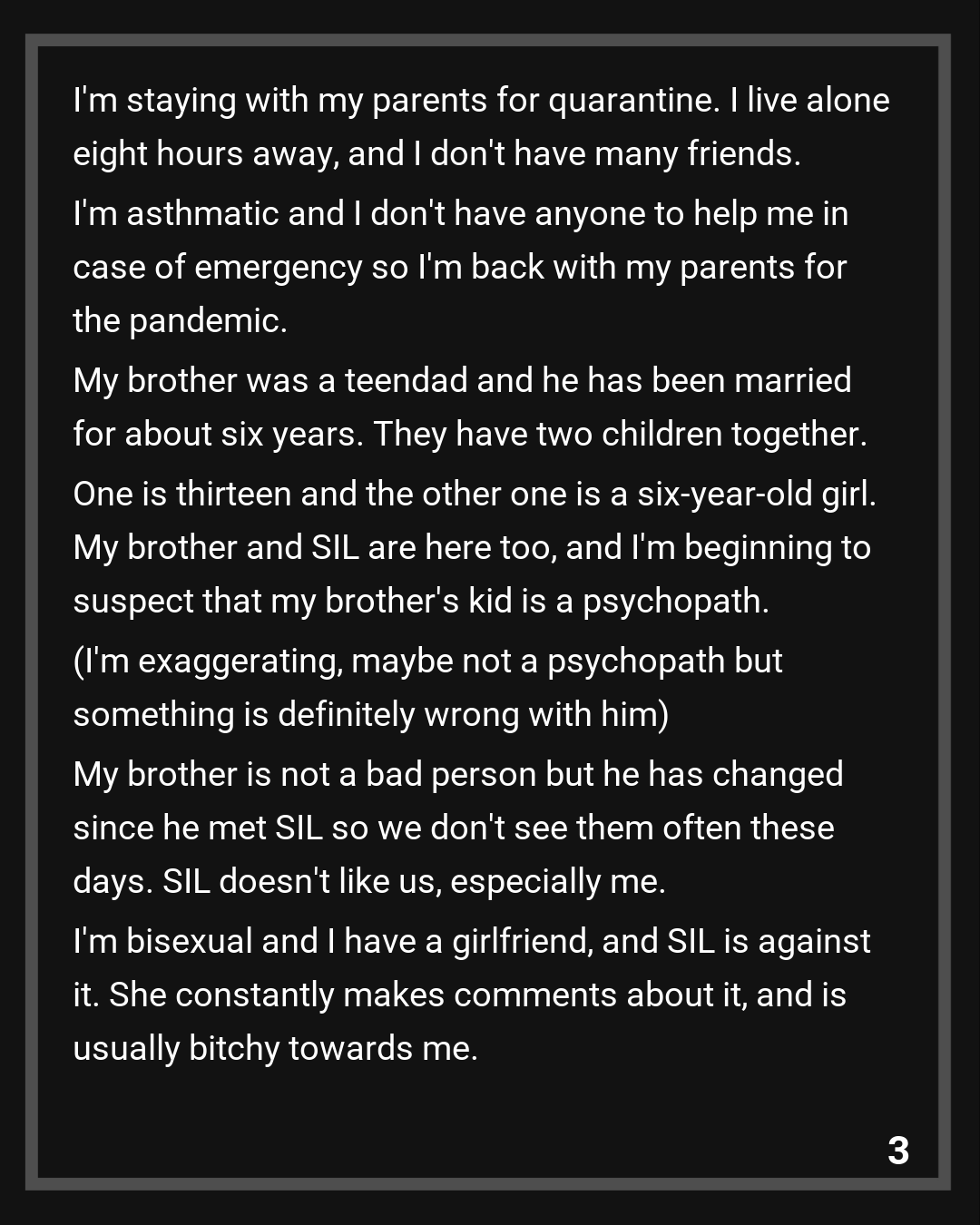
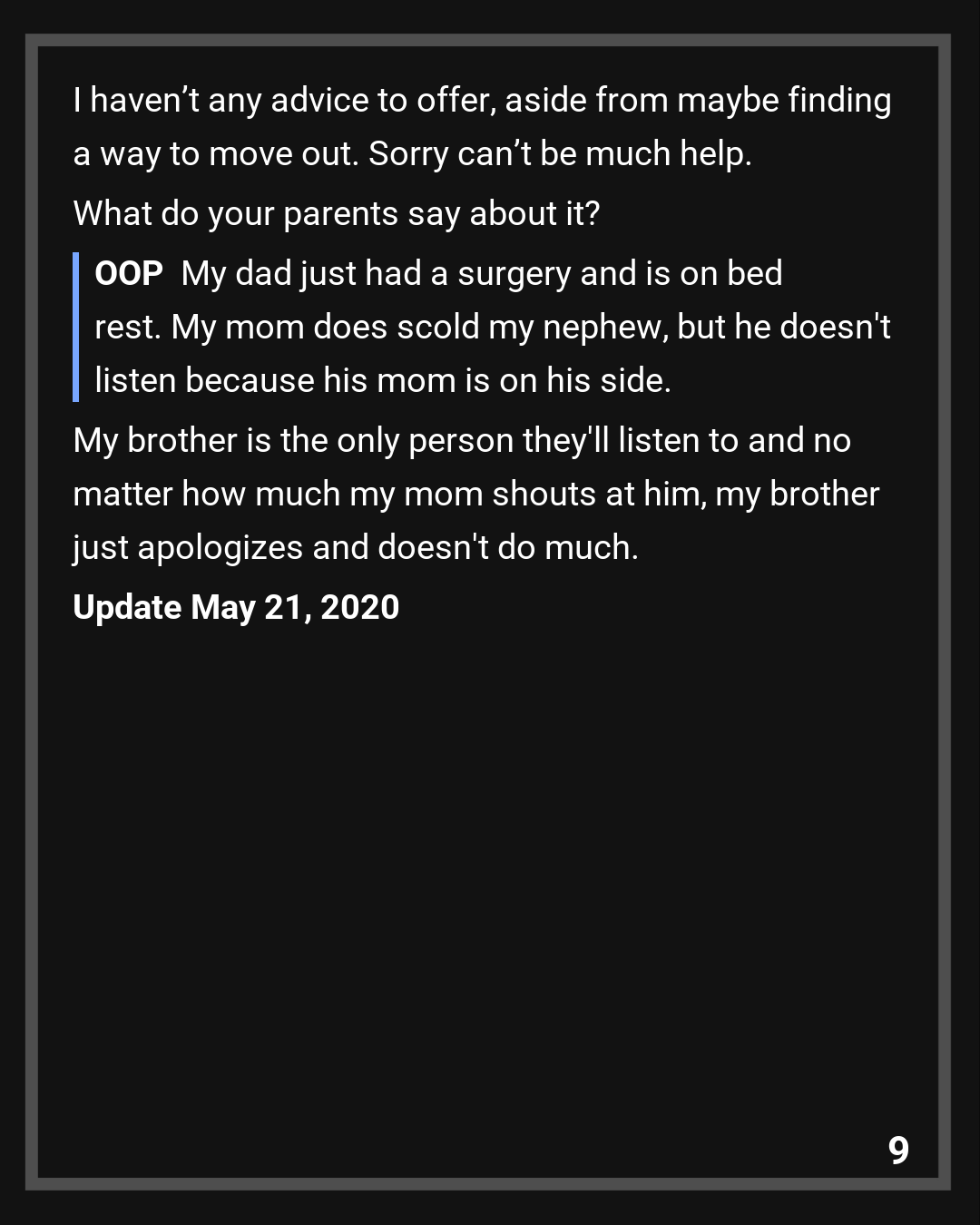
The Reddit homophobic family quarantine organized itself around one unspoken rule: OOP’s presence was conditional, and her brother’s family’s was not. Her father’s recent heart surgery and her mother’s emotional fragility created the dependency. Her brother paid the bills. His wife managed the caregiving. OOP contributed neither income nor labor, which meant every complaint she raised could be weighed against what she cost versus what they provided.
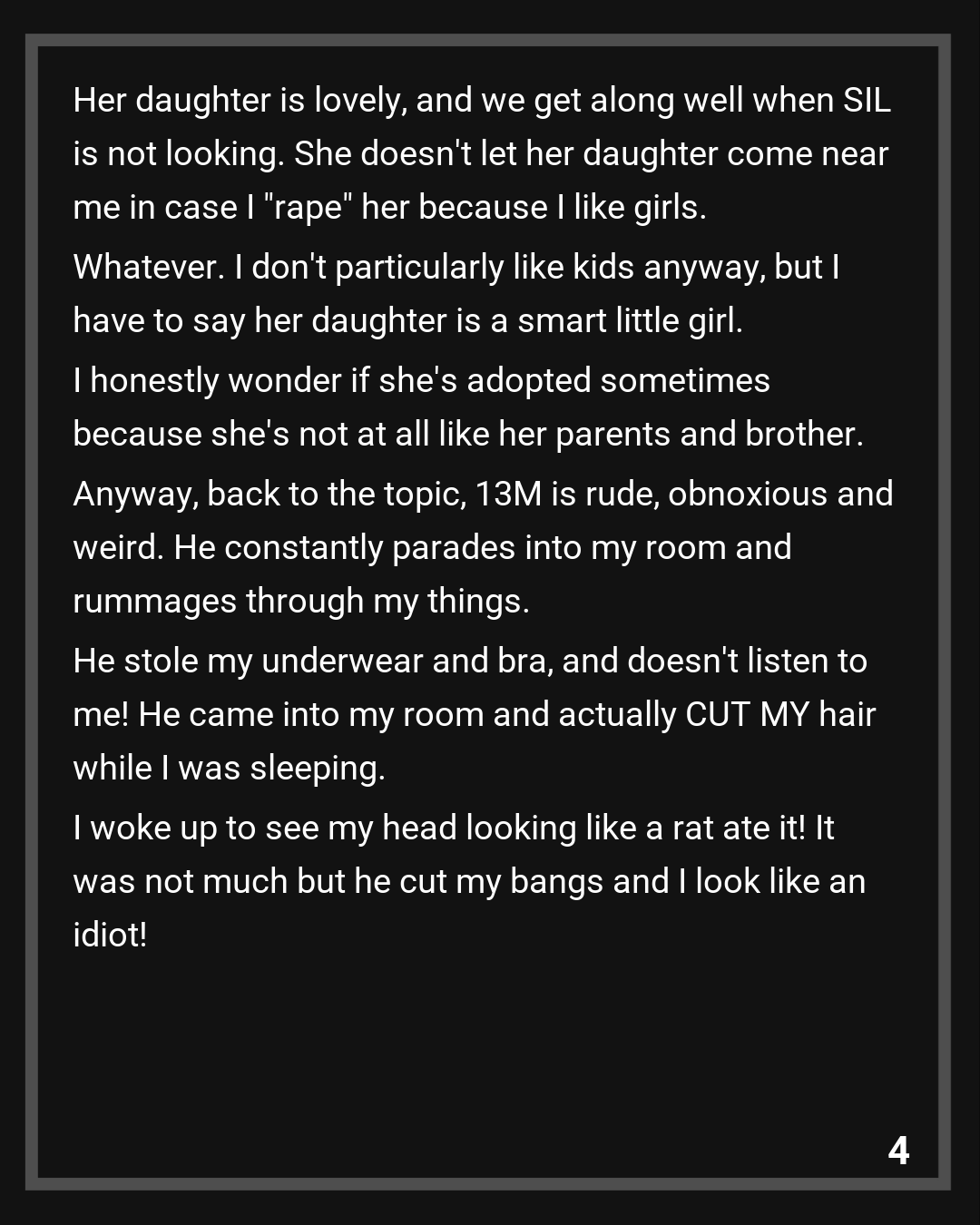
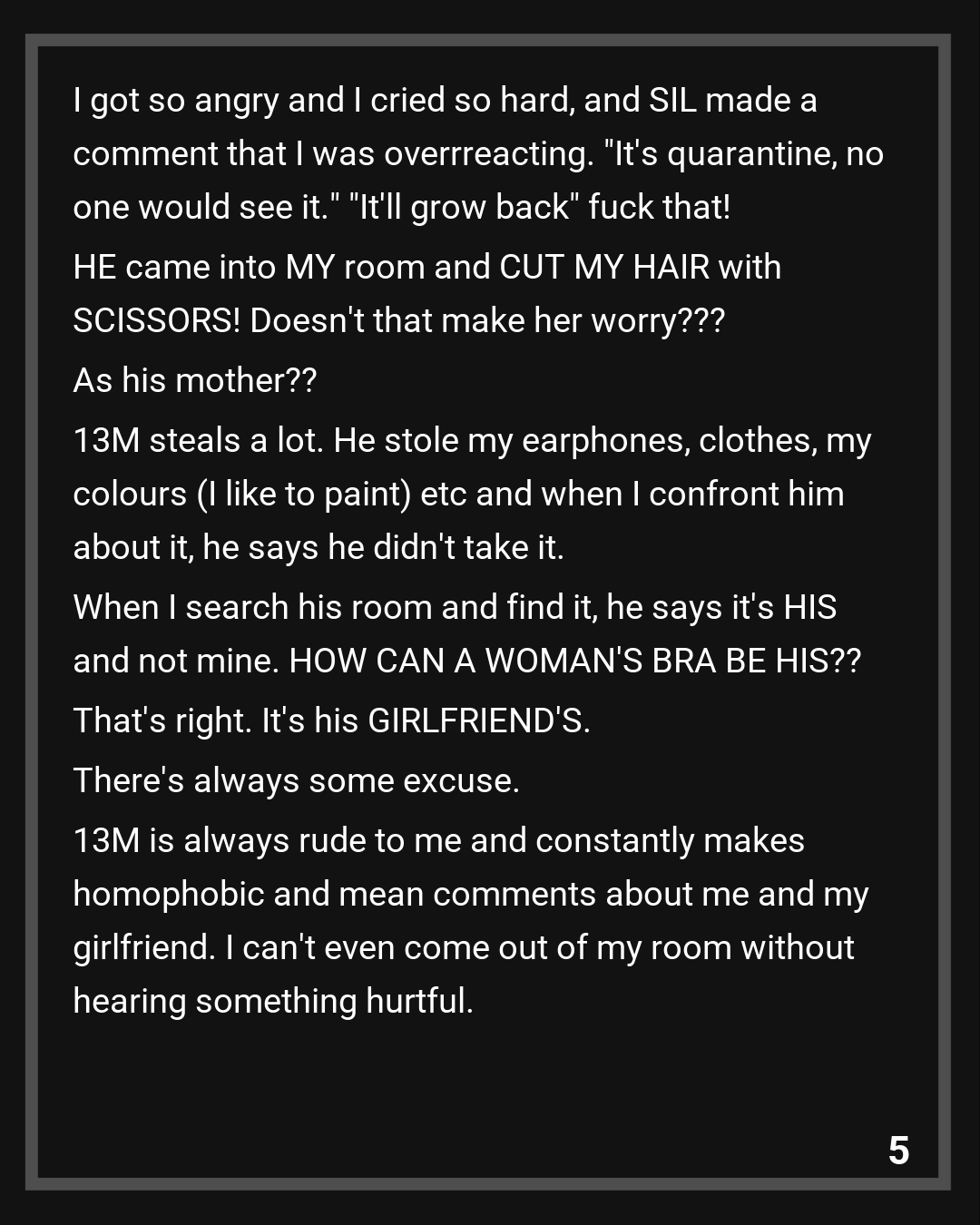
Inside that economy, the nephew operated with near-total impunity. He graduated from petty theft to bodily violation in a clear sequence: earphones, then clothing, then a bra, then scissors to her hair while she slept, then both inhalers during an active asthma attack. Each escalation tested whether anyone would intervene. No one did in a way that stuck. His mother reframed every act as theology. His father offered apologies that functioned as punctuation marks between incidents, not as corrections.
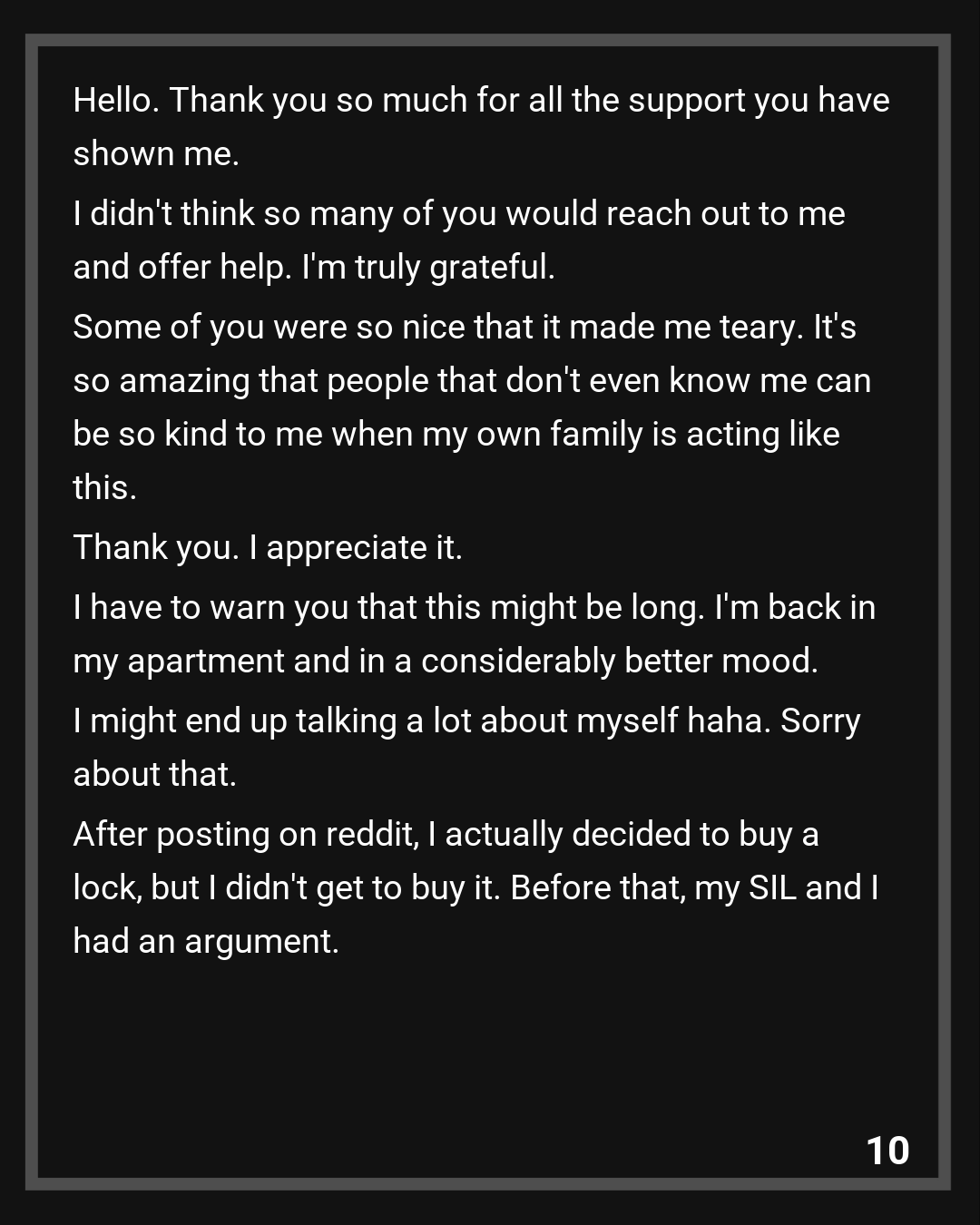
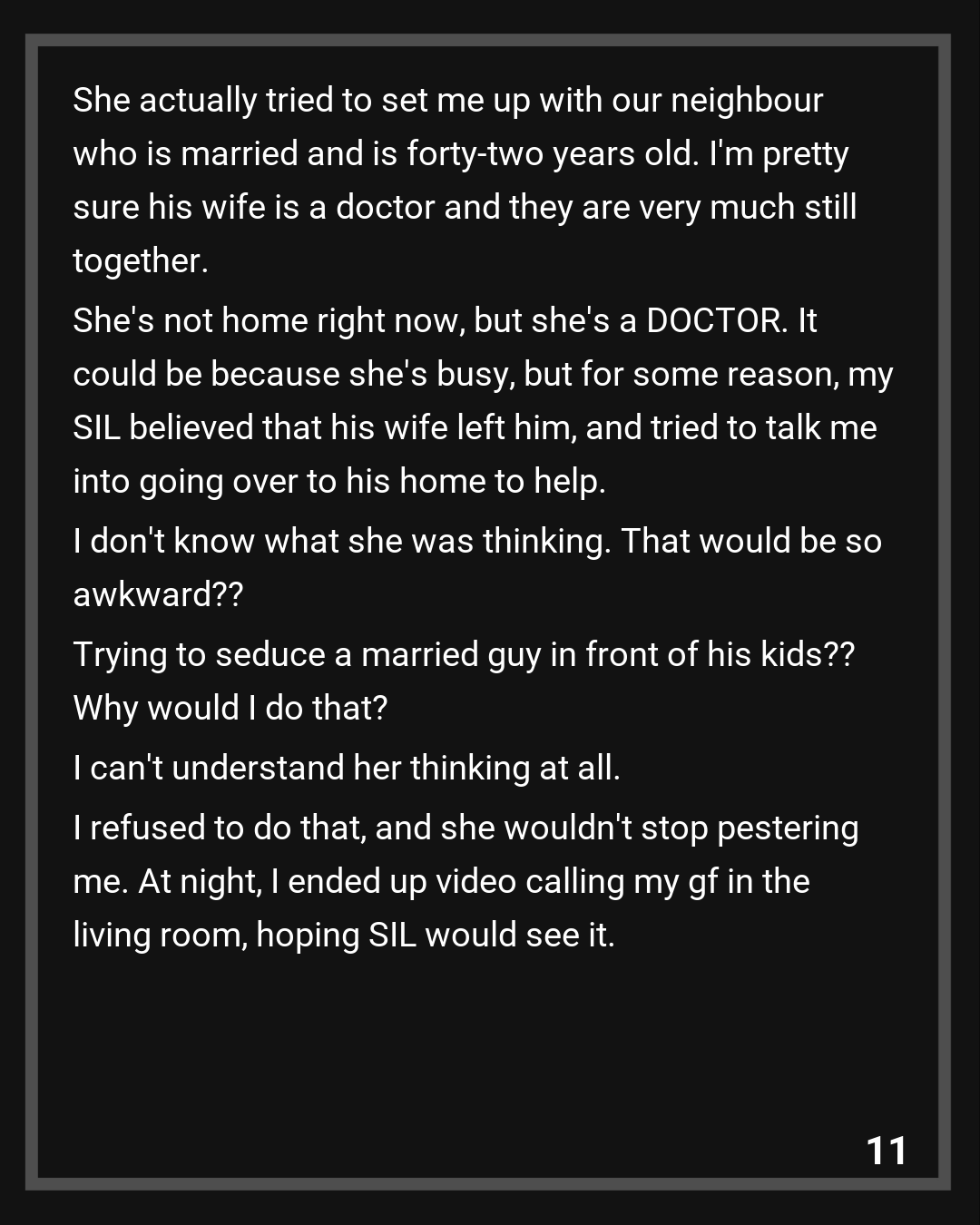
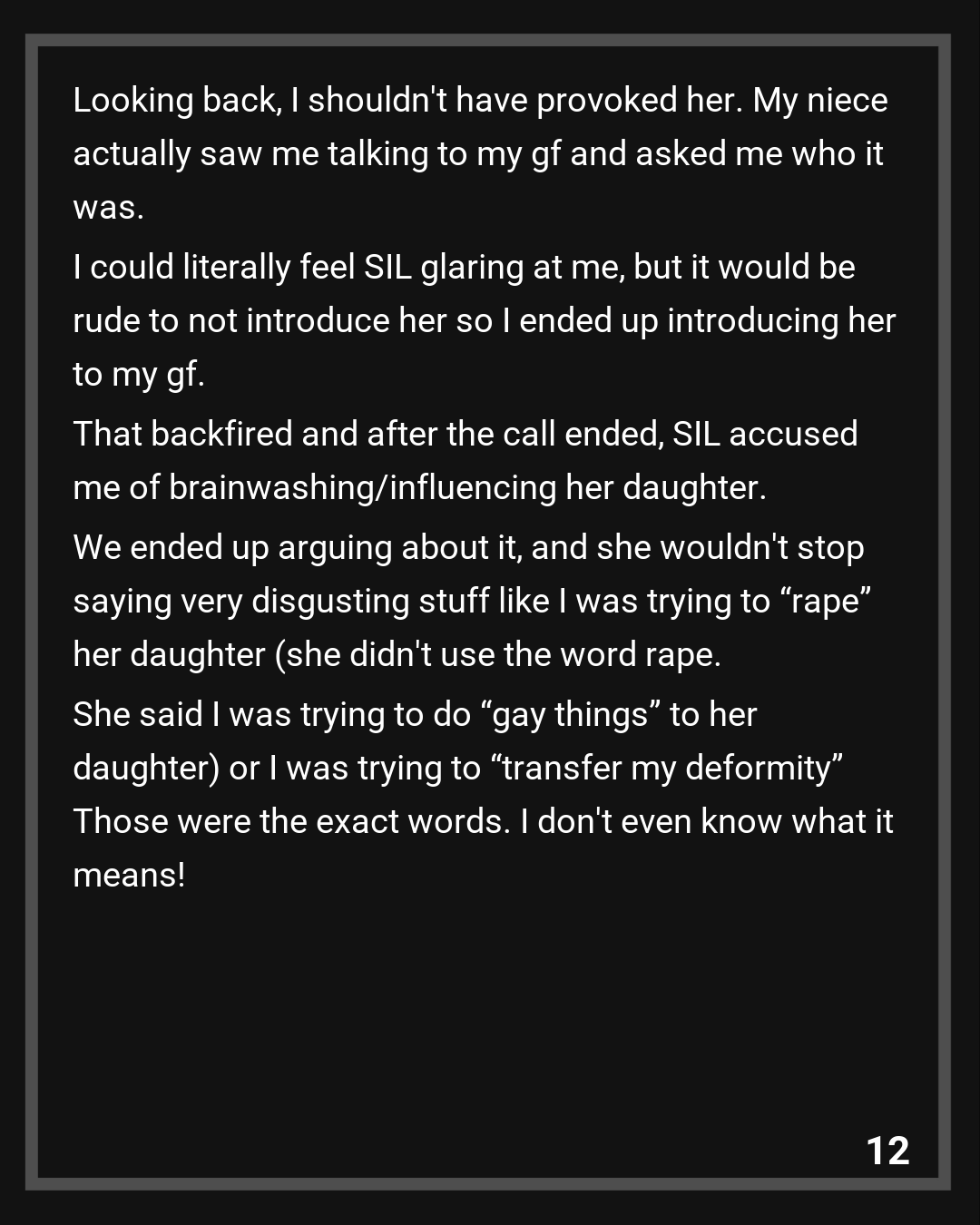
OOP’s countermoves reveal how few options the structure left her. She locked her inhalers in a box. The nephew threw the box out a window. She introduced her girlfriend over video call. SIL accused her of recruiting her own niece. Every defensive action generated a new accusation, which means the system punished response and rewarded silence.
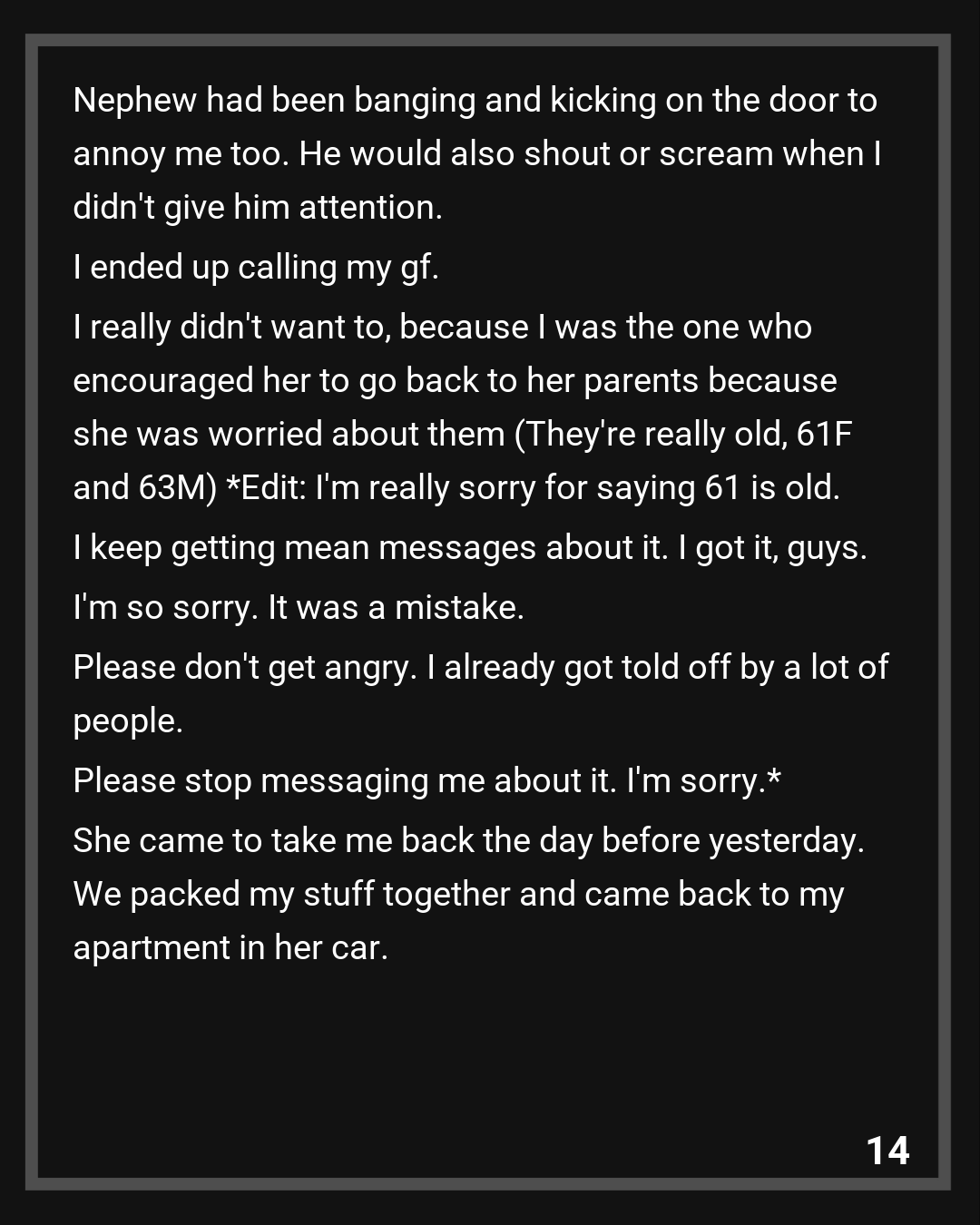
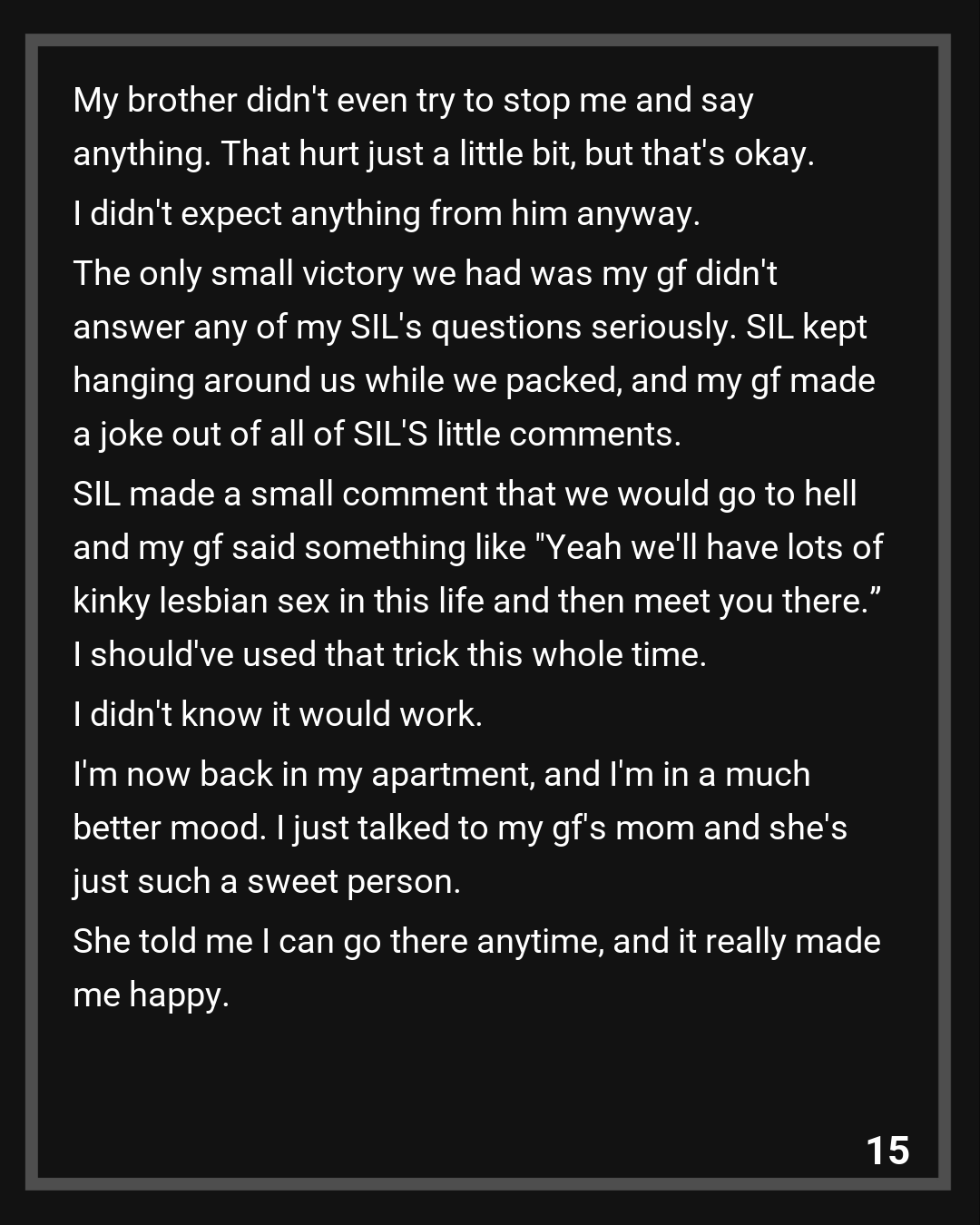
Her girlfriend’s arrival was the only intervention that worked, and it worked because it was an extraction, not a negotiation. Nobody in the household protested her departure. The brother said nothing. That silence confirmed what the whole quarantine had already demonstrated: OOP was never going to win a seat at that table. She could only leave it.


The Courier Who Thinks He’s the Author
A thirteen-year-old boy steals a bra and claims it belongs to his girlfriend. He cuts a sleeping woman’s hair with scissors. He hides both her asthma inhalers and watches her gasp. Taken alone, each act reads as sociopathy. Taken together, and in order, they read as a curriculum.
Every theft the nephew commits targets something intimate. Underwear. Art supplies. Medical equipment. He does not steal food or money. He steals items that belong to OOP’s body or her identity, which tracks precisely with what his mother considers offensive about her. SIL objects to OOP’s sexuality, her relationship, her physical presence in the home. The boy removes the objects attached to those things. He is not selecting targets at random. He is selecting the targets his mother’s commentary has already flagged.
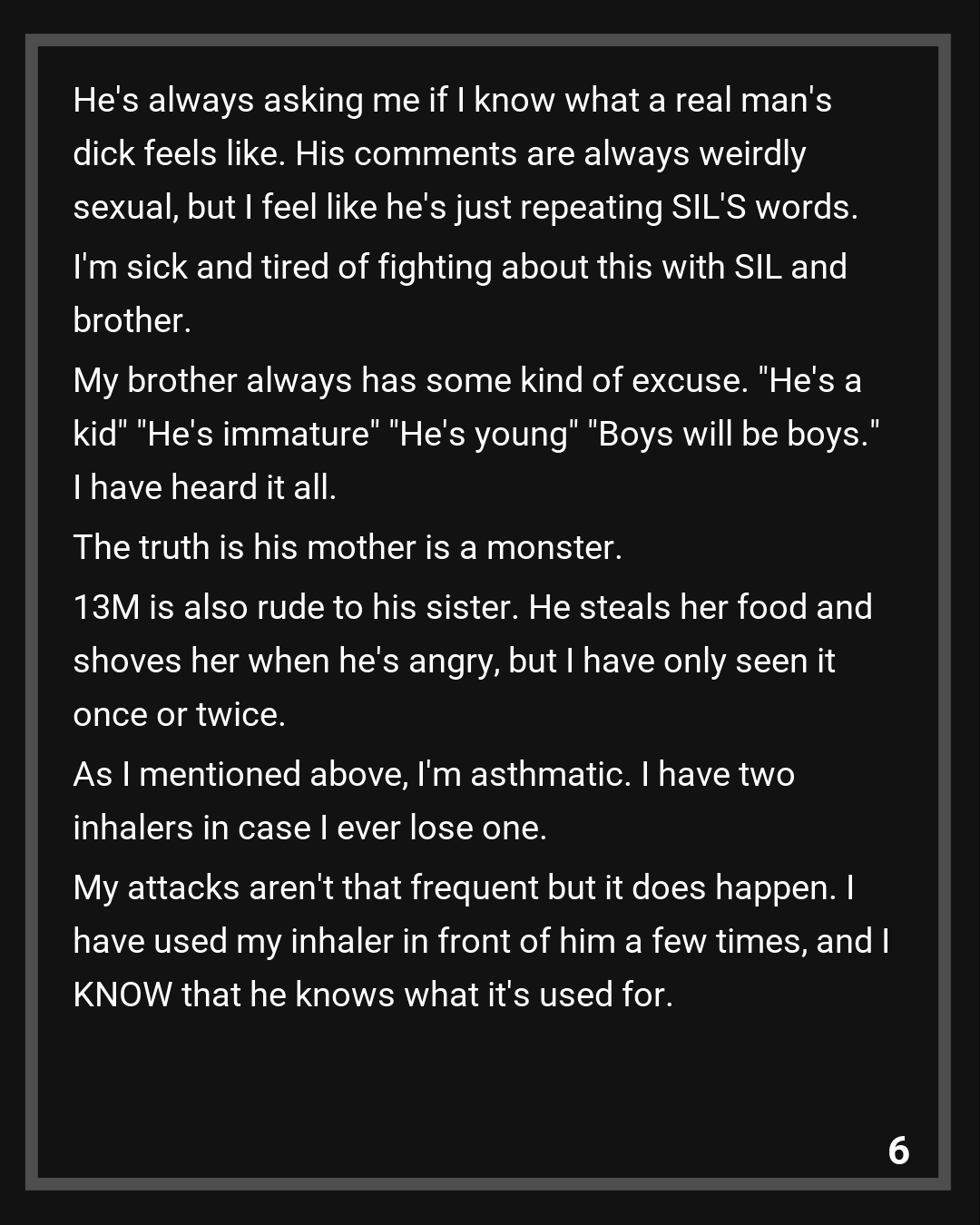
His language confirms the pattern. He asks OOP if she knows what a real man feels like. That sentence does not come from a thirteen-year-old’s imagination. It comes from an adult lexicon, filtered through a child who has learned that saying it out loud gets rewarded, or at minimum, gets tolerated. When OOP identifies the comments as “weirdly sexual,” she senses the borrowed quality without naming it. The words fit his mother’s mouth better than his.
When God Steals an Inhaler
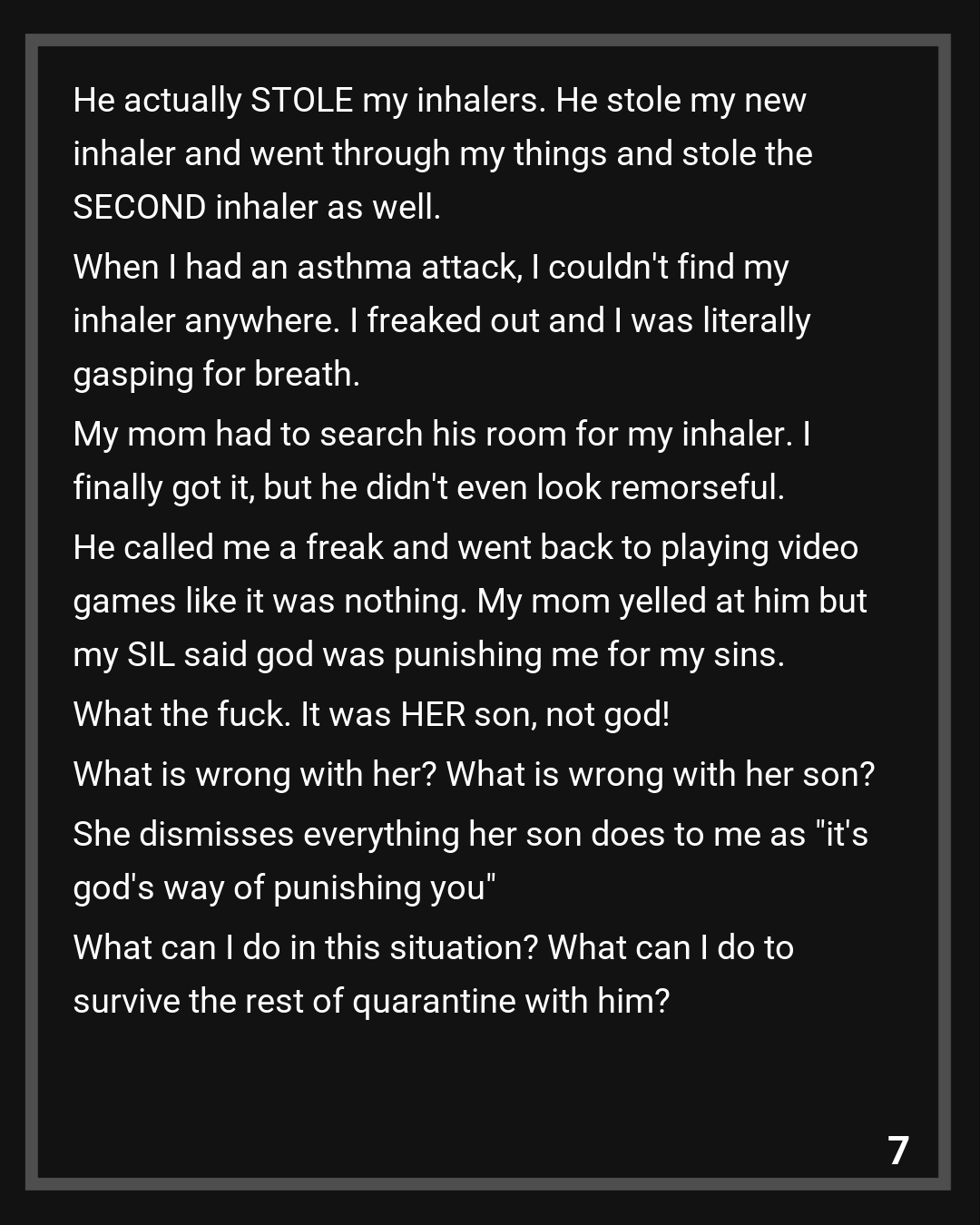
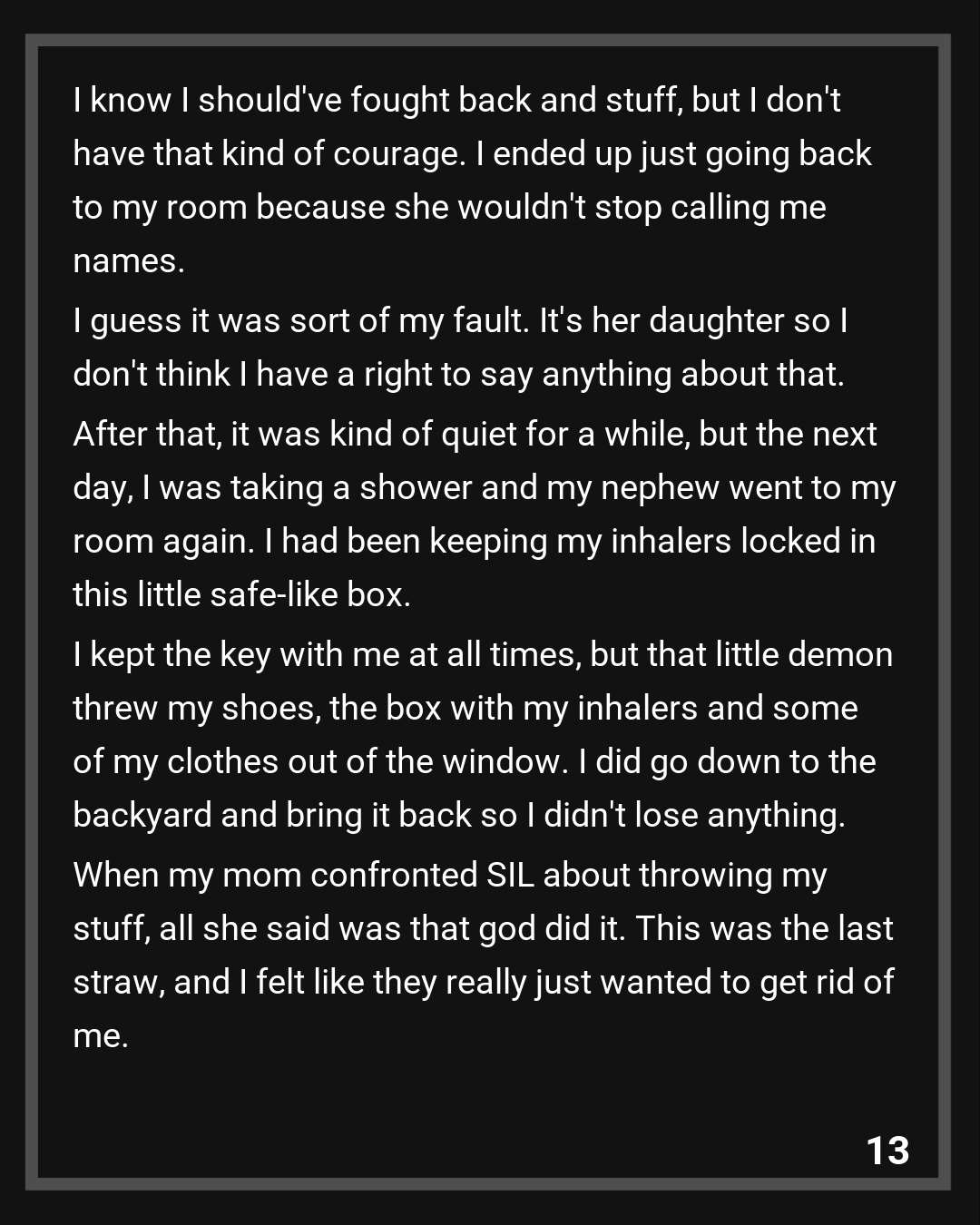
The asthma attack is where this Reddit homophobic family quarantine story drops its ambiguity. A boy hid both inhalers. His aunt could not breathe. His grandmother had to search his room to find the medication. And when it was over, SIL said god was punishing OOP for her sins.
That sentence did not arrive as comfort or deflection. It arrived as a claim of authorship. SIL took a medical emergency her son had manufactured and credited it to divine justice. She did not scold the boy, ground him, or acknowledge danger. She endorsed the outcome. In a household where a child watches his mother frame his cruelty as holy, the feedback loop closes completely. The boy learns he is not misbehaving. He is ministering.
OOP’s mother yelled at the nephew. He called OOP a freak and returned to his video game. That reaction makes more sense when you understand he had already received the only verdict that mattered to him. His mother had ruled the act righteous before his grandmother even finished shouting.
The Cheque That Bought the Silence
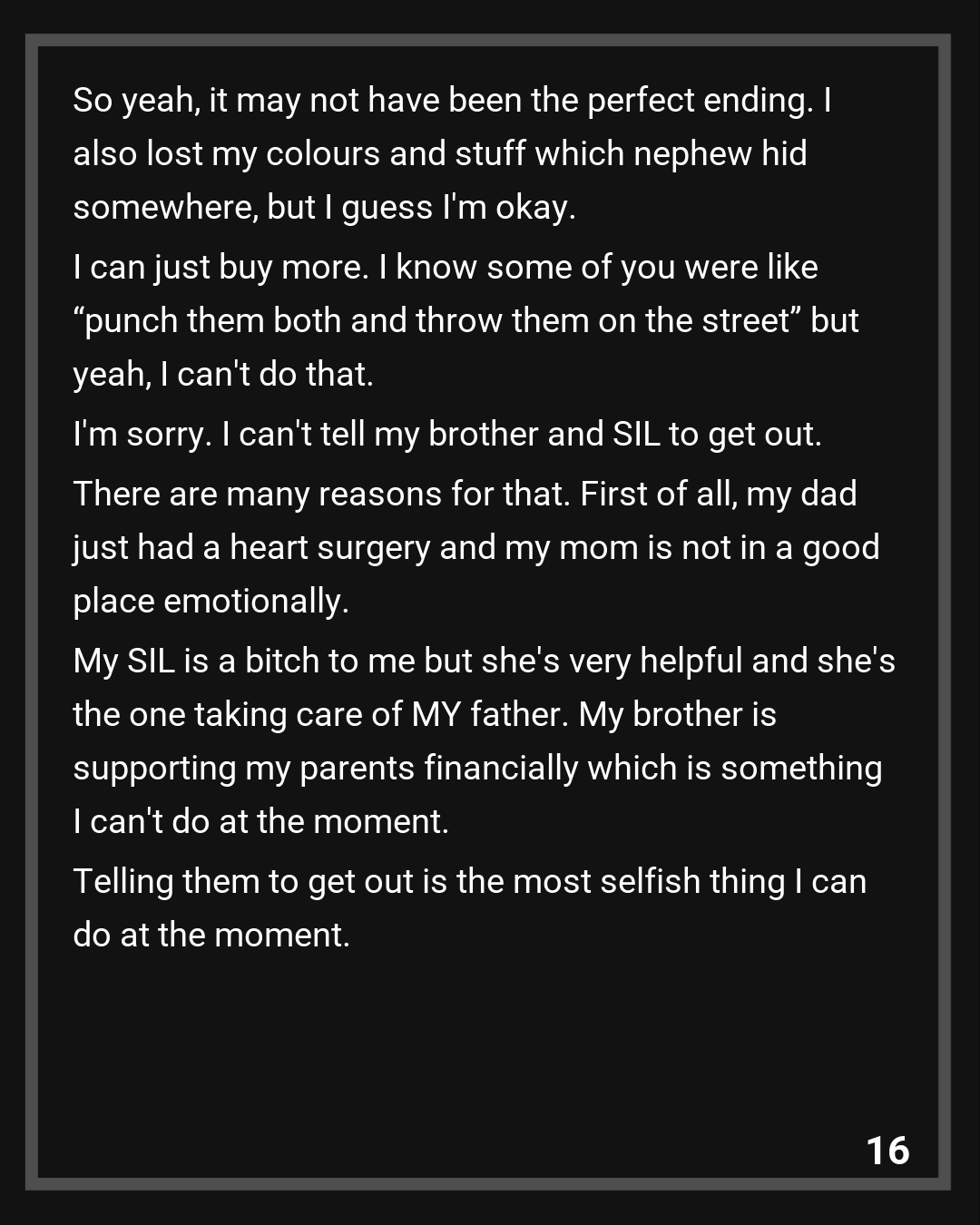
OOP lists her reasons for not demanding her brother’s family leave: her father’s surgery, her mother’s emotional state, SIL’s role as caregiver, her brother’s financial support. She calls the idea of evicting them “the most selfish thing I can do.” But the word she is looking for is not selfish. It is impossible. Her brother’s money had become the household’s architecture. Challenging his wife meant challenging the income stream her parents depended on while her father recovered from heart surgery.
This is the mechanism that made every other failure stick. The mother could scold the nephew, but she could not override SIL, because overriding SIL risked alienating the brother, and alienating the brother risked the finances. OOP could report each incident, but her complaints carried no structural weight. She contributed neither rent nor caregiving. In the household’s unspoken economy, she was a cost. The brother’s family was an investment.
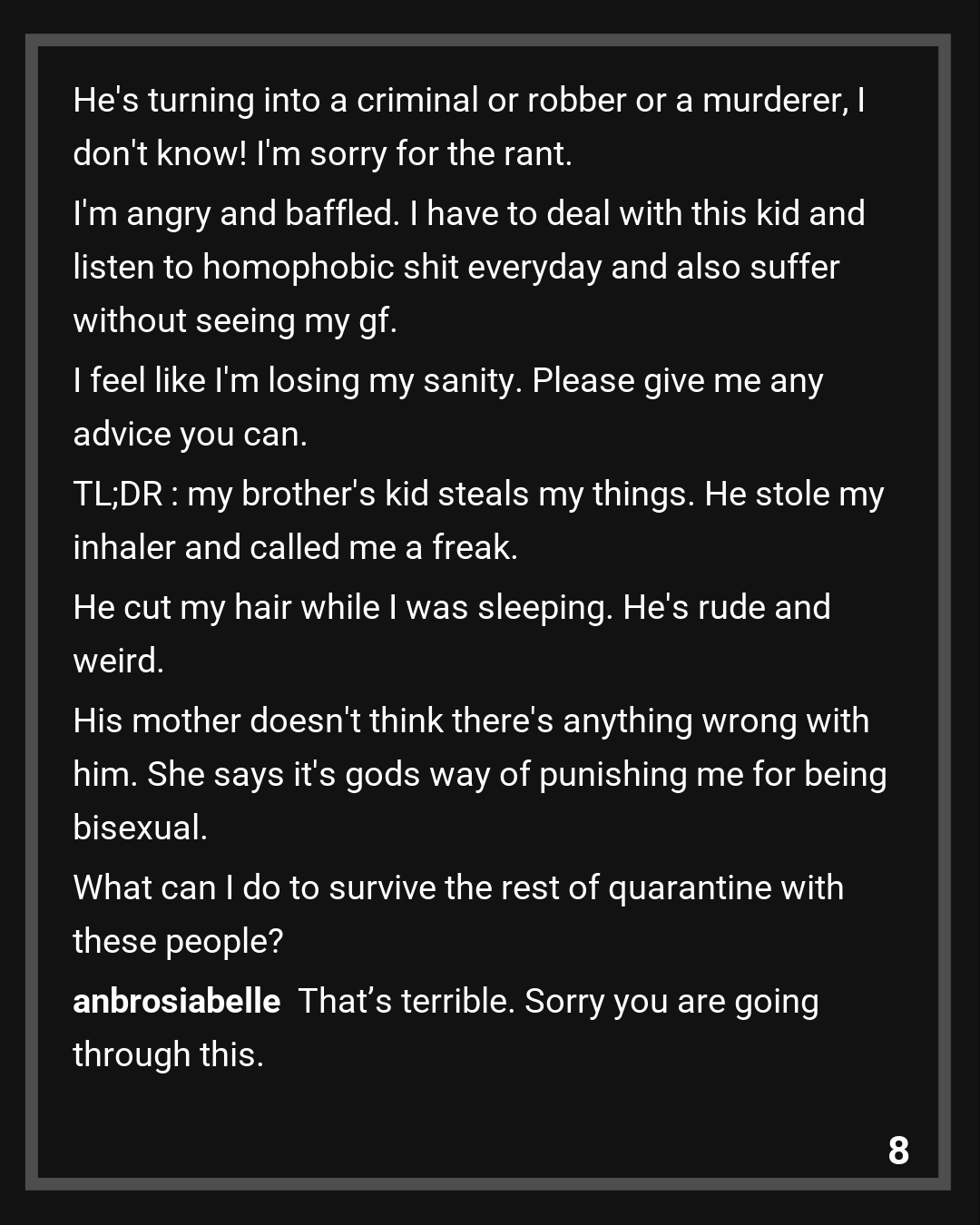
Her nephew is thirteen and has not yet had a single adult in his life model a different option. OOP calls him a future criminal or murderer. That accusation treats a child as the origin point of his own cruelty when every piece of evidence in points to a boy performing exactly the role his environment designed for him. Holding him accountable as though he invented this bigotry ignores that he lives in a home where bigotry is theology, theft is divine will, and his father’s silence is the most expensive sound in the house.
The girlfriend arrived with a car and packed OOP’s belongings. The brother watched and said nothing. His six-year-old daughter, the one SIL forbids from standing near her aunt, had already asked to meet OOP’s girlfriend on a video call.
What Reddit Said
The largest cluster focused not on the nephew but on the adults who built him. Readers identified SIL as the architect and the brother as the contractor who signed off on every blueprint by saying nothing. Comments pointing to the brother’s failure to parent, protect, or even speak carried thousands of upvotes. The anger here was structural, directed at a man who funded a household and then treated his own authority like decorative furniture. Commenters read his silence not as weakness but as alignment. The emotional register ran hot, sharpened by the recognition that financial leverage without moral participation is its own kind of violence.
A second cluster skipped the present tense entirely and projected the nephew forward into criminal adulthood. Readers competed to predict his future: prison, assault charges, a courtroom where SIL insists her son did nothing wrong. This group treated the story as a prologue to something worse. Their certainty was striking. Nobody hedged. The inhaler theft and the hair-cutting registered as rehearsals, not isolated incidents, and commenters assigned the boy a trajectory with the confidence of people who have watched similar patterns play out before. Fear drove this cluster more than anger.
A smaller but persistent thread worried about the six-year-old niece. Readers flagged the nephew’s physical aggression toward his sister and his sexualized language, then drew a line from OOP’s experience to the girl still living in that house. Several commenters noted that the nephew’s behaviour toward OOP followed a predatory escalation pattern, and that with OOP gone, his sister became the most vulnerable person in the household. This cluster ran on dread rather than outrage.
A fourth group turned its frustration on OOP herself, reading her repeated apologies and her reluctance to fight back as evidence of a passivity that enabled her own mistreatment. Other commenters pushed back, pointing out that OOP had no financial leverage and that her parents depended on the brother’s income. The tension between these positions revealed a fault line in how readers assign agency: some measured power by personality, others by economic reality.
The comment section processed this story almost entirely through prediction rather than reflection. Readers did not linger on what happened. They fast-forwarded to what the nephew would become, treating the post as evidence in a case that had not yet been filed. That impulse says less about the story than about the audience: a readership trained by pattern recognition to see a thirteen-year-old and calculate the adult he is already becoming.
This editorial is based on a story originally shared on Reddit’s r/BestofRedditorUpdates community.