Featured on @StorylineReddit: November 18, 2025
The Mother Who Had to Introduce Herself
Reddit nanny boundaries stop looking like a childcare dispute the moment a neighbor says, “I thought she was the mom.”
That line lands because it does two things at once. It turns the mother into a stranger in her own neighborhood, and it shows that this confusion did not come from one awkward encounter. A neighbor who chats easily with the child and speaks with confidence has been watching a pattern, not guessing from a single walk past the house.
Mary’s real failure was not social clumsiness. She had repeated chances to say two simple words, “I’m the nanny,” and she did not take them. Then she answered the child’s use of “mama” with a tidy explanation about her name starting with “Ma,” as if phonetics could erase the boundary she had been enjoying. That kind of reply does not calm a parent. It tells her she is being asked to swallow her own humiliation politely.
The husband’s complaint is practical and understandable. Childcare collapsed in one afternoon. Still, the mess came after the insult, not before it. Once Mary treated racial misrecognition like harmless flattery, trust was finished.
Reddit Nanny Boundaries on the Sidewalk
The firing looks abrupt only if the story begins and ends with logistics. A nanny lost her job, a doctor with brutal hours lost childcare, a husband came home to a crisis. That version is neat, and it leaves out the part that actually detonated the situation: Mary benefited from a white neighborhood’s willingness to assign motherhood to the white looking woman beside the child and babysitting status to the Asian mother.
The neighbor’s confusion matters because it had duration. People do not casually become familiar enough with a toddler to greet them warmly while also inventing a full backstory about who the mother is. Mary either actively fed that impression or treated it as a little social upgrade she did not want to surrender. Her later defensiveness makes that second possibility hard to dismiss. She did not respond with embarrassment or concern for the family. She responded like someone annoyed that a pleasant fiction had suddenly become expensive.
The update sharpens the outline. Once the mother’s trust broke, smaller choices stopped looking random: the lighter skinned dolls, the jokes about neighborhoods, the steady absence of Asian food for a biracial child whose mother had already prepared it. None of those details proves a grand scheme. Together, they sketch a caregiver who kept nudging the child toward one side of herself while minimizing the mother attached to the other.
That is why the severance offer feels humane, but the firing still feels justified. Mary was not just watching a child. She was helping shape the child’s sense of who counted.


A Neighbor Does Not Invent a Mother
The neighbor’s line changes the scale of the whole thing. Strangers make sloppy assumptions all the time, especially when a white passing child is with an Asian mother. But this neighbor greeted the child easily, spoke as someone familiar, and had apparently watched Mary with the toddler often enough to form a settled picture of the household. That matters. A single misunderstanding would have been embarrassing. A neighborhood level misunderstanding means Mary had been living inside that mistake for a while and found it comfortable enough not to break.
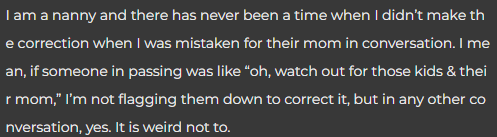
Her defense made it worse because it was so thin. She did not say she felt awkward, corrected people later, or worried she had crossed a line. She said she simply did not correct them. That answer treats motherhood like a costume she happened to look good in.
The Wrong Kind of Attachment
Caregivers get close to children. Good ones often do. A toddler using a softened name, clinging to a nanny, or preferring the person who is present during the day does not automatically signal danger. Yet the problem here was never simple attachment. The problem was attachment paired with social role theft.
A child saying “mama” might have been messy but survivable if Mary had shown clean boundaries everywhere else. Instead, the word landed next to a neighbor’s belief that Mary was the mother, and beside Mary’s own willingness to let that belief breathe. Those details start talking to each other. In , the mother’s anger does not read as possessiveness. It reads as someone realizing that a woman paid to care for her child had begun enjoying the public rewards of being mistaken for her.
Reddit Nanny Boundaries Break in Small Pieces First
The update is where the story stops being about one sidewalk conversation and becomes a pattern. Once trust cracked, the earlier details lined up fast: the lighter skinned dolls, the jokes about how much safer the neighborhood was than Mary’s, the way Asian food left in the fridge never made it to the child. None of that sounds explosive when isolated. Placed together, it starts to look like a caregiver editing a biracial child’s world toward the side that felt more normal, prettier, safer, easier.
That is why the racial wound here is sharper than the husband’s first response allows. The mother was not reacting to a child who happened to resemble the nanny. She was reacting to a series of choices that kept confirming the same social message: the white looking woman reads as mother without effort, while the actual mother has to introduce herself and then defend her place.
A Clean Moral Decision Can Still Be Bad Operations
Firing Mary was justified. Firing her on the spot without a transition plan was still reckless.
Both things can sit together without cancelling each other out. The husband was right about the practical damage. Two parents with long hours suddenly had no childcare, the grandmother had to step in, and a household already running on tight scheduling got shoved into chaos in a single afternoon. He also got handed the consequences of a decision he did not help make. That is not nothing. Moral clarity does not pack a daycare bag.
Still, the operational mess does not rescue Mary. Once a nanny becomes dismissive about being confused with the child’s mother, and then minimizes the mother’s distress by saying the child “looks so much like me,” the employment relationship is already ash. Keeping her another week for convenience would have asked the mother to subsidize her own humiliation.
The Flattery Was the Point
The ugliest possibility is not that Mary wanted to steal the child. The uglier and more believable possibility is smaller. She liked the status of being read as the young mother of a white looking toddler in a nice neighborhood. She liked being the woman who fit the picture. That interpretation matches the dismissive tone, the lack of contrition, and the way she only seemed to grasp the seriousness when her job was gone.
That is also why the story hits such a nerve. The mother is an emergency physician, the person literally keeping strangers alive on brutal hours, and she still gets socially demoted to nanny while the nanny gets silently promoted to mother. No speech about intention fixes that inversion. No tears about needing money undo the pleasure of having been mistaken for the rightful woman in the stroller scene.
Mary chose to stand there and explain that “mama” was just short for a name that started with Ma.
What Reddit Said
The biggest cluster did not treat Mary as merely rude or careless. Readers with mixed race families, adoptive histories, or direct experience of being mistaken for kidnappers read the story as a safety failure wrapped inside racism. That group was large and emotionally hot, because the neighbor’s familiarity with the child made the situation feel durable rather than accidental. Their recurring argument was simple: once a caregiver lets the wrong people believe she is the mother, she is not just stealing social credit, she is creating conditions where the real parent might not be believed in a crisis. The register was angry, with a grief note underneath from people dragging their own family memories into the thread.
Another strong cluster came from former nannies, babysitters, nurses, and relatives who have cared for children in public. They were less theatrical, but not more forgiving. Their logic hinged on context. A passing stranger at a shop is one thing. A neighbor, teacher, or familiar face is different because those people become part of the child’s social world. The recurring argument here was professional boundary maintenance: competent caregivers correct durable misunderstandings immediately, and they correct child language too. The register leaned analytical, with open disgust when Mary tried to hide behind the “mama” explanation.
A third cluster locked onto the update and stopped treating the sidewalk incident as isolated. Those commenters saw the lighter dolls, the safer neighborhood jokes, and the refusal to serve Asian food as a chain rather than a pile. Once that pattern snapped into view, Mary stopped looking naive and started looking like someone quietly whitening the child’s environment while minimizing the mother attached to the nonwhite side of that identity. This cluster was smaller than the safety chorus but intellectually sharper. Its recurring argument was that intent had become irrelevant because repeated small choices were already doing cultural work. The emotional register was angry, but also protective.
Then there was the speculative cluster, loud enough to matter, that treated Mary as a woman auditioning herself into the family’s social role. These readers were fixated on status, fantasy, and replacement. They saw the appeal of being read as the younger wife in the good neighborhood with the white passing child, and some pushed that suspicion all the way into melodrama about seduction or abduction. Not all of that was disciplined thinking, but it grew from a real instinct: people recoil hard when paid care starts to look like personal possession. The register was paranoid, mocking, and intensely hostile.
The husband produced the smallest but healthiest disagreement. Readers in this lane still backed the firing, yet they refused to pretend that blowing up childcare in one afternoon was nothing. Their recurring argument was that Mary had to go, but a household decision that large should not have been made unilaterally if there was any safe way to avoid it. The register was frustrated rather than furious.
The thread shows that readers process this kind of story through threat calibration before morality. They do not begin with etiquette, and they barely care about workplace niceties. Once race, parenthood, and public recognition collide, commenters start asking who would be believed if something went wrong, and that question drags every smaller detail into the light.
This editorial is based on a story originally shared on Reddit’s r/BestofRedditorUpdates community.