Featured on @StorylineReddit: November 12, 2025
The Key Was for Emergencies
This blind woman Reddit threats story doesn’t begin with the rape jokes. It begins with a copied key and a boyfriend who thought proximity meant safety.
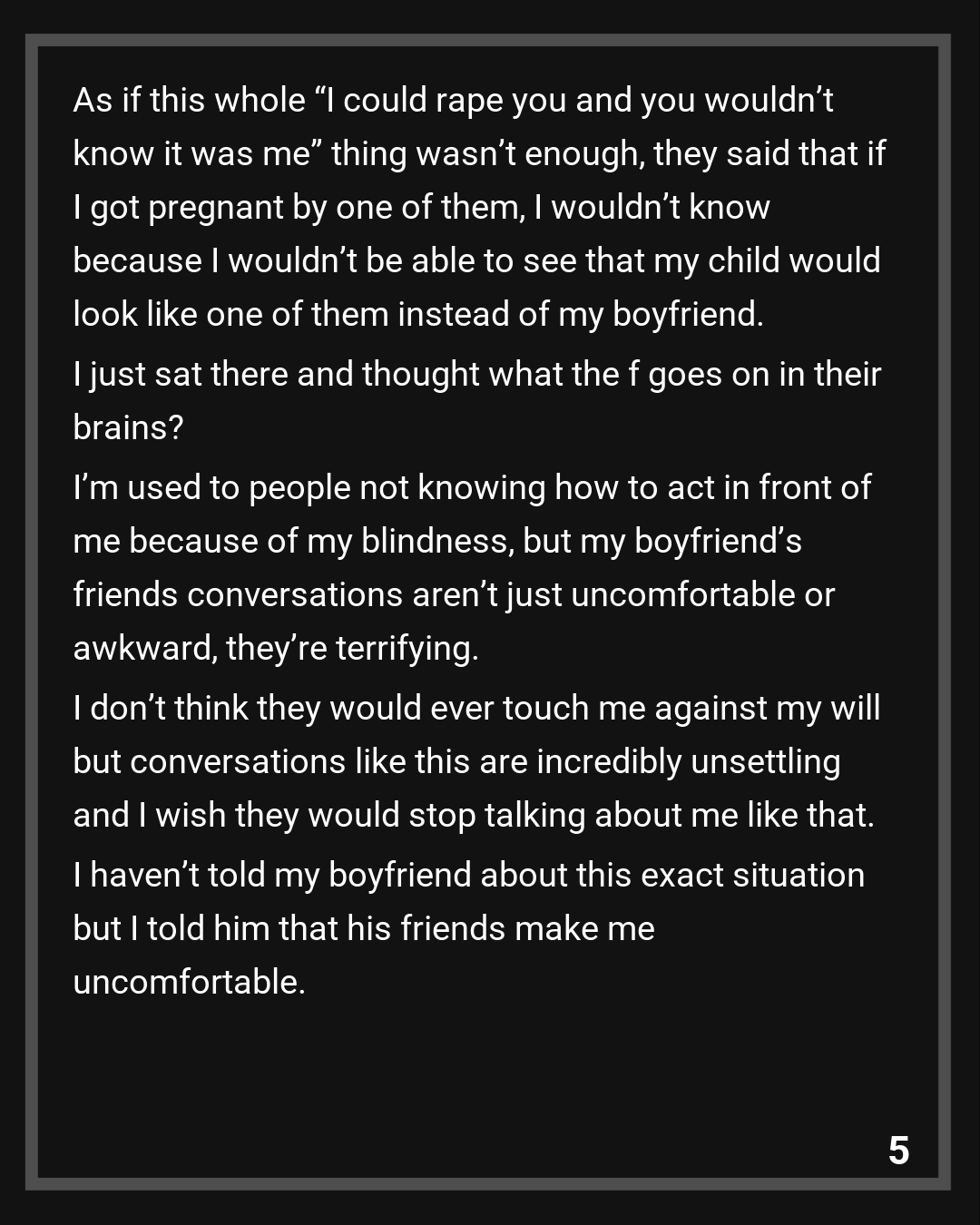
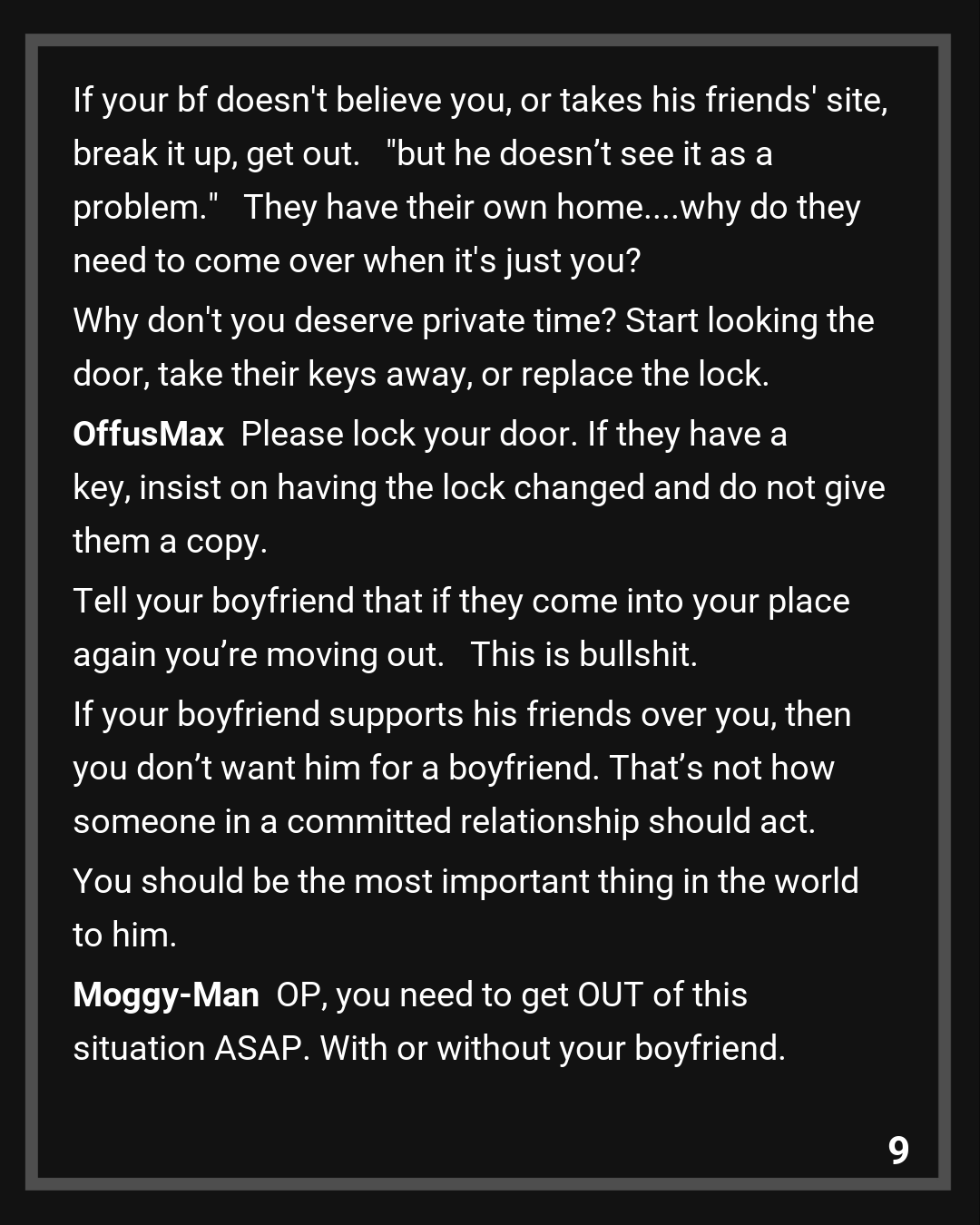
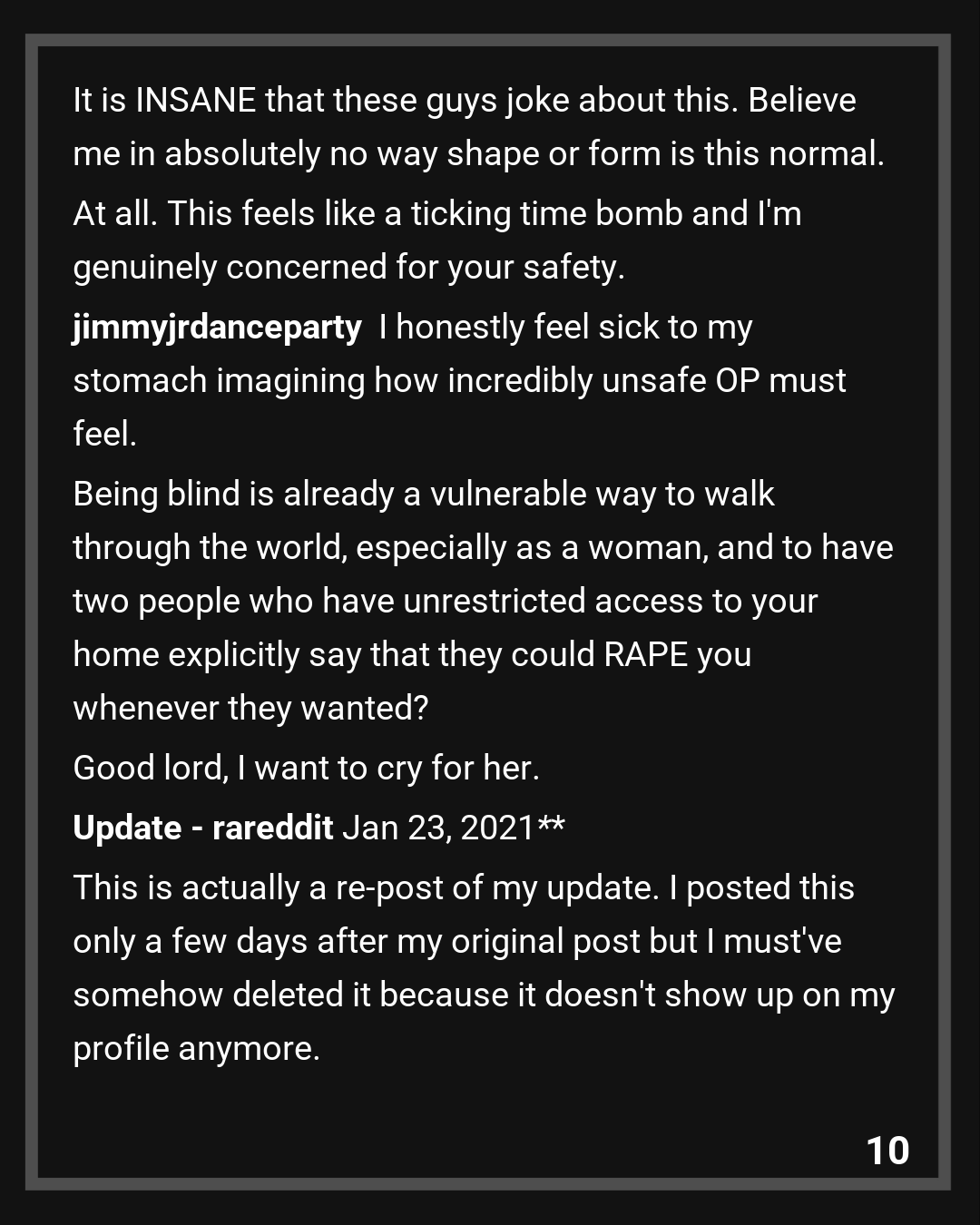
Two men, 32 and 35, held an apartment key designated for emergencies. They used it daily, letting themselves in when OOP’s boyfriend was at work to sit across from a 24-year-old blind woman and narrate in detail how they could rape her without detection. They explained the mechanics: walk in pretending to be the boyfriend, exploit her inability to see. Then came a follow-up scenario about pregnancy and resemblance, calibrated to her specific disability.
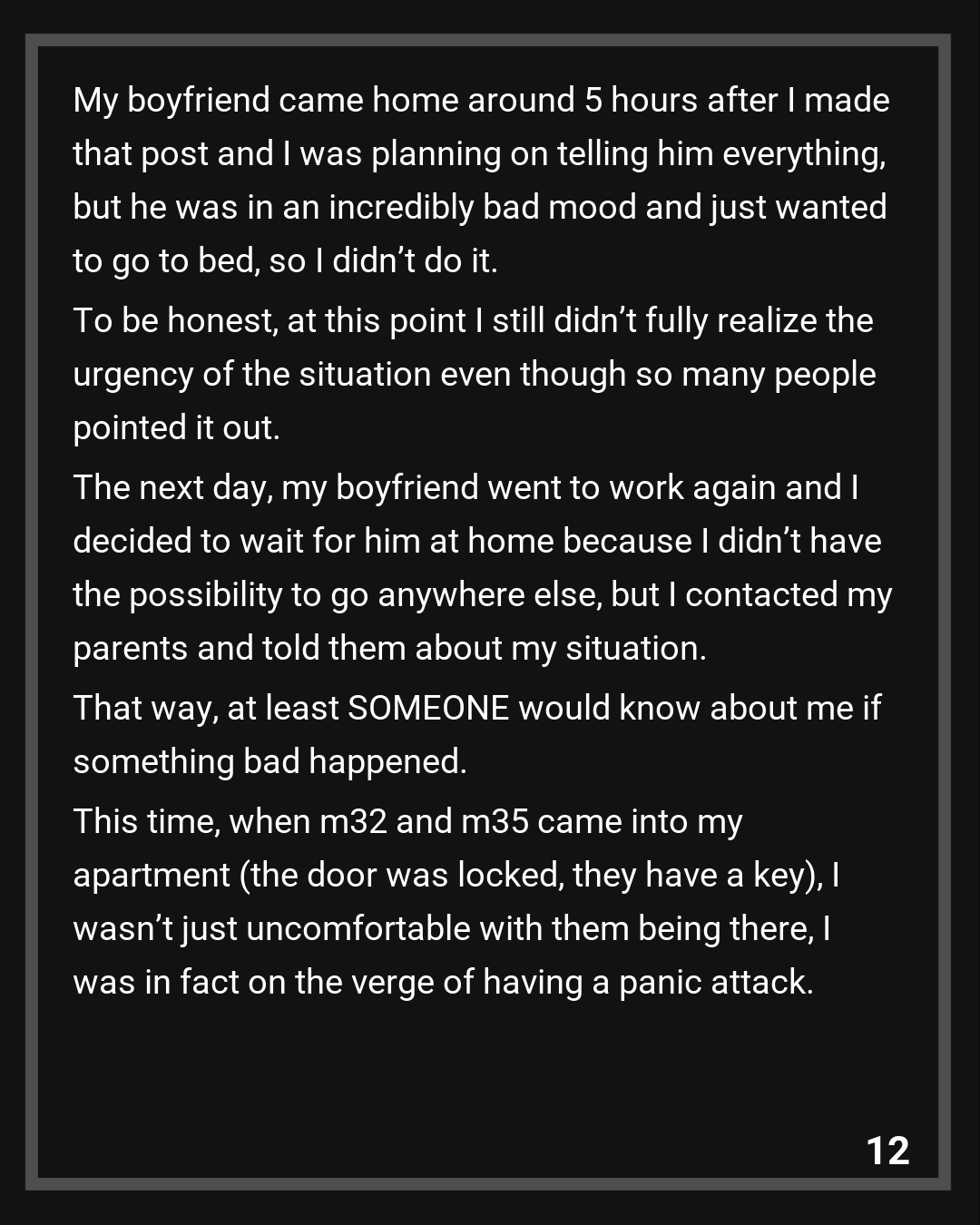
OOP told her boyfriend his friends made her uncomfortable. He registered the complaint and did nothing. The friends had been “helping” in his mind. His framework for their presence was generosity, not surveillance.
What collapsed here wasn’t one boundary. The lock meant nothing because the key existed. The boyfriend’s awareness meant nothing because his interpretation was wrong. OOP’s discomfort meant nothing because she measured it against the wrong threshold, waiting for something worse before calling it dangerous. Every layer of protection was technically present and functionally useless.
A Spare Key and the Blind Woman Reddit Threats
The escalation followed a logic that only looks obvious in hindsight. Two men normalized their presence in OOP’s apartment over months, establishing a pattern her boyfriend endorsed as neighborly support. Access became routine before it became dangerous. By the time the verbal threats arrived, the infrastructure was already built.
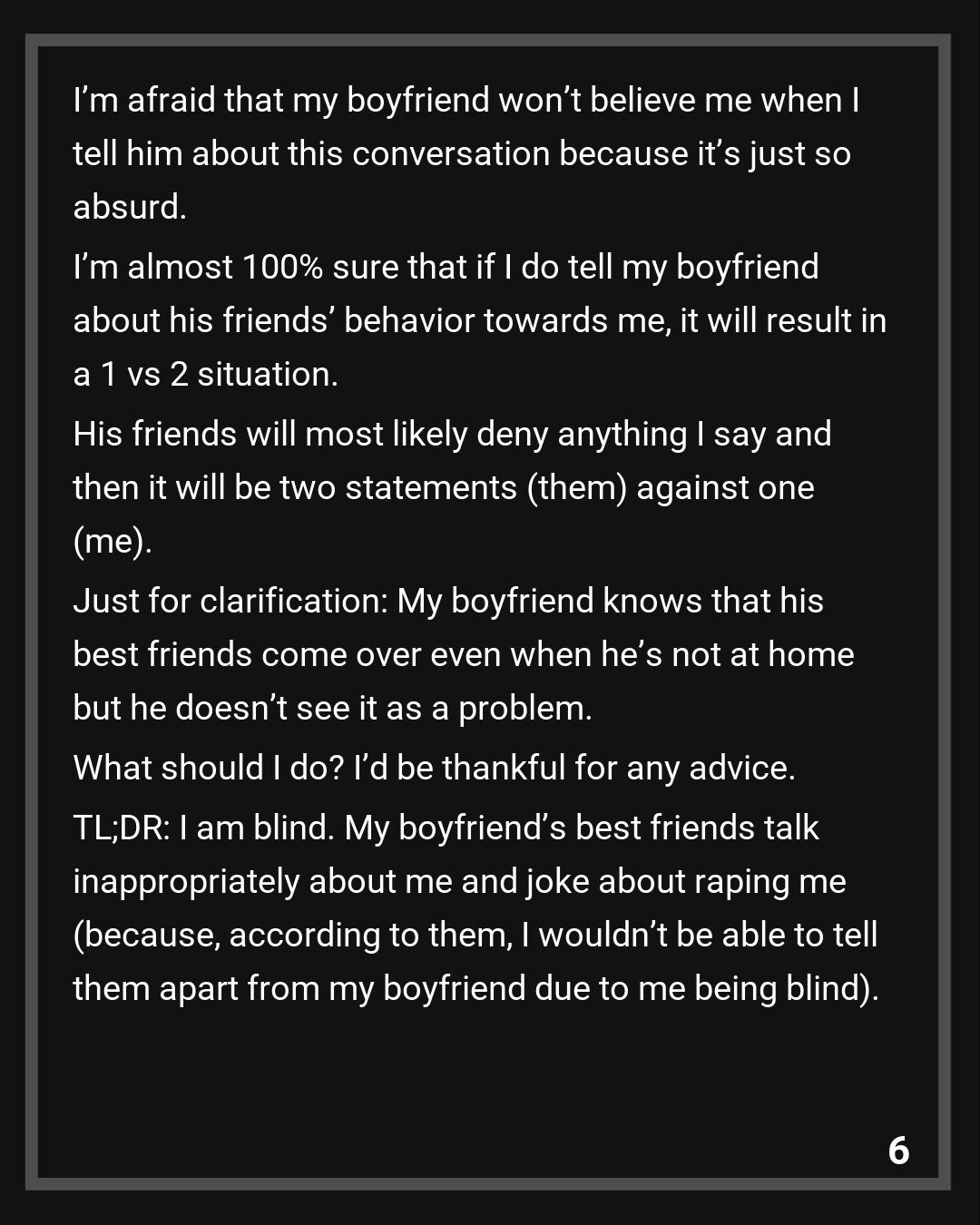
OOP’s hesitation to report the rape comments followed a calculation many disabled people recognize: the 2-against-1 math of credibility. Her prediction was accurate, that the boyfriend would face two denials against one account. Instead of detailing the threats, she told him his friends made her uncomfortable. Discomfort is easy to file away. Specifics would have forced a response, but specifics required her to gamble on being believed.
The day it broke open
Physical escalation confirmed what the verbal threats had already established. The friends did “disgusting things” to OOP while treating the encounter as comedy. She screamed. A stranger from the floor above did what no one in her immediate circle had managed: she intervened without requiring an explanation first.
Her boyfriend’s fury, once he heard the full account, was immediate and physical. He confronted the friends, then packed their bags. Within hours they were at her parents’ house. The speed of his response measures something uncomfortable. He could act decisively when he finally understood the danger. Every month before that, he chose not to understand.
The German proverb OOP quotes from her father lands differently in context. “Vorsicht ist besser als Nachsicht” is usually advice about caution. Here it reads as an epitaph for a period when caution was treated as optional by everyone except the person who needed it most.


The Lock That Was Never Locked
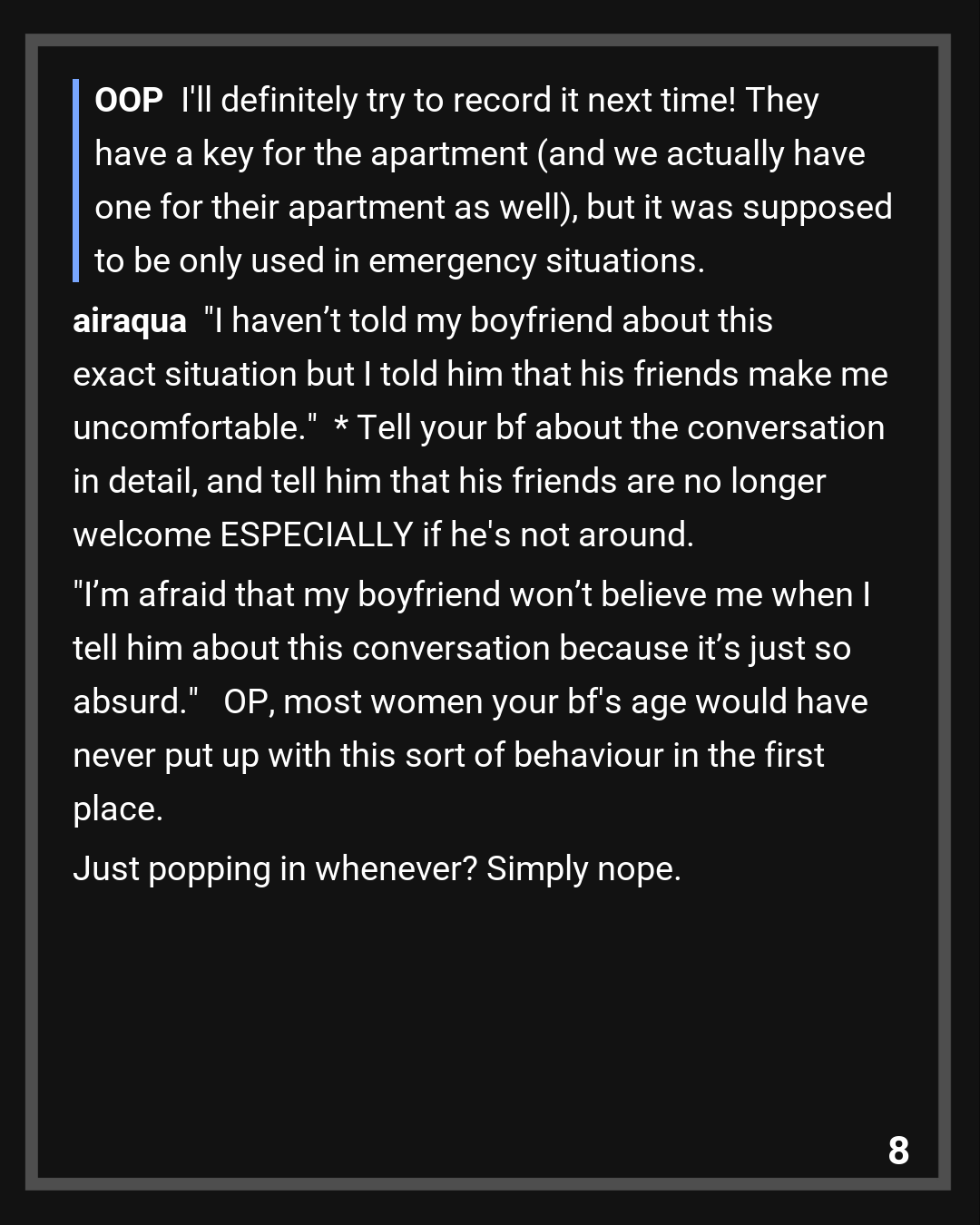
A key copied for emergencies. A door that opened without knocking. Two men who entered a blind woman’s apartment whenever they felt like it, sometimes before she could identify who had walked in. The entire threat structure of this story was architectural before it was verbal. Every piece of safety infrastructure existed on paper: a lock on the door, a boyfriend who knew his friends visited, a key designated for crisis use only. None of it functioned as intended.
OOP’s boyfriend endorsed the arrangement. He believed his friends were checking in on her, providing support while he worked. His framework was assistance. The friends’ framework was access. These two interpretations occupied the same apartment, the same key, the same unlocked door, and nobody reconciled them until the distance between help and harm had already collapsed.
When the door is the problem
The key was supposed to be for emergencies. Instead it eliminated the one barrier between OOP and two men she had no reason to trust. Changing the lock would have cost under fifty euros. Nobody changed it.
Rehearsal Dressed as Comedy
The friends did not stumble into their comments about rape. They constructed a scenario calibrated to OOP’s specific disability. They explained how they could enter pretending to be the boyfriend. They described how a resulting pregnancy would go undetected because she could not see the child’s resemblance. Each detail required forethought. Each detail mapped her blindness onto a sequence of exploitation.
Calling this a joke requires ignoring its precision. Jokes exaggerate. These comments inventoried. The friends catalogued her vulnerabilities to her face, then watched her reaction. When people narrate a step-by-step plan for committing a crime against someone sitting in front of them, the word for that is not humor. The word is rehearsal. You can read and measure the specificity yourself.
This blind woman Reddit threats case sits in a category that disability advocates have named for decades: the weaponization of accommodation. Systems built to support disabled people create predictable patterns. Predictable patterns create exploitable access points. The friends did not need to break in. The support system held the door open for them.
The Silence Before the Scream
OOP told her boyfriend his friends made her uncomfortable. She chose that word carefully. Not threatening. Not terrifying. Uncomfortable. The downgrade was strategic: she was calculating the odds of being believed, and “uncomfortable” felt survivable if it was dismissed.
Her hesitation followed a math problem familiar to anyone who has reported misconduct from a position of disadvantage. Two men would deny everything. She would stand alone against their version. Her boyfriend had already shown that he could hear her discomfort and do nothing with it. Escalating the language meant risking the relationship on a bet she was not sure she would win.
A father’s proverb, arriving late
She quotes her father afterward: “Vorsicht ist besser als Nachsicht.” Better safe than sorry. She frames it as a lesson learned. But the proverb’s target is wrong. OOP was not the one who failed to be cautious. She told her boyfriend. He registered it and chose his friends’ version of reality. Her caution was not absent. It was overruled by someone else’s comfort.
The day the friends escalated to physical contact, OOP screamed. A stranger from upstairs intervened. During two hours of sobbing in that woman’s apartment, OOP was being comforted by someone who had known her for minutes. Every closer relationship had failed before the stranger arrived.
An Elderly Woman and an Empty Excuse
The boyfriend’s rage, once he finally heard the full account, was explosive. He confronted the friends physically. He packed their bags within hours. He drove them to her parents’ house. The speed of his response proved something he probably did not intend to prove: he was capable of decisive protection the entire time. He simply had not treated the situation as requiring it.
His earlier inaction was not malice. It was a failure of imagination common among people whose bodies are not treated as access points. OOP said his friends made her uncomfortable. He heard an interpersonal friction complaint. He did not hear a safety report. The gap between those two interpretations is where the blind woman Reddit threats escalated from verbal to physical without anyone intervening.
Framing his eventual fury as redemption requires ignoring the months that preceded it. A man who packs bags in an hour could have changed a lock in an afternoon. He could have revoked the key after OOP’s first complaint. He could have asked a single follow-up question. He did none of these things, and his anger afterward, however justified, does not subtract from the time he spent not asking.
The elderly neighbor asked no questions. She heard screaming, opened her door, and took OOP in. Two hours of comfort from a woman whose name we never learn, in an apartment OOP had likely never entered before that afternoon.
How Readers Mapped the Danger
The largest cluster, anchored by a 9.7K-upvote comment, organized itself around relief. Readers expected the boyfriend to dismiss OOP or side with his friends because that is the pattern BORU has trained them to anticipate. Several commenters admitted they braced for the boyfriend to be complicit. The relief was not celebration. It was the exhale of people who had already written the worse version in their heads and were grateful to be wrong. Their emotional register ran warm, but the warmth had a nervous edge: gratitude measured against how close the outcome came to something irreversible.
A second cluster rejected the word “jokes” entirely. These readers identified the friends’ behavior as boundary-testing, rehearsal, or outright threat. One commenter described a male acquaintance who casually told her he could “neutralize the dog” if he wanted to hurt her. Another recounted how a partner’s rape “jokes” preceded actual assault discovered years later. This group processed the story through pattern recognition sharpened by personal experience. Their certainty was not abstract. They had watched the same script play out before and knew what follows the punchline.
The third cluster turned inward, examining why OOP waited. Commenters named the socialized doubt women carry when deciding whether to report: the fear of not being believed, the instinct to minimize, the calculation that two voices outweigh one. One reader cited “The Gift of Fear” and its argument that women override survival instincts to avoid seeming impolite. This cluster read OOP’s hesitation not as a personal failing but as a system-level outcome. Their frustration pointed outward, toward a culture that teaches women to second-guess danger signals while the danger itself escalates unchecked.
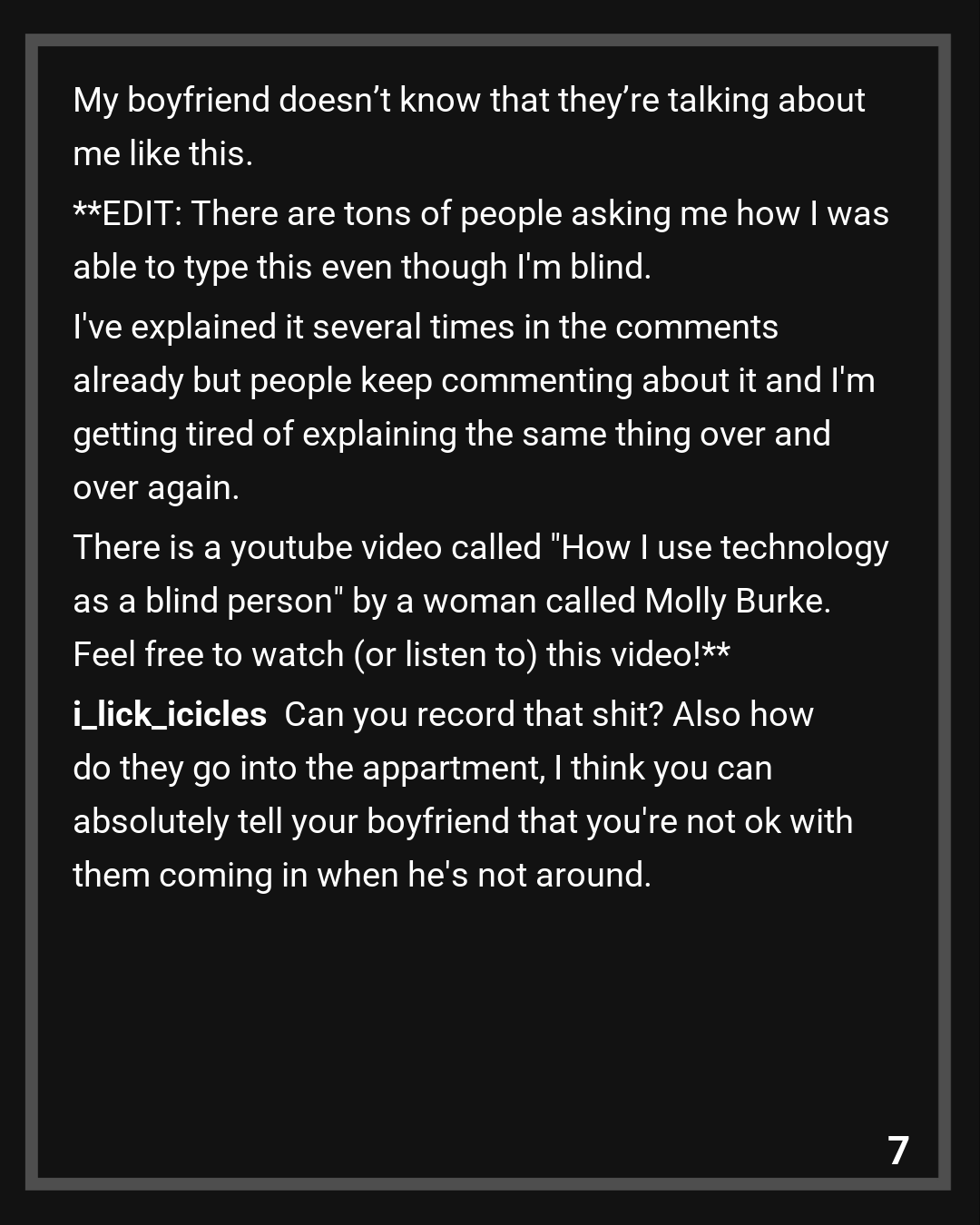
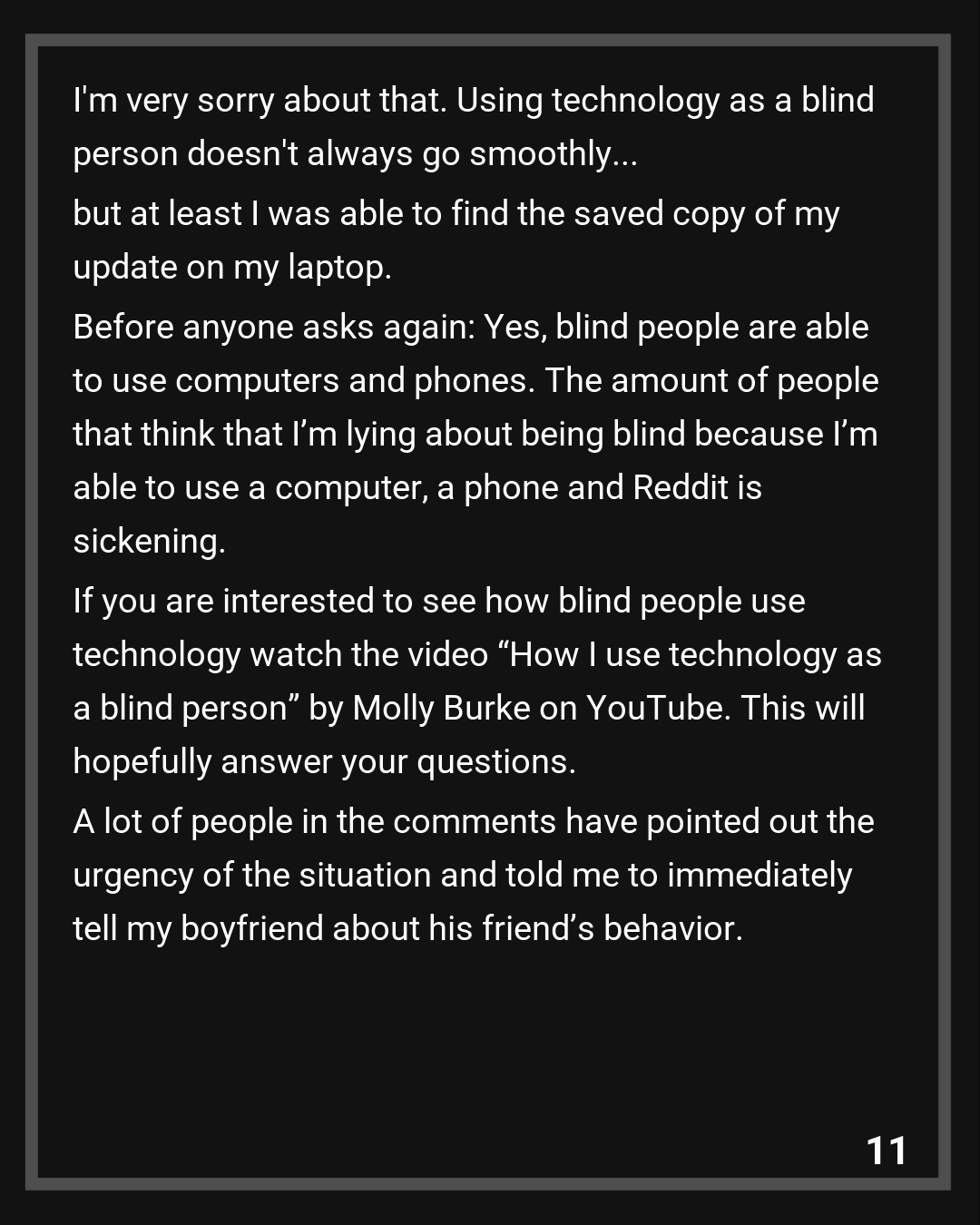
A fourth, smaller cluster fixated on the ableism embedded in the Reddit response itself. Blind commenters noted the irony: a woman describes being terrorized, and a significant portion of readers demand she prove her blindness is real. One blind user said the pattern of having to justify technology use before anyone will engage with the actual content was familiar and exhausting. The story about predatory men became, for a visible subset of readers, a story about whether a blind woman could type.
The comment section splits along a fault line that has nothing to do with the friends or the boyfriend. Readers who have experienced predatory escalation recognized the mechanics instantly and responded with specificity. Readers who haven’t defaulted to narrative relief, measuring the story by its ending rather than its structure. The survivors in the thread were not reading for resolution. They were reading for confirmation that other people could finally see what they had always known was there.
This editorial is based on a story originally shared on Reddit’s r/BestofRedditorUpdates community.