Featured on @StorylineReddit: November 17, 2025
A Public Proposal Is Not a Question
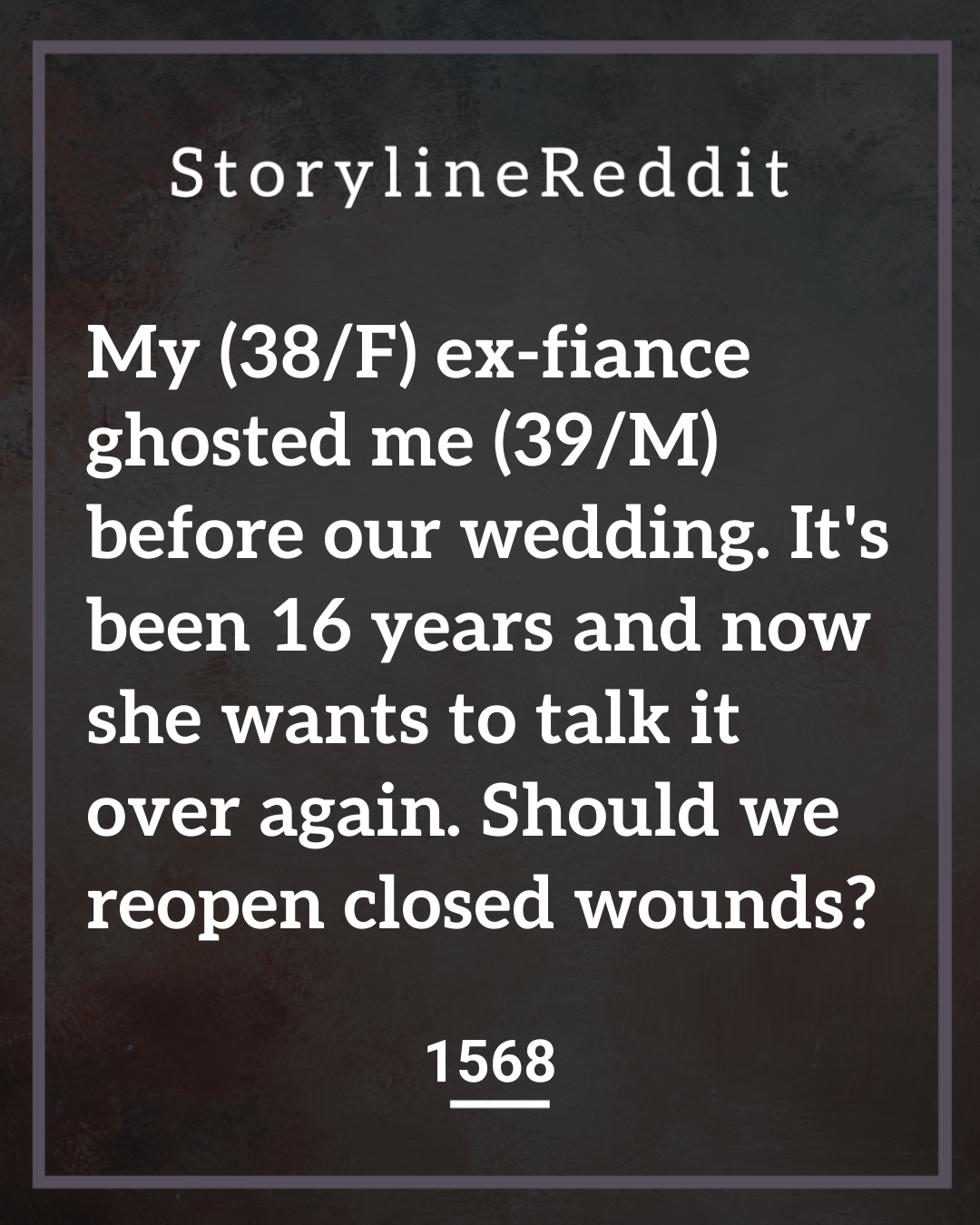
Most people read this Reddit ghosted wedding closure story as a jilted groom finally getting answers, but the answers he got were about himself. OOP arrives on r/relationship_advice performing the role of the abandoned man. Sixteen years of rehearsal have polished that identity smooth. He describes a fiancée who vanished without explanation, a wedding that collapsed, feelings that never faded. Every sentence in the original post positions him at the center of an injustice done to him.
Then a café conversation dismantles the entire frame. His fiancée did not leave because she was unstable or cruel. She left because a public proposal had removed her last opportunity to say no, and years of having her voice overwritten had taught her that vanishing was the only decision nobody could block. OOP recognizes this in the update. He calls what he did abuse. The word lands in his own comments like a confession nobody expected from the defendant.
The closure he spent sixteen years wanting arrived. It just indicted him on the way in.
Closure as Indictment
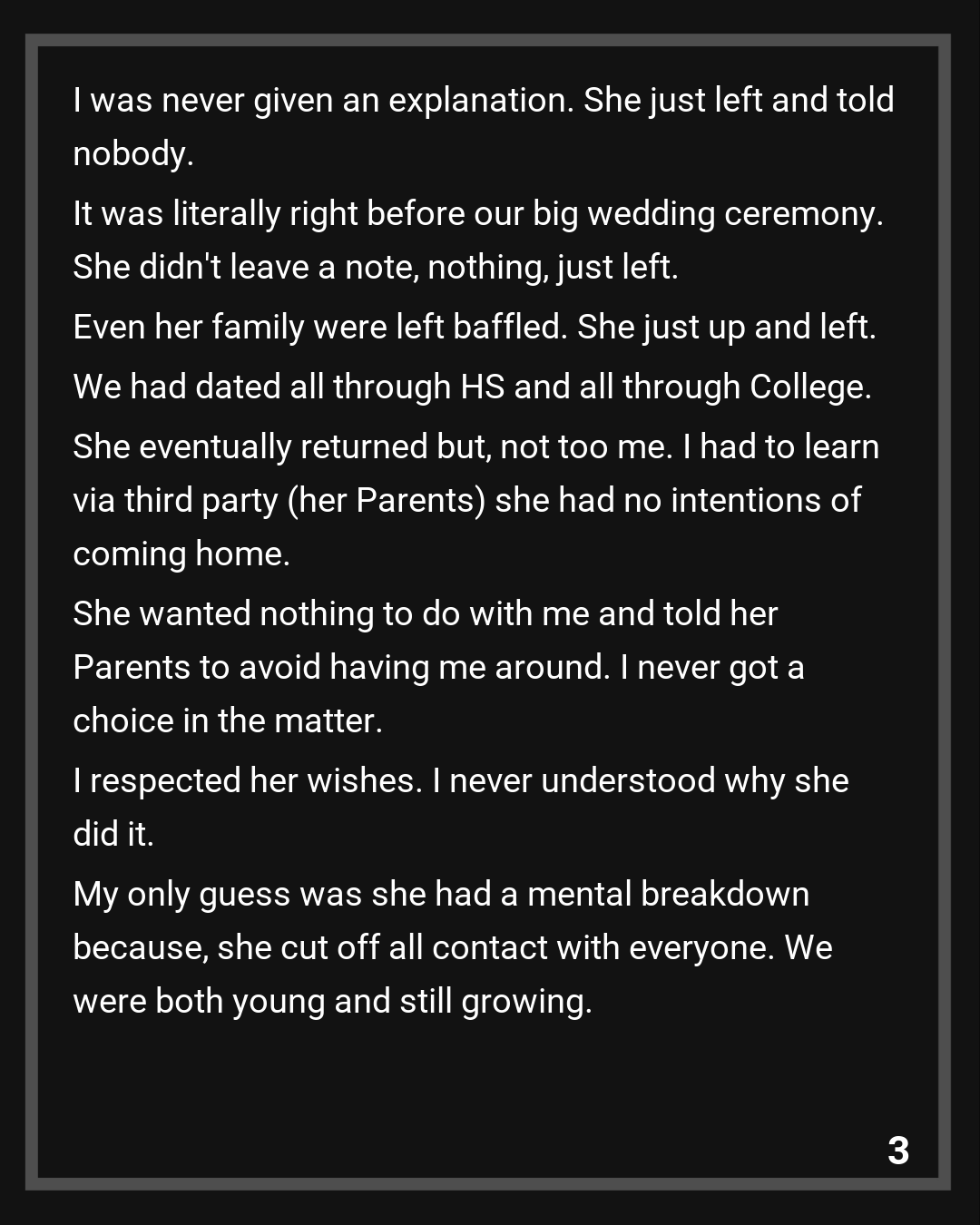
The architecture of this post operates on a reversal so complete it restructures every detail retroactively. OOP’s original submission reads like a victim statement. A woman vanished before a wedding. She left no note. No explanation followed, and no contact came for over a decade. The framing invites exactly one reading: she did something inexplicable to him.
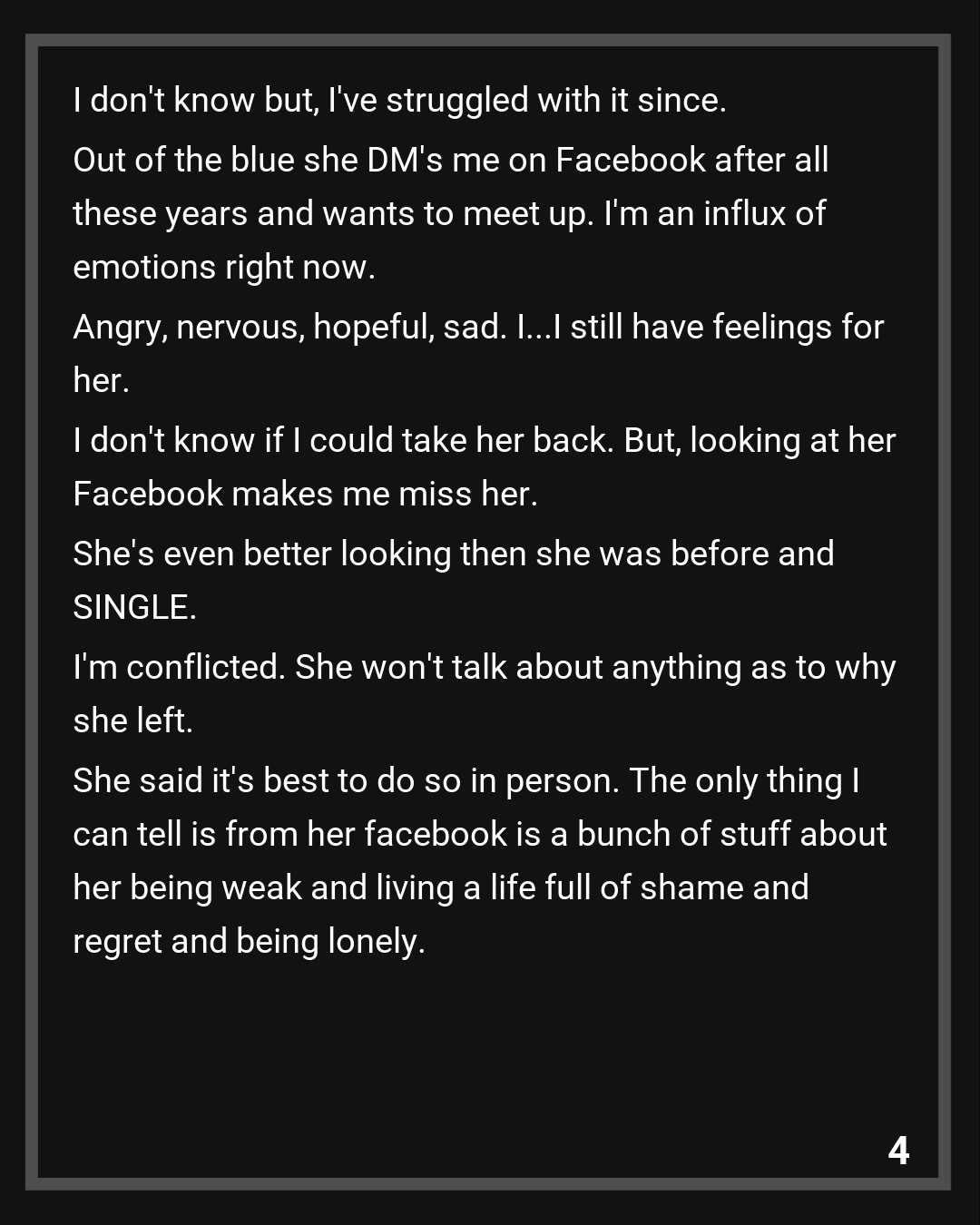
His language reinforces this. OOP catalogs his emotional state with the precision of someone who has audited these feelings many times. Angry, nervous, hopeful, sad. She is single and attractive, he notes. He wonders whether to ghost her in return. Every instinct points toward a man preparing to reclaim a narrative he believes was stolen from him.
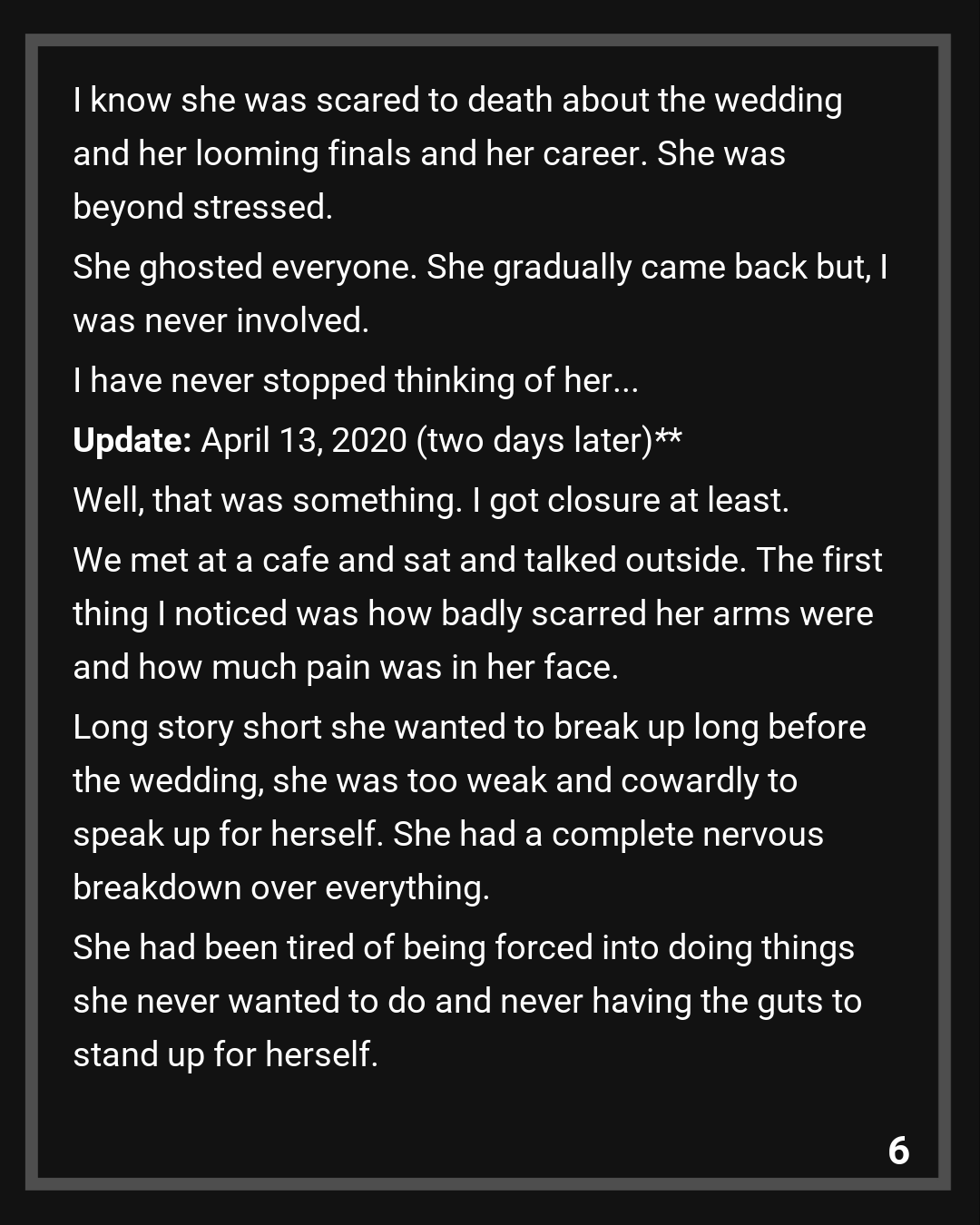
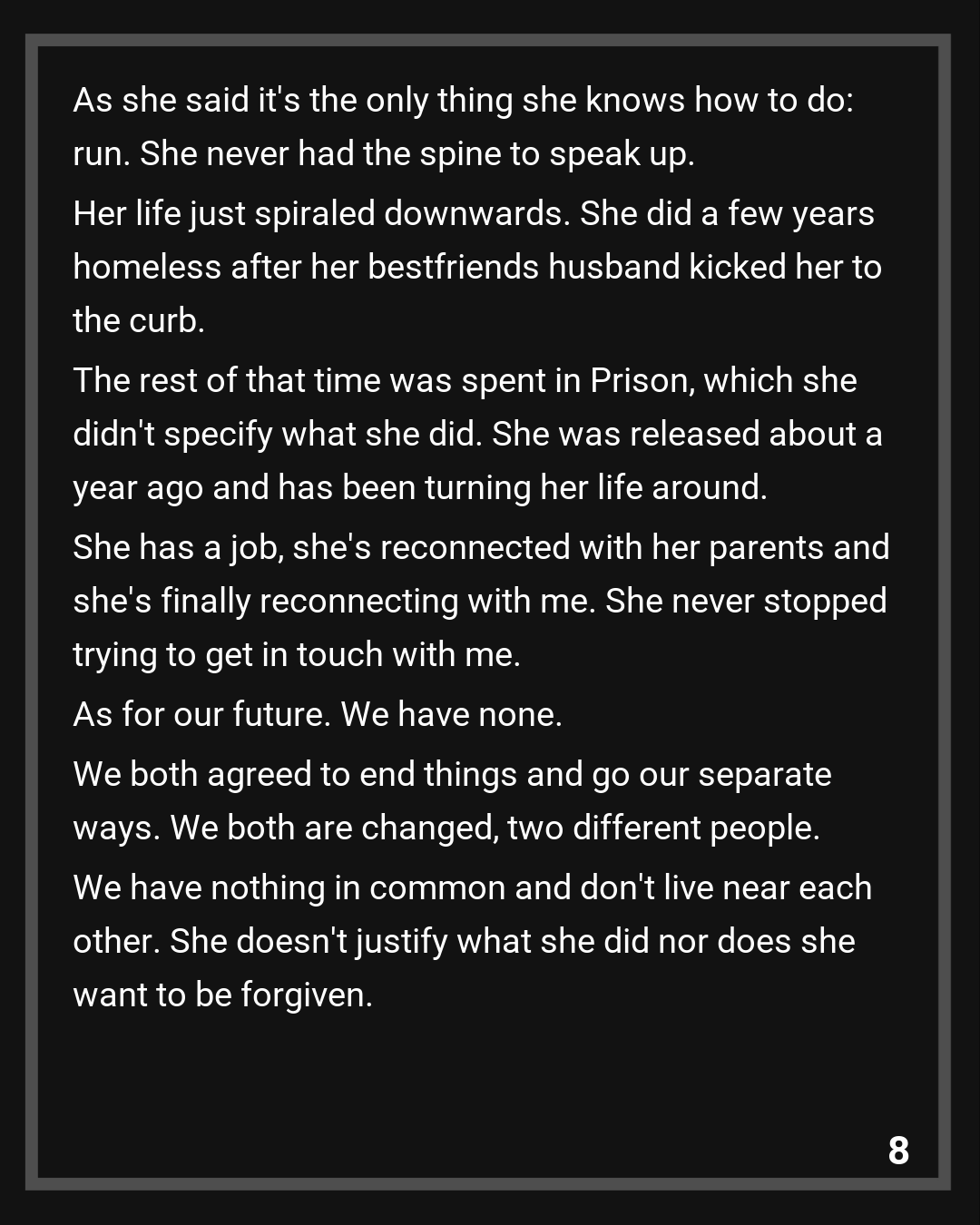
The update collapses that structure within its first paragraph. Scarred arms. Pain visible in her face. A woman who spent years homeless, then incarcerated, after a breakdown set off by a life in which nobody permitted her to refuse anything. OOP’s public proposal was not a romantic gesture. It was the final removal of her agency, staged before witnesses who would have shamed her for declining.
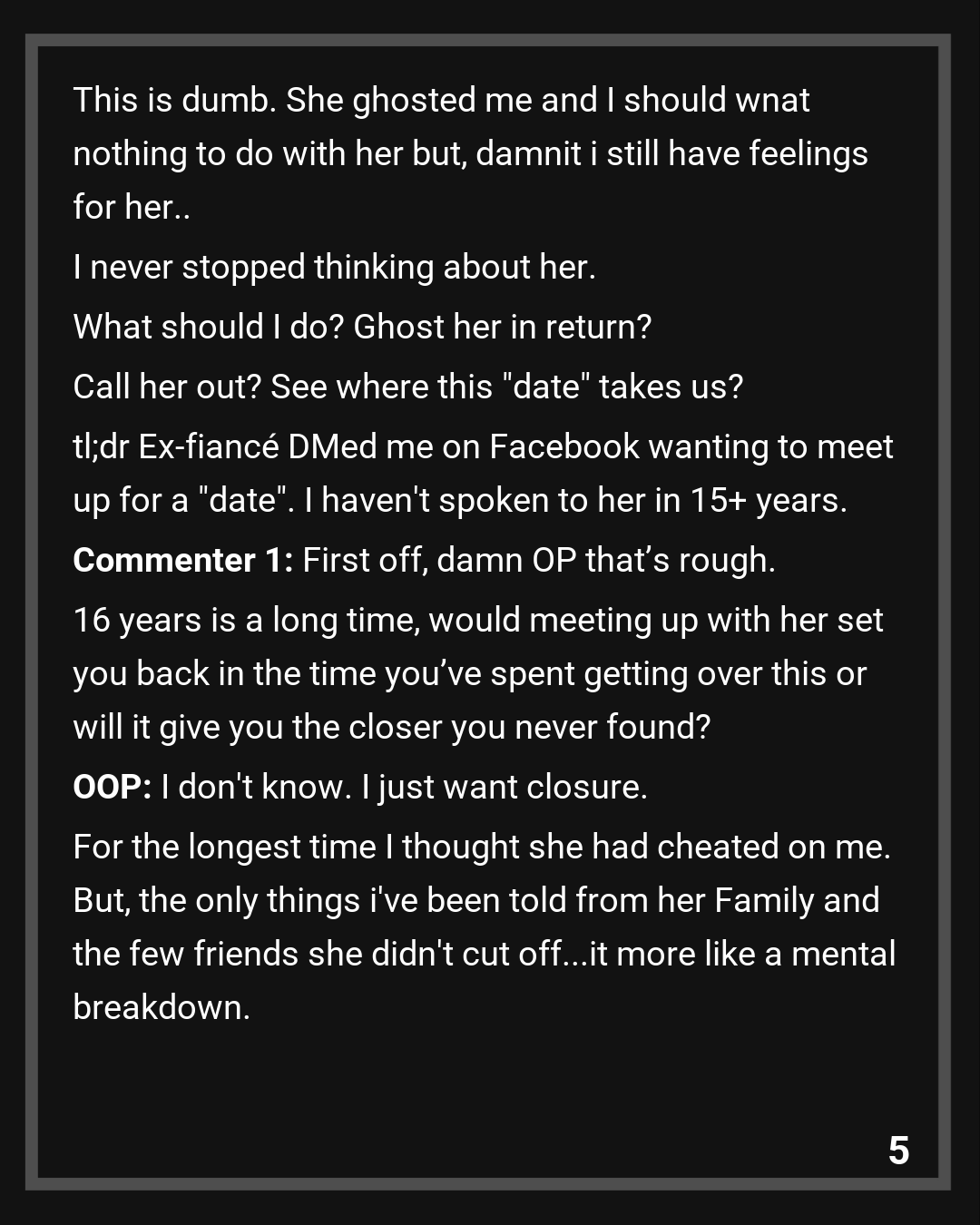
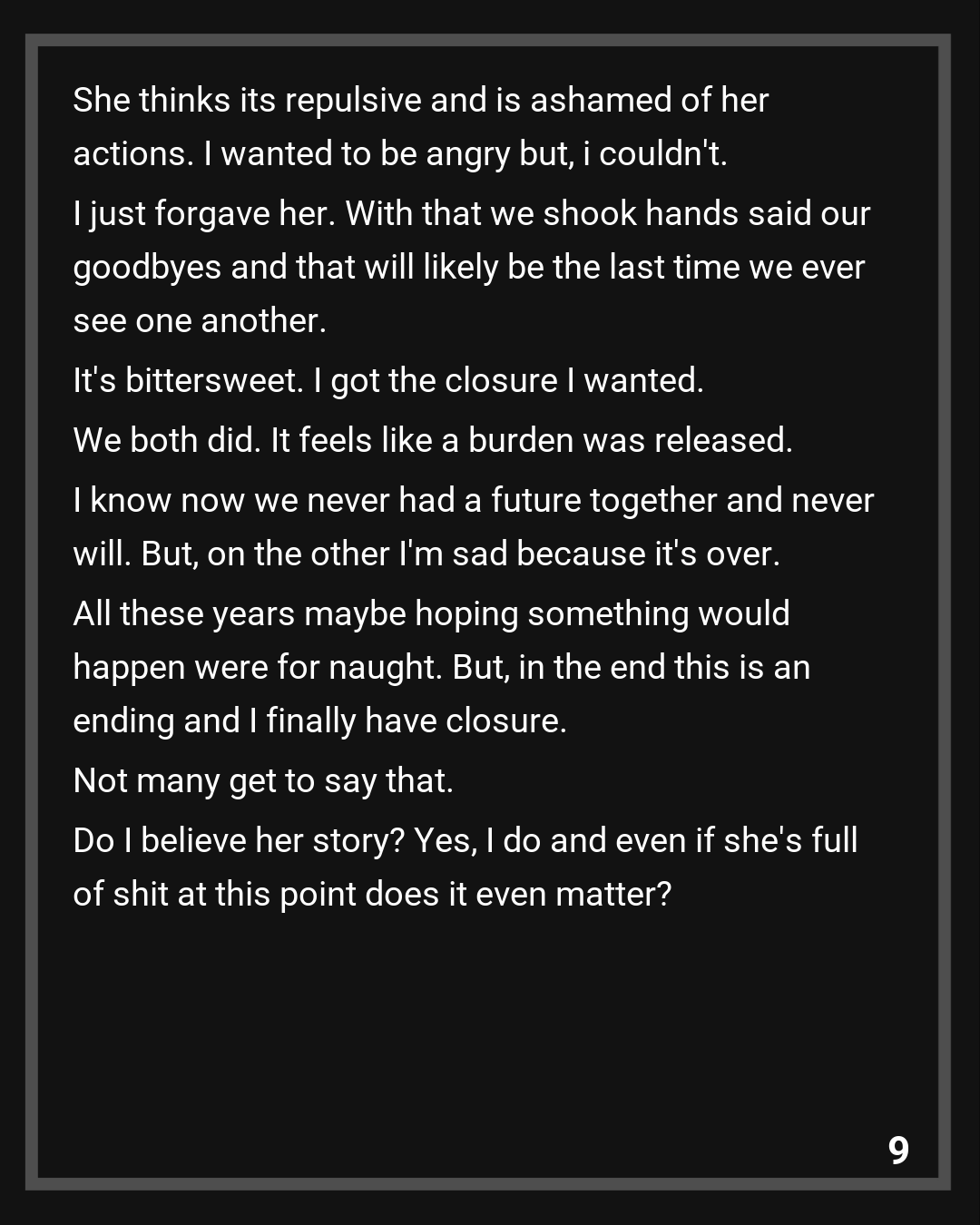
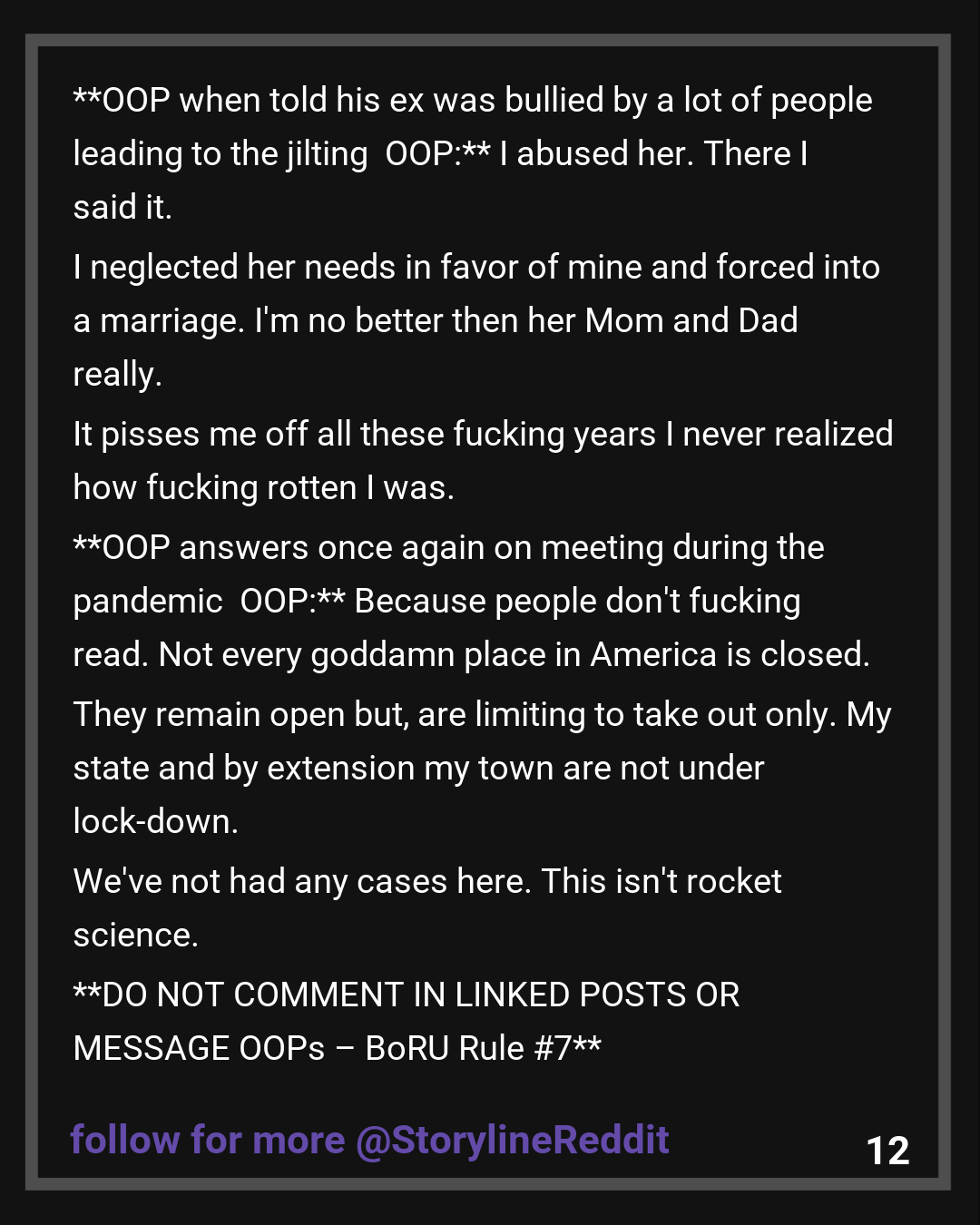
Most accounts of a Reddit ghosted wedding closure end with the abandoned partner receiving vindication. This one ends with the abandoned partner realizing he was the thing she escaped. The admission of abuse is not what distinguishes OOP’s comments from typical online confessions. People deploy that word loosely. The specificity is rarer. He names the mechanism: he staged the proposal in public to guarantee she could not say no. That sentence does not hedge or reframe the act as a well-intentioned mistake. It identifies a strategy.
Their goodbye is a handshake in a parking lot during a pandemic. No reconciliation, no second chance. Two people agreeing the relationship was built on one person’s terms and survived on the other’s silence.


A Proposal Staged Like a Verdict
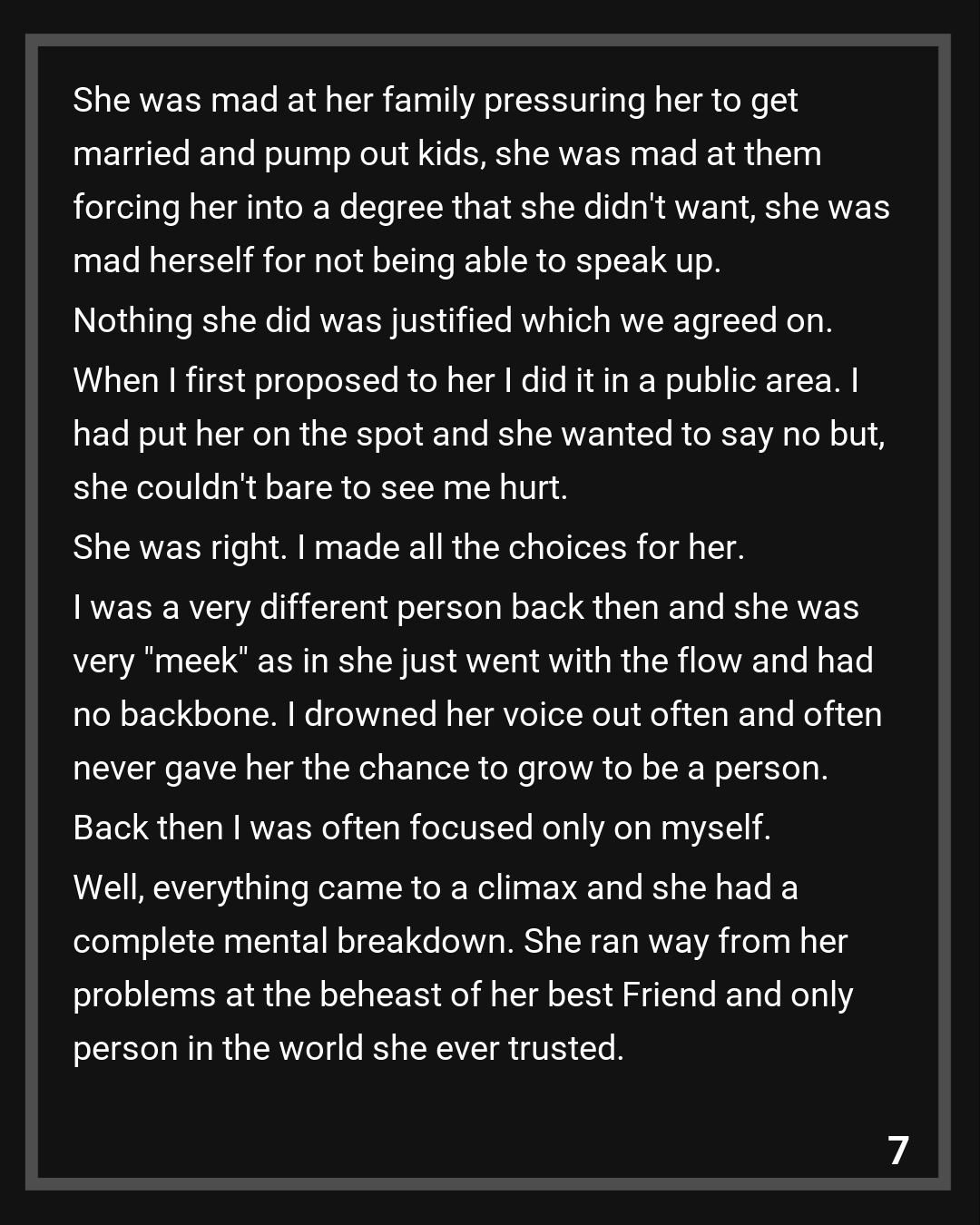
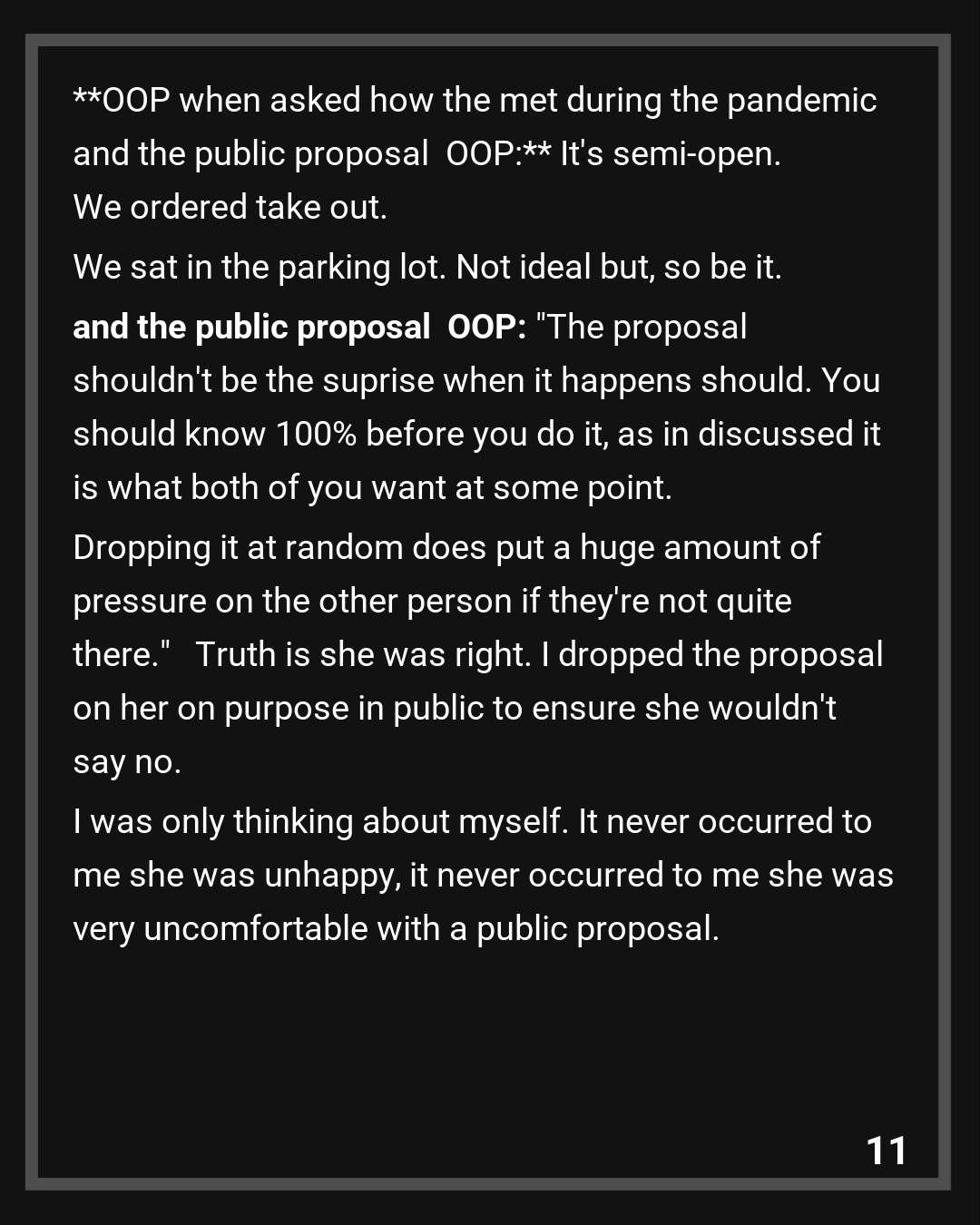
OOP chose a public location for the proposal on purpose. He admits this in the comments with startling precision: “I dropped the proposal on her in public to ensure she wouldn’t say no.” That sentence does not describe a romantic gesture gone wrong. It describes a negotiation where one party removed the other’s ability to decline. The audience became enforcement. Every stranger watching became a reason she could not refuse.
A proposal is supposed to be a question. OOP engineered his to function as an announcement. The distinction matters because it predicts everything that followed. A person who designs a moment to eliminate refusal has already decided that their partner’s agreement is a formality. Her preferences existed only as obstacles to manage.
The Witnesses as Architecture
Consider what the public setting communicated. Saying no would have meant humiliating him in front of strangers. She would have been the woman who rejected a man on his knee. OOP understood this calculus. He built the moment around it. Her “yes” was not consent. It was compliance under social pressure, extracted by someone who knew the difference and chose not to care.
The Only Door Nobody Guarded
She ghosted everyone. Not just OOP, not just the wedding party. Parents, friends, her entire social network went dark. That pattern does not match a woman punishing a specific person. It matches someone whose every relationship had become a corridor of expectations she could not push back against.
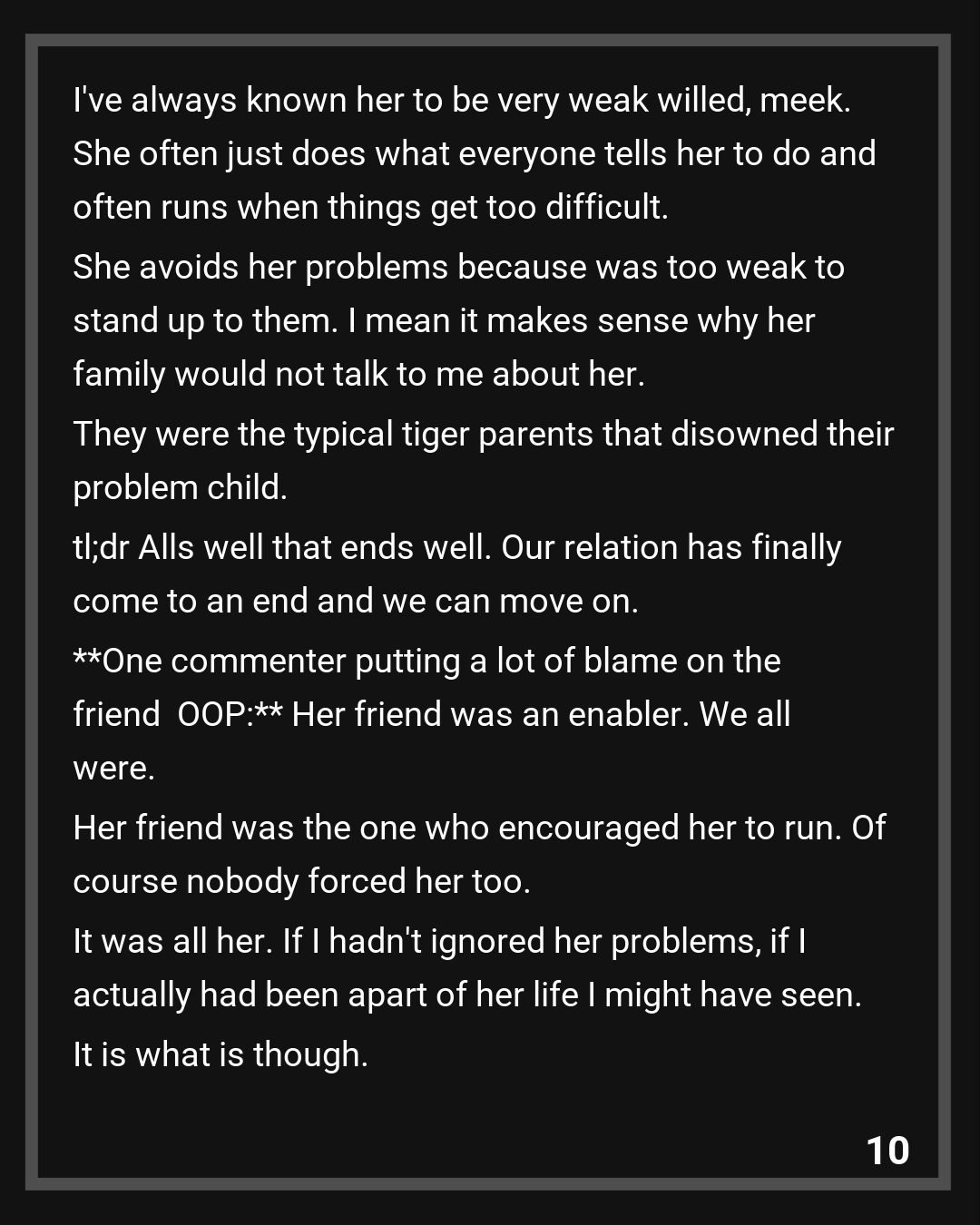
Her best friend told her to run. OOP calls this enabling. But when a person has never been permitted to say no inside a relationship, leaving the relationship entirely becomes the only form of refusal available. Ghosting was not sophisticated. It was not brave. It was the single action she could execute without anyone’s permission or approval.
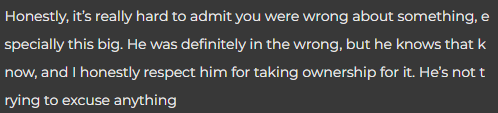
OOP describes her as “meek” and “weak-willed” across both posts. That framing survives even his own confession of abuse. He cannot see her silence as a response to his behavior. He categorizes it as a character flaw she arrived with. The possibility that her passivity was produced by the relationship, not imported into it, does not seem to register.
Sixteen Years Spent Rehearsing the Wrong Testimony
OOP never stopped thinking about her. He says this like a declaration of loyalty. Read it differently and it becomes something else: sixteen years of circling a story in which he was wronged, never once testing whether the story held up.
He had evidence. Her family stopped talking to him. She cut off every person connected to her former life. Friends described a mental breakdown, not an affair. The signs pointed away from betrayal and toward collapse. OOP registered none of this as information about himself. He filed it under her instability.
This is where the Reddit ghosted wedding closure narrative gets uncomfortable. OOP’s ignorance was not passive. He chose the version of events that cast him as the injured party because that version required nothing from him. Reexamining the relationship would have meant questioning the proposal, the pressure, the decisions he made for both of them. Not knowing was easier. Not knowing preserved the story.
His self-flagellation in the comments, calling himself abusive and rotten, may be less of a breakthrough than it appears. Declaring yourself the villain is still a way of occupying center stage. The old narrative starred a brokenhearted groom. The new one stars a repentant abuser. Both revolve around him. His fiancée remains a supporting character in her own story, defined by what she endured rather than who she became after.
A Handshake in a Parking Lot
They met during a pandemic, ordered takeout, and sat in a parking lot. The setting stripped away every pretense of romance or reunion. No candlelit restaurant, no dramatic confrontation. Two middle-aged people in a semi-open town talking through sixteen years of wreckage over takeout containers.
She did not ask for forgiveness. OOP forgave her anyway. That asymmetry echoes the original relationship. She stated what she needed to state. He responded with what he wanted to give, regardless of whether she requested it. Even in the final meeting, his instinct was to provide something she had not asked for.
They shook hands and agreed they had no future. A Reddit ghosted wedding closure story is supposed to end with vindication or reconciliation. This one ended with two people confirming that the relationship had been wrong from its foundation. No redemption arc, no second chance.
Her arms were scarred. He noticed that before anything else.
What the Parking Lot Crowd Saw
The largest cluster fixated on the prison sentence, treating it as a forensic puzzle rather than a biographical detail. Readers reverse-engineered timelines, calculated years served, and proposed charges ranging from armed robbery to drug conspiracy. The emotional register ran analytical and oddly enthusiastic. These commenters wanted to solve the one piece of information OOP’s ex withheld, as if identifying the specific crime would complete a narrative that was never theirs to close. The investigative energy functioned as displacement. Speculating about her record was easier than sitting with OOP’s confession.
A second cluster rejected OOP’s self-assessment as insufficient. These readers noticed that even in his moment of supposed reckoning, OOP continued calling his ex “weak” and “meek.” Several pointed out the contradiction: a woman who survived homelessness, incarceration, and a decade of rebuilding does not fit any reasonable definition of weakness. The frustration here carried heat. Commenters read OOP’s vocabulary as evidence that his transformation was shallower than advertised. One recurring argument held that he never stopped defining her through his framework, even while apologizing for having one.
A third group questioned OOP’s reliability outright. They flagged inconsistencies: his claim that she “never stopped trying to reach him” contradicted the sixteen years of silence. His assumption that a Facebook message constituted a date invitation. His immediate attention to her appearance before registering her scars. These readers approached the post as testimony with visible seams, not as a confession to be taken at face value.
A smaller but vocal cluster identified with the ex-fiancée directly. One commenter described living inside an arranged marriage, trapped in a career chosen by parents, with safety but no joy. Others recognized the pattern of compliance trained into children by controlling families and then exploited by partners who benefited from that compliance without examining it. Their responses carried grief rather than analysis.
The comment section split along a revealing line. Readers who focused on OOP’s growth praised his willingness to name his behavior as abuse. Readers who focused on his language noticed he was still narrating her life for her. That division mirrors a broader pattern in how online audiences process male contrition: the act of confession absorbs so much attention that nobody checks whether the confessor has stopped committing the offense. OOP called himself rotten. He also described a woman who rebuilt her life from incarceration as someone who lacked a spine.
This editorial is based on a story originally shared on Reddit’s r/BestofRedditorUpdates community.