Featured on @StorylineReddit: November 20, 2025
The Number You Block When Your Son Is Still There
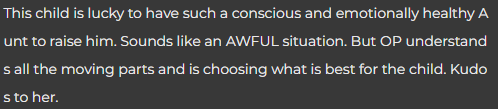
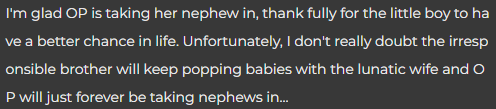
Reddit brother abandoned son sounds like the headline, but the real rupture is a father blocking the person still holding his two year old at the end of the day. That one choice matters more than the missed birthday, the flaky lunch, or the ugly marriage lore, because it turns childcare into disposal. A toddler stops being a child with parents and starts looking like a problem passed to the nearest competent adult. The detail that bites is not that the sister has six children already. It is that her brother knows exactly which house will absorb the shock when he decides not to act like a father.
Her competence does not read like simple virtue. It reads like old training. She mentions parents who lost rights, grandparents who stepped in, and a marriage at nineteen to get out. So when she moves from outrage to custody talk, the motion is fast because this role is already familiar. Reddit brother abandoned son lands so hard because the rescue feels loving and damaged at the same time. The child gets safety. The family also slides back into the old arrangement where one person cleans up what everyone else leaves rotting.
Reddit Brother Abandoned Son in a House Full of Adults
The story keeps returning to adults who treat responsibility like a thing that can be delayed by mood. The brother invites his sister to lunch instead of collecting his child. He flakes on the lunch too. Later, the blocked number gives way to an excuse about eviction, as if housing trouble explains why a two year old stayed parked with relatives past the agreed return. Those details line up with the apartment condition she describes afterward. Roaches, mice, unauthorized pets, ignored warnings. Neglect here does not arrive dressed as one cinematic act. It looks like avoidance piling up until every room starts showing it.
The rescue comes from the same place the damage did
Her family history changes the shape of the choice in front of her. She is not only reacting to her brother’s failure. She is reacting to a childhood where adults already dropped the load and grandparents had to catch it. That makes her a believable rescuer, but it also explains why she steps into the gap so quickly. The same past that sharpened her instincts may also make family takeover feel normal.
Private chaos meets public systems
The marriage details matter less as gossip than as proof that the adults around this child live in permanent instability. Separation, impulsive travel, livestreamed drinking during pregnancy, unemployment by choice, and a filth based eviction all point in one direction. This was already a collapsing household before the custody question became explicit. Reddit brother abandoned son is therefore not a story about one bad handoff. It is about kinship care beginning at the exact moment private disorder becomes impossible to hide from landlords, relatives, and likely CPS.


Reddit Brother Abandoned Son Was the Easy Part
The ugliest action in this story is small. He blocked her number while she still had his child.
A missed pickup can still live inside carelessness, exhaustion, chaos, stupidity. Blocking the one adult holding your two year old crosses into something cleaner and colder. It says the immediate problem is not the child. The problem is the person insisting you behave like a parent. That is why the later explanation about eviction does not rescue him. Even if the notice was real, even if he felt ashamed, even if the apartment had become unlivable, none of that explains why the first move was to cut off contact instead of say, “Keep him tonight, I am falling apart.”
That blocked number is the moral center of the whole piece because it exposes his instinct under pressure. He does not move toward the child. He moves away from the adult witness.
Then the lunch plan makes more sense. Lunch was not logistics. Lunch was theater. He could still perform normalcy, still have someone show up, still make the day feel social instead of accusatory. Flaking on that lunch too turns the performance inside out. He cannot even keep up the appearance of being a functioning adult for one meal, much less for a child who just turned two.
She Did Not Become the Backup Parent That Week
Her speed matters. She moves from anger to custody talk with almost no hesitation, and that does not read like sudden sainthood. It reads like muscle memory.
She says her parents lost parental rights when she and her twin were twelve. She says her grandparents had to raise them. She says she married at nineteen to escape. None of that turns her into a perfect narrator, but it does explain why she knows the smell of family collapse before other people even admit the house is burning. When a person grows up in a system where adults disappear into addiction, failure, or legal trouble, competence becomes less of a virtue and more of a survival reflex. Somebody always has to get practical. Somebody always has to make the call nobody wants on paper.
That somebody is her.
The telling detail is that she had already co signed for the apartment after a prior eviction. The rescue did not begin with the abandoned birthday pickup. It had already been underway through housing, excuses, second chances, and family credit. By the time the boy stays past the agreed return, she is not entering a crisis. She is arriving at the latest room in a building she has been walking through for years.
The Marriage Was Not Gossip, It Was Broken Infrastructure
Readers naturally fixate on the wife flying to the UK, then to New York, the social media lies, the drinking during pregnancy, the bio line about being forced into motherhood. Those details are lurid, but their real function is structural. They show two adults living in permanent instability and calling it a relationship.
A stable household can survive infidelity, depression, unemployment, even a move across states. This one cannot survive ordinary maintenance. The adults are separating and reconciling on repeat. They are unemployed by choice. They are ignoring landlords. They are treating travel like an emotional reset button while a toddler stays with relatives. So the marriage story matters because it explains the weather inside the home. Every emergency arrives in a room already soaked.
Her description of her brother sharpens this in an uncomfortable way. She blames part of his dysfunction on prenatal drug exposure and low IQ. That may be true, partly true, or family shorthand for helplessness. Either way, it shows how thoroughly she has been trained to narrate his failures as conditions to manage rather than decisions to punish. She sounds less like a sister and more like a worn out caseworker who knows which forms of incompetence are chronic and which are performative.
Neglect Has a Smell Before It Has a Headline
Once she says the eviction was not about unpaid rent but filth, the whole story changes texture. Roaches. Mice. Unauthorized pets. Ignored warnings.
That is not clutter. That is a living environment collapsing around a child too young to leave it. Neglect often arrives like this, not as a single spectacular act but as a chain of tolerated conditions. The apartment gets dirty. Then it gets infested. Then letters come. Then the letters get ignored. Then the child spends more time somewhere else because everyone can feel, without saying it cleanly, that one house is functioning and the other is not.
Reddit brother abandoned son works as a search phrase because it names the event readers can grasp fast. Yet the deeper injury sits lower and longer. A two year old does not understand being abandoned after vacation. He understands where he sleeps, who feeds him, what the floor feels like, whether adults answer when he cries, and whether home has become a place with roaches and mice moving through it.
That is why the blocked number and the filthy apartment belong together. One is social abandonment. The other is environmental abandonment.
Rescue Can Also Cushion the Guilty
Taking the nephew in was loving, and it also reduced the immediate cost for the adults who created the danger. Both things can be true.
Family care is usually kinder than stranger care. It keeps the child with relatives, siblings, routines, familiar voices. It spares him the shock she lived through when her own parents lost rights. But kinship care also absorbs consequences that should have landed harder on the parents. Once the boy is safe with his aunt and her surgeon husband in a large household that can feed him, clothe him, and even bring him to Great Wolf Lodge, the state sees less urgent visible crisis. The child is protected. The adults are, for a moment, protected too.
That is the hard edge in her decision. She may be breaking one cycle for the boy while stepping right back into another one for herself. She becomes the competent relative who prevents catastrophe from looking like catastrophe. Families often praise that person. They also quietly use that person.
Her language already shows the trap forming. She says “our son will have a little buddy.” It is tender and generous, but it also rushes straight past grief and into incorporation. The child has barely been left behind and he is already being folded into the emotional architecture of a healthier house. That may save him. It may also make it easier for the original parents to disappear into the fog of excuses because somebody better has taken over.
The Crowd Heard Abandonment and Wanted Punishment
The comment section chases the mystery of the mother because maternal detachment still shocks people more than paternal failure. Readers can picture a bad father. A mother who does not rush back for her two year old still scrapes against an older cultural script. So the comments search for hidden drugs, hidden illness, hidden motives, some missing explanation large enough to justify the emotional vacancy.
Her replies push the story in a different direction. She keeps dragging the conversation back to lived pattern. Legal trouble. Lies. pregnancy drinking. unemployment. filth. bad decisions. family history. She is not trying to decode one scandalous choice. She is describing a structure where irresponsibility has become ordinary and a child has become movable property within it.
That is why the story feels so enraging. Nobody in it sounds shocked enough except the aunt, and even she sounds like a person who has been here before. The adults who should be panicking are improvising. The adult who should be allowed distance is discussing custody funding with CPS.
Roaches and mice were living in the apartment while the two year old was supposed to be living there too.
What Reddit Said
The biggest cluster did not treat the post as a child welfare story first. They treated it as a credibility test, and OOP failed it for them. That group kept circling the same pressure points: the oddly specific surgeon husband, the TikTok income, the seven children, the spontaneous travel by two unemployed parents, and the casual language around getting custody or state money. Their logic was simple. Once a story stacks too many high-drama details and then fumbles legal reality, readers stop engaging with the abuse claim and start auditing the narrator. The emotional register there was angry, mocking, and almost competitive in how fast people could spot the next inconsistency.
A second large cluster accepted the broad shape of the story but redirected attention toward OOP’s family role. These commenters were less interested in whether every detail added up and more interested in why she kept signing, paying, covering, and rescuing. They read the co-signing, rent support, and instant willingness to absorb the nephew as the behavior of someone who had been trained since childhood to function as her brother’s real caretaker. Their recurring argument was that trauma can make terrible boundaries feel like love. The register was compassionate, but not soft. People were trying to explain her choices without pretending those choices were healthy.
Then there was a more clinical cluster that tried to translate the chaos into disability, prenatal exposure, developmental impairment, and untreated mental illness. That reading took OOP’s line about drug exposure in the womb and her brother’s low functioning seriously, then folded in the wife’s behavior as evidence of two unstable adults trying to run a household they could not maintain. Their recurring move was to shift the frame from moral failure to impaired capacity. The tone was analytical, sometimes humane, sometimes too quick to diagnose strangers from a post.
Another visible cluster got stuck on the way OOP described the child. They did not like the “little buddy” language, the fast pivot into folding him into her household, or the sense that the boy was being absorbed as a role inside her family rather than discussed as a traumatized child. That reaction came from distrust, not cruelty. Readers who already suspected family vlogger energy heard a woman talking about a nephew the way people talk about a foster dog or an accessory child. The register there was suspicious and disgusted.
The comment section shows that readers do not simply evaluate whether a rescue happened. They judge whether the rescuer sounds clean enough, competent enough, and believable enough to be trusted with the title of rescuer. Once OOP introduced influencer money, seven kids, vague legal language, and a child who might become a playmate for her son, the crowd stopped asking whether the nephew was safe and started asking whether every adult in the story was using him for something.
This editorial is based on a story originally shared on Reddit’s r/BestofRedditorUpdates community.