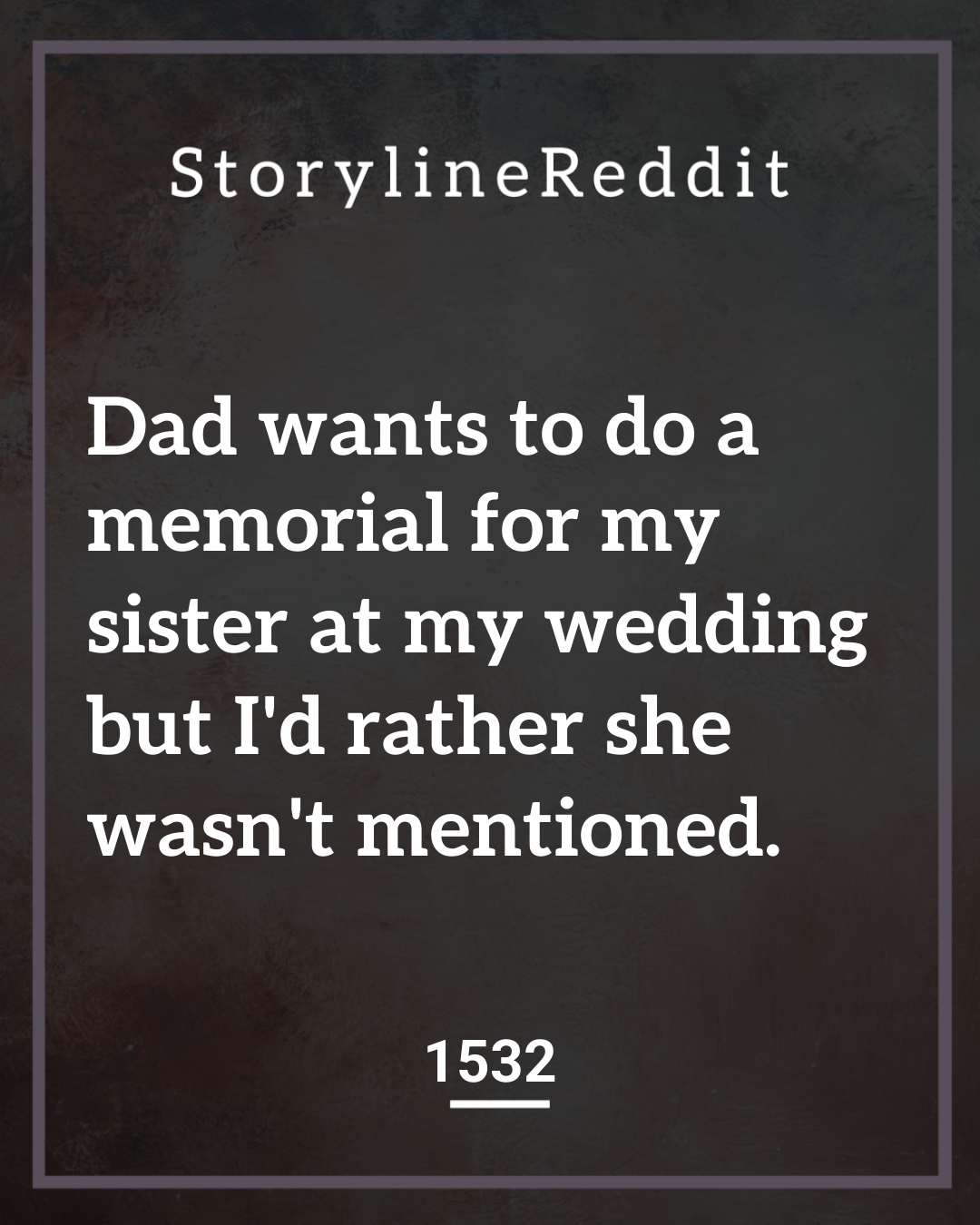
Featured on @StorylineReddit: November 9, 2025
The Toast He Almost Gave
A Reddit wedding sister memorial dispute looks like a question about etiquette until you notice the bride has been losing her own milestones to someone else’s crises for most of her life. The question was never whether to honor a dead sibling. It was whether one person’s grief earns the right to commandeer a room.
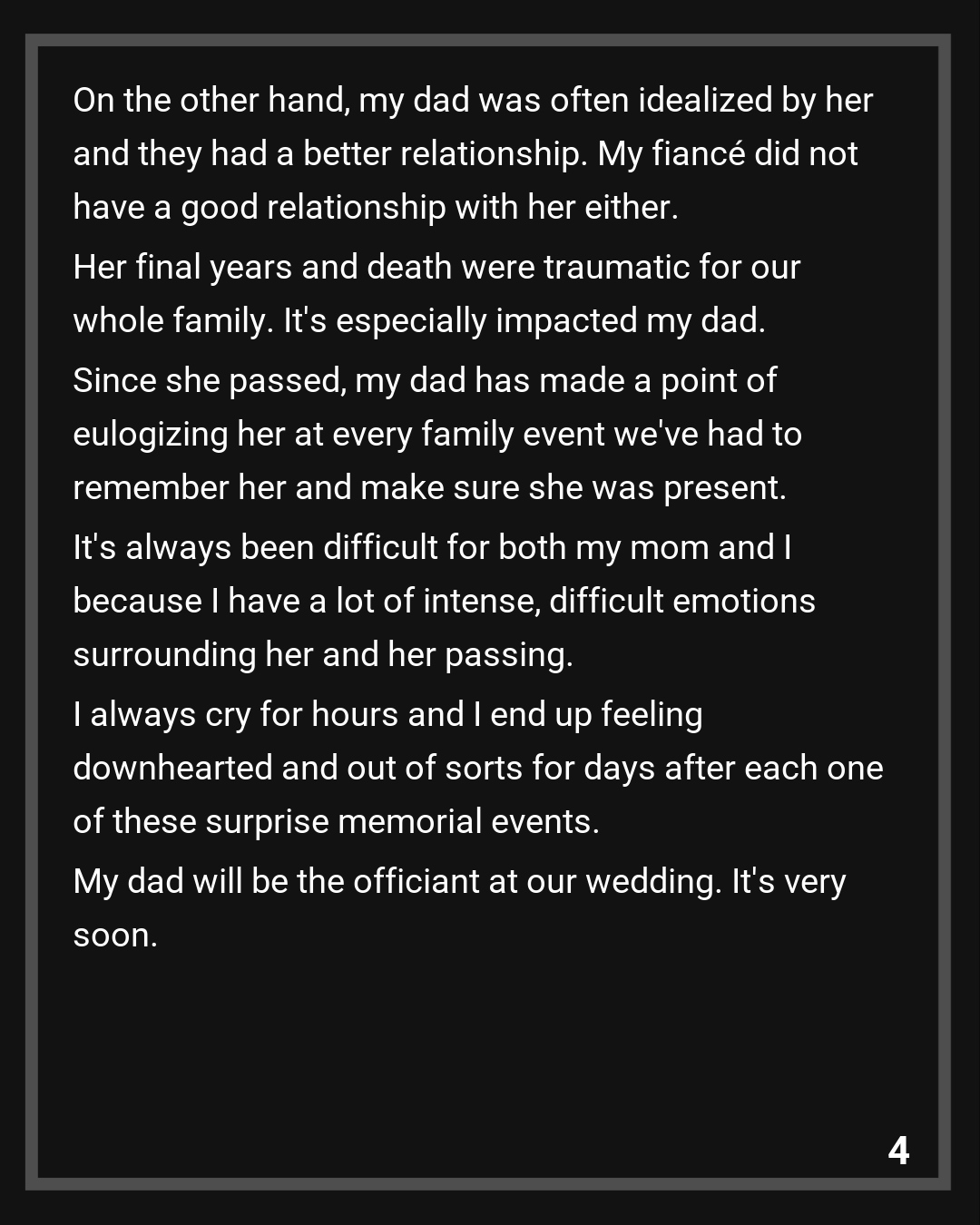
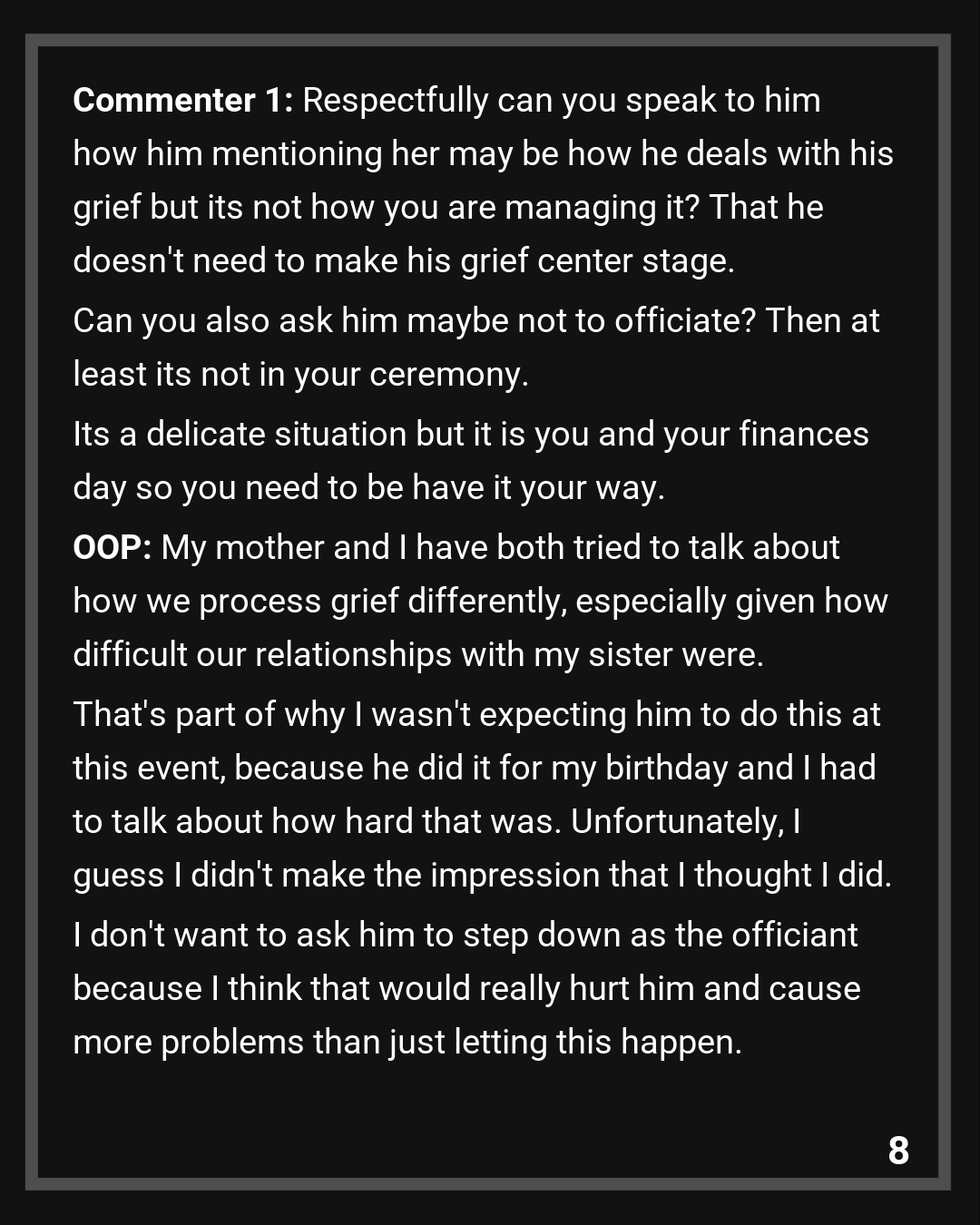
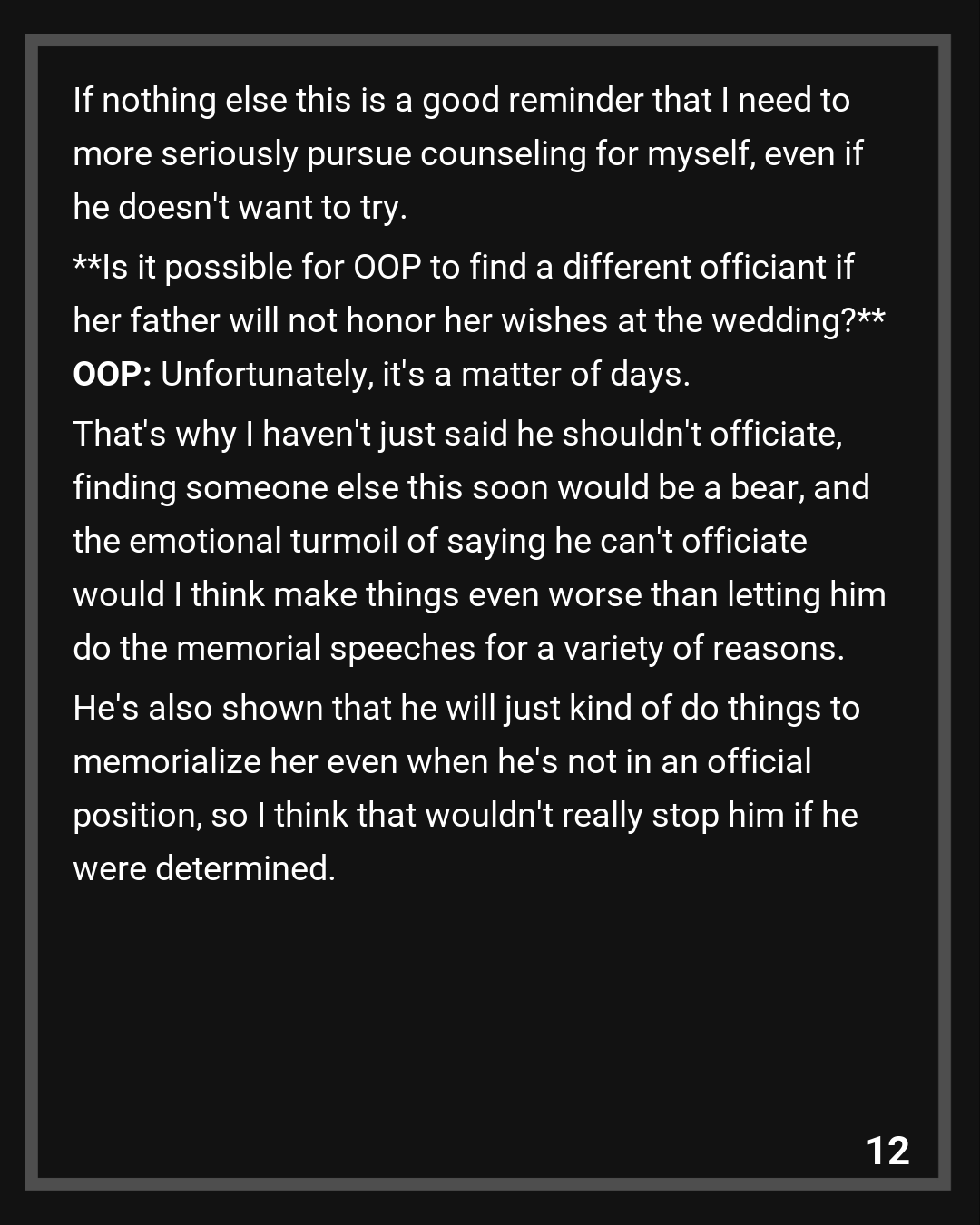
OOP’s father, set to officiate the ceremony, had already turned every family gathering since his younger daughter’s death into an impromptu memorial service. Each time, OOP cried for hours and stayed emotionally wrecked for days. Yet she never drew a line firm enough to prevent the next one.
This is not a disagreement about wedding planning. It is a family testing whether it can separate love for someone from the performance of that love. The father needed his grief witnessed. The bride needed one day where her sister’s story did not become the loudest sound in the room. Both positions carried weight. Only one could shape the ceremony.
The Memorial That Followed Her Home
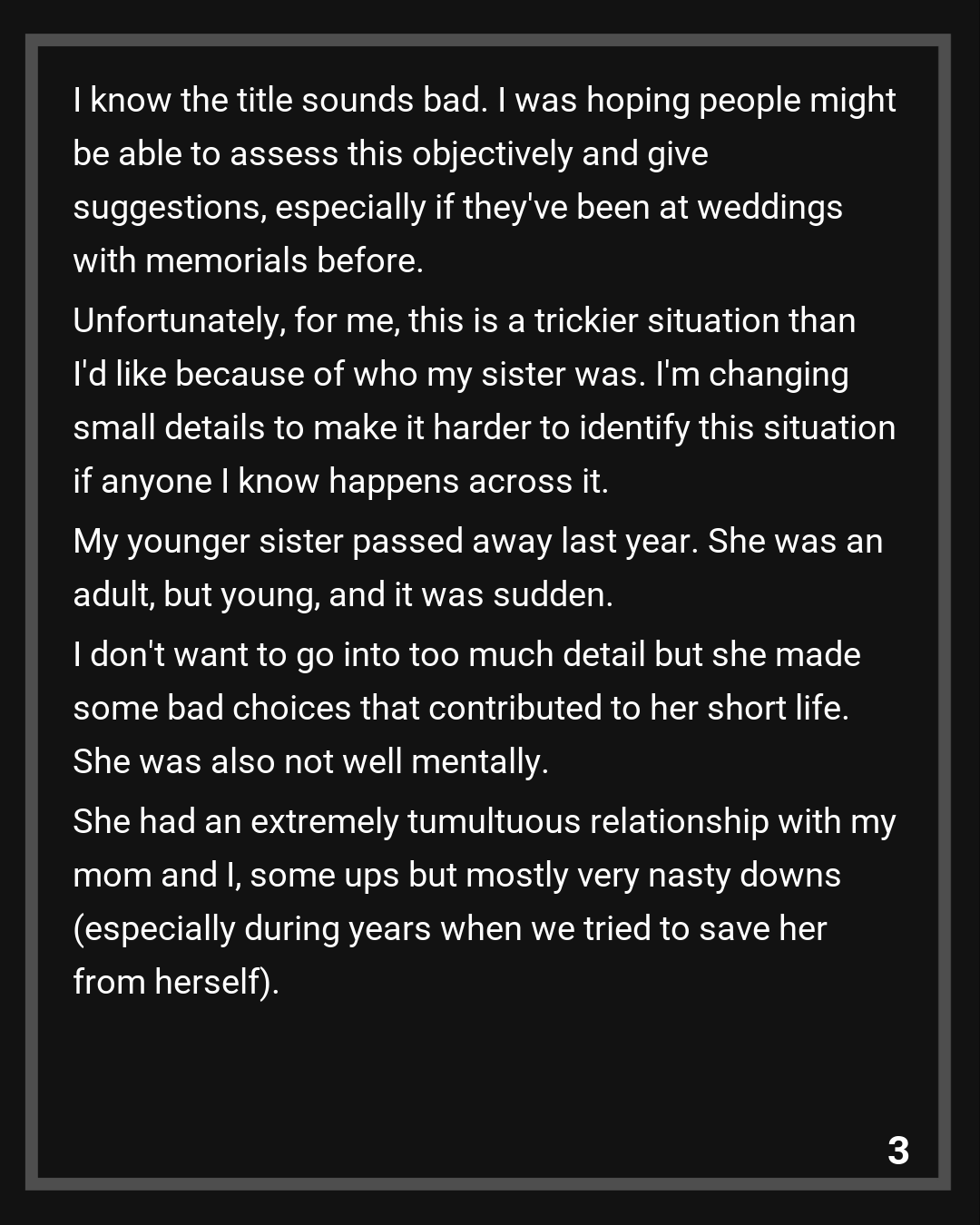
The bride’s younger sister had spent years making family events about herself while alive. Volatile mental health, burned bridges across the family, and a relationship with their mother defined almost entirely by conflict marked her final years. The father occupied a different position: idealized by the sister, he carried the heaviest guilt after her sudden death. His chosen remedy was public eulogies at every gathering, transforming shared celebrations into grief ceremonies that left his surviving daughter destabilized for days afterward.
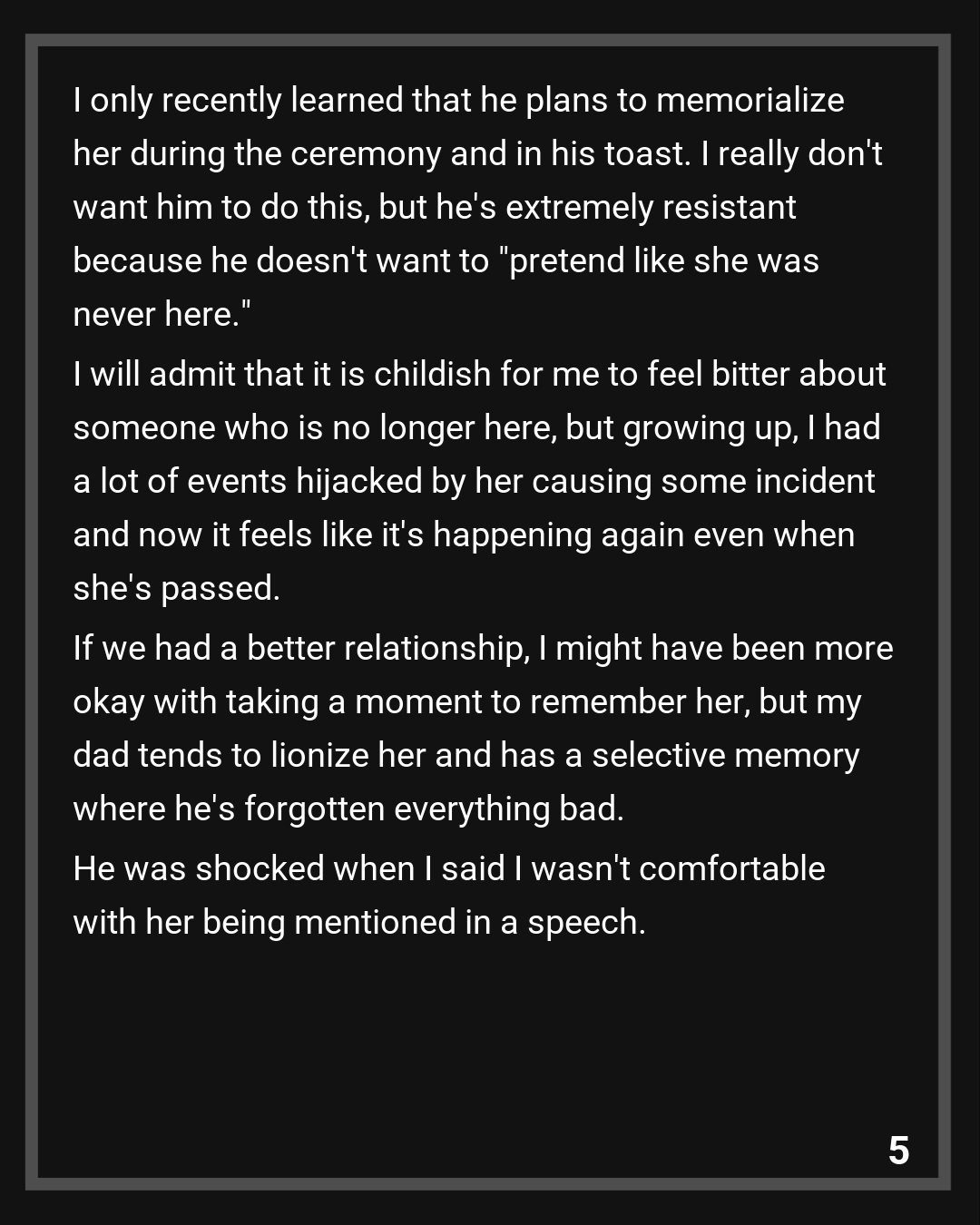
When OOP discovered he planned to extend this ritual into her wedding ceremony and reception toast, a confrontation she had been deferring for months finally arrived. Not between a heartless bride and a bereaved father, but between two people who loved the same dead woman and could not agree on what that love owed a room full of guests.
The Instinct to Absorb
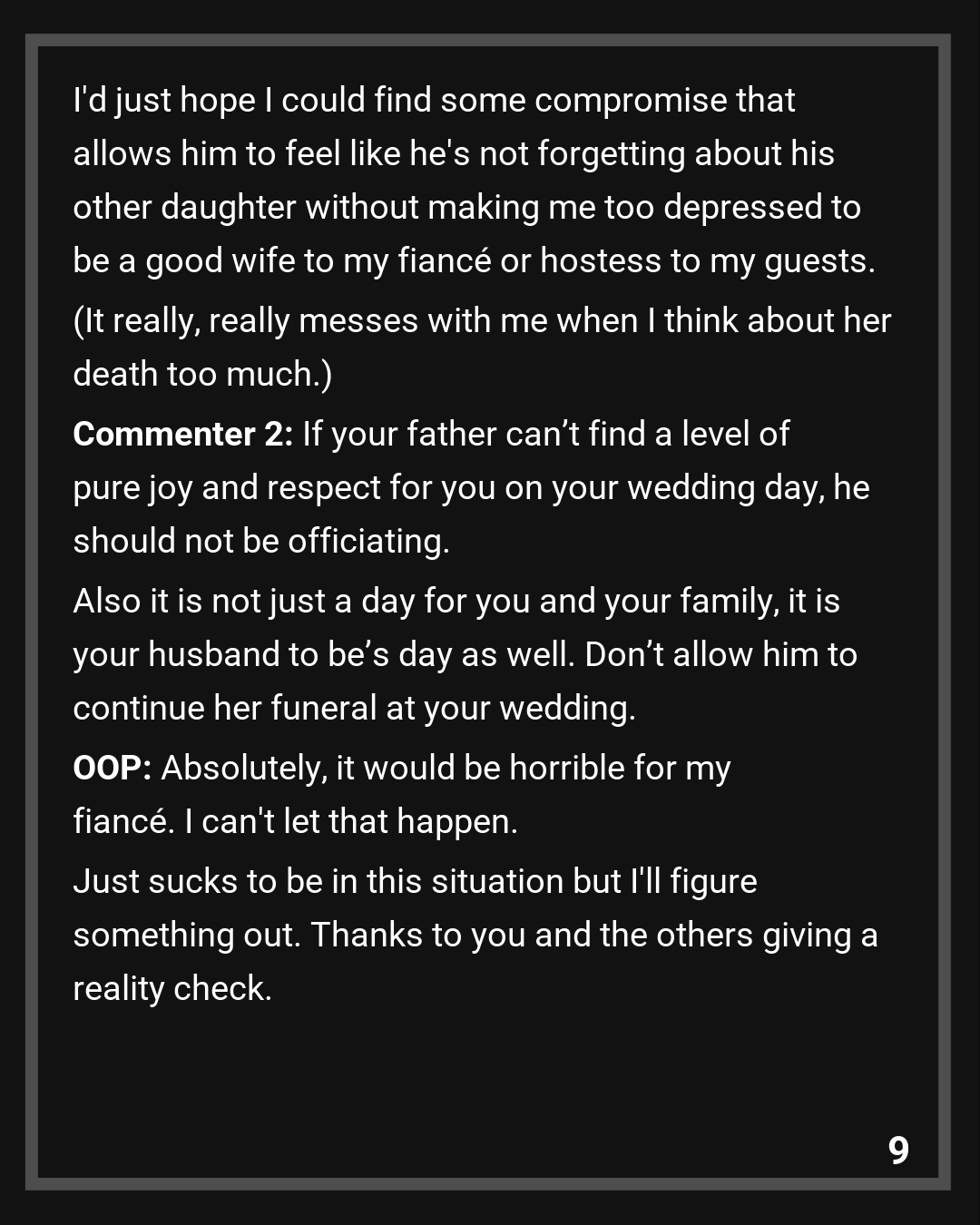
OOP’s first response was familiar: maybe she should just let him speak. She weighed her own discomfort against his pain and nearly chose silence again. Reddit pushed back hard. Her fiancé deserved a celebration free of her family’s unresolved grief cycle. She deserved a day that belonged to her own story rather than her sister’s.
Presence Without Performance
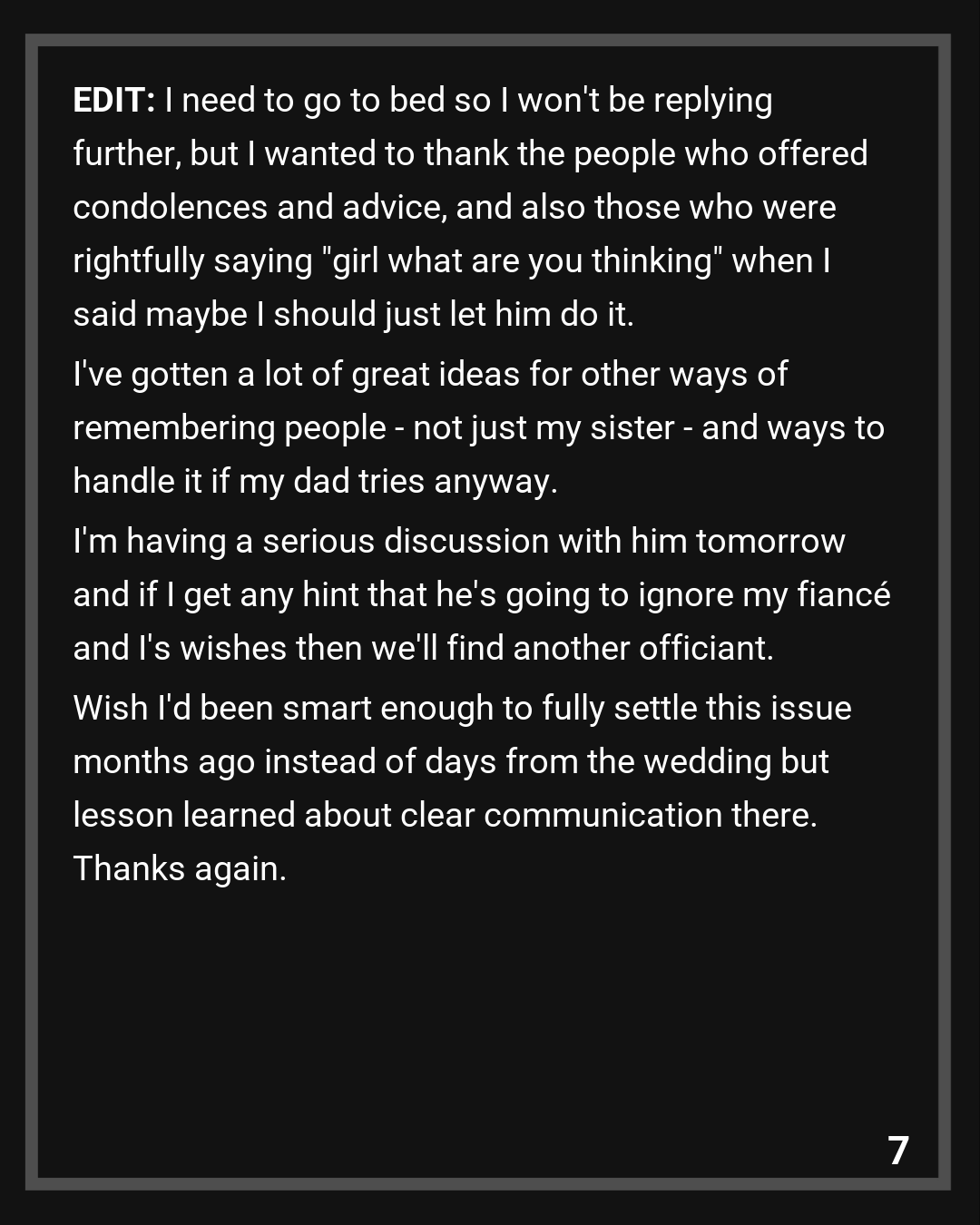
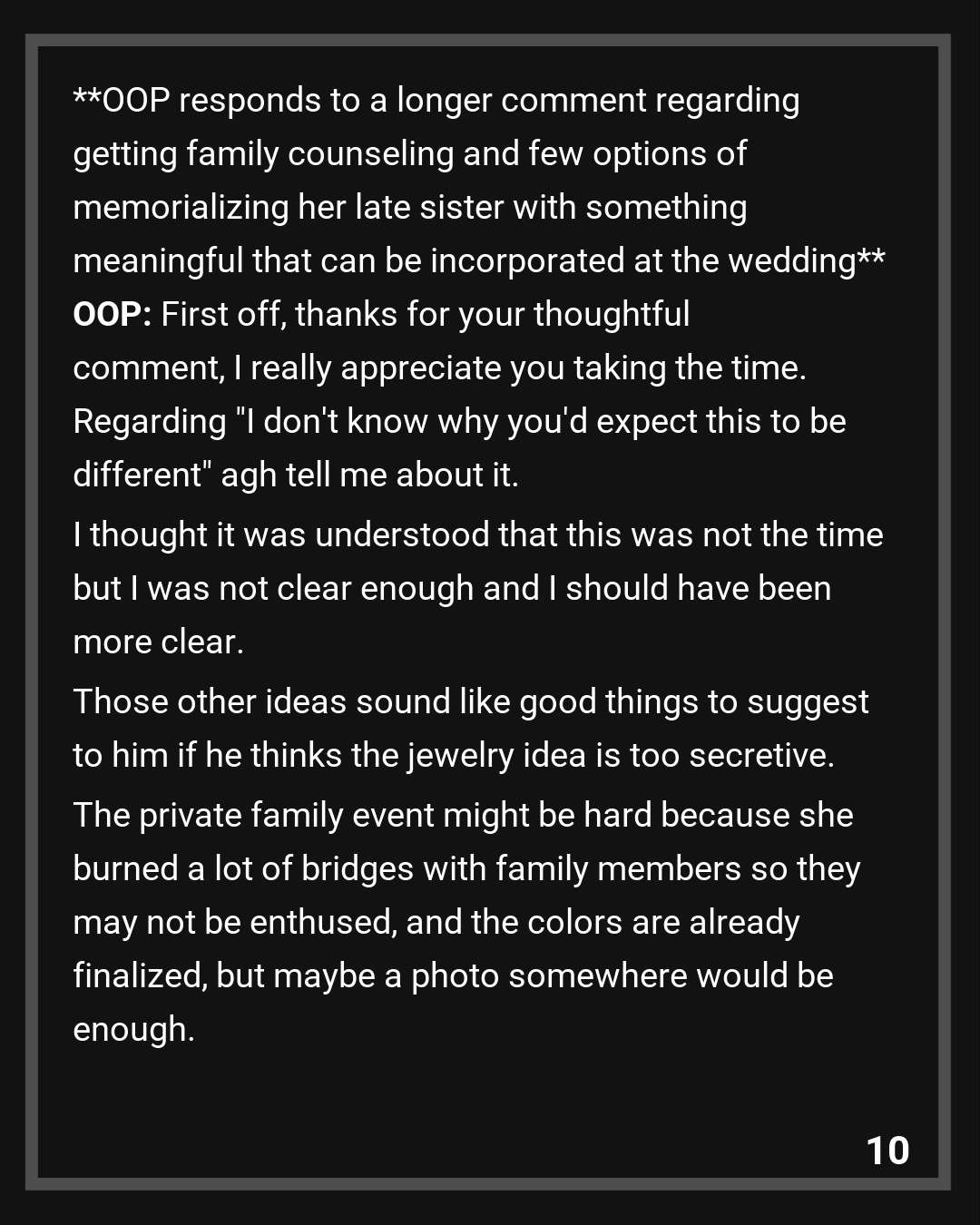
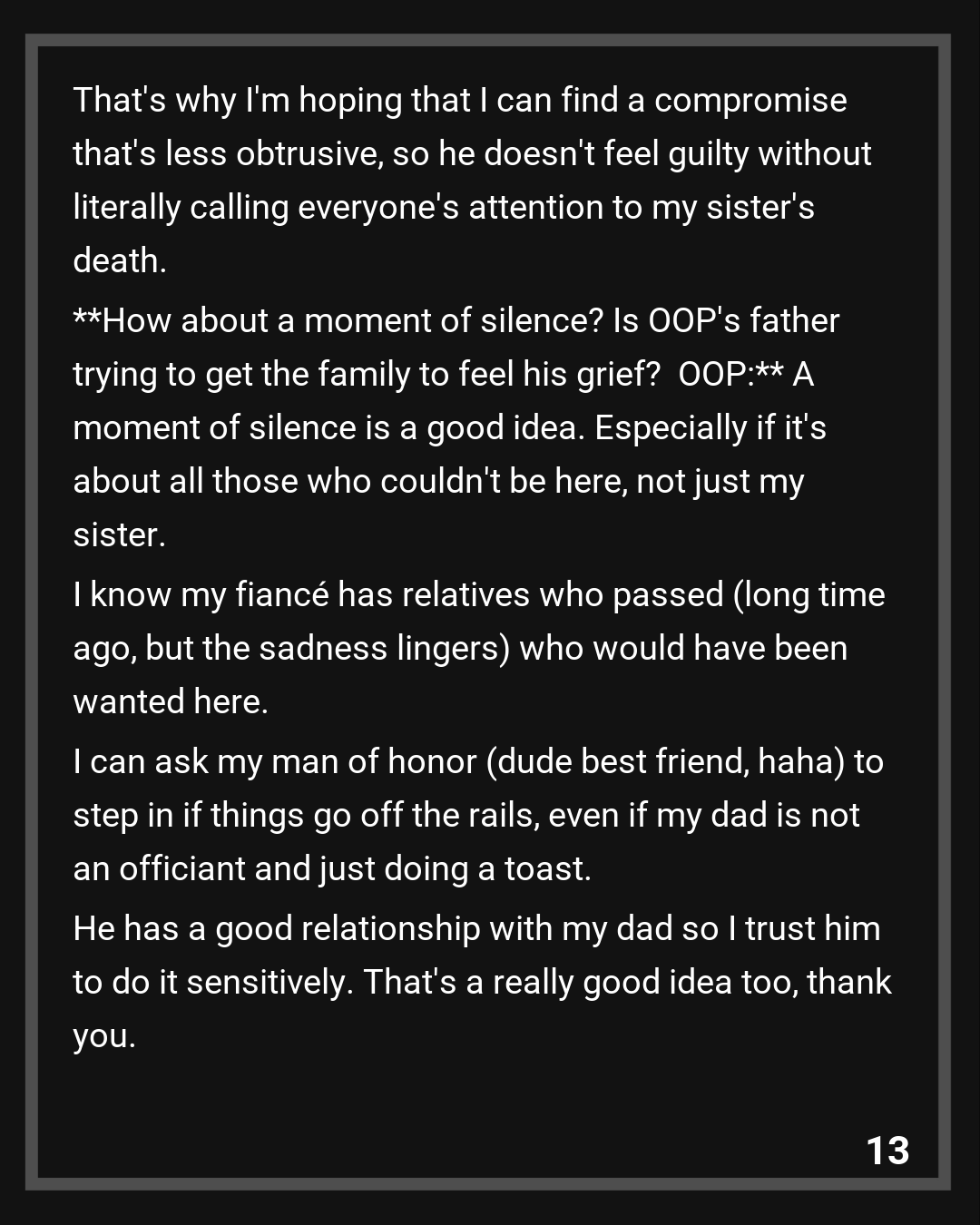
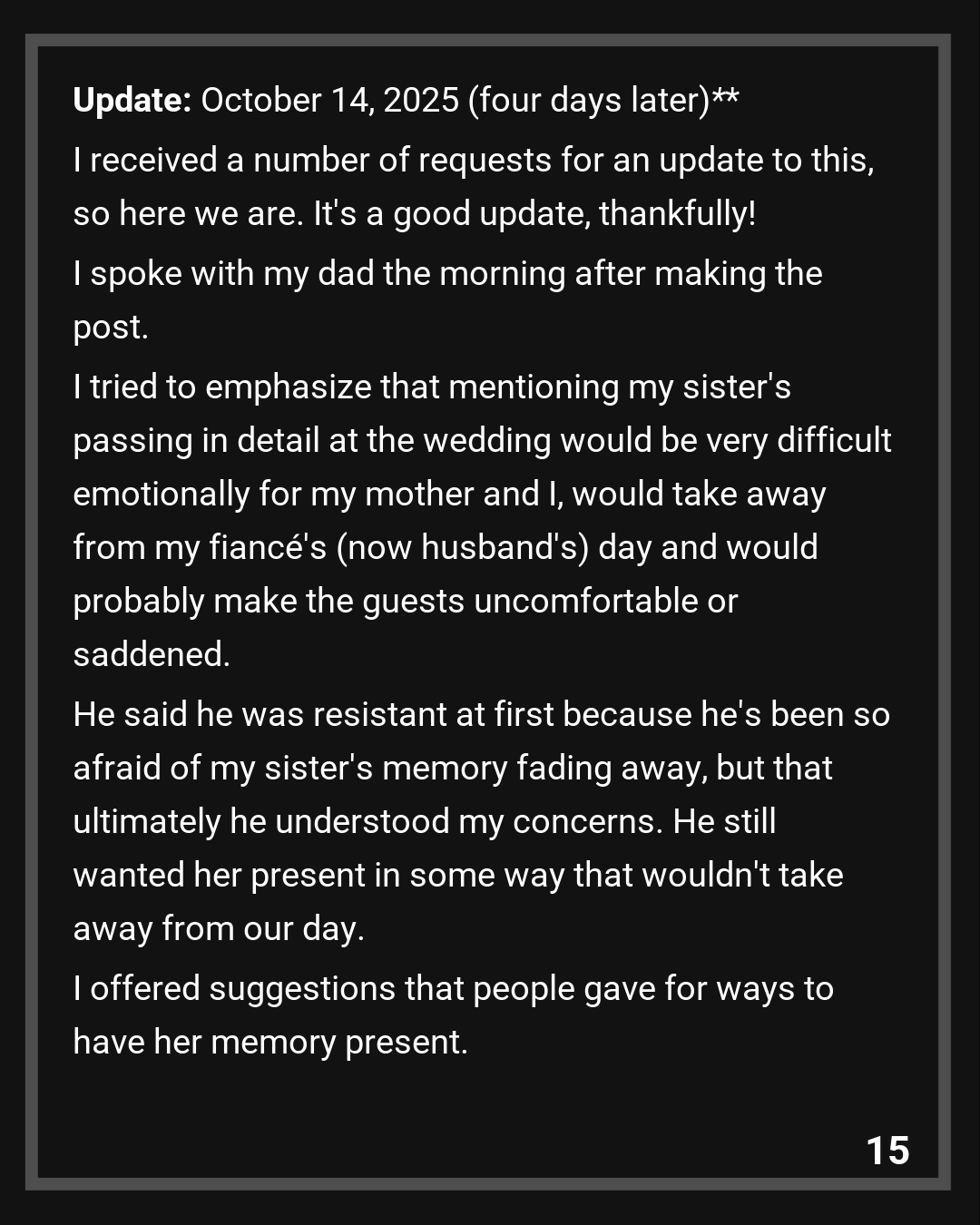
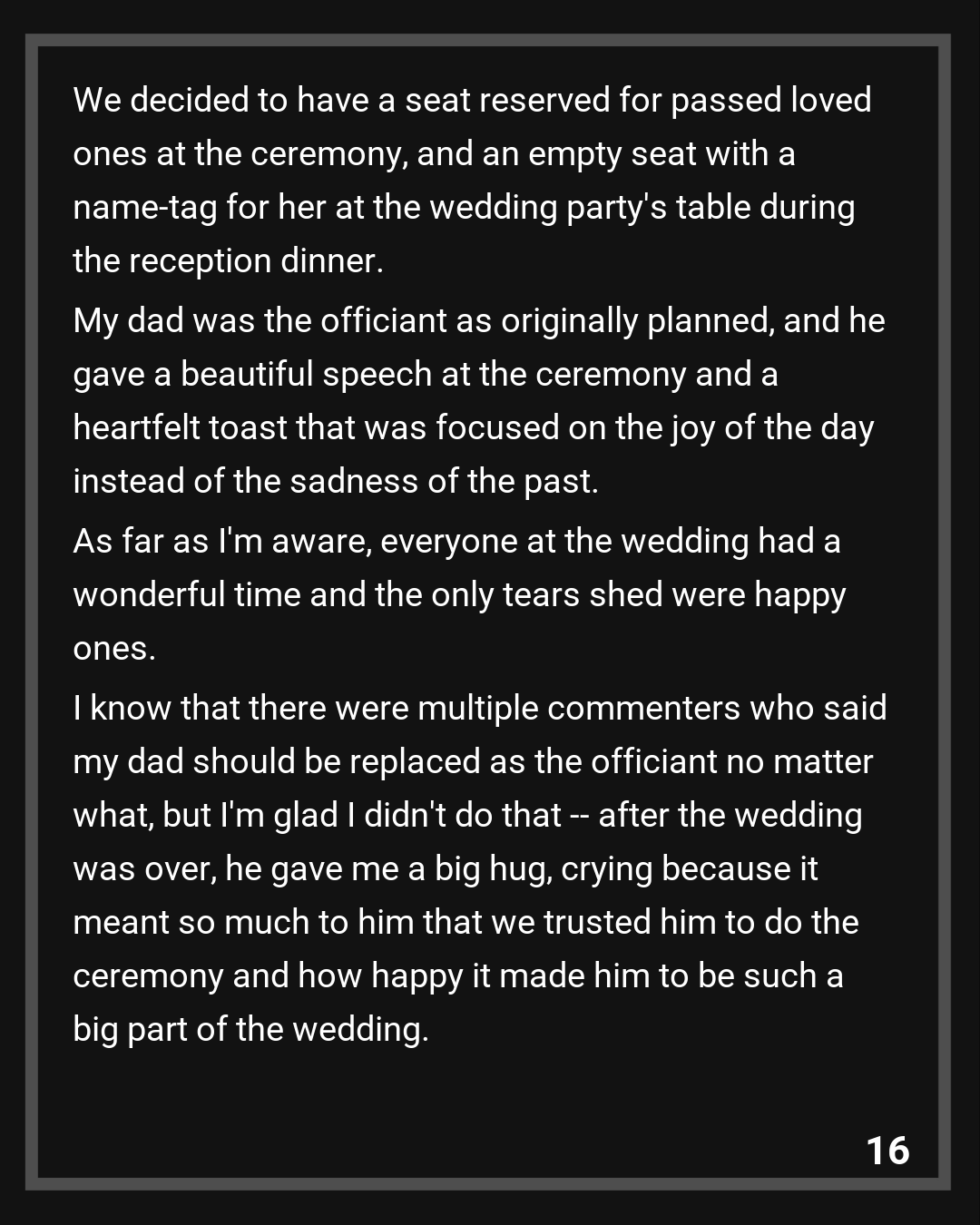
The conversation the next morning moved the father from resistance to cooperation. They chose a reserved seat for passed loved ones at the ceremony and a place setting with a name tag at the reception. No eulogy repurposed as wedding speech. No toast rewritten into elegy. The father officiated with joy, and afterward wept from gratitude that his daughter trusted him with the ceremony. The Reddit wedding sister memorial compromise worked because it replaced narration with a quiet, physical reminder. An empty chair said what a speech never could have without costing the bride her own day.


The Ghost That Still Stole the Show
OOP names the pattern without quite seeing its full shape. Growing up, her sister hijacked family events through crises. Birthdays collapsed into damage control. Gatherings bent around whoever was loudest. Now, with the sister gone, the father’s compulsive eulogies perform the same function from the opposite direction. Where the sister demanded attention through chaos, the father demands it through mourning. The disruption has changed costumes, but it occupies the same chair.
He had already delivered surprise memorials at every family gathering since her death. OOP’s birthday became another occasion for grief. Each time, she absorbed the impact and said too little afterward. The wedding forced a different calculus because the cost was no longer private. A fiancé, guests, a ceremony with its own meaning stood between the father’s need and his usual audience.
A Pattern Nobody Named
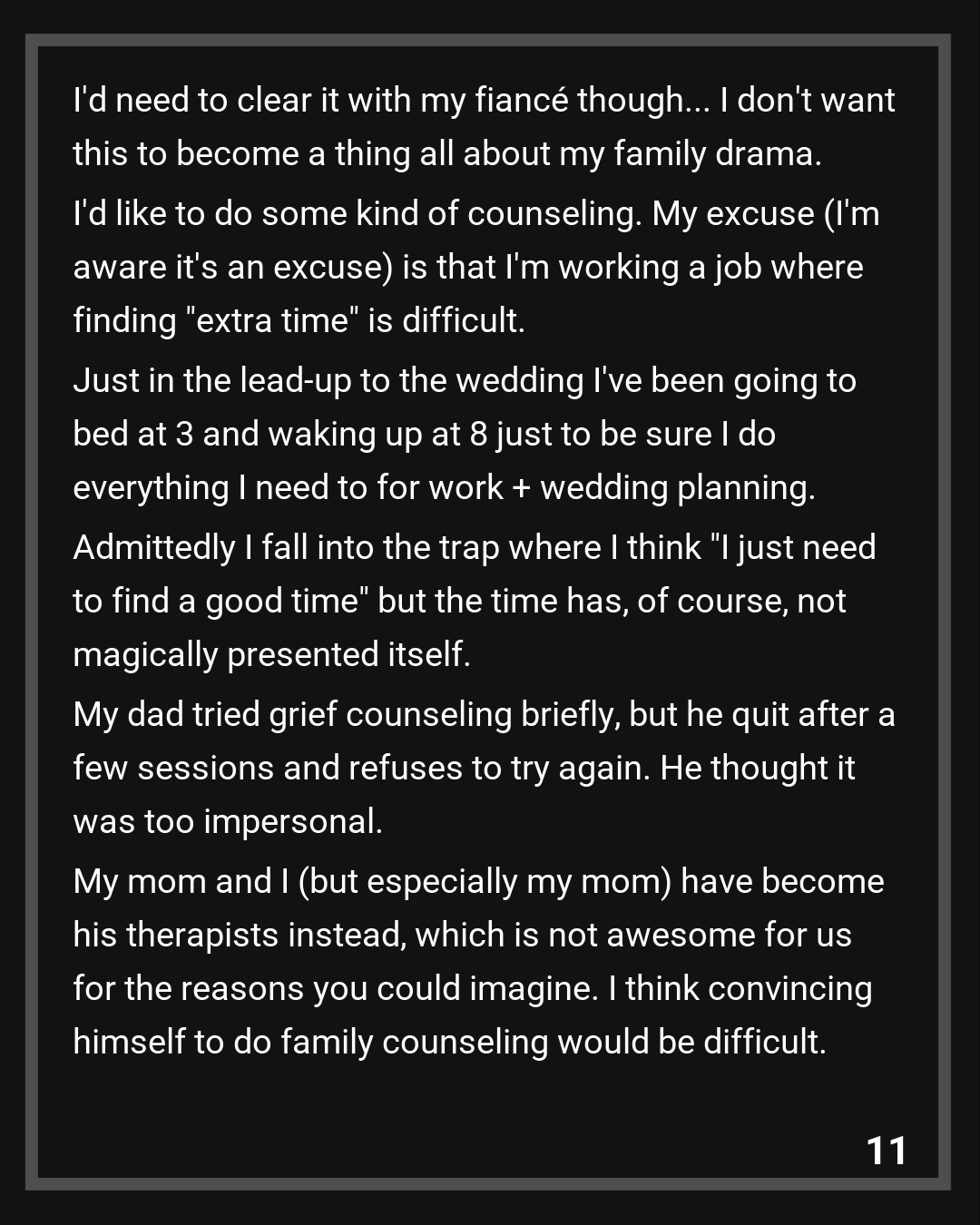
What kept the cycle running was the family’s reluctance to call the eulogies what they were: a ritual that served one person at the expense of everyone else in the room. OOP’s mother had become the father’s unpaid therapist. OOP herself nearly decided to let him speak at the wedding rather than risk the confrontation. The instinct to absorb someone else’s emotional overflow was so familiar she almost mistook it for generosity.
Penance Disguised as a Reddit Wedding Sister Memorial
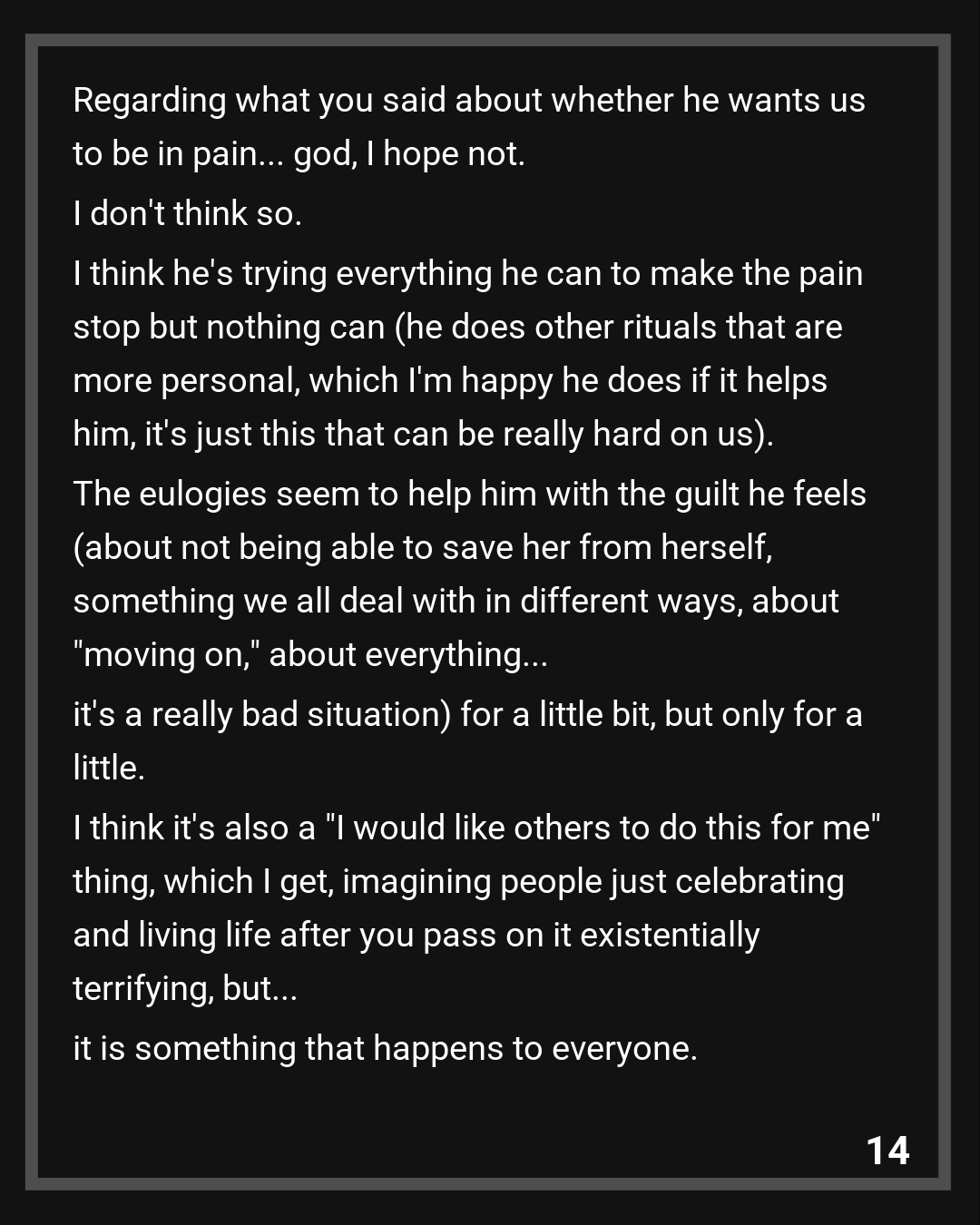
The father quit grief counseling after a few sessions because it felt “too impersonal.” He replaced professional support with public eulogies delivered to captive family audiences. Each speech carried a specific weight: if he honored his daughter loudly enough, often enough, maybe the guilt of not saving her would loosen its grip.
His fear that her memory would “fade away” deserves to be taken seriously rather than dismissed as melodrama. He watched a child he was close to die young after making choices he could not reverse. The surviving family members carry complicated feelings about the sister, ranging from resentment to exhaustion. His resistance to a quiet compromise came from a reasonable terror: that without his voice insisting she mattered, the family’s private relief might swallow her whole. That fear was not paranoid. OOP admits she would prefer her sister went unmentioned entirely. Her fiancé wanted the same.
The father was right to push back, at least initially. A family eager to skip the memorial is not the same as a family that has processed its grief. But being right about the danger of erasure did not entitle him to choose the method, the venue, or the audience. His guilt required witnesses. His daughter’s wedding was not obligated to provide them.
An Empty Chair Instead of a Speech
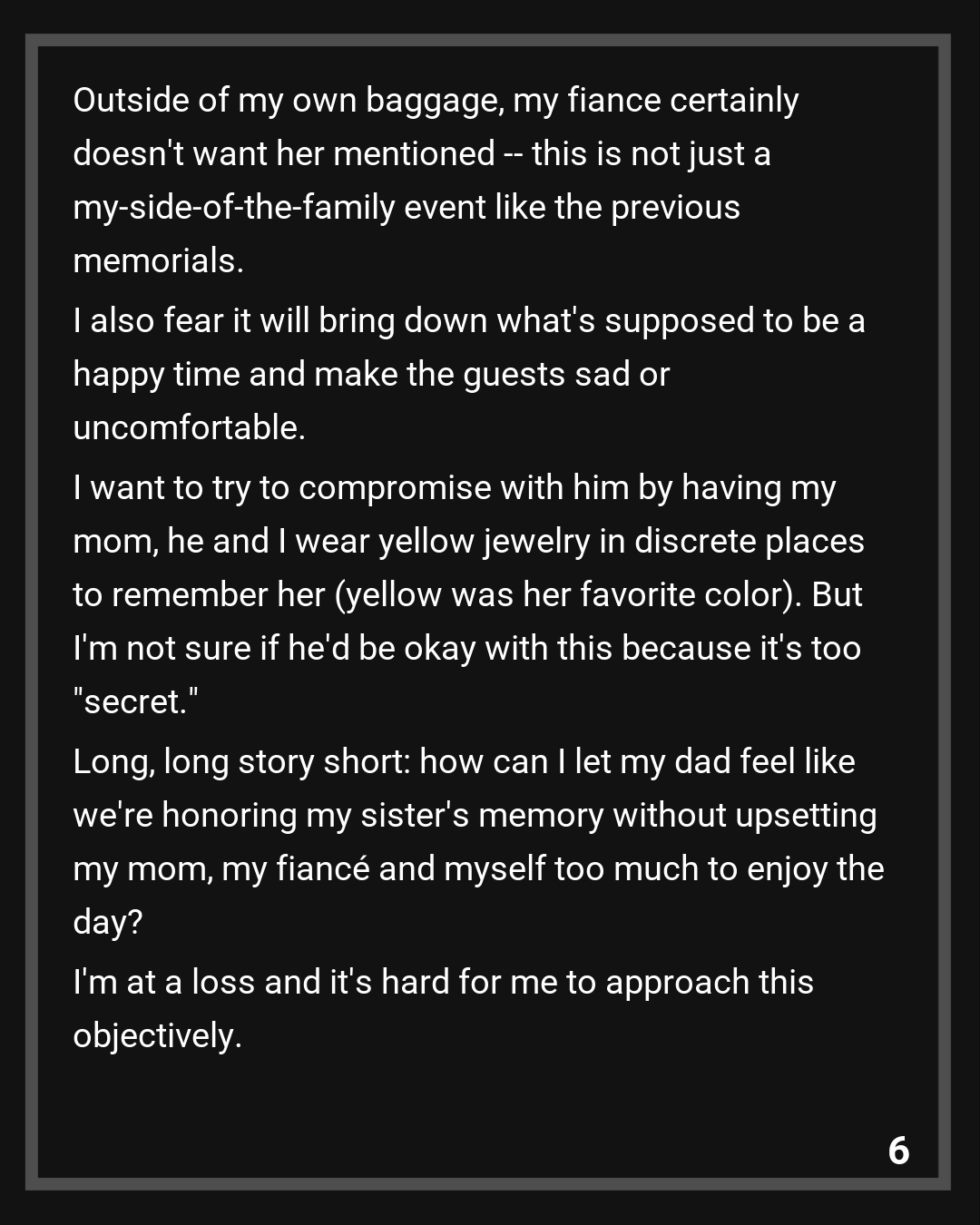
The compromise landed in a place no one had mapped in advance. A reserved seat at the ceremony for passed loved ones. A name tag at the reception table. No eulogy. No toast repurposed into elegy. The father officiated with focus and warmth, then broke down crying afterward because his daughter trusted him with the role.
What shifted was not the father’s grief but its container. For every previous gathering, mourning had taken the form of narration: stories, tributes, public declarations that pinned the room in place. The empty chair replaced language with presence. It let the sister exist in the room without requiring anyone to perform a reaction. Grief stayed, but it stopped needing a microphone.
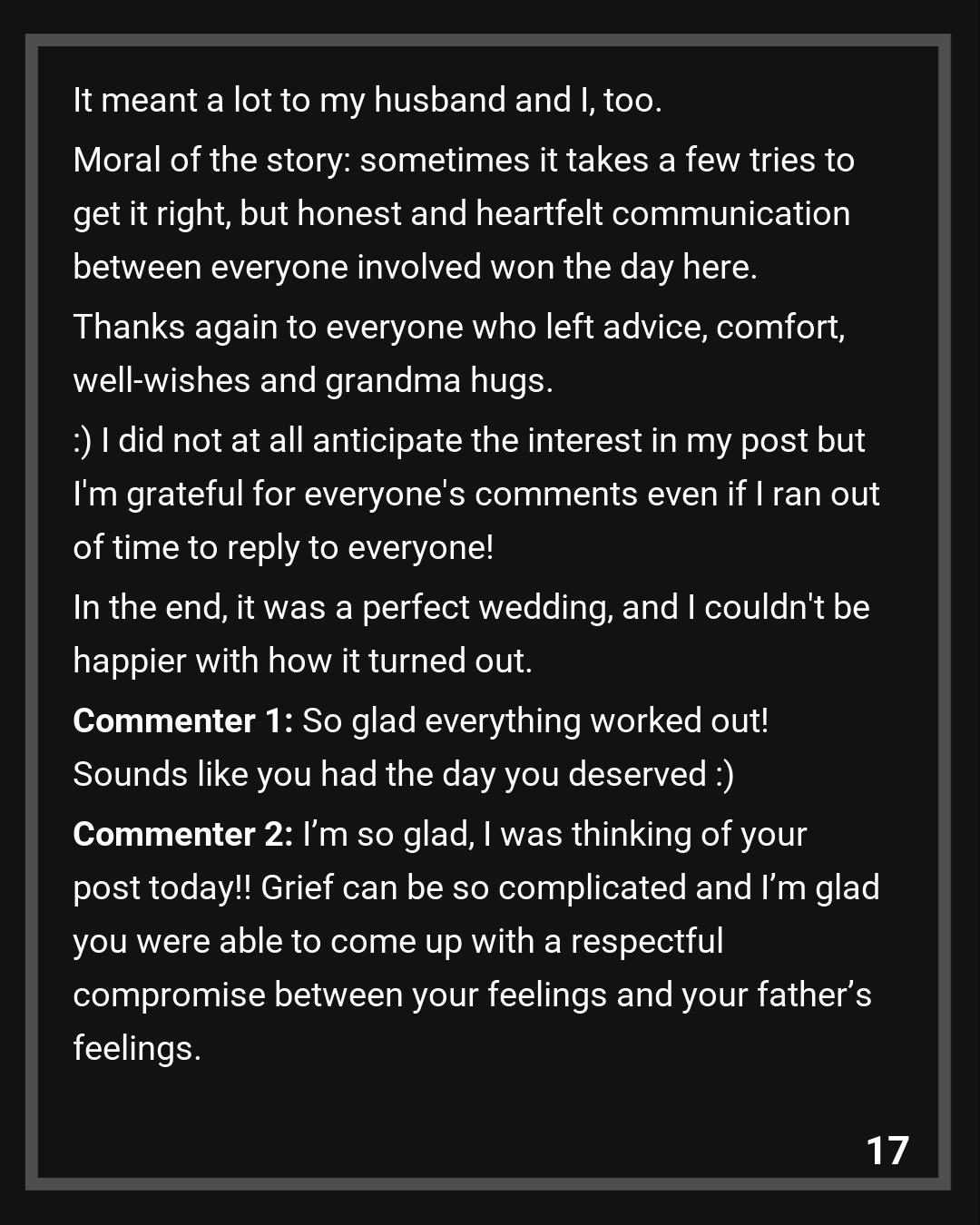
OOP could have removed her father as officiant. Reddit urged her to do exactly that. Instead, she bet that a direct conversation could do what months of hinting had failed to accomplish. The morning-after talk worked not because she found the perfect words, but because she finally stopped treating her own needs as less urgent than his pain. You can read the full exchange in.
After the ceremony, her father held her and wept. Not for the daughter who was gone. For the one standing in front of him.
Where the Crowd Looked First
The largest cluster treated the father’s grief not as emotional excess but as a structural problem with a name: parentification in reverse. Commenters zeroed in on OOP’s admission that she and her mother had become his unpaid therapists. Several noted he quit professional counseling because it felt “too impersonal,” then conscripted his surviving family into the role instead. The emotional register here ran analytical with an undercurrent of exhaustion, particularly from readers who recognized the pattern from their own families. For this group, the wedding dispute was a symptom. The disease was a man who preferred captive audiences to trained professionals.
A second cluster, nearly as vocal, fixated on the sister’s posthumous promotion. One commenter observed that the reserved seat at the wedding party table elevated the sister to a bridesmaid she never was and never would have been. This thread read the compromise as only partially successful, arguing that OOP had traded a loud memorial for a quieter one that still centered her father’s revisionist history. The tone was protective and slightly angry, driven by readers who saw the bride absorbing yet another concession dressed as a solution.
The third and most expansive cluster turned the conversation away from the family entirely. Thousands of upvotes went to a sprawling exchange about cultural rituals for honoring the dead: Día de los Muertos, Obon, All Saints’ Day, Appalachian Decoration Day. Readers from the Philippines, Finland, Poland, Mexico, Austria, and Japan described designated days for grief with something close to longing. The emotional register was warm and communal, and the implicit argument was pointed. Cultures that build containers for mourning produce fewer fathers who hijack weddings.
A smaller thread noticed what OOP could not yet say aloud. Her father idealized the sister who idealized him. Her mother and OOP fought the harder battles while alive and carried the more complicated grief afterward. Several readers named this as golden child dynamics surviving death itself.
The comment section split along a revealing line. Readers who focused on the family saw a crisis of boundaries. Readers who pulled back to culture saw a crisis of infrastructure. Both groups arrived at the same conclusion from opposite directions: grief without a designated container will find one on its own, and it will choose the room where it can command the most attention.
This editorial is based on a story originally shared on Reddit’s r/BestofRedditorUpdates community.