Featured on @StorylineReddit: November 8, 2025
The Daughter Who Was Never Worth Protecting
Everyone who hears about this Reddit stolen book family drama fixates on the manuscript, but the real theft happened years before the SIL ever touched a file. OOP spent a decade building a novel from a middle-school idea into a finished draft. Her sister-in-law spent an afternoon in a bathroom and walked out with the document. The family’s response to this discovery tells you everything the copyright dispute cannot. OOP’s parents threatened to disown her. Not the woman who stole the work. The daughter who objected.
The SIL’s method was almost insultingly simple. A bathroom break during a family visit, a copied file, a hired editor, a pseudonym. But the family’s reaction followed a script that predated the visit by years. OOP had never been the child they celebrated. Her brother existed as pride; SIL arrived as adjacent pride. OOP occupied the remaining category: a daughter with flexible boundaries, whose losses always carried less weight than anyone else’s gains.
The Reddit Stolen Book Nobody Was Supposed to Find
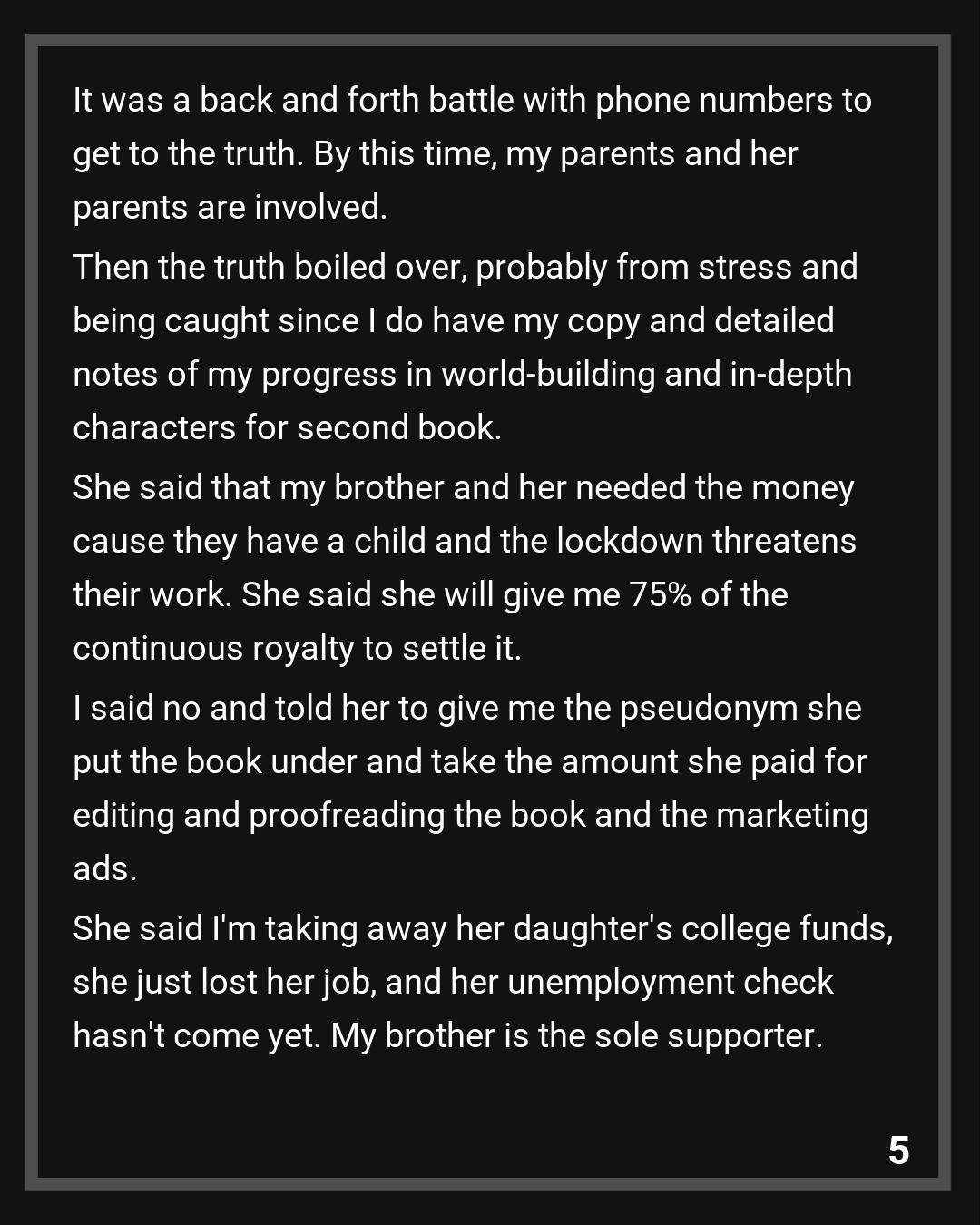
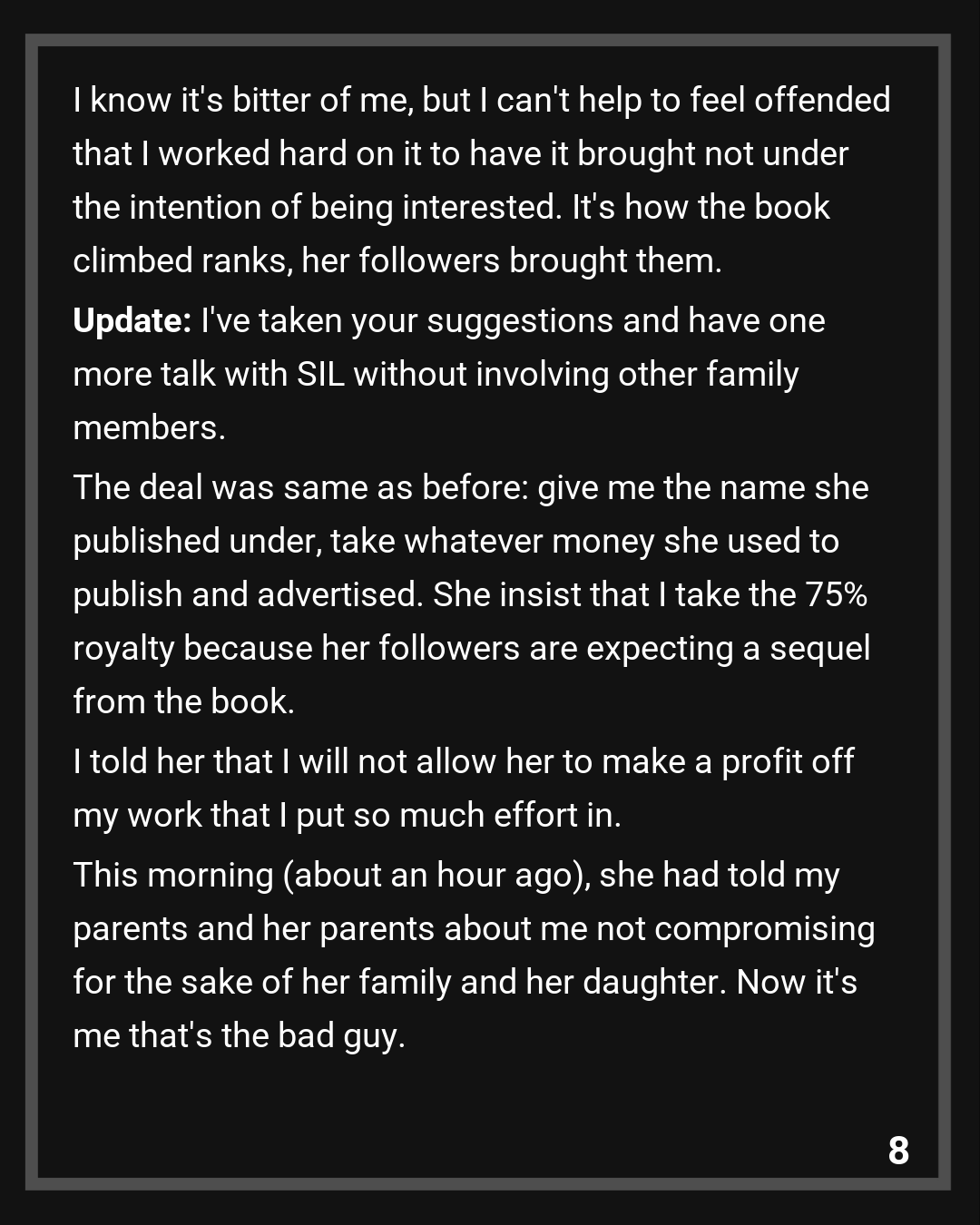
OOP discovered the theft by accident. She bought a copy of her SIL’s self-published novel out of support and recognized her own work behind a coat of professional editing. The confrontation that followed did not operate on the logic of accountability. SIL admitted to the theft under pressure, then offered 75% of royalties as though splitting stolen property constituted fairness. OOP refused. Her counter was startlingly modest: hand over the pseudonym, keep whatever you spent on editing, return the rest. The family called this unforgivable.
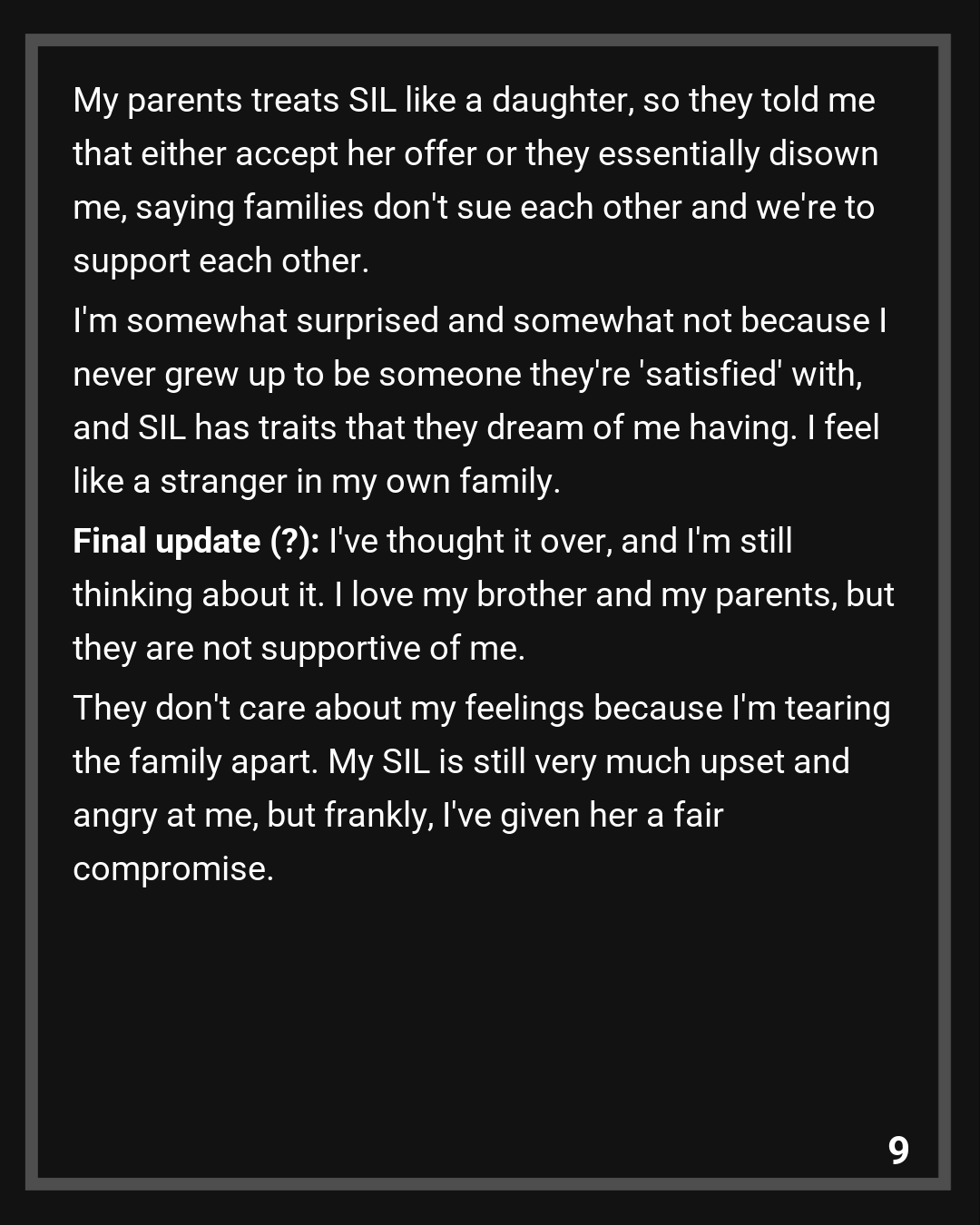
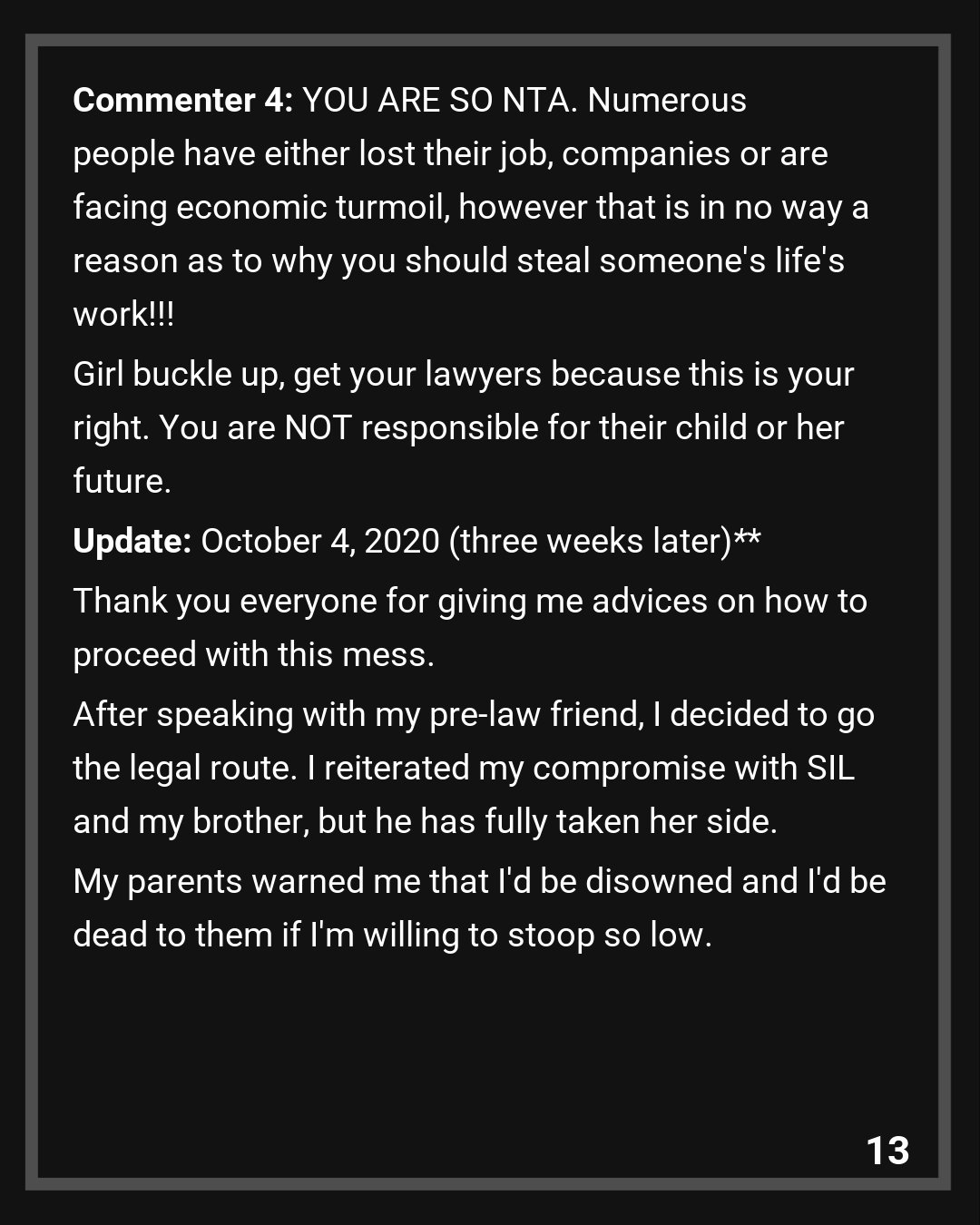
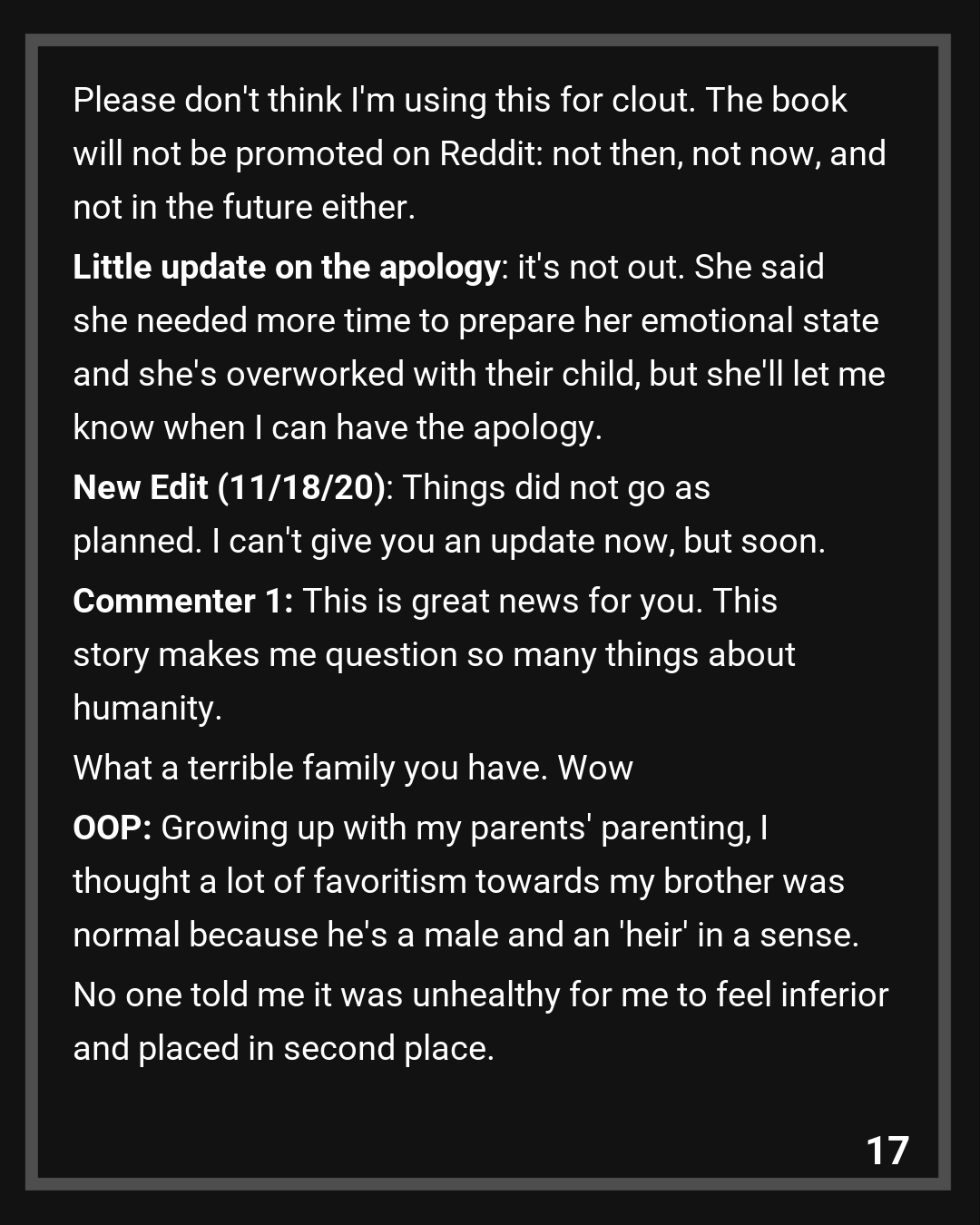
What escalated the situation was not the demand itself but the family’s inability to see it as generous. Her parents issued an ultimatum: accept the 75% or be disowned. Her brother sided with his wife without public hesitation. None of this required new allegiances. The hierarchy had been in place for years. OOP grew up as the lesser child, the one who never matched standards her brother met by default. SIL, welcomed warmly from one month into dating the brother, had been absorbing the parental approval OOP spent a lifetime failing to earn.
When the lawyer entered the picture
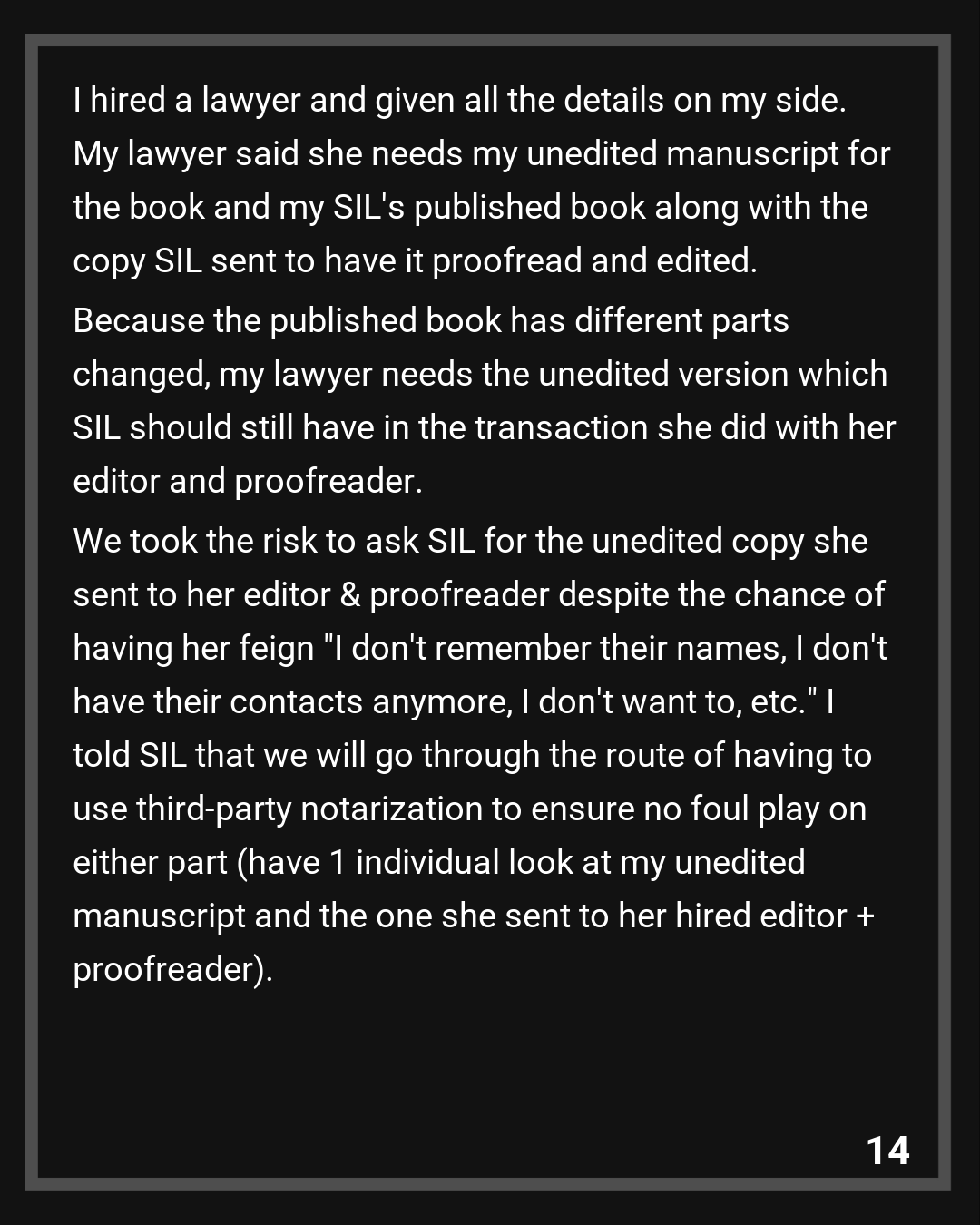
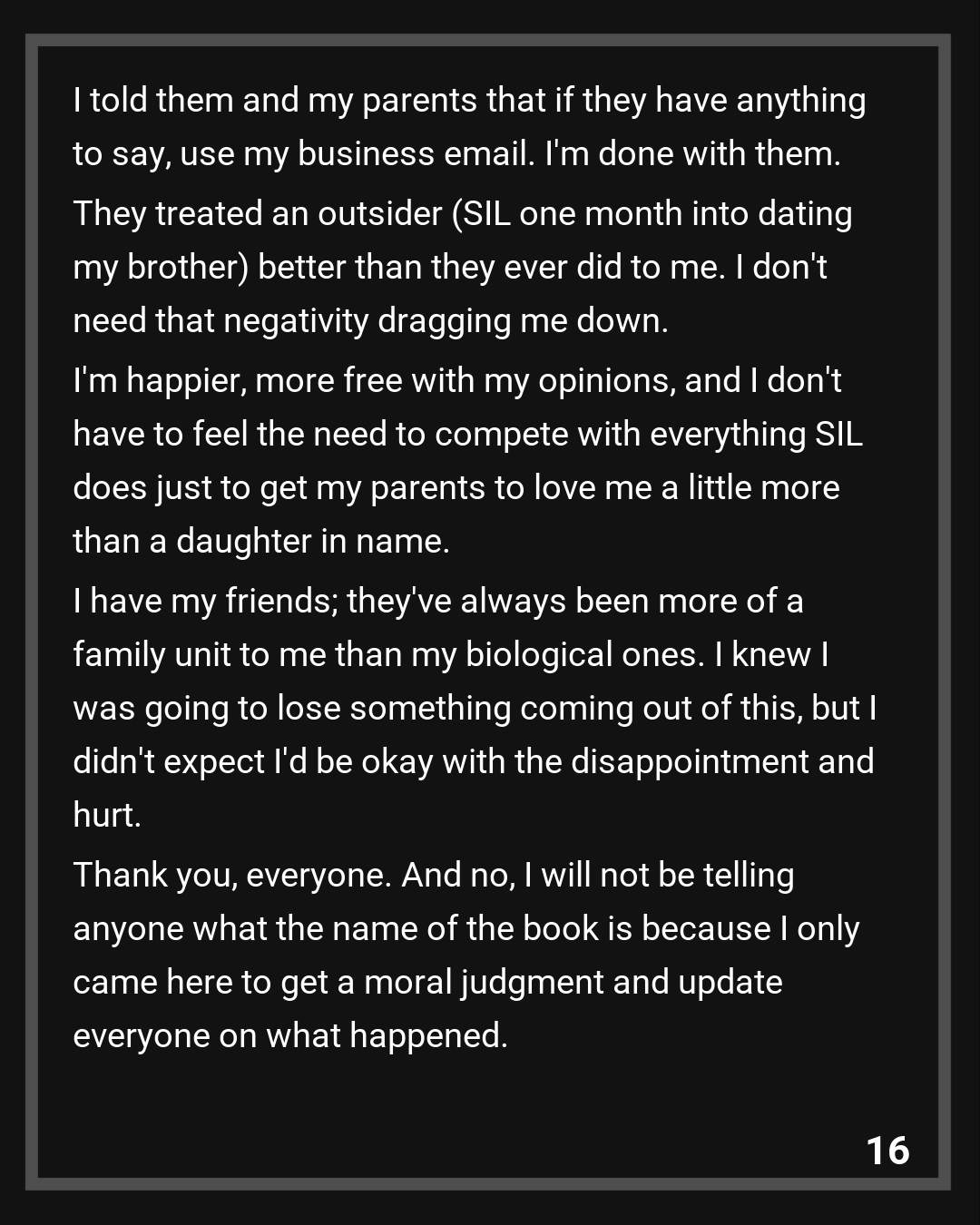
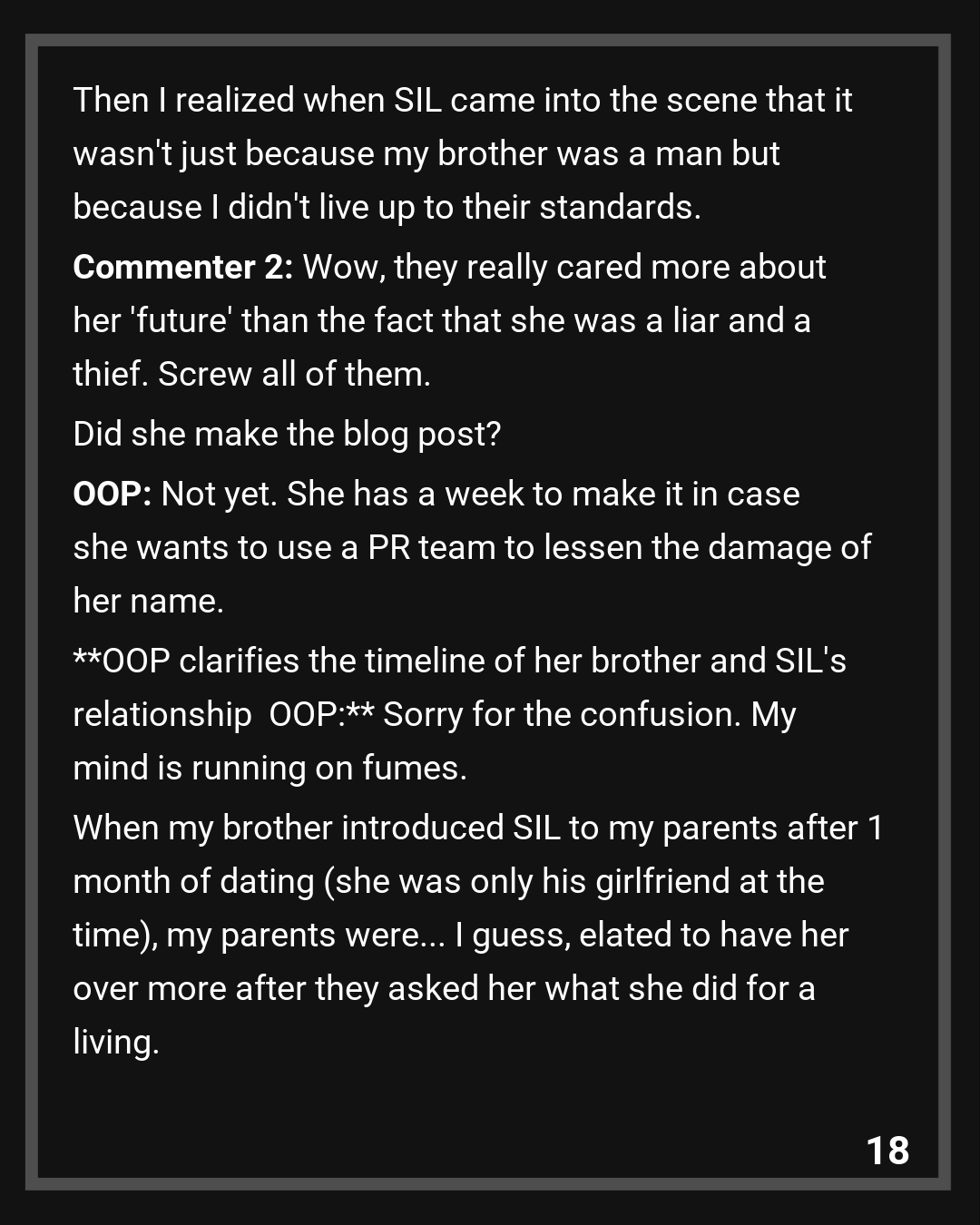
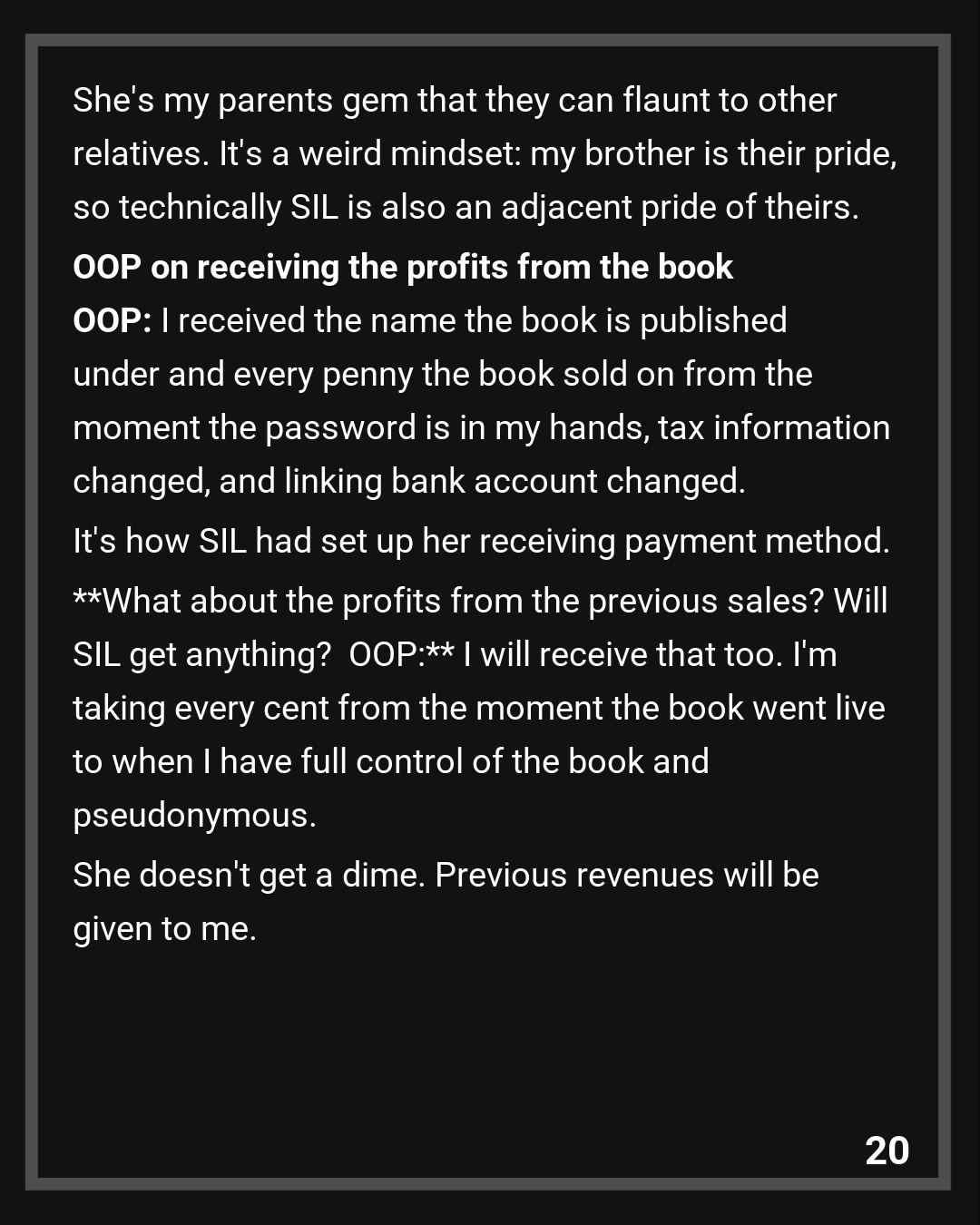
OOP hired an attorney. The moment she requested the unedited manuscript through a notarized third party, SIL accepted every original term. She surrendered the pseudonym, the full revenue from first sale to last, and agreed to post a public confession on her blog admitting the book contained nothing she had written. That confession, weeks later, still had not appeared. SIL said she needed time to manage her emotional state.
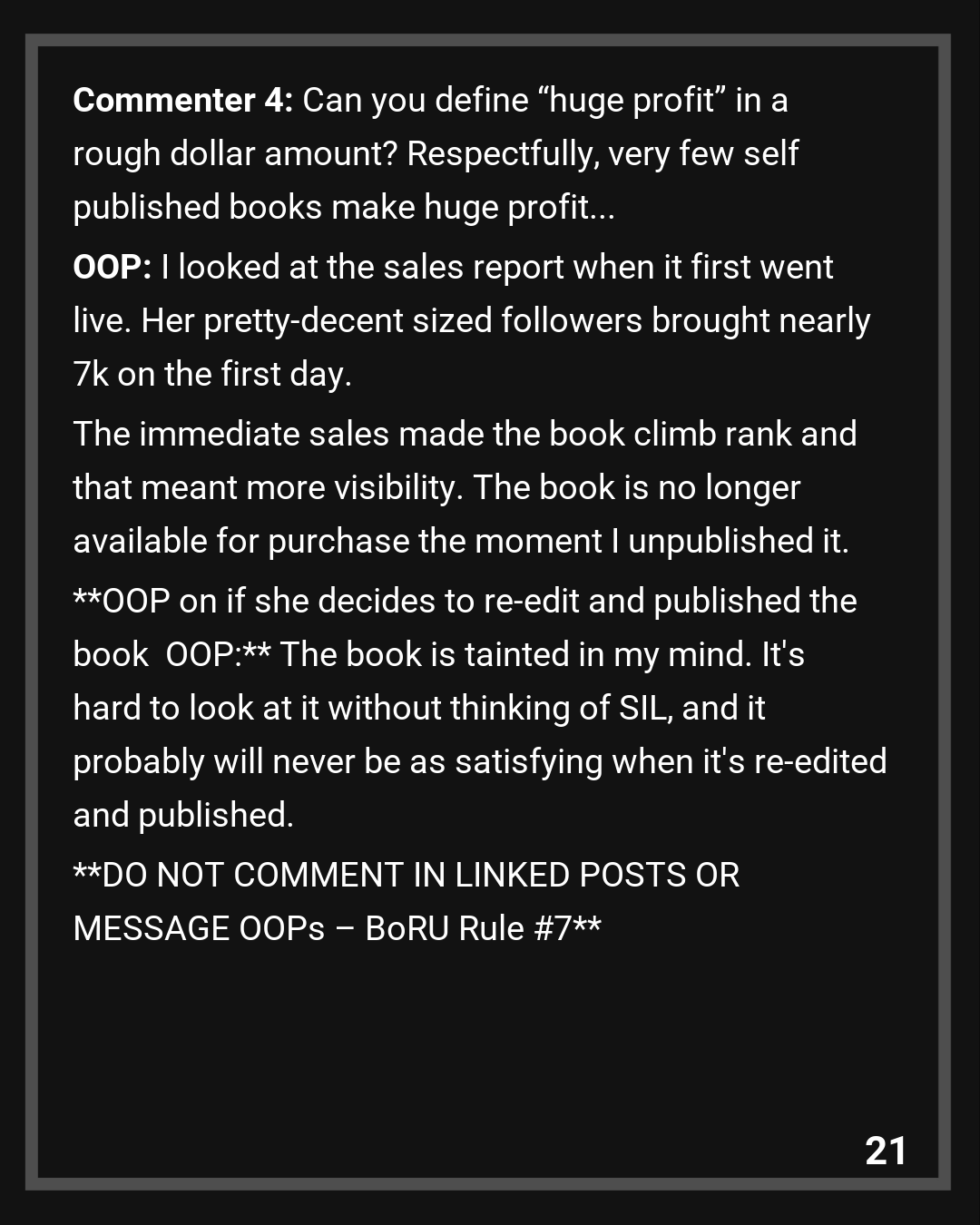
The book sat unpublished. OOP called it tainted. A decade of creative labor now permanently fused to the person who stole it, and to a family system that punished her for wanting it back.


A Bathroom Break and a Decade of Work
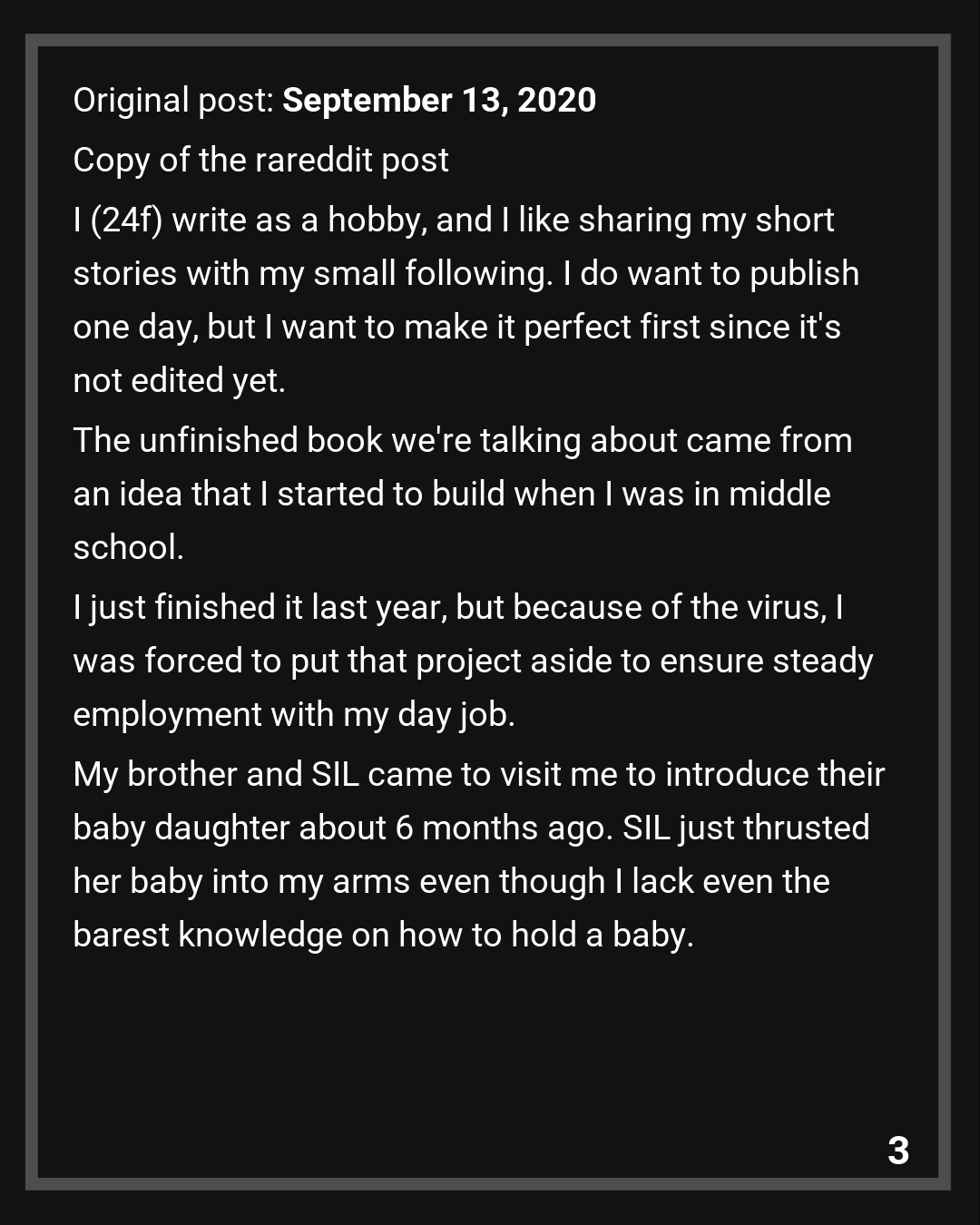
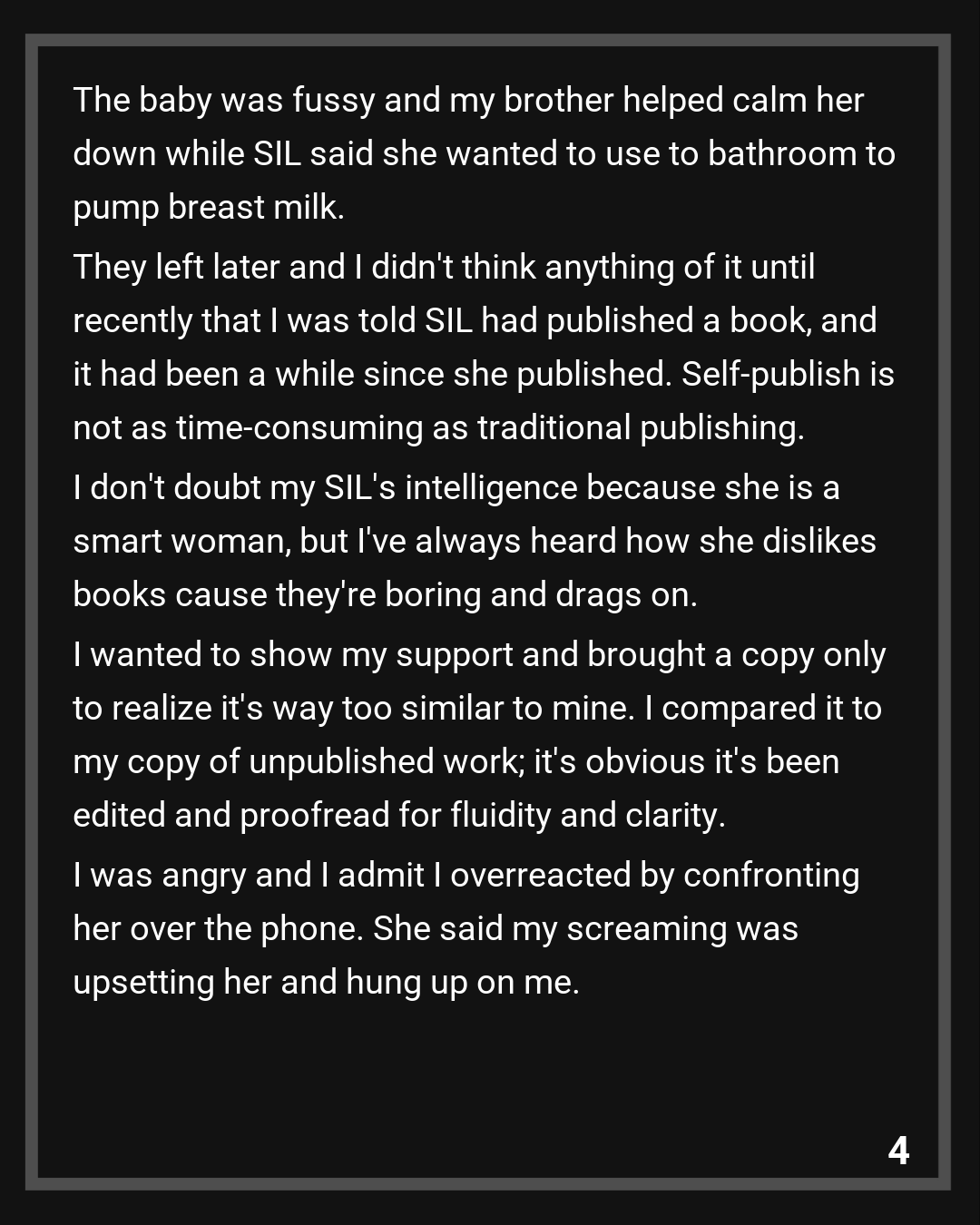
SIL chose a family visit to steal the manuscript. She handed her baby to OOP, announced she needed to pump breast milk, and used the privacy to copy a file that represented ten years of creative labor. The method itself tells a story about perceived risk. SIL did not sneak into OOP’s home. She did not hack an account. She walked into a room, took what she wanted, and walked back out holding a baby. That confidence did not come from nowhere.
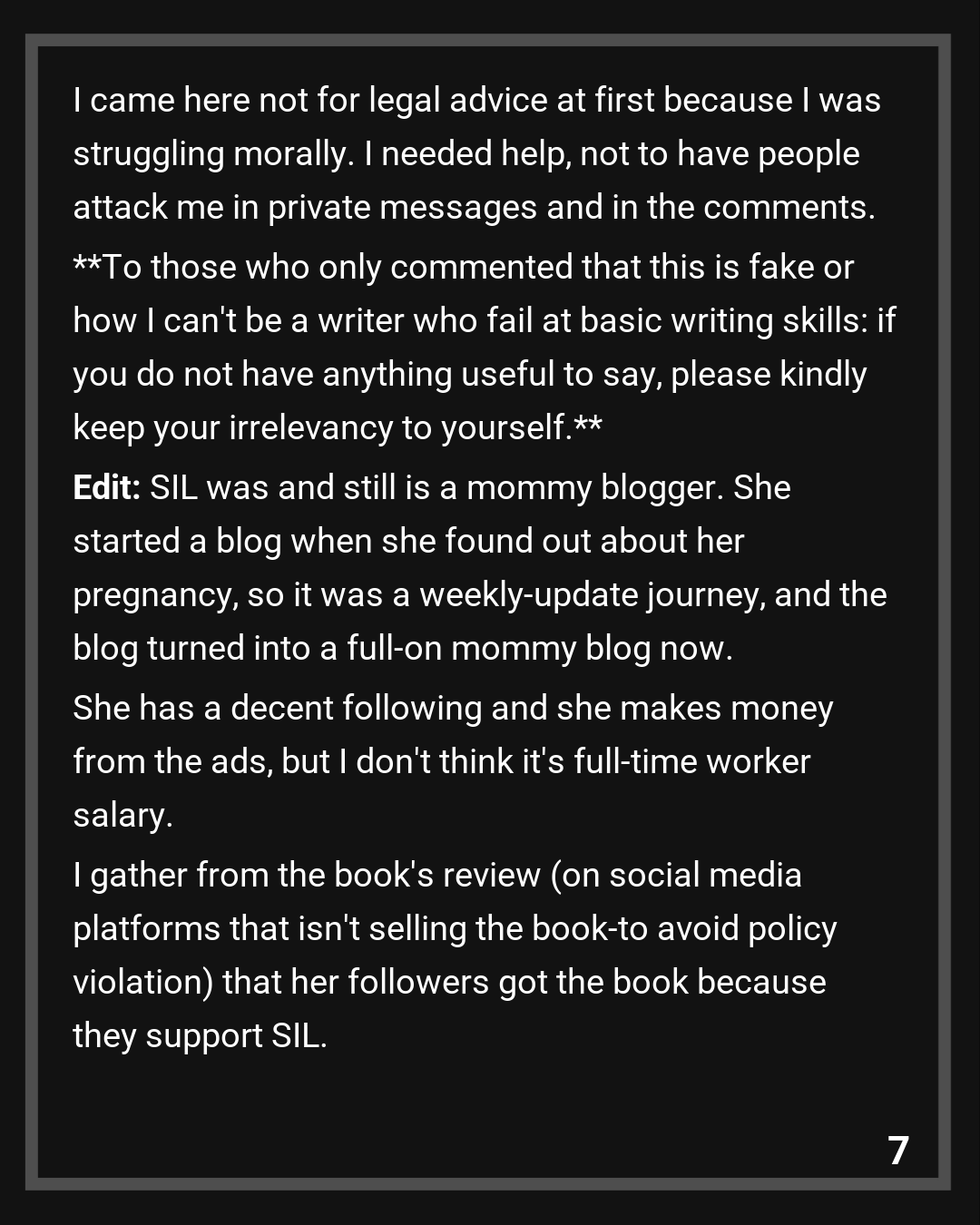
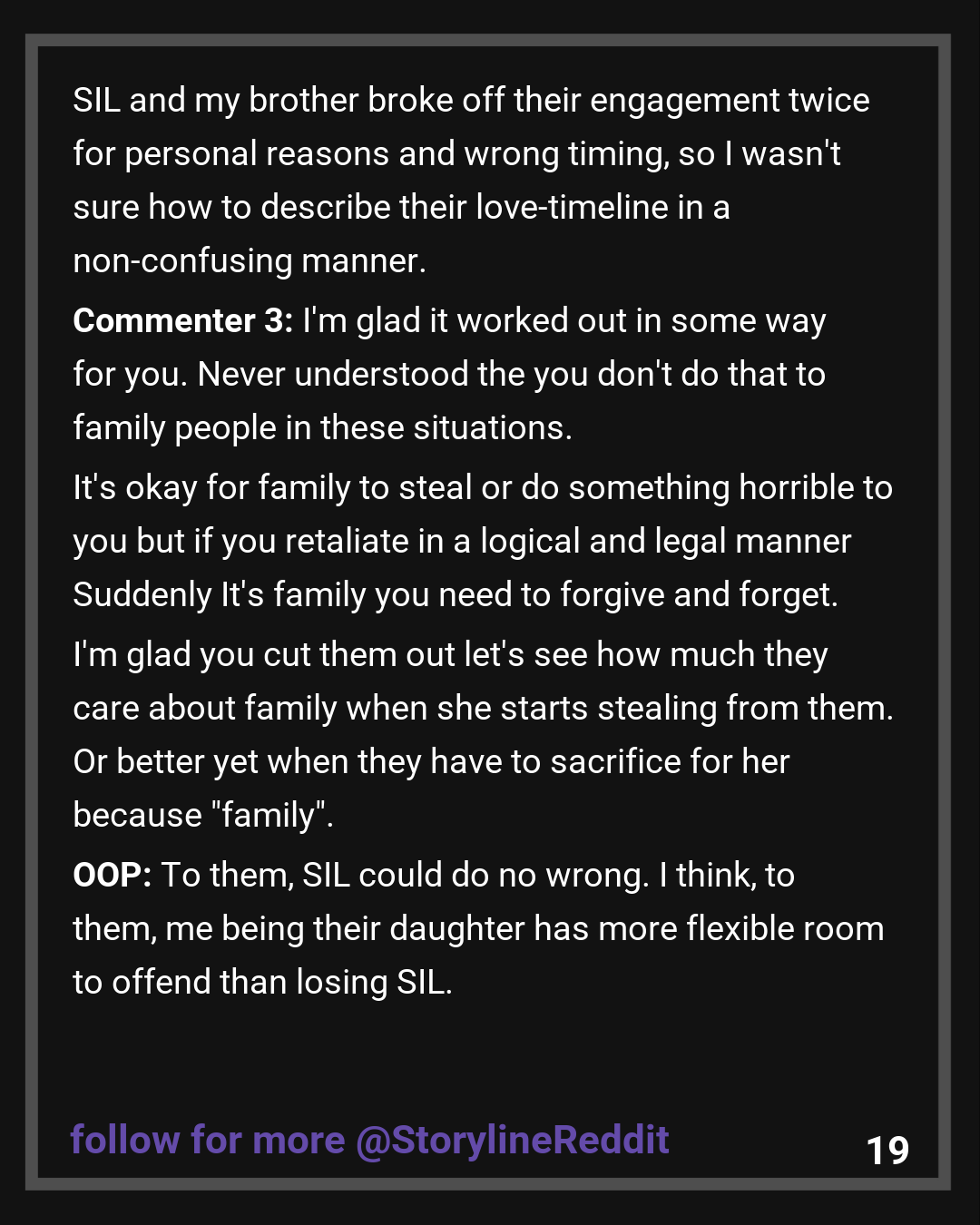
It came from a family that had spent years teaching everyone involved that OOP’s things carried less weight. Her parents treated the brother as their achievement and SIL as a welcome extension of that achievement. OOP existed in a different column entirely. She describes growing up as someone they were never “satisfied” with, a daughter who failed to embody traits her parents later found in their son’s girlfriend after one month of dating. SIL’s entitlement to the manuscript did not begin in that bathroom. It grew from a household where OOP’s labor had always been available for redistribution.
Financial desperation as moral camouflage
SIL justified the theft by pointing to her newborn, the pandemic, her lost job. These pressures were real. But thousands of people faced identical financial strain in 2020 without stealing a family member’s unpublished novel. The financial argument functioned as a shield, not a reason. It gave OOP’s parents the vocabulary they needed to side with SIL while appearing principled. “She did it for her daughter” sounds like compassion. It operated as permission.
The Hierarchy That Built Itself Before the Book Existed
OOP’s parents did not choose SIL over their daughter in the moment of the theft. They had been making that choice, incrementally, for years. The ultimatum they issued (“accept 75% or you’re dead to us”) reads as disproportionate until you understand the family’s internal accounting. OOP had always been the flexible loss. Her feelings, her career ambitions, her creative work occupied a tier below her brother’s marriage, SIL’s blog income, and the grandchild’s hypothetical college fund.
The brother’s silence reinforced this architecture. He never publicly defended his sister. He never acknowledged that his wife entered his sister’s private space and copied her work. His loyalty defaulted to his wife without friction, which suggests the default had been set long before the theft surfaced.
Why OOP kept competing
OOP admits she spent years trying to earn approval by matching whatever SIL accomplished. That pattern reveals how deeply the hierarchy had embedded itself. She was not just losing a manuscript dispute. She was losing the last round of a competition she had been entered into without consent, against a competitor the judges had already chosen.
The Offer the Family Refused to See
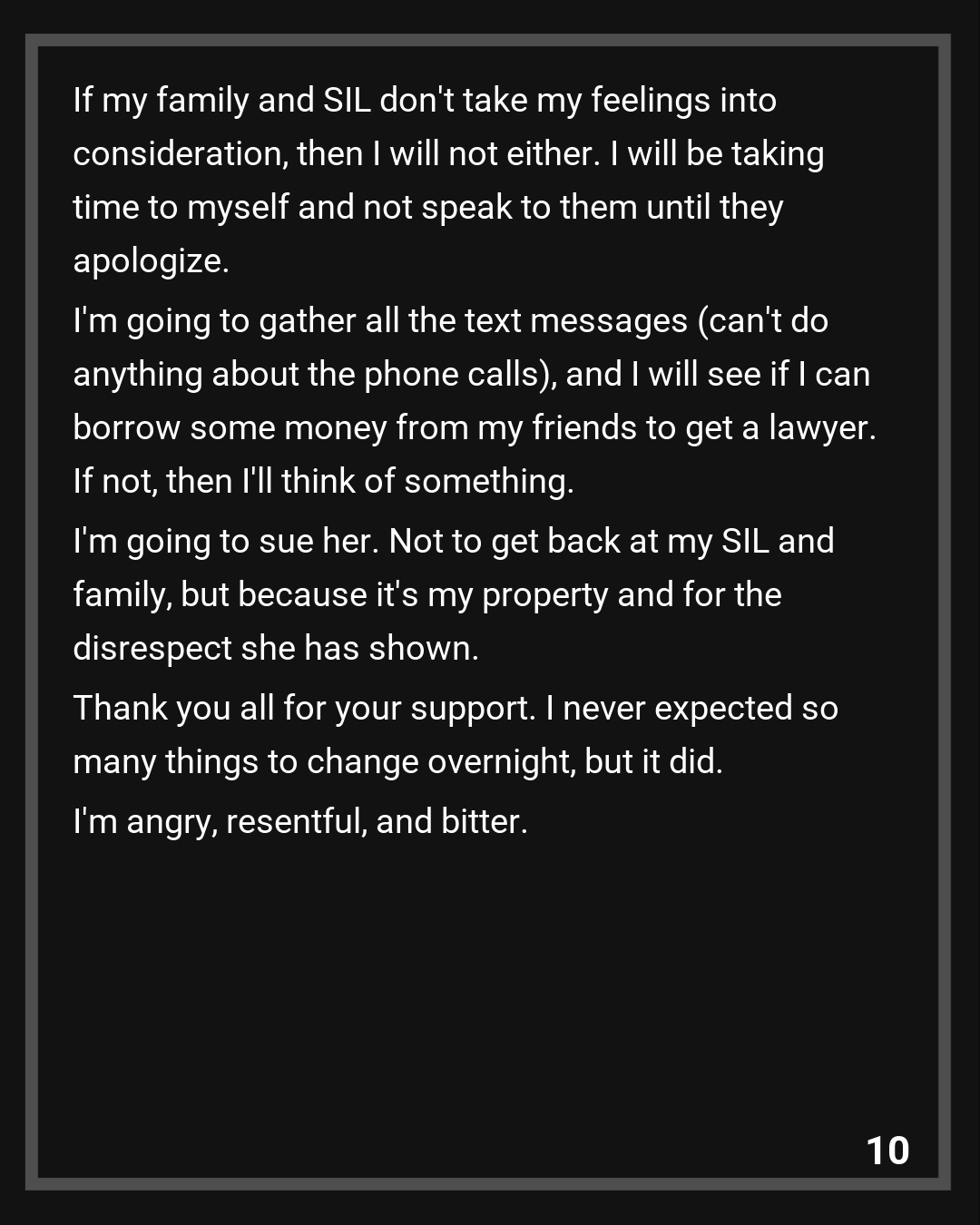
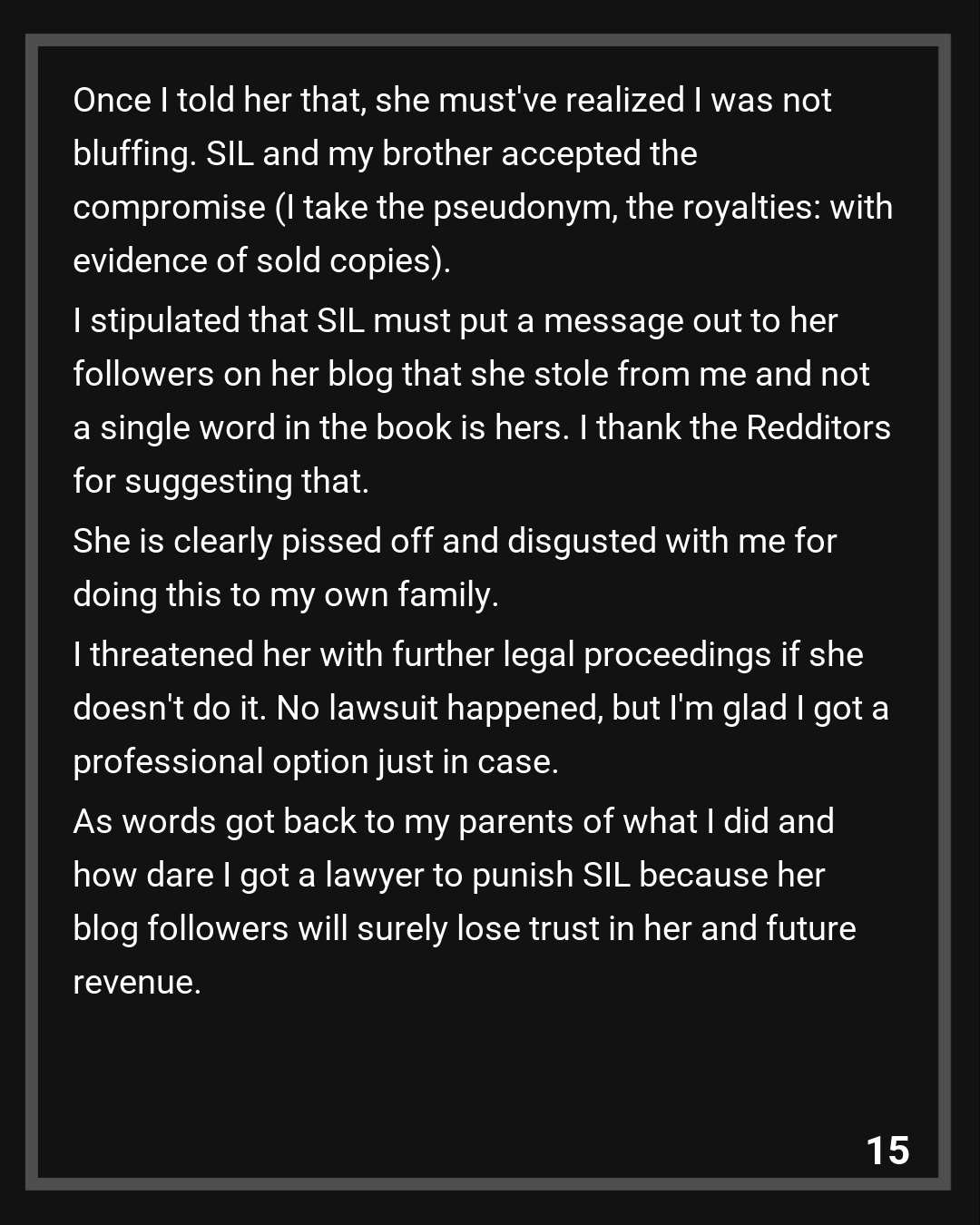
OOP’s compromise was remarkably restrained. She asked for the pseudonym and the net revenue. SIL could keep whatever she had paid for editing and proofreading. For a case involving wholesale intellectual property theft, this was closer to a settlement than a punishment. Yet the family treated it as an act of war.
The demand for a public blog confession, however, crossed a different line. OOP required SIL to tell her followers that not a single word in the book was hers. That stipulation targeted SIL’s reputation and future income from the blog, not just the stolen book’s revenue. It was punitive. Justified or not, it moved past reclaiming property and into ensuring the thief’s audience knew what she had done. OOP framed it as accountability. For SIL, whose blog following represented her only remaining professional asset after losing her job, it functioned as demolition.
The family’s fury intensified after this demand. And for the first time in the entire Reddit stolen book family conflict, their anger had a foothold that was not pure favoritism.
A Novel She Won but Cannot Open
SIL eventually accepted every term once a lawyer and a notarized third-party review entered the picture. She surrendered the pseudonym, the full sales revenue, and agreed to the public confession. OOP won completely.
She then unpublished the book.
A decade of world-building, character development, and revision now sat in a file she described as tainted. She could not look at her own creation without seeing the person who stole it and the family who defended that person. The creative violation was total. Winning the legal dispute returned the manuscript to her possession but could not return it to the space where it had once been hers alone, untouched by betrayal.
The confession that never arrived
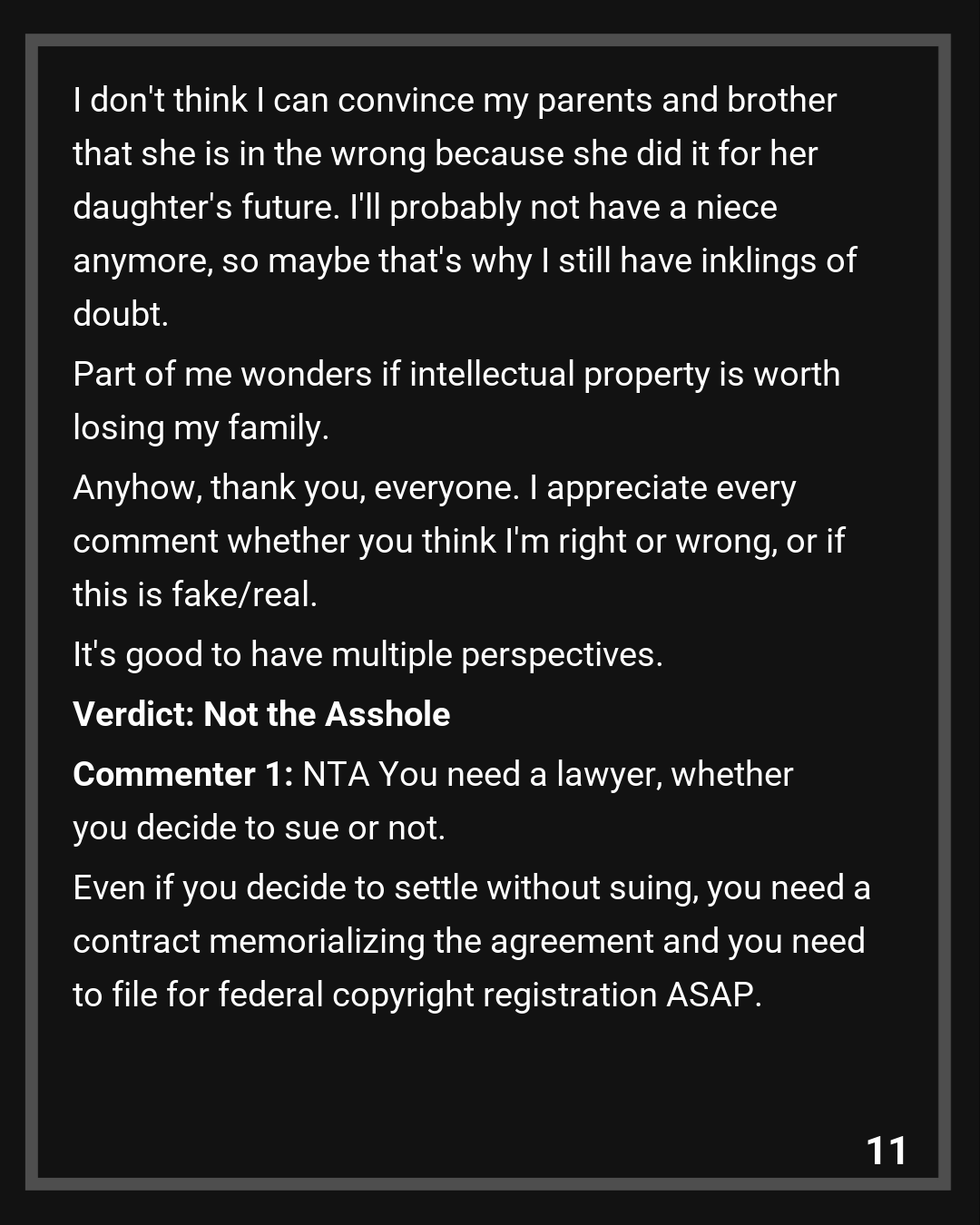
Weeks after agreeing to post the public apology, SIL had still not done it. She cited emotional overwhelm and childcare demands. OOP’s last update noted ominously that “things did not go as planned.” The manuscript sat unpublished. The apology sat unwritten. OOP’s relationship with her parents sat severed. She reported feeling happier, freer, relieved. But her final line in the original post asked whether intellectual property was worth losing a family. She already knew the family had been lost before the book was.
Where the Readers Went Looking
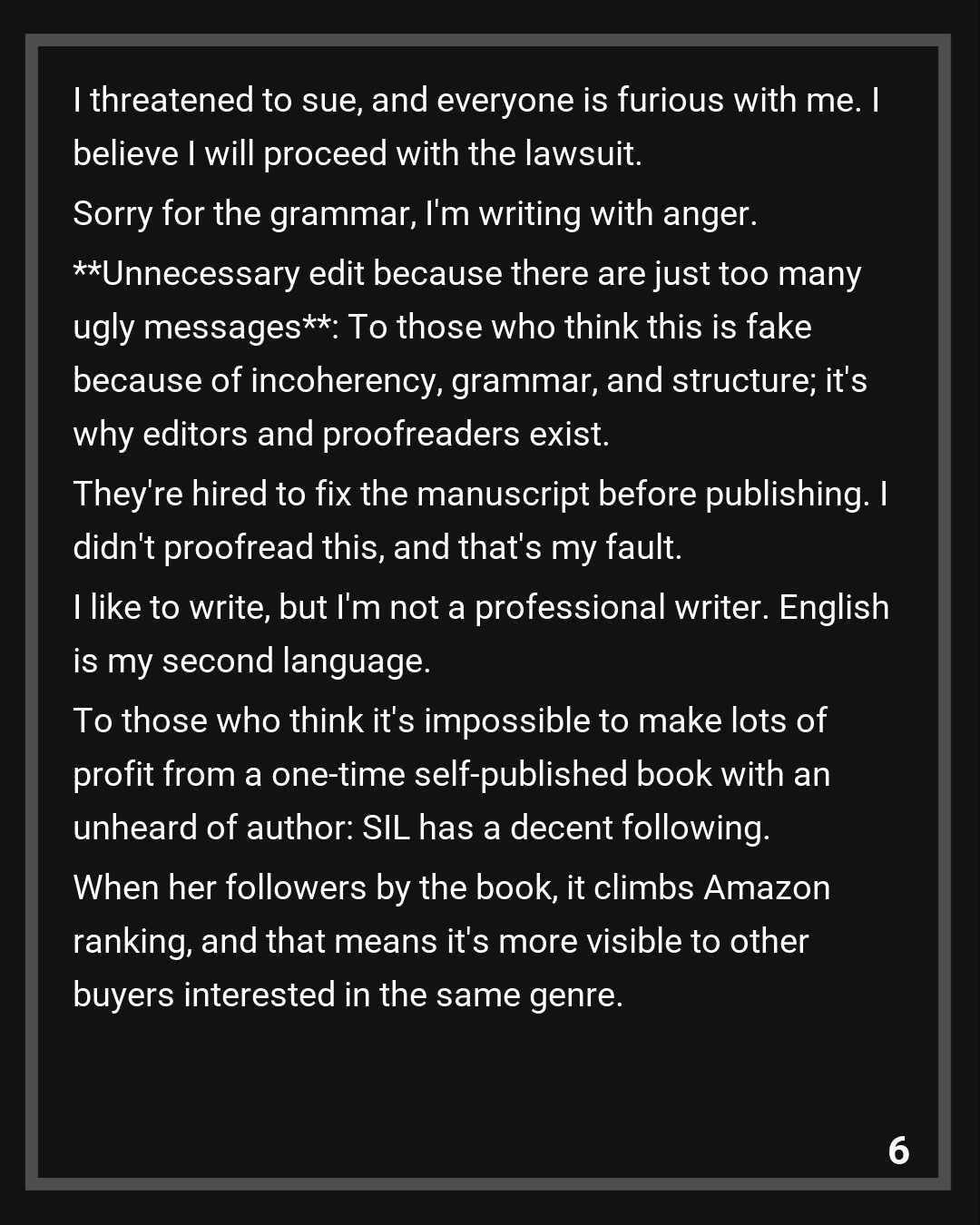
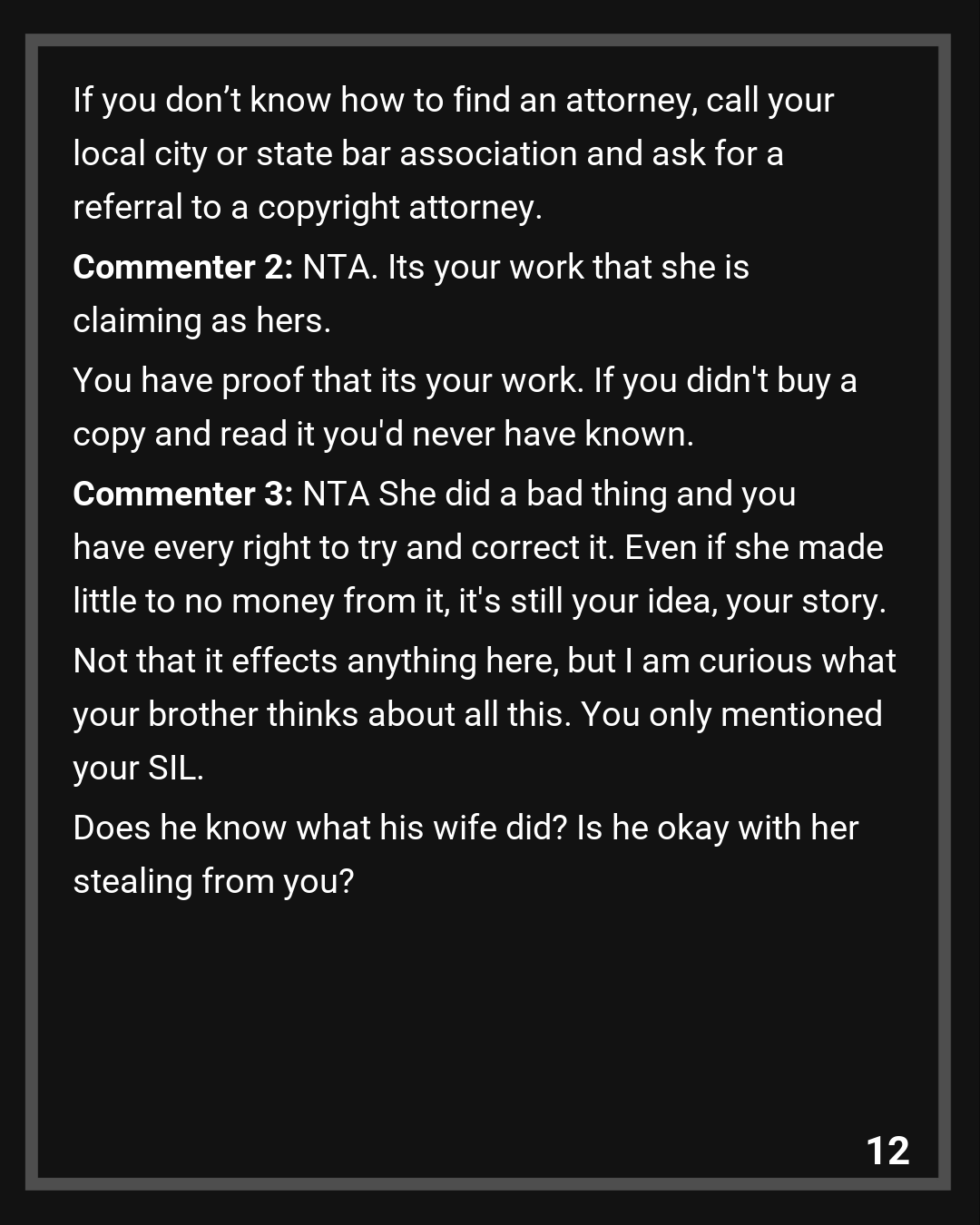
The largest cluster treated this as a case already decided. Hundreds of commenters skipped past the moral question entirely and focused on logistics: get a lawyer, file for copyright, demand the unedited manuscript. Their energy was not compassionate. It was procedural, almost impatient, as though OOP’s hesitation to sue was the real problem. These readers understood family loyalty as a trap with a specific function, designed to keep the person being wronged from using the tools available to correct it. The emotional register ran hot but disciplined. Anger directed not at the theft itself but at the family’s insistence that accountability counted as betrayal.
A second, overlapping group fixated on the parents’ ultimatum. The threat of disownment activated something personal for many commenters, several of whom described their own experiences with conditional love in granular detail. One recurring observation surfaced across dozens of replies: the moment a parent admits their love has conditions, it can never return to feeling unconditional. These responses carried grief underneath the outrage. Readers recognized the disownment threat not as a new punishment but as the first honest statement OOP’s parents had made about her place in the family.
Professional writers formed a smaller but vocal cluster. They described the manuscript’s contamination in visceral terms, comparing it to having a child’s identity stolen. Their fury carried a specificity that general readers lacked. They understood that the legal resolution, even a total victory, could not undo the publishing complications created by muddied authorship. For them, the real damage was not financial. It was the permanent corruption of a creative work that could never again belong solely to its author.
A persistent undercurrent of speculation ran through the thread about OOP’s ominous final edit, where she wrote that things had not gone as planned. Commenters split between assuming SIL reneged on the public apology and darker possibilities, including COVID deaths and legal gag orders. The unresolved ending generated more engagement than the theft itself.
The comment section reveals a readership that processes family betrayal stories through the lens of their own unresolved hierarchies. Readers did not need convincing that SIL stole the book. They needed the story to confirm something they already suspected about how families assign worth. The commenters who wrote the longest replies were not analyzing OOP’s situation. They were describing their own.
This editorial is based on a story originally shared on Reddit’s r/BestofRedditorUpdates community.