Featured on @StorylineReddit: November 4, 2025
Wrong Once Was Ignorance. Wrong Twice Was the Point.
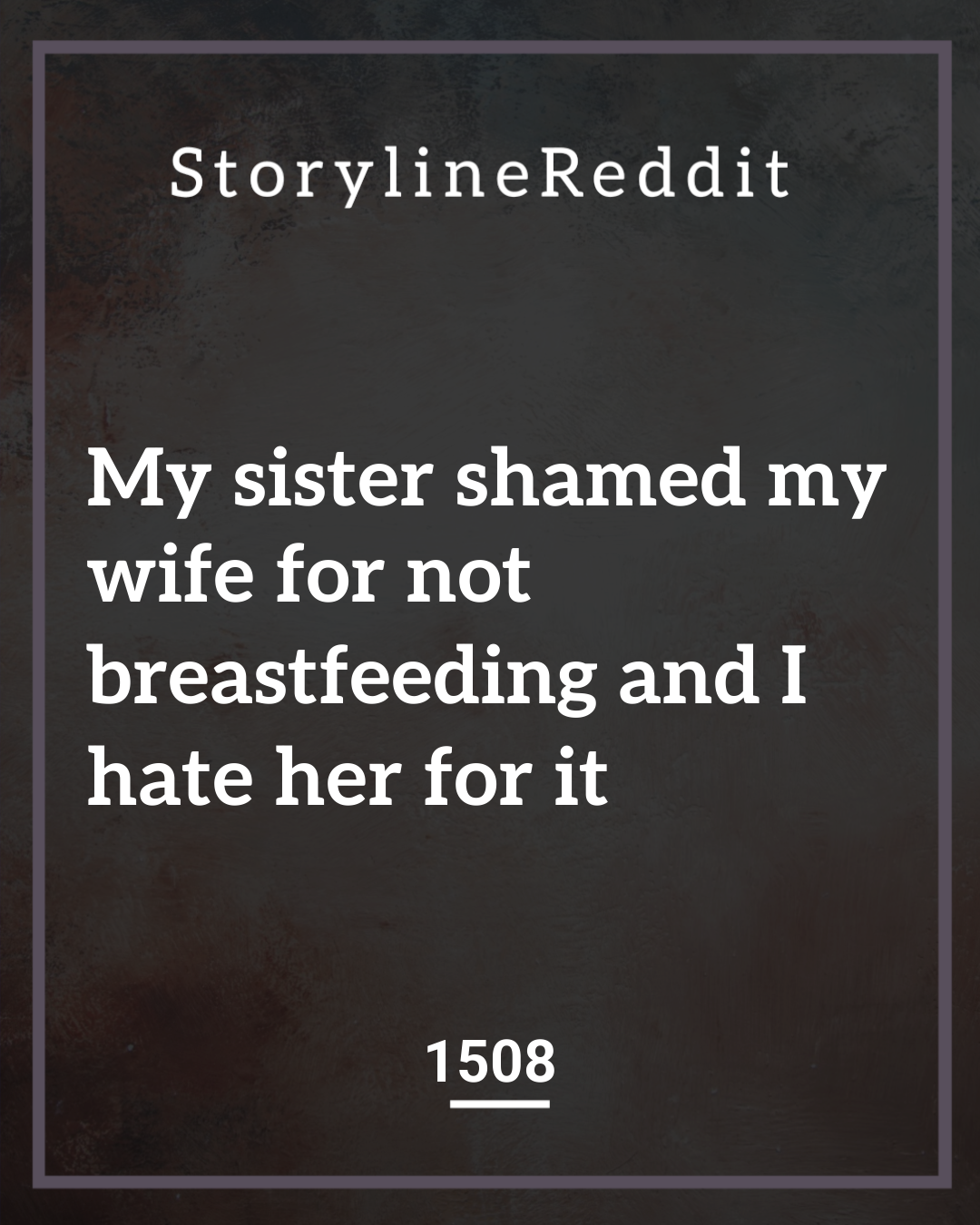
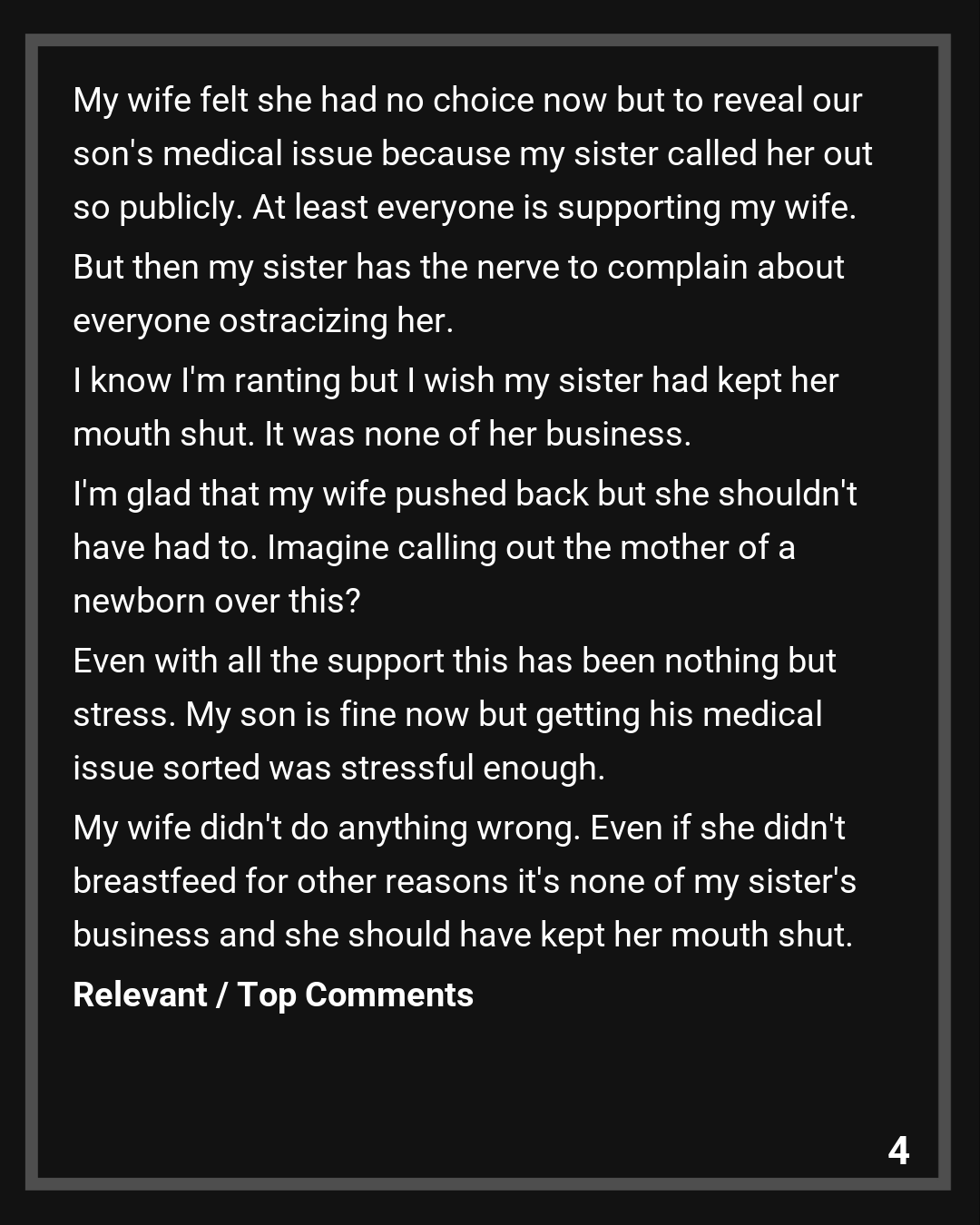
Every Reddit breastfeeding shaming story gets framed as ignorance meeting motherhood, but this one is about something colder: a woman who learned she was wrong and kept going. OOP’s sister had no children of her own when she took to social media to publicly accuse her sister-in-law of neglecting a newborn. The baby survived on prescription formula because breastmilk would have been lethal to him. That medical fact did not produce an apology. It produced a louder version of the same accusation.
The sister occupied a specific role in this family: both parents were dead, and she had apparently decided that authority over parenting decisions transferred to her by default. She wielded conviction where she had zero experience, and when the medical facts arrived, she treated them as an interruption rather than a correction.
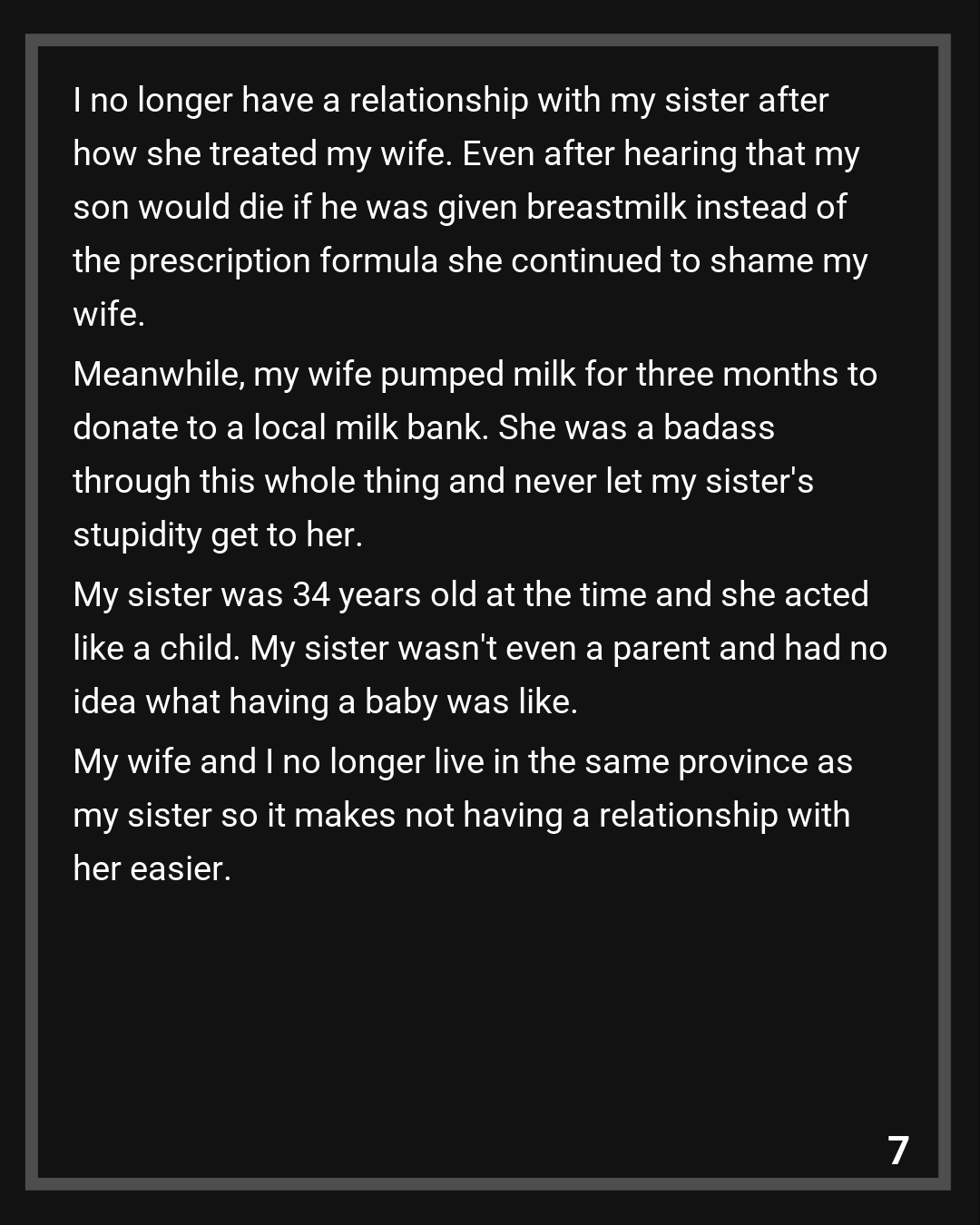
Meanwhile, the wife she targeted was pumping milk every day for three months and donating it to babies who could actually use it. The person accused of refusing to feed her child was feeding other people’s children.
The Reddit Breastfeeding Shaming Story Nobody Could Walk Back
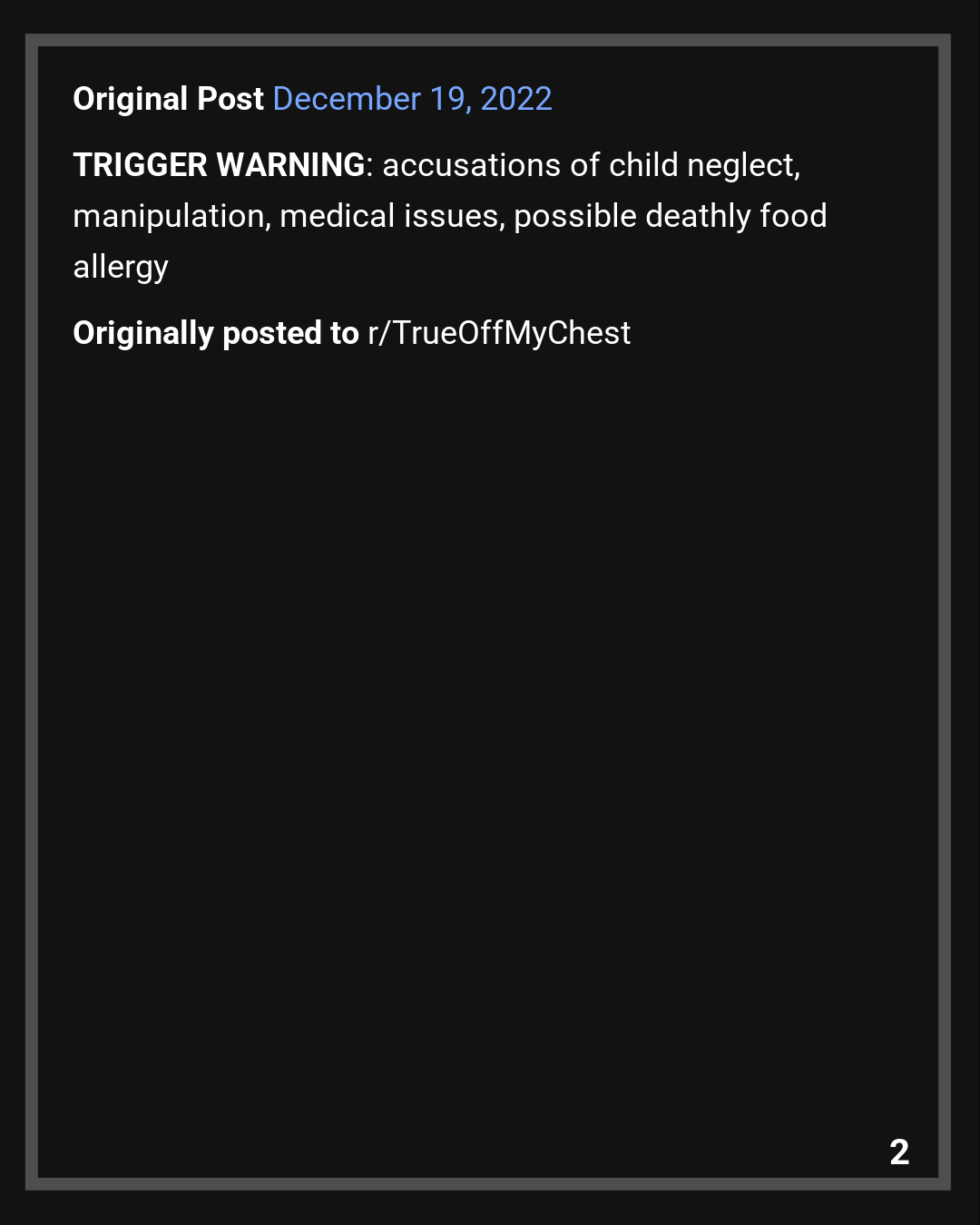
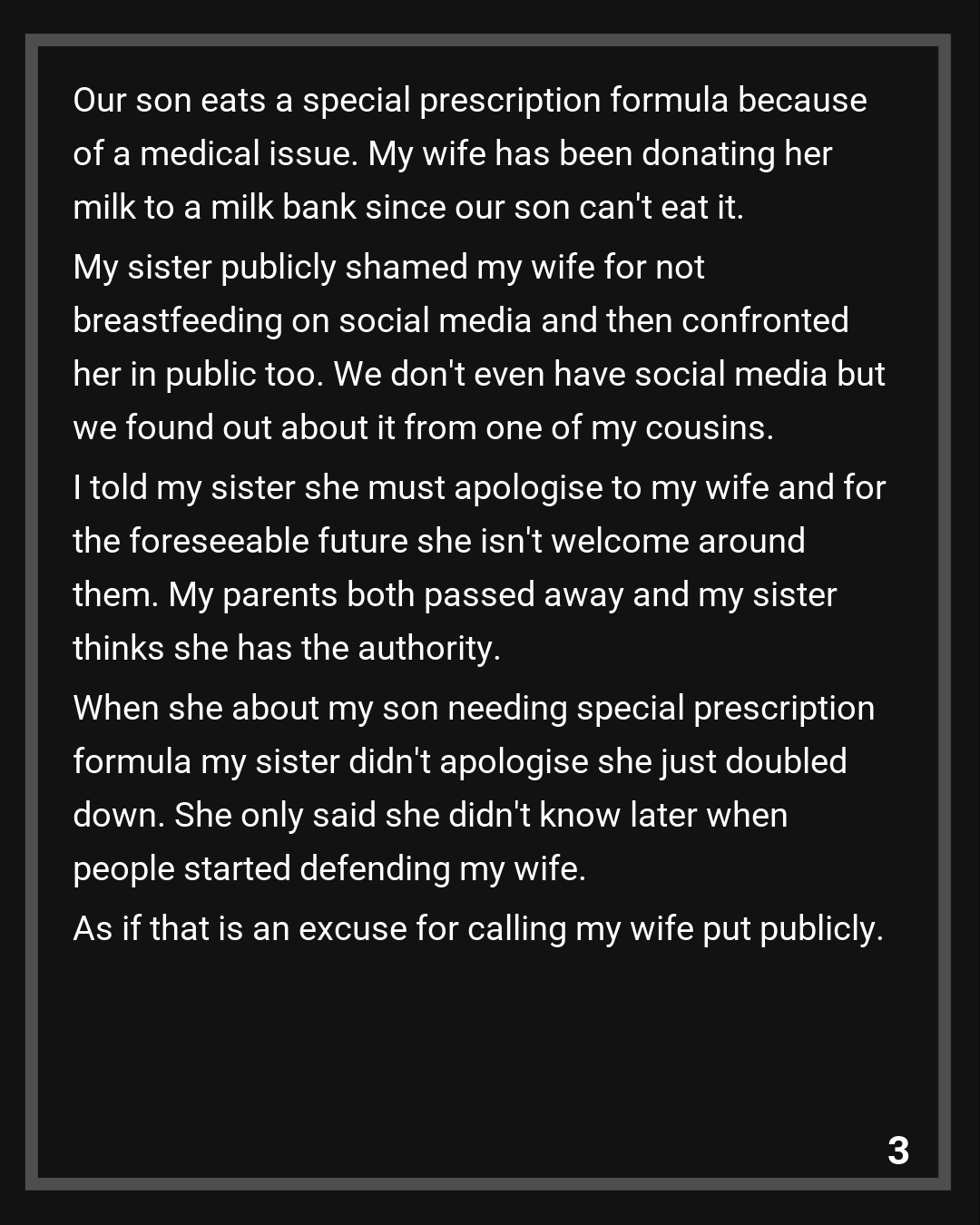
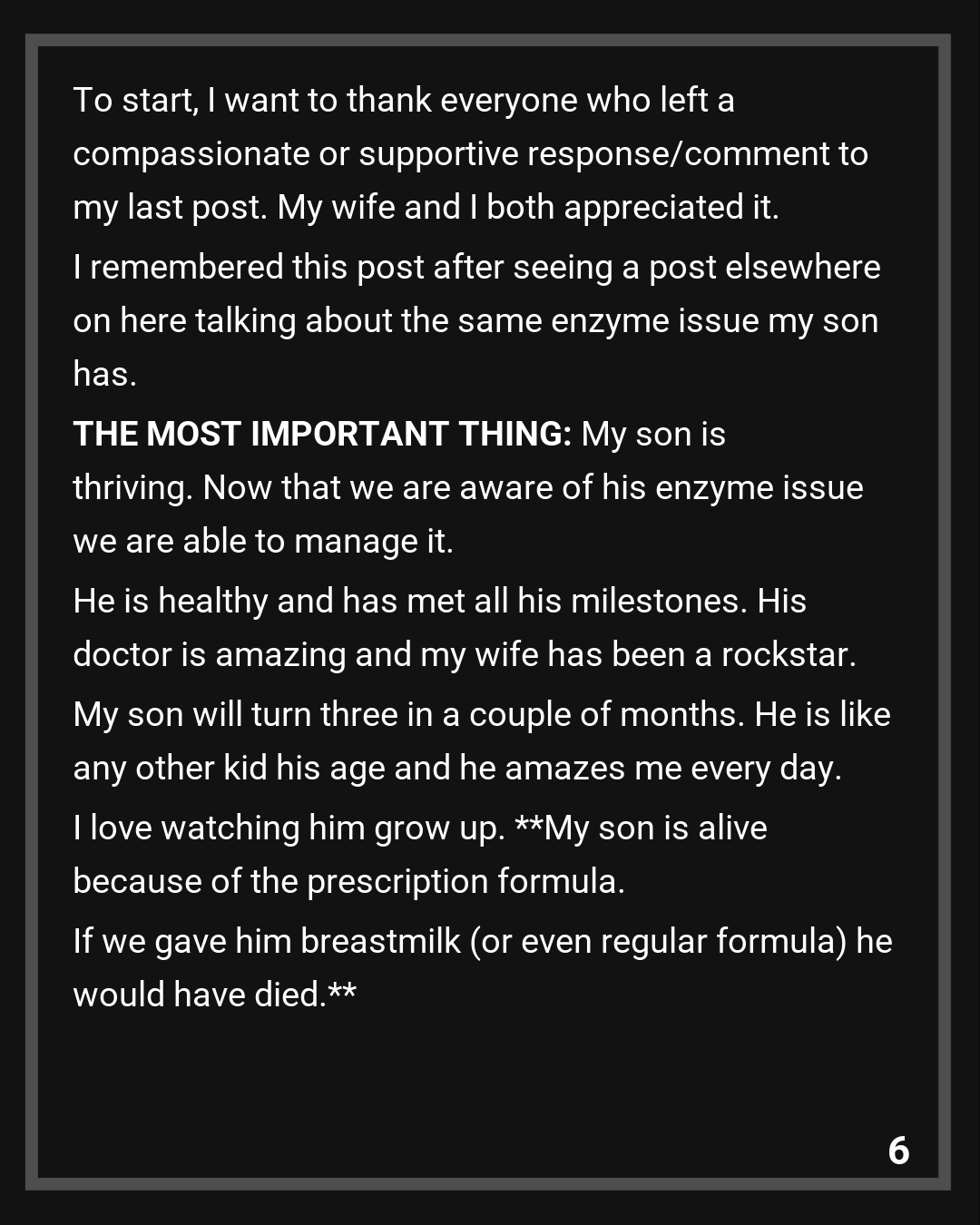
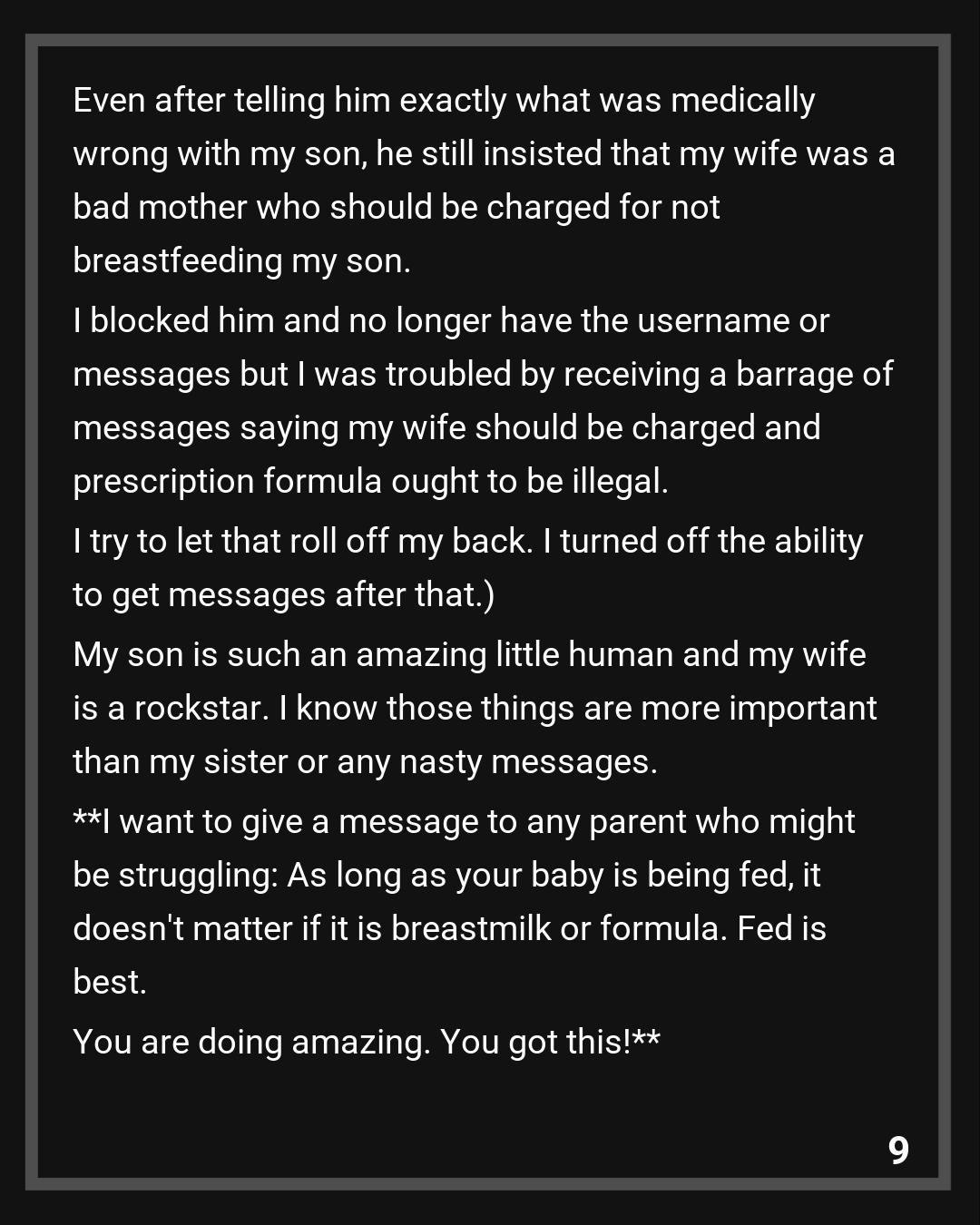
The original post arrived in December 2022, written by a father still processing the collision between a family medical crisis and a sibling who decided public humiliation was an appropriate response to a feeding choice she knew nothing about. His son required prescription formula due to an enzyme deficiency. Breastmilk would have killed him. There was no alternative feeding philosophy at play here, only chemistry.
His sister’s attack moved across two fronts: social media posts visible to their extended circle, and a direct public confrontation with his wife. When the medical reality surfaced, the sister did not recalibrate. She softened her language only after community backlash made her position socially expensive. That sequence matters. The correction came from reputational cost, not from new information.
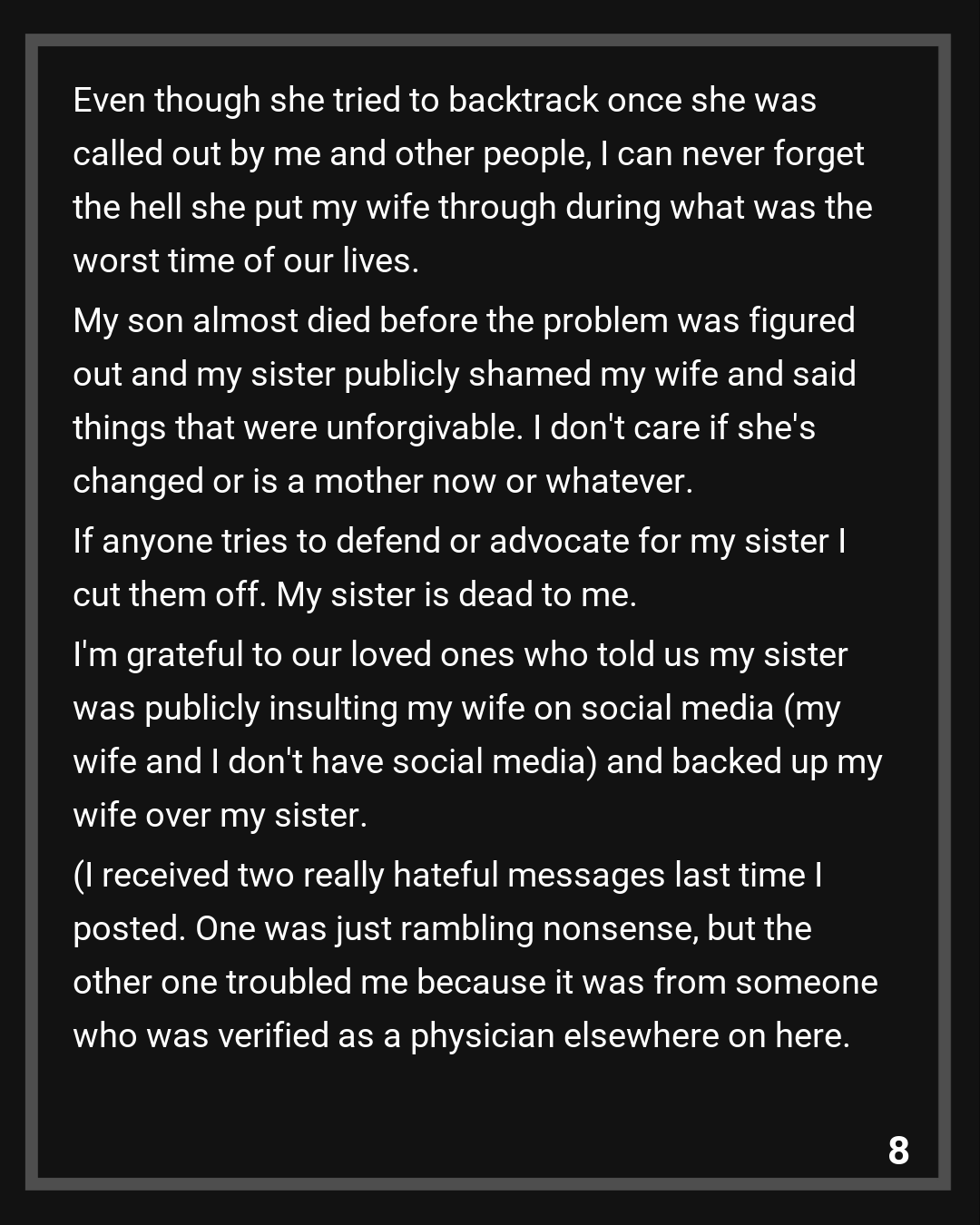
The October 2025 update, nearly three years later, carries no ambivalence. OOP’s son is healthy and meeting every milestone. His wife stopped pumping donor milk long ago. And the sister no longer exists in their lives. OOP describes cutting off not just her, but anyone who advocates on her behalf. The estrangement is total, maintained without visible hesitation.
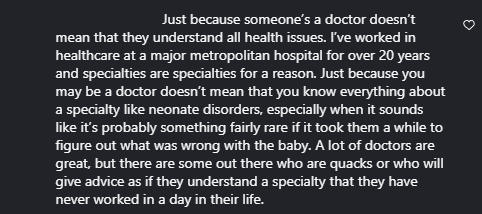
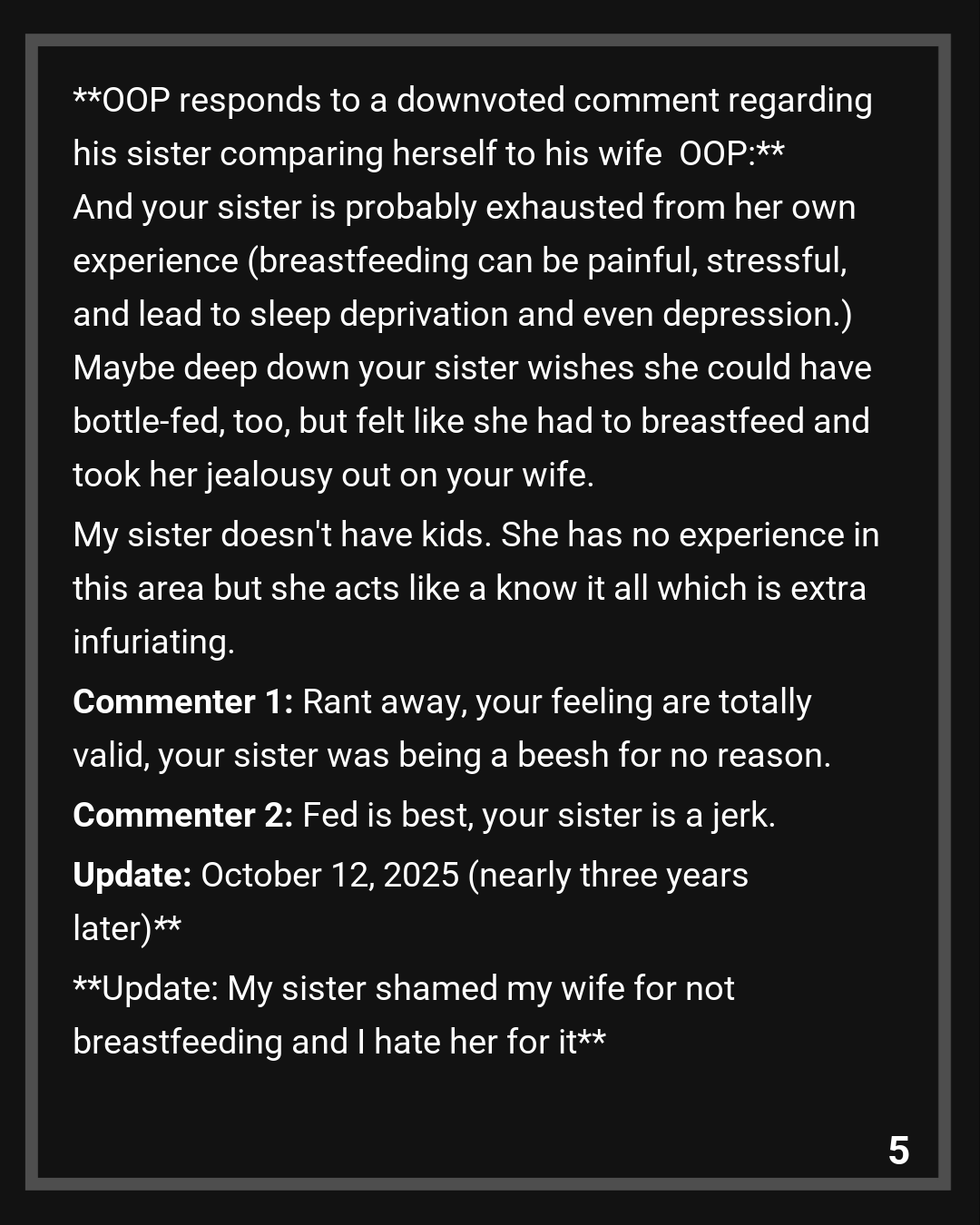
One detail from the update lands differently than the rest. A verified physician sent OOP messages insisting his wife should face criminal charges for using prescription formula. The hostility toward formula feeding in this Reddit breastfeeding shaming story extended well beyond one difficult sister. It lived in the inbox of a stranger with a medical degree.


Source
The Correction She Treated Like an Interruption
The sister learned that her nephew would have died from breastmilk. She kept shaming his mother anyway. That sequence is the entire story compressed into two facts, and the second one is the only one that matters.
Plenty of people hold strong opinions about infant feeding. Those opinions usually bend when someone explains that a baby has a life-threatening enzyme deficiency. The sister’s didn’t. She softened her public tone only when the social cost became unbearable, after friends and family rallied behind the wife. New medical information did not move her. Reputation damage did. The distinction tells you everything about where her conviction actually lived. It was not rooted in concern for the child. It was rooted in a fixed idea about what good mothers do, and that idea was load-bearing enough that a dead baby would not have dislodged it.
A Woman With No Children and All the Answers
Both of OOP’s parents had died before this conflict. The sister, then 34 and childless, stepped into a vacuum nobody asked her to fill. She positioned herself as the family’s moral authority on parenting without having changed a diaper, survived a night feeding, or sat in a pediatrician’s office watching a newborn fail to gain weight.
Her authority claim was not unusual in structure. Families reassign roles after a parental death, and someone often moves to fill the empty chair. But the sister did not fill it with support or presence. She filled it with surveillance and public judgment, targeting the most physically and emotionally vulnerable person in the family: a new mother managing a medical crisis. Her platform was social media. Her audience was the extended family. Her evidence was nonexistent.
OOP notes in that his sister “acts like a know it all,” and the phrasing is casual, almost resigned. He had watched this pattern long before the breastfeeding conflict. The baby just gave it a target with real consequences.
Milk She Pumped for Someone Else’s Baby
Here the story turns in a direction the sister never accounted for. While being publicly labeled a negligent mother, OOP’s wife was pumping breastmilk every day and donating it to a milk bank. For three months. The woman accused of withholding nutrition from her child was producing it on schedule and giving it away to infants who could metabolize it safely.
The wife’s body was doing exactly what the sister demanded. Her decision-making was doing something harder: routing that milk to babies it wouldn’t kill. She did not publicize the donation. She did not weaponize it as a rebuttal. OOP mentions it almost in passing, the way you mention something that was just part of the daily grind. Pumping is exhausting under normal circumstances. Pumping milk your own son cannot drink, while a relative tells the internet you are starving him, requires a kind of composure that makes the sister’s public theatrics look even smaller.
Zero Tolerance and Its Mirror
Three years later, OOP has not softened. His sister is “dead to me.” Anyone who defends her gets cut off. There is no door left open, no conditional path back, no interest in hearing whether she has changed.
This rigidity works as a protective structure. It shields his wife from re-exposure and his son from a relative who treated his medical needs as an inconvenience to her ideology. But it also mirrors the very absolutism OOP despises in his sister. She refused to update her position when the facts changed. He refuses to entertain the possibility that a person could change over three years. Both positions share a common architecture: a line drawn once and never revisited.
Whether that symmetry matters is a separate question. The sister’s absolutism endangered a newborn. OOP’s absolutism protects one. The stakes are not equivalent. Still, the update carries no trace of cost, no acknowledgment that cutting off a sibling required anything from him emotionally. He reports it the way someone reports canceling a subscription.
His son turned three healthy, meeting every milestone, alive because of prescription formula his aunt spent months publicly calling evidence of bad mothering.
What Reddit Said
Where the Crowd Landed
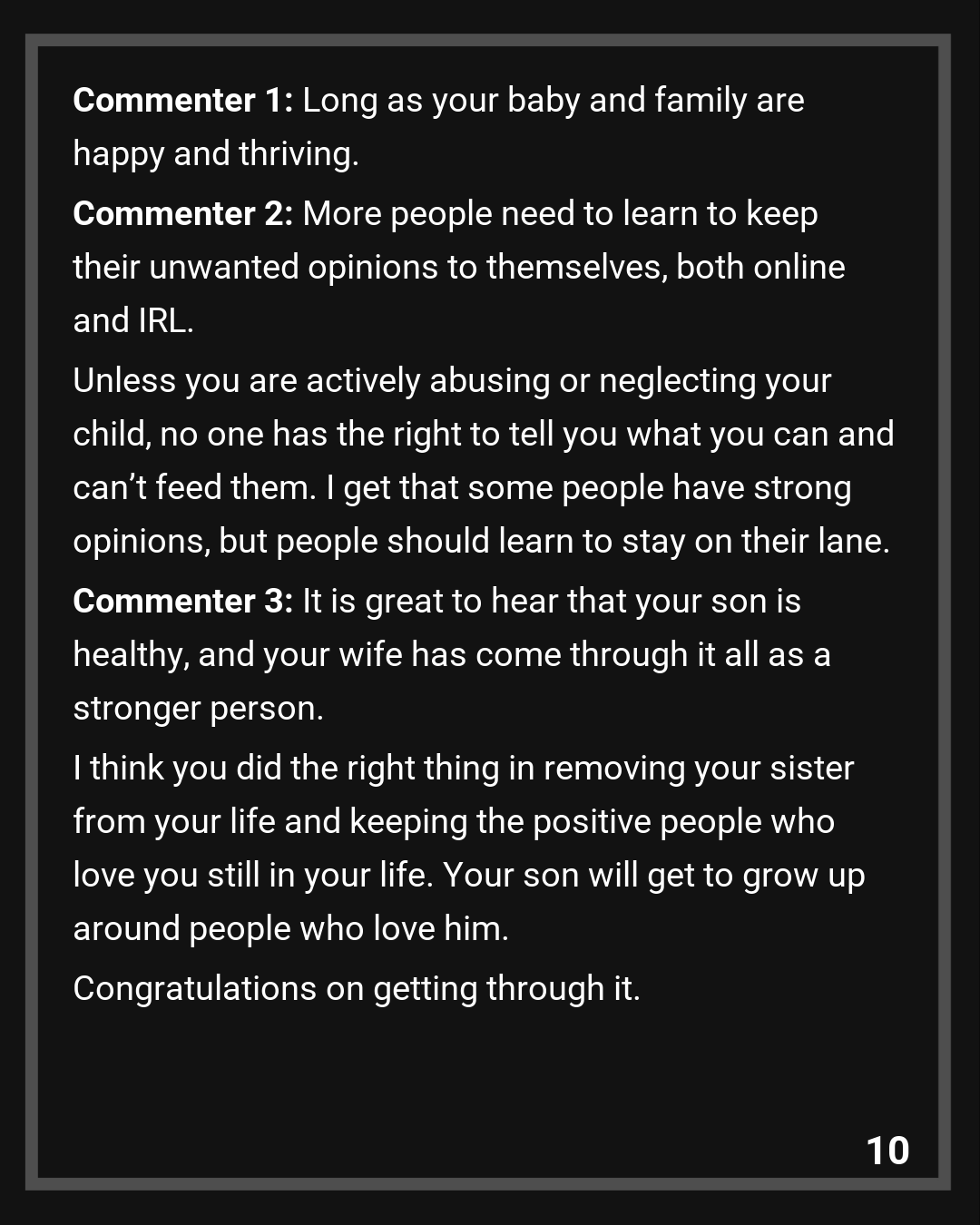
The largest cluster treated breastfeeding ideology as the real antagonist, not the sister specifically. Dozens of commenters offered personal stories of lactation failure, medical complications, premature births, and hostile consultants. These weren’t sympathy responses. They were testimony. Readers recognized the sister as a specific instance of a pressure system they had encountered in hospitals, family gatherings, and online parenting spaces. The emotional register ran hot, and the personal stakes were high. People wrote with the specificity of wounds that had not fully closed, even a decade later.
A second cluster locked onto the wife’s milk donation as the moral centerpiece of the story. Commenters who had received donor milk, struggled to pump, or watched their own supply fail treated the wife’s three months of pumping as an act of extraordinary generosity rather than a footnote. Several pointed out the physical toll of pumping for a baby you cannot feed. The admiration was genuine, but it also functioned as a rebuttal weapon: readers used the donation detail to sharpen the contrast with the sister’s accusations.
The verified physician who harassed OOP drew its own focused outrage. Commenters called for medical board reports, questioned the legitimacy of the verification, and connected the incident to broader patterns of ideological rigidity within healthcare. A lactation consultant joined the thread to explain the likely diagnosis and affirm that feeding this child breastmilk would have constituted criminal neglect. Her comment collected thousands of upvotes precisely because it delivered expert validation in the language of the community rather than from above it.
A fourth cluster, smaller but sharp, framed the sister’s behavior as a case study in authority without credentials. The recurring joke was that nobody parents better than someone without children. Readers treated the sister’s childlessness not as an incidental detail but as the structural foundation of her confidence. Several connected this to a broader critique of “crunchy” parenting culture and its overlap with anti-vaccine sentiment and naturalist ideology.
The comment section processed this story less as a family conflict and more as a referendum on who gets to define adequate motherhood. Readers arrived with preloaded grievances from their own encounters with breastfeeding absolutism, and the sister became a vessel for every lactation consultant who withheld compassion, every relative who watched a mother struggle and offered judgment instead of help. The physician detail radicalized the thread further, converting personal frustration into institutional critique.