Featured on @StorylineReddit: November 4, 2025
Two Women, Two Lies, One Floor Plan
Forty days is not very long to unravel a life someone else spent years constructing, but a Bluey t-shirt in the hamper was enough to expose a Reddit fiancé’s hidden children. OOP quit her job, left Minnesota, and moved into a two-bedroom house in Texas for a man who had already filled that second bedroom on weekends she was never supposed to know about. He didn’t just hide three kids. He ran parallel storylines: to OOP, he was a devoted partner building a future; to the mother of his children, OOP was a pregnant one-night stand he was tolerating out of obligation. Neither woman had enough information to see the full architecture, and that imbalance was the design, not the accident.
A Reddit Fiancé’s Hidden Children Behind Every Kind Gesture
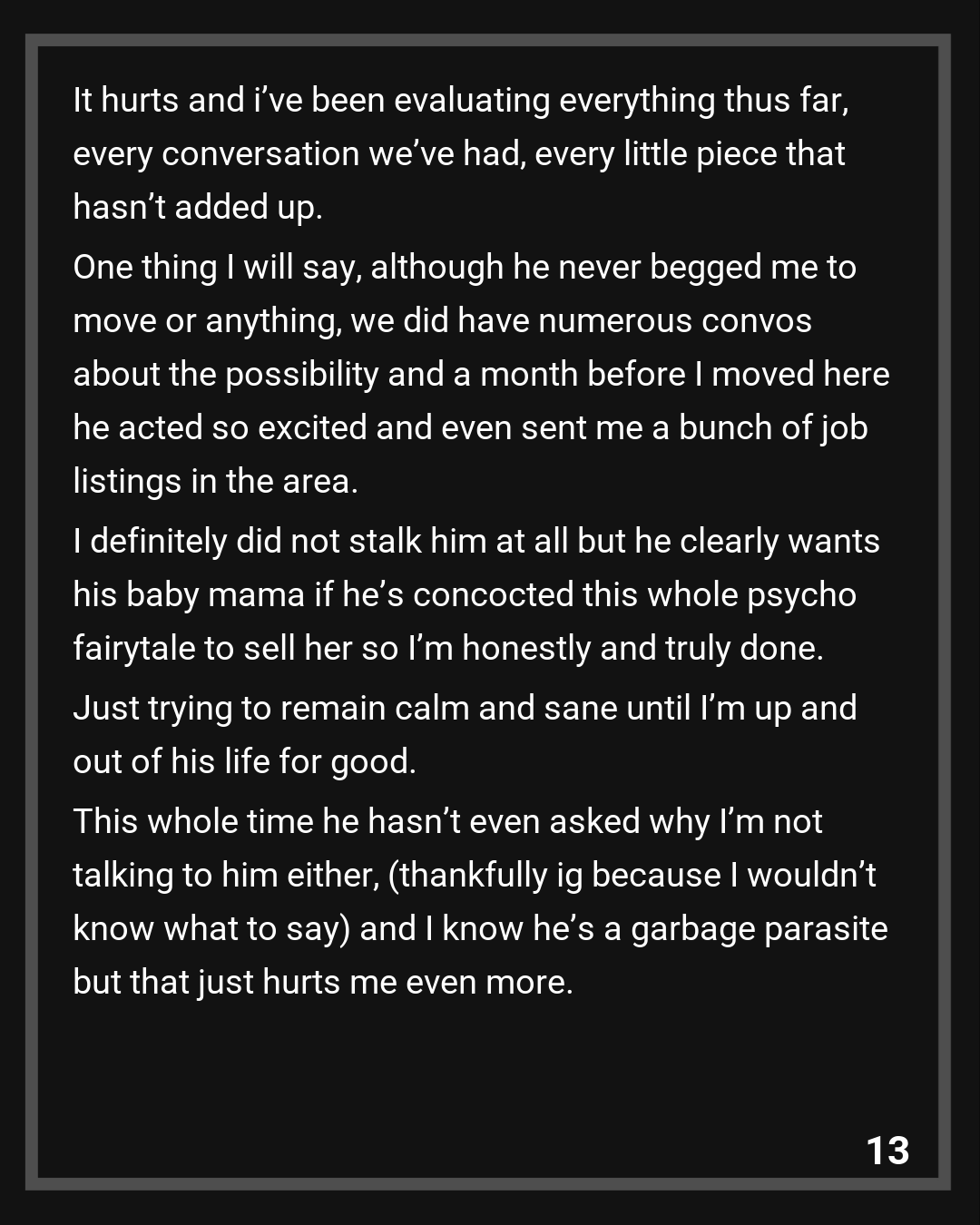
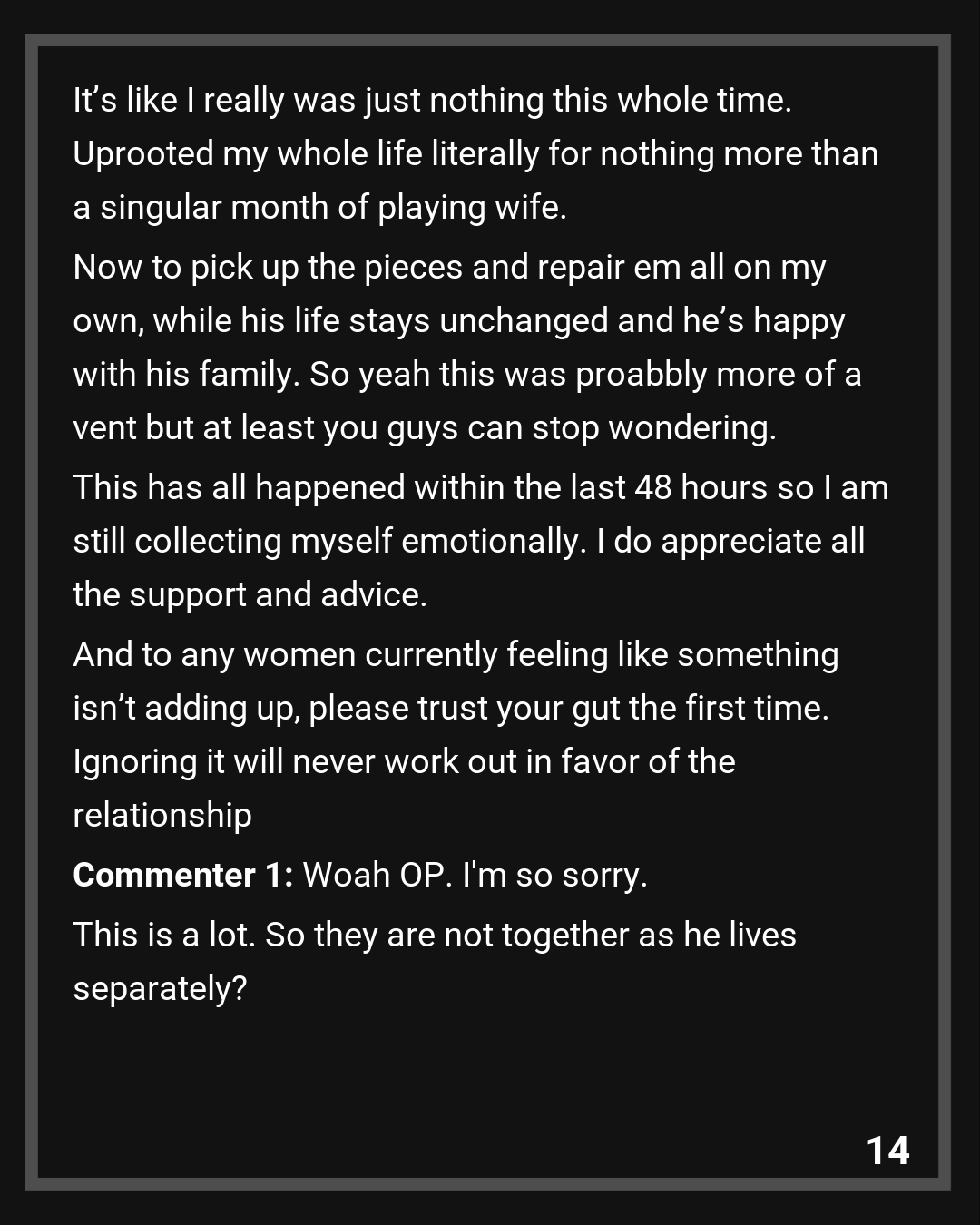
What stings is not the deception alone but the infrastructure. A house purchased near his ailing mother. Flights back and forth that doubled as custody logistics. Job listings sent with enthusiasm that also served to lock OOP into a geography he controlled. Every gesture of partnership carried a second function, and OOP had no framework for suspecting that because nothing about his behavior looked like negligence. It looked like love. That is precisely what made the con sustainable.
The Laundry Hamper That Collapsed Two Years of Theater
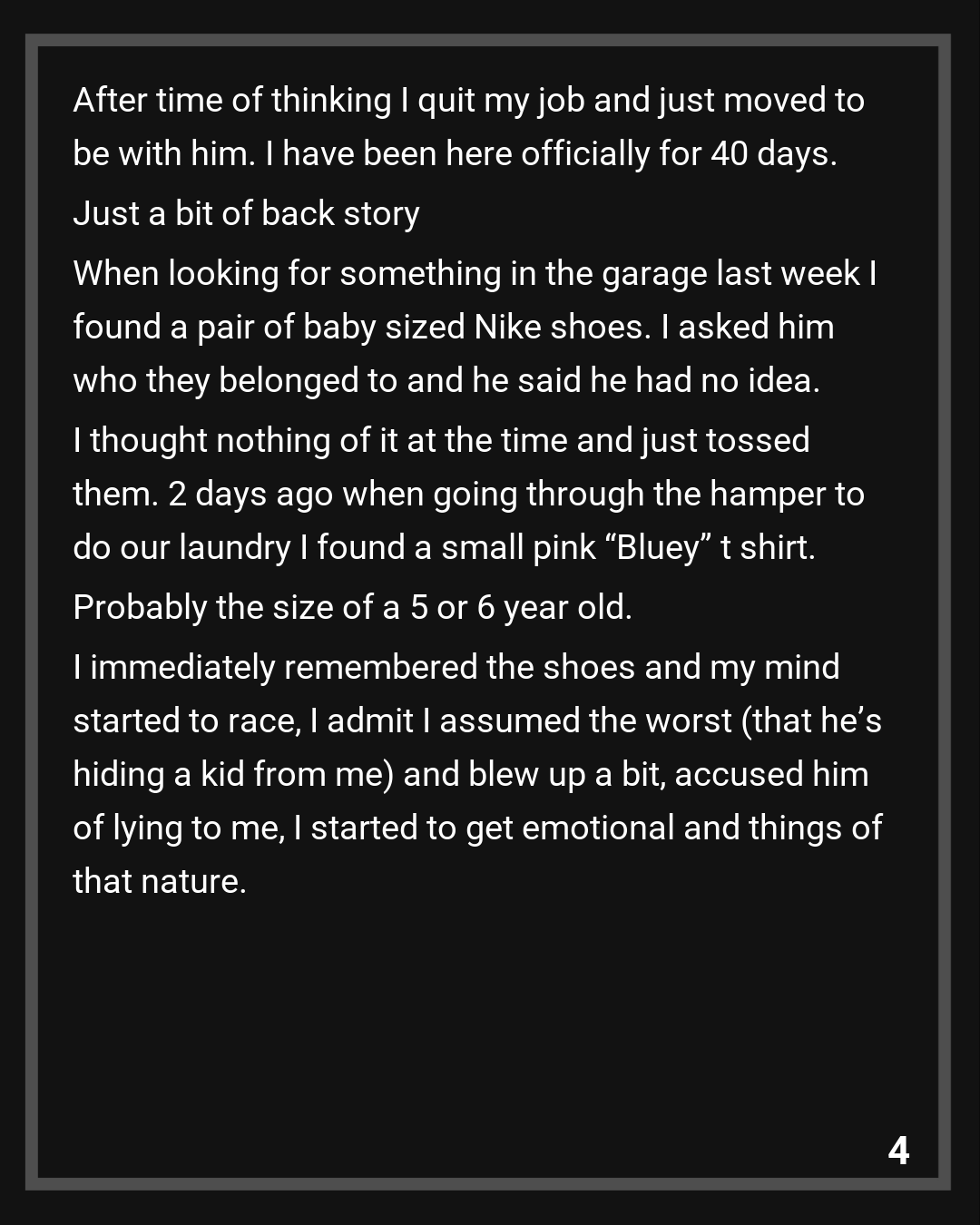
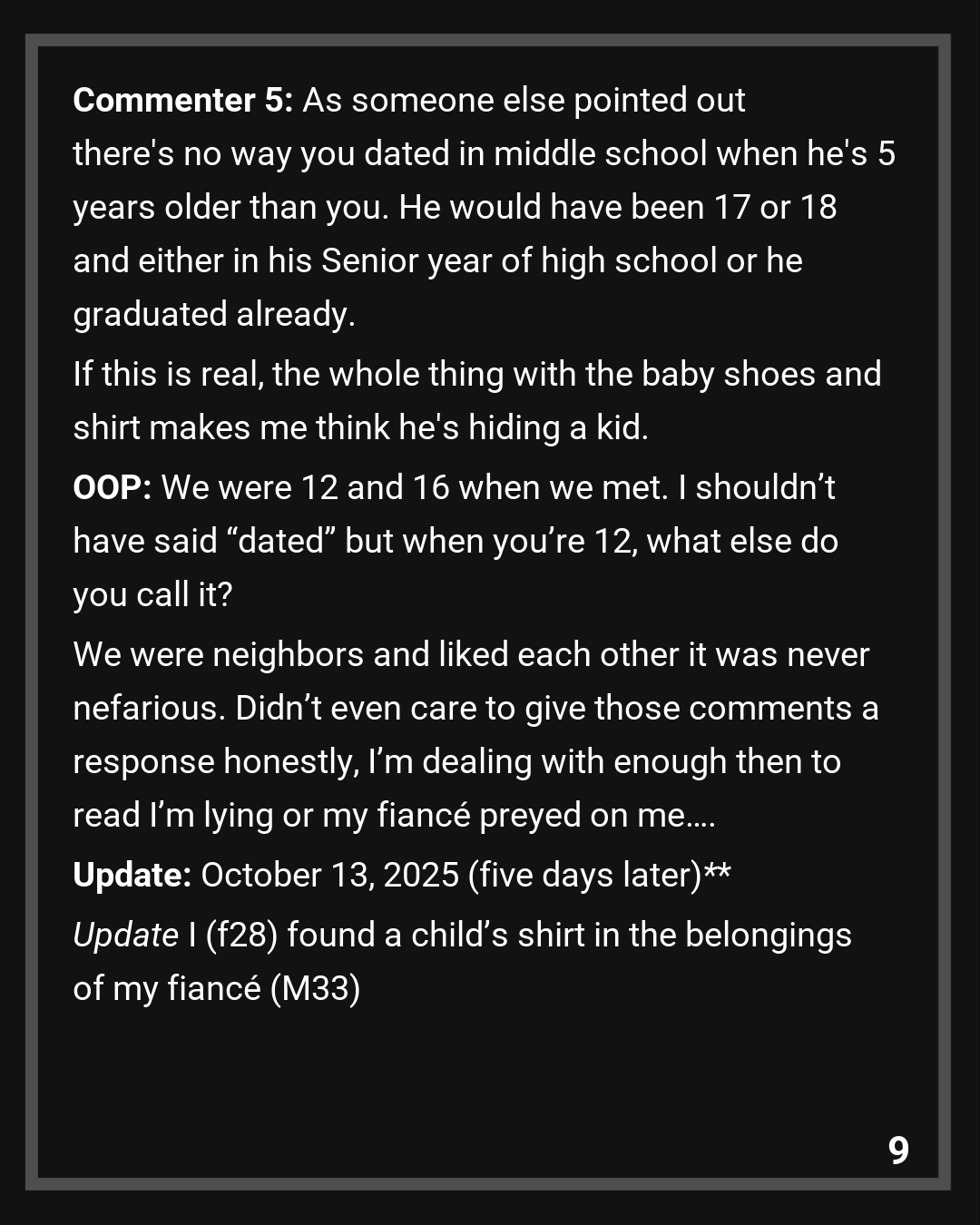
OOP reconnected with a childhood acquaintance five years her senior, and within two years they were engaged and she was relocating across the country on faith. The first fracture was small: baby Nike shoes in the garage, waved away with a shrug she accepted. The second was impossible to absorb. A pink Bluey shirt, sized for a five-year-old, sitting in the laundry hamper of a home where no child had supposedly ever visited.
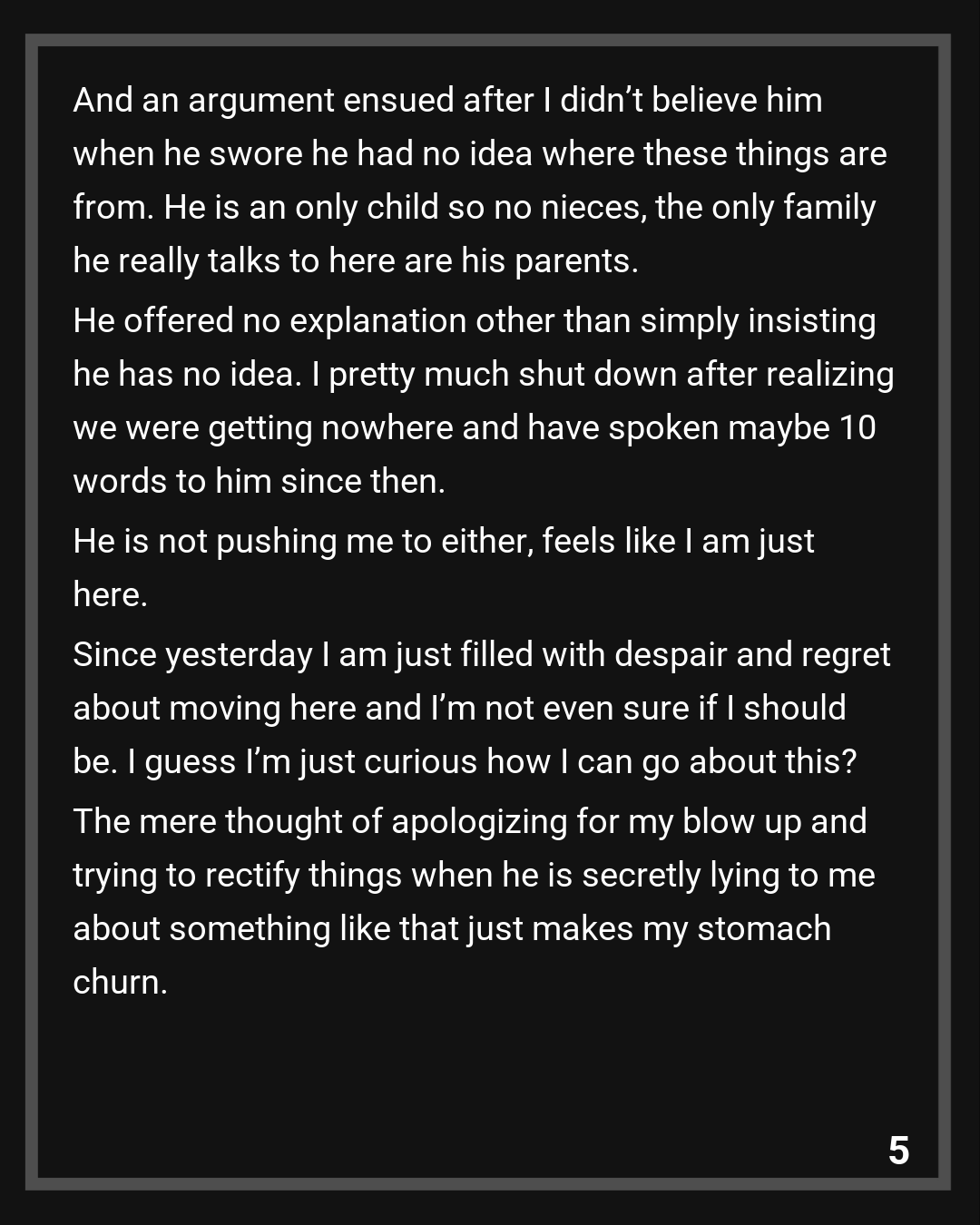
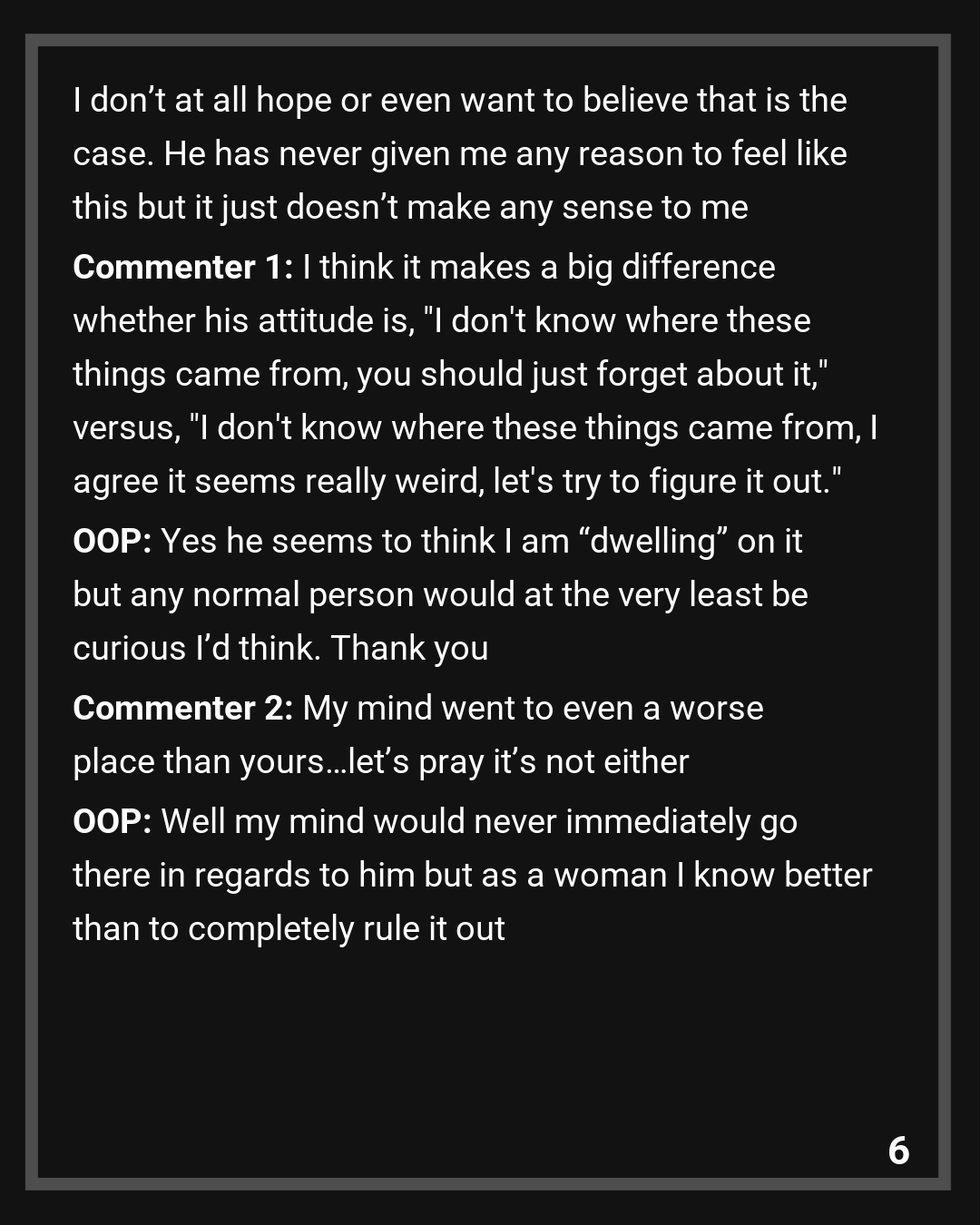
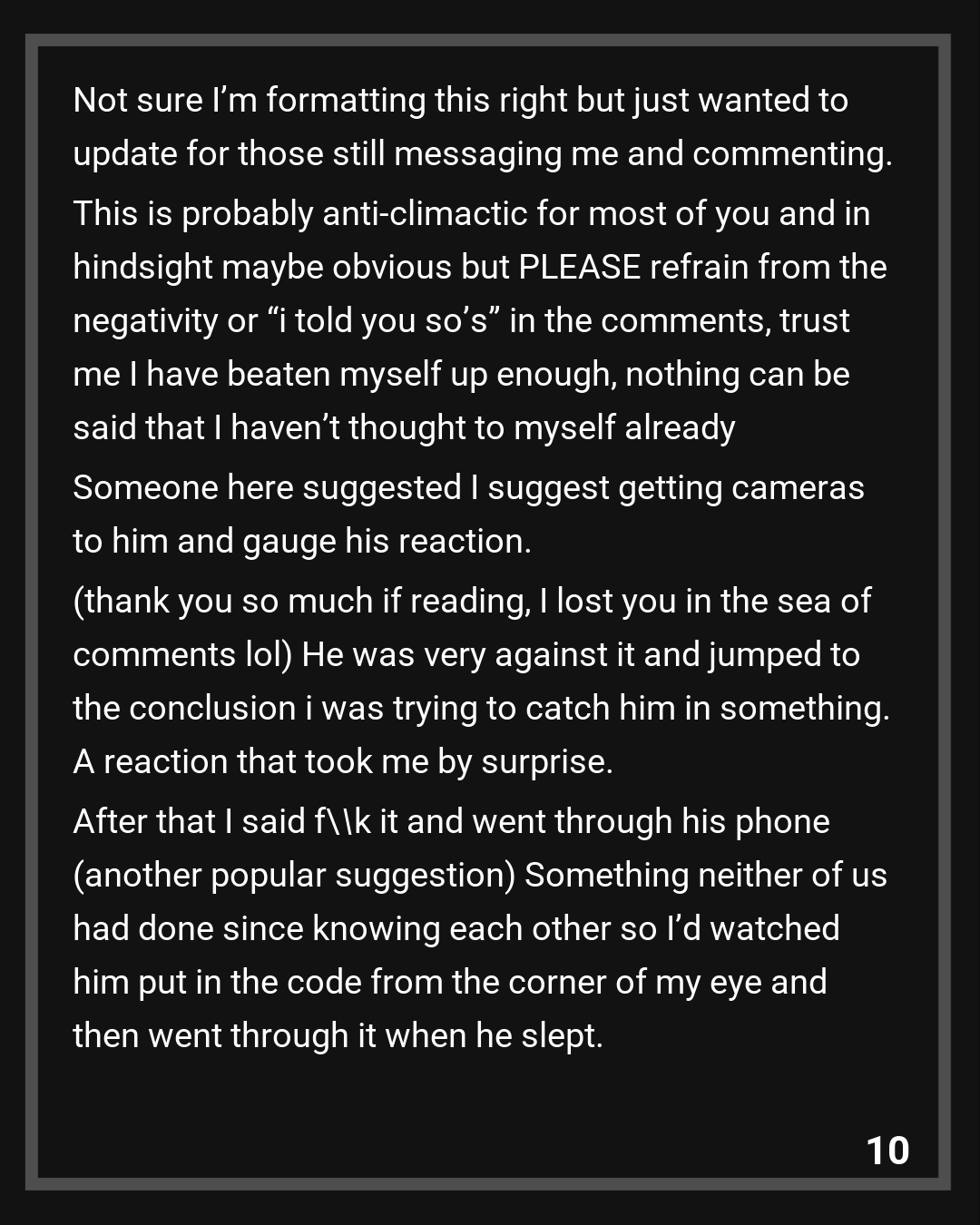
His refusal to engage sealed the suspicion. He didn’t puzzle over the shirt alongside her or volunteer explanations. He told her she was “dwelling.” When OOP floated the idea of installing home cameras, he reacted not with curiosity but with accusation, treating a reasonable suggestion as surveillance rather than shared problem-solving. That pivot told her everything his words refused to.
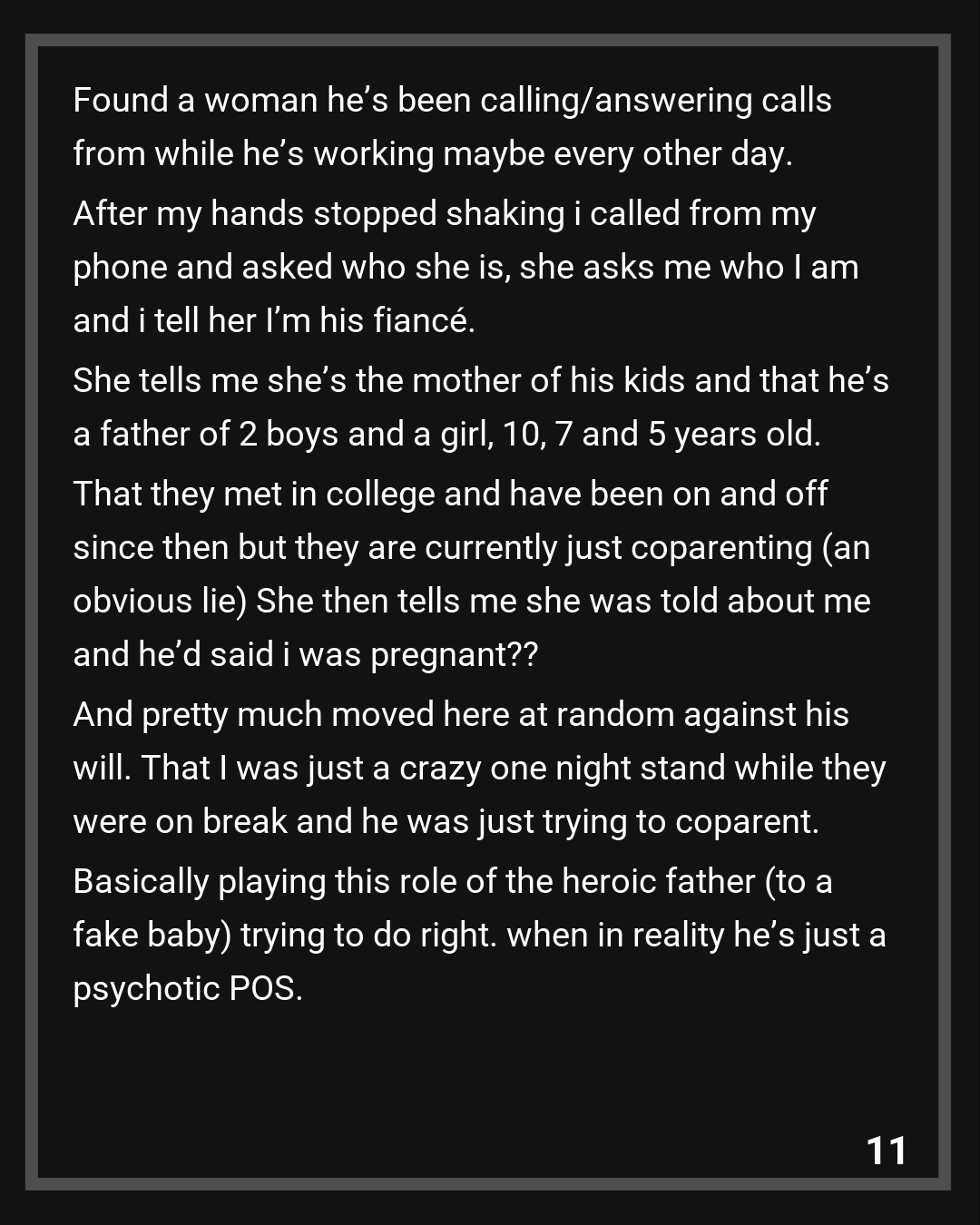
So she watched him type his phone passcode and waited for him to fall asleep. The calls led to a woman who identified herself as the mother of his three children: ages ten, seven, and five. This woman had been told OOP was pregnant and unstable. OOP herself had been told nothing at all. Both narratives were crafted to keep each woman stationary, asking no questions that might puncture the walls between his two lives.
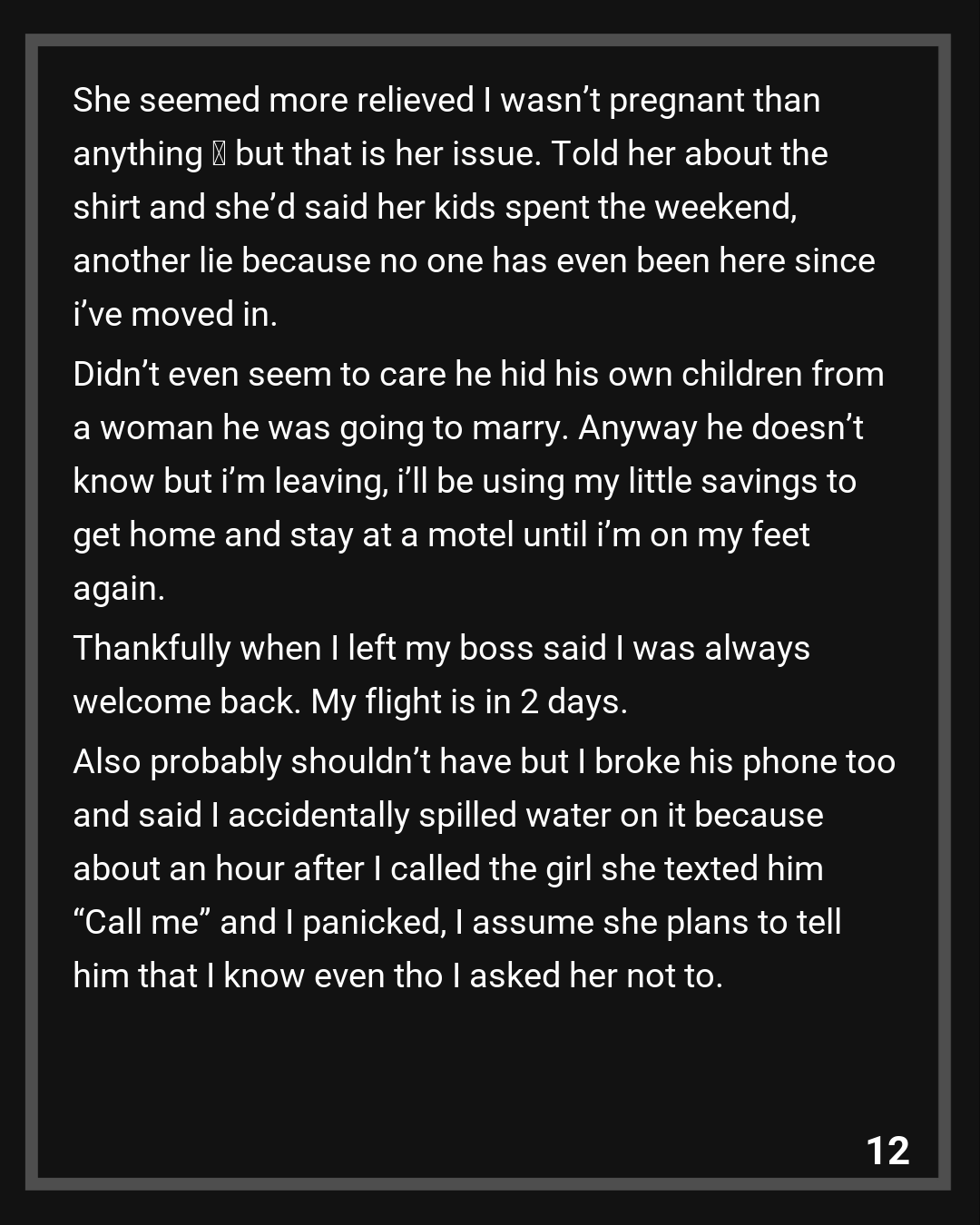
Within 48 hours of finding those call logs, OOP had booked a flight, broken his phone to buy herself time, and contacted her old employer. She did not confront him. She did not ask for explanations she already knew would be fictional. Forty days after arriving in Texas to build a life, she started dismantling it with the same decisiveness, only now the information guiding her choices was finally, verifiably hers.


Source
The Second Bedroom Was Never Empty
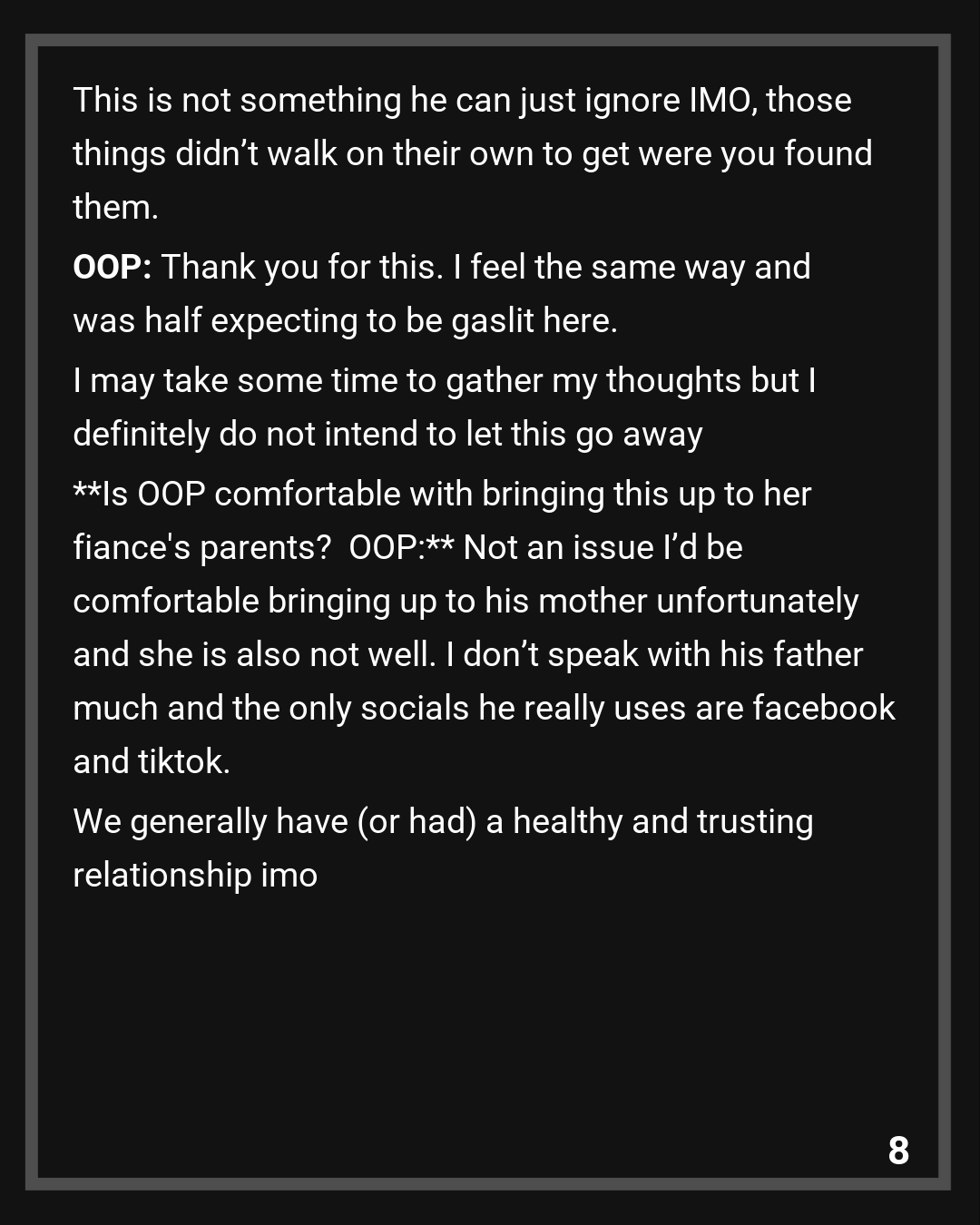
He bought a two-bedroom house near his ailing mother. That framing made it sound like devotion. OOP accepted the explanation because it fit the man she believed she was marrying: someone who dropped everything when family needed him. But a single man does not need a second bedroom for hospital visits. He needs it for weekend custody of three children whose existence he never disclosed. The purchase itself was infrastructure, a staging ground designed to hold both his real life and the version he performed for OOP without visible seams.
Every logistical detail he offered carried dual purpose. The biweekly flights between Texas and Minnesota that looked like a man commuting for love also covered custody handoffs. Job listings he sent OOP with apparent excitement also functioned as bait, pulling her into a geography where he controlled the information environment. None of these gestures required lying in the moment. They only required omission, and omission is almost impossible to detect when someone is being generous with their time and attention.
Two Scripts, One Actor, Zero Overlap
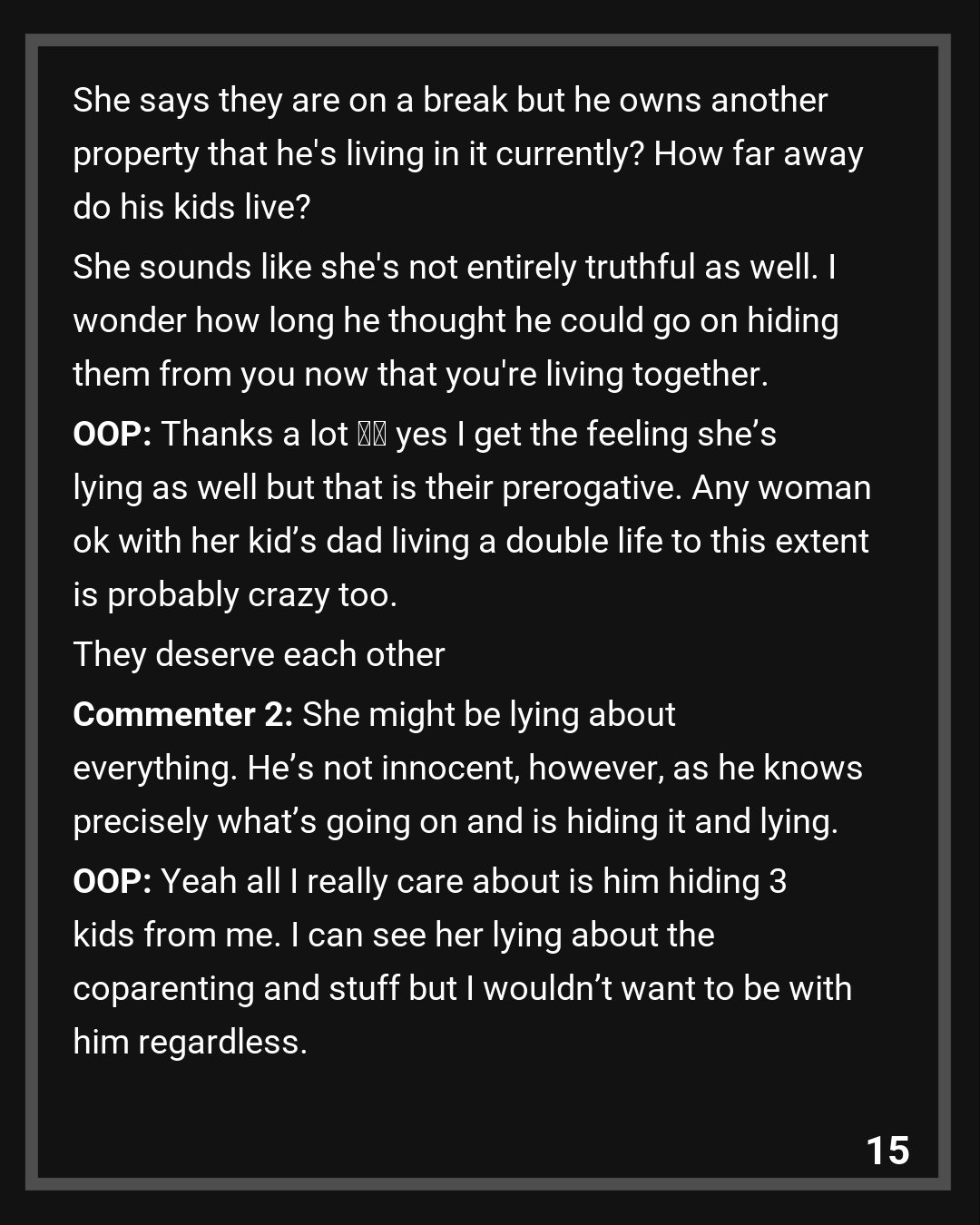
The information architecture he built depended on total separation between the two women. OOP knew nothing about the children. The baby mama knew nothing accurate about OOP. She had been told OOP was pregnant from a one-night stand, a story designed to make the baby mama feel secure in her position while also discouraging her from reaching out. OOP, meanwhile, had been given a love story with no footnotes.
Both narratives shared a structural feature: they made asking questions feel unnecessary. OOP had a fiancé who flew to see her constantly and sent job listings with heart emojis. The baby mama had a co-parent who assured her the other woman was temporary and irrational. Neither script invited scrutiny because both women were handed versions of reality where they already had the important information. The gap between those versions was where he lived.
The Phone Call That Collapsed Two Realities
When OOP called the number from her phone, the baby mama’s first question was “who is this?” Not alarm, not confusion. A weary check. She had likely fielded calls before, or at least expected to someday. Her calm delivery of the facts, three children, their ages, the coparenting arrangement, carried the practiced quality of someone reciting information she had organized in her own mind many times. She was not shocked by OOP’s existence. She was recalibrating around new data.
A Pink Shirt Does What a Screenshot Cannot
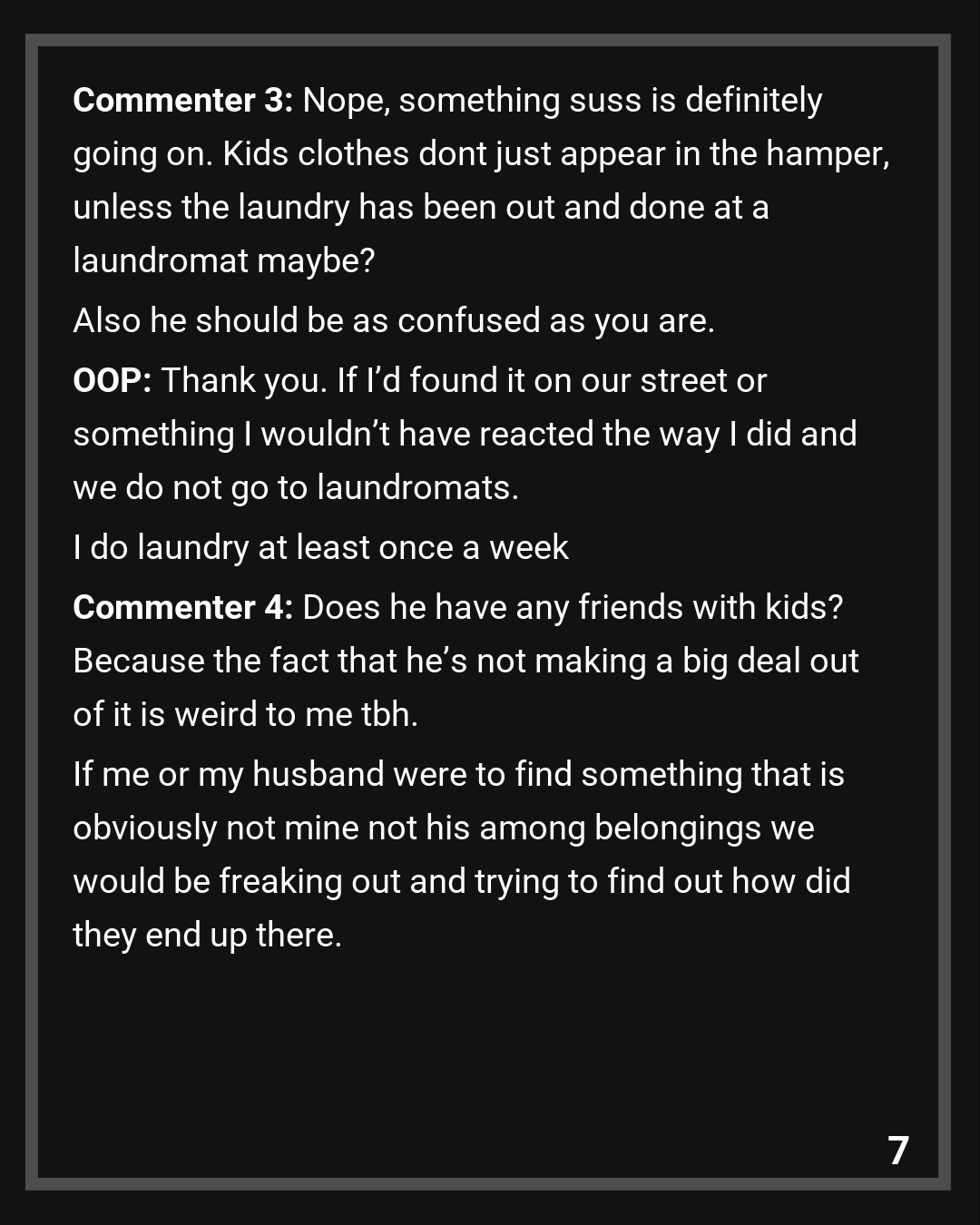
Digital evidence can be denied, recontextualized, explained away. A child’s Bluey t-shirt in a laundry hamper resists all of that. It is physical, sized for a specific age, and it ended up in the wash cycle of a home where no child supposedly lives. OOP could not have misread it. Her fiancé could not claim it was spam or a wrong number or an old conversation. He could only say “I don’t know,” which is the weakest possible defense against an object you can hold in your hands.
The shoes came first and were easier to dismiss. Baby Nikes in a garage could belong to anyone, could have been left by a previous owner, could have arrived in a donated box. OOP tossed them. But the shirt landed in the hamper, inside the domestic routine she maintained weekly. It entered her space through the most intimate household channel: dirty laundry. Someone had undressed a child in this house, and recently enough for the shirt to still need washing.
Forty Days and the Courage of Quick Math
OOP had been in Texas for forty days when she discovered worth of betrayal. She had quit her job, left her state, and moved into a home with a man she planned to marry. The sunk cost was enormous, and she cleared it in 48 hours. Flight booked, old boss contacted, motel identified. No negotiations, no couples therapy suggestion, no waiting to hear his side of the story she already knew was fiction.
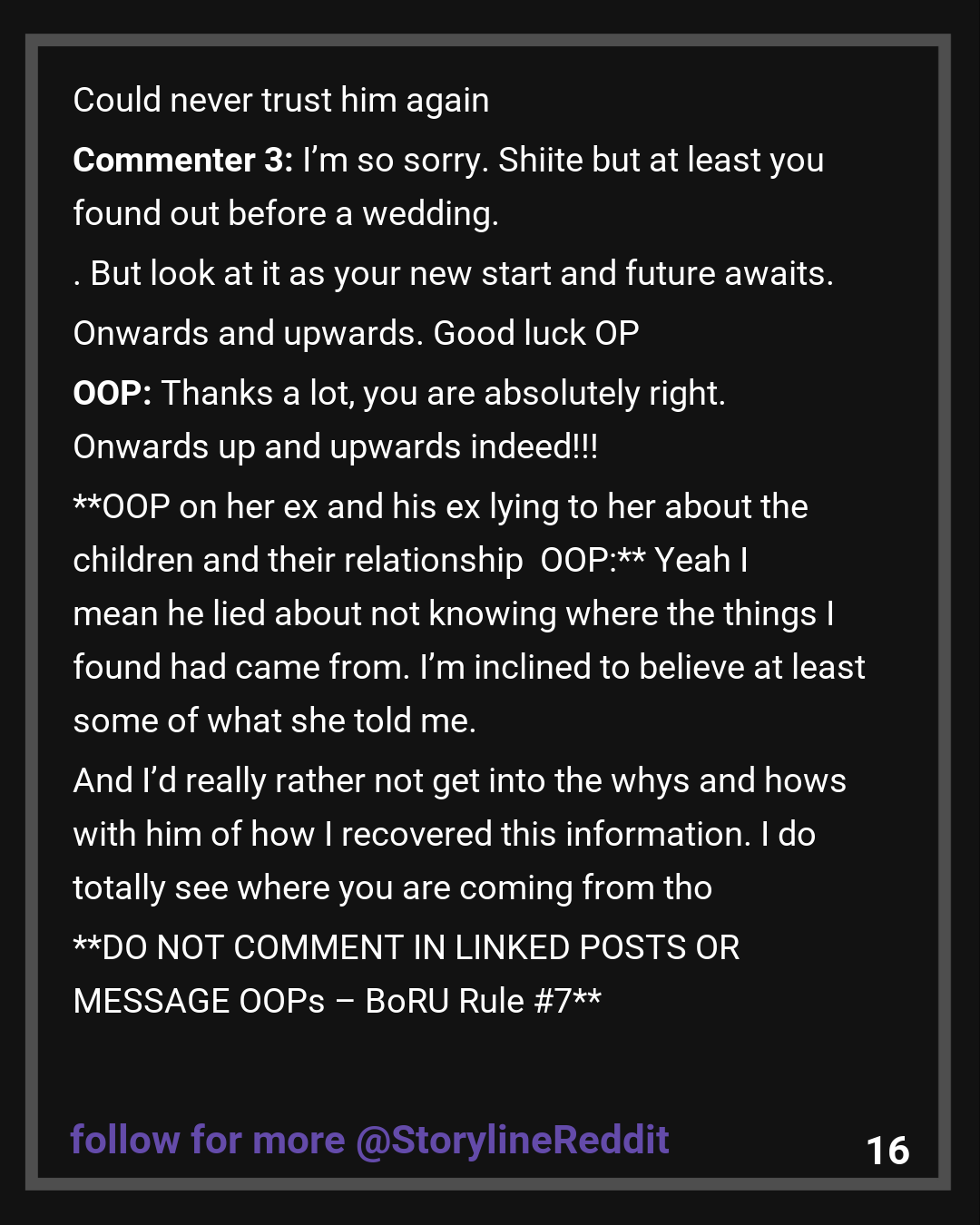
That speed deserves respect, but it also left something unfinished. OOP never told her fiancé what she found. She broke his phone to intercept a “call me” text from the baby mama, then kept her silence. She will leave, and he will construct a new narrative from whatever fragments remain. Perhaps OOP went crazy. Perhaps she was always unstable. The baby mama already received one fictional version of this woman; a sudden disappearance will slot neatly into the framework he built. By choosing silence over confrontation, OOP protected herself from a conversation she could not stomach. She also handed him the raw materials for his next lie.
The Woman Who Was Not Surprised
The baby mama’s reaction to OOP’s call is the strangest element in this story. She learned that the father of her three children had been hiding them from a fiancée, and her primary concern was confirming OOP was not actually pregnant. Not outrage at the deception. Not fear about what this meant for her kids. Relief about a nonexistent baby.
She had been told a story in which she was the primary partner and OOP was a nuisance. Learning that OOP was actually a fiancée should have demolished that framework. Instead, she absorbed it and moved on to logistics, texting him “call me” an hour later. Either she already suspected and had made her peace, or she operates within the same information economy he does, managing revelations rather than reacting to them. OOP called her an obvious liar about the coparenting claim and was probably right. But OOP also left before learning what the baby mama planned to do with her new information.
Somewhere in Texas, a broken phone is drying on a counter, and a man with three children is about to find out that the woman who did his laundry also found what was in it.
What Reddit Said
The largest cluster fixated not on the fiancé’s deception but on its arithmetic. Commenters competed to calculate how many additional women, children, or fabricated pregnancies might exist beyond what OOP uncovered. The top-voted comment speculated that the “pregnant OOP” story might reference yet another girlfriend entirely. This group treated the revelation as a floor, not a ceiling, and their energy was less outraged than darkly entertained. Several shared their own ancestry-test surprises and secret-sibling discoveries, turning the thread into an informal census of paternal fraud. The emotional register was wry, almost competitive, each commenter trying to top the last with a wilder version of the same betrayal.
A second cluster zeroed in on the age gap. OOP mentioned meeting her fiancé when she was twelve and he was sixteen, and a vocal contingent refused to move past it. For these readers, the hidden children were predictable because the man’s character had been legible since adolescence. Their logic ran backward from the present betrayal to the original relationship, reading the age difference as the first data point in a pattern rather than an innocent detail OOP had tried to contextualize. The tone here was protective and angry, directed less at the fiancé than at the commenters who glossed over the math.
A third group questioned OOP’s own narrative reliability. They noticed inconsistencies: she described herself as his fiancée but never clarified a proposal, she moved without being explicitly asked, and his parents apparently never mentioned three grandchildren across two years of contact. These commenters were not hostile toward OOP, but they treated her account as incomplete. Some speculated she had been a side piece who misread the relationship’s seriousness. The register was analytical, cautious, uncomfortable with full sympathy before the facts settled.
A smaller but persistent thread focused on the cheater’s sheer logistical laziness. Children’s clothing in the hamper, baby shoes in the garage, a phone passcode entered in plain view. Commenters swapped parallel stories of partners who left condoms in expense reports or asked their wives to unpack incriminating luggage. The consensus was not that cheaters want to be caught but that sustaining deception requires a competence most people simply do not possess.
The comment section reveals a readership that processes betrayal stories by immediately stress-testing the narrator. Sympathy flows freely, but only after readers have audited the timeline, checked the ages, and satisfied themselves that the victim’s account holds together under pressure. Trust, even toward someone wronged, has to be earned twice: once in the story and once in the telling.

