Featured on @StorylineReddit: November 11, 2025
Laughing Along Was the Job Description
Everyone remembers this Reddit workplace prank update for the fake pregnancy announcement, but the real story is what she found when she stopped laughing along. For a full week, a radio host congratulated her by name with a warmth that made the fabrication worse, not better. The surface read treats this as a boundary violation that got corrected once the director stepped in. Underneath, the correction never landed.
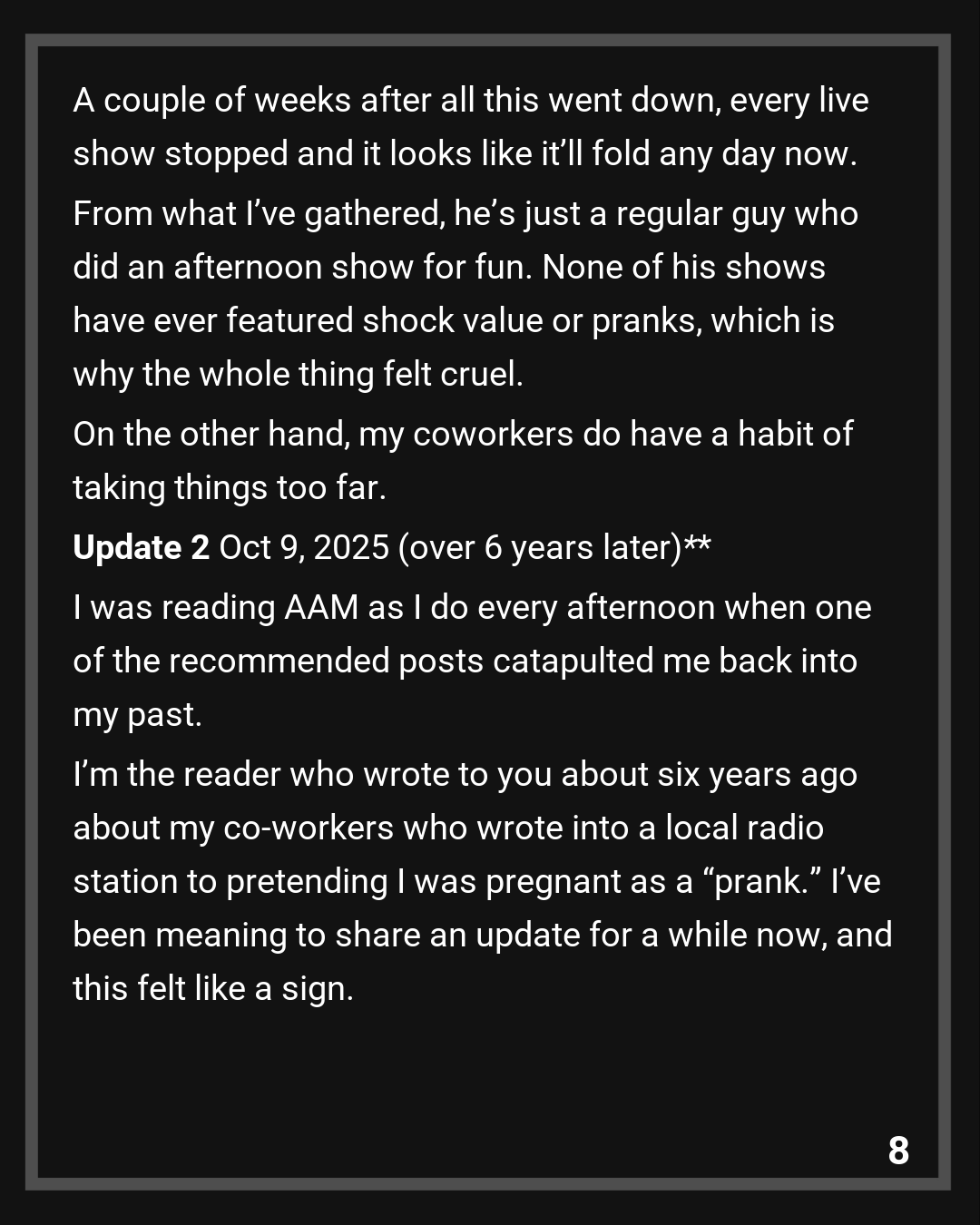
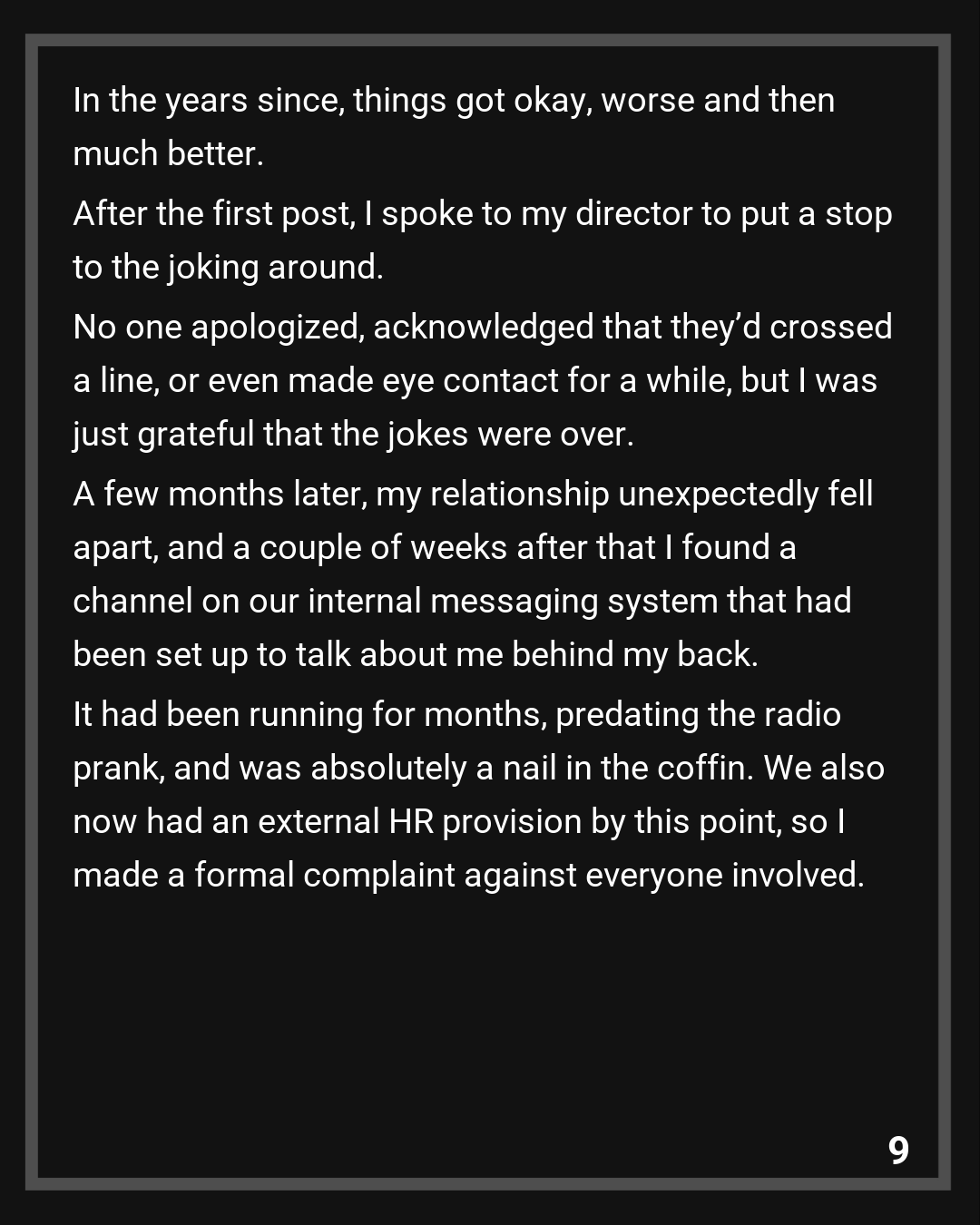
The prank stopped. Nobody apologized. Months later, a private messaging channel surfaced, revealing that covert mockery had been running long before anyone contacted the radio station. The fake pregnancy was not where hostility began. It was where hostility went public.
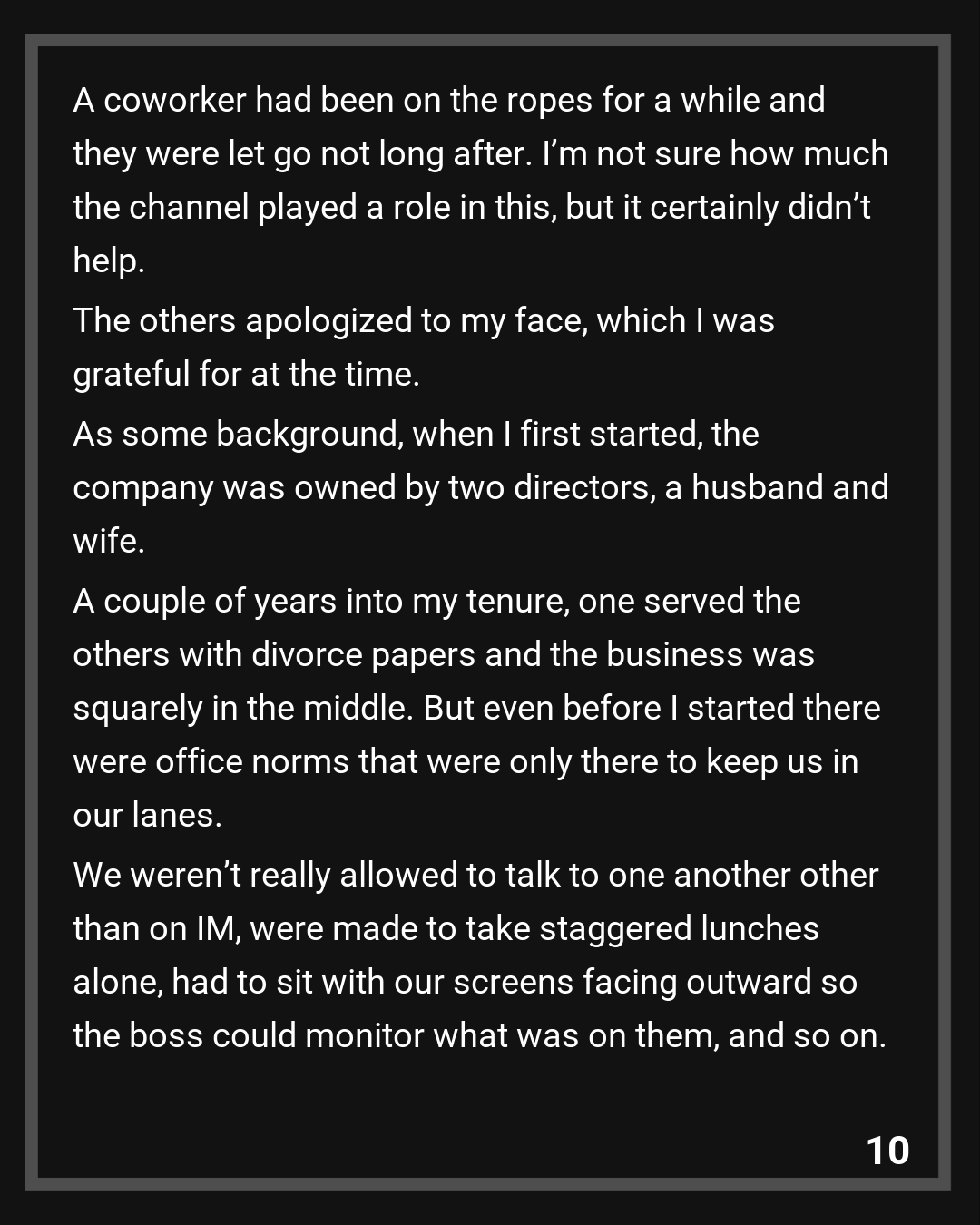
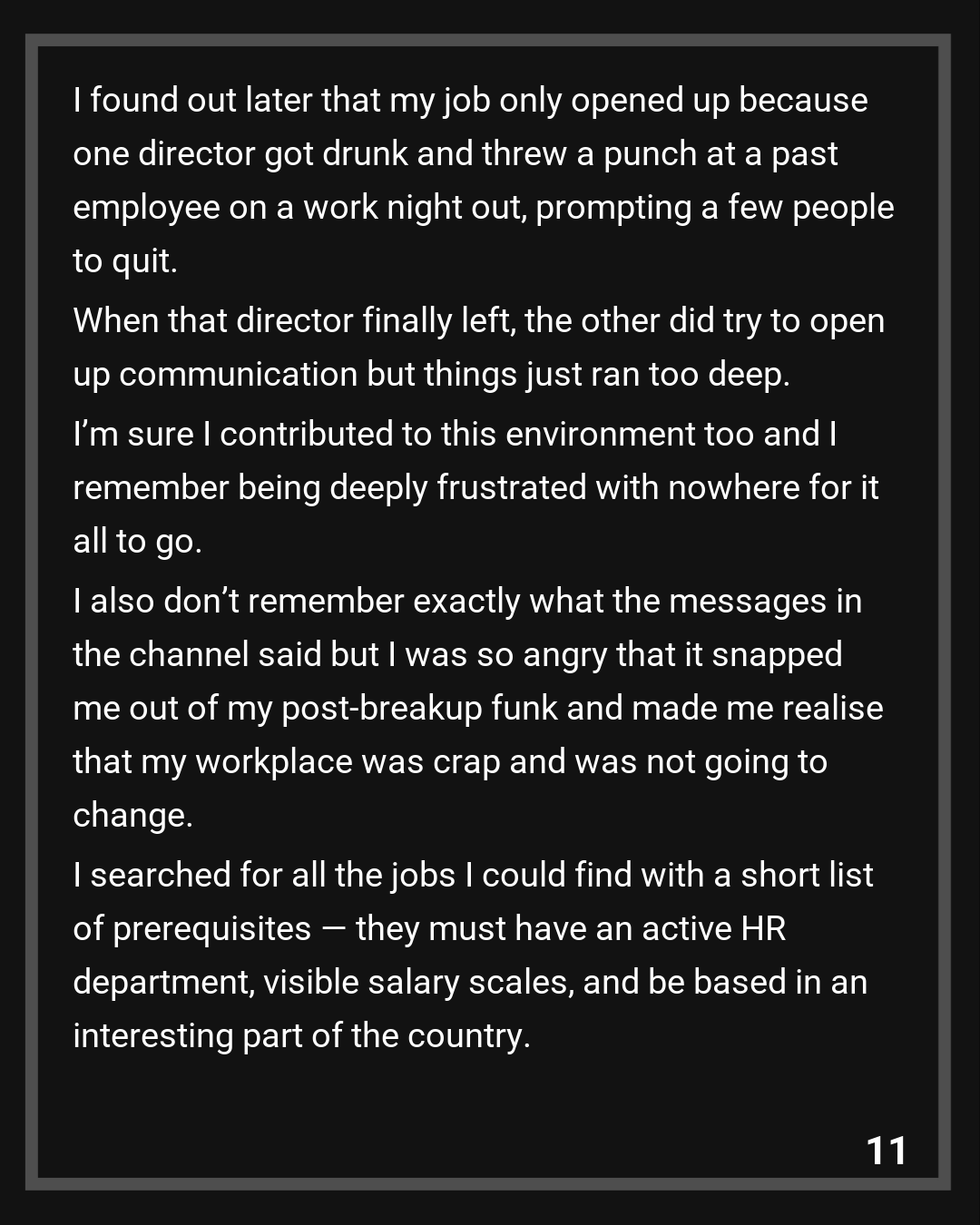
Six years of distance gave the writer a vocabulary for what she had been tolerating. Staggered lunches taken alone, screens positioned for managerial surveillance, a director who once threw a punch at an employee on a night out. She joined a system engineered around isolation and spent years questioning her own reactions instead of the environment producing them. Her eventual job criteria read like a diagnostic checklist of everything her old company refused to provide.
The Prank Was Already Old News
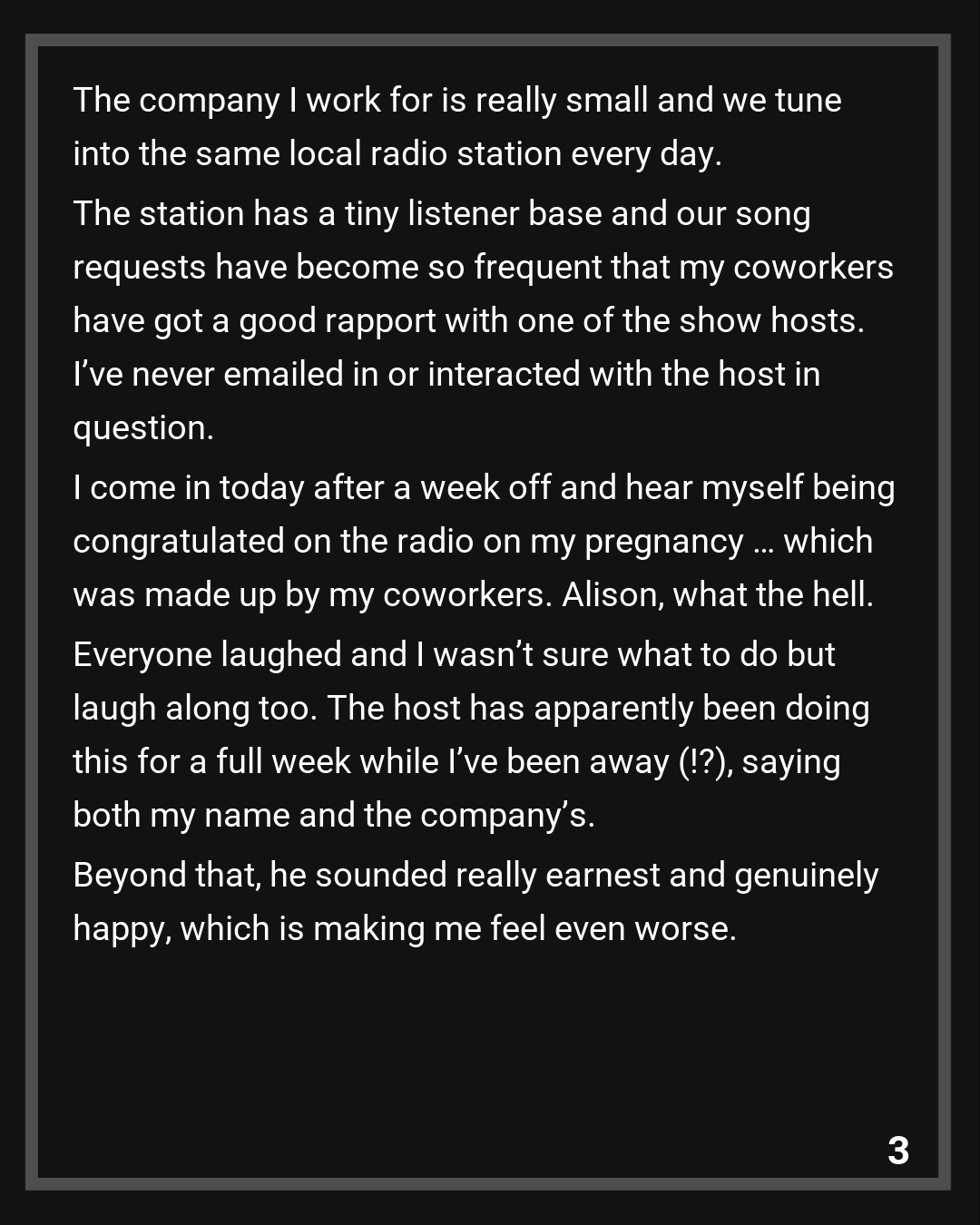
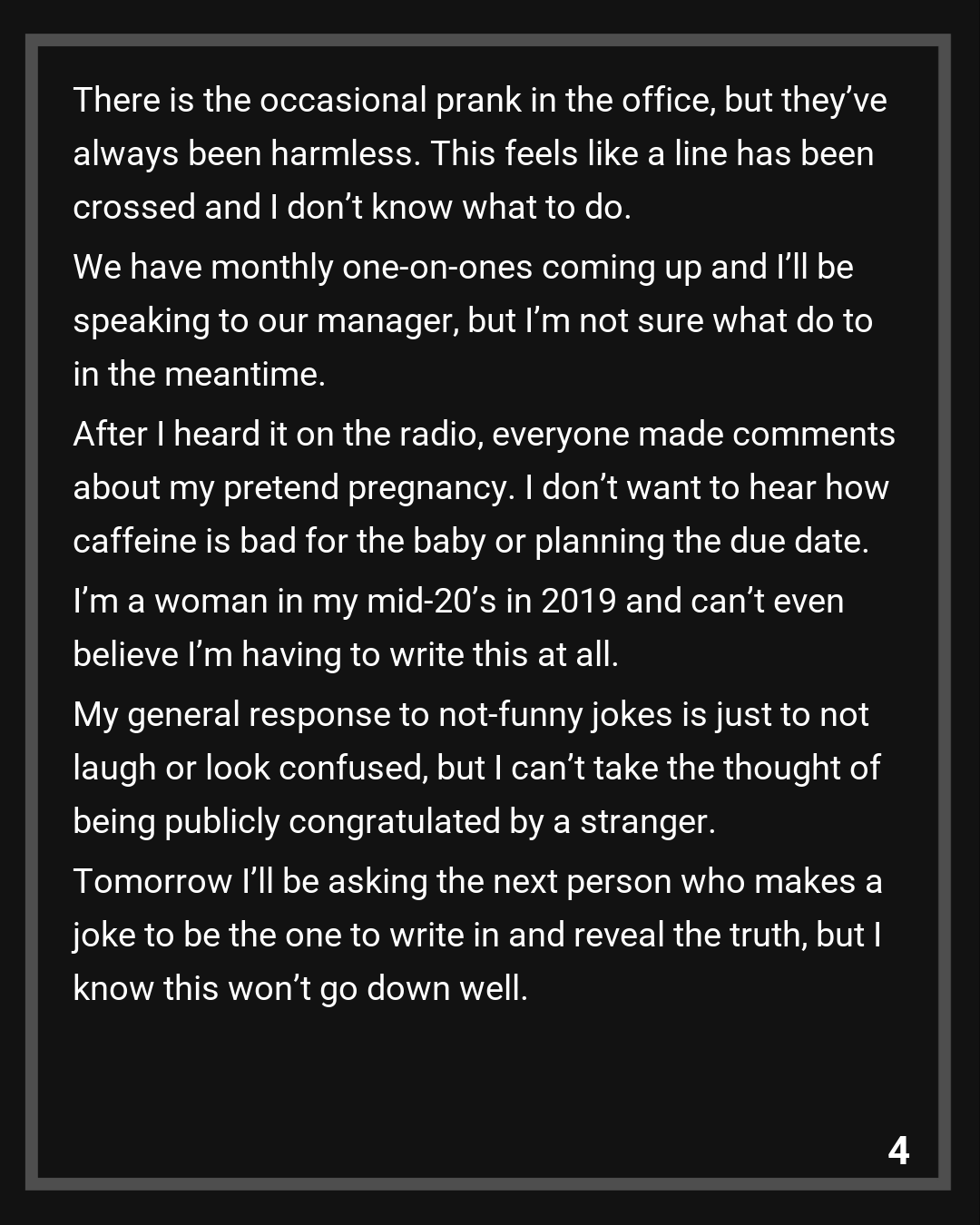
The letter arrived at Ask A Manager in June 2019 from a woman trying to determine whether she was permitted to be upset. Her coworkers had told a local radio host she was pregnant, handing a stranger the role of announcing something that never happened. She returned from holiday to hear her own name spoken with genuine enthusiasm over a fiction. Her first instinct was to laugh along. Her second was to ask someone else to send the correction. Both responses prioritized group comfort over her own.
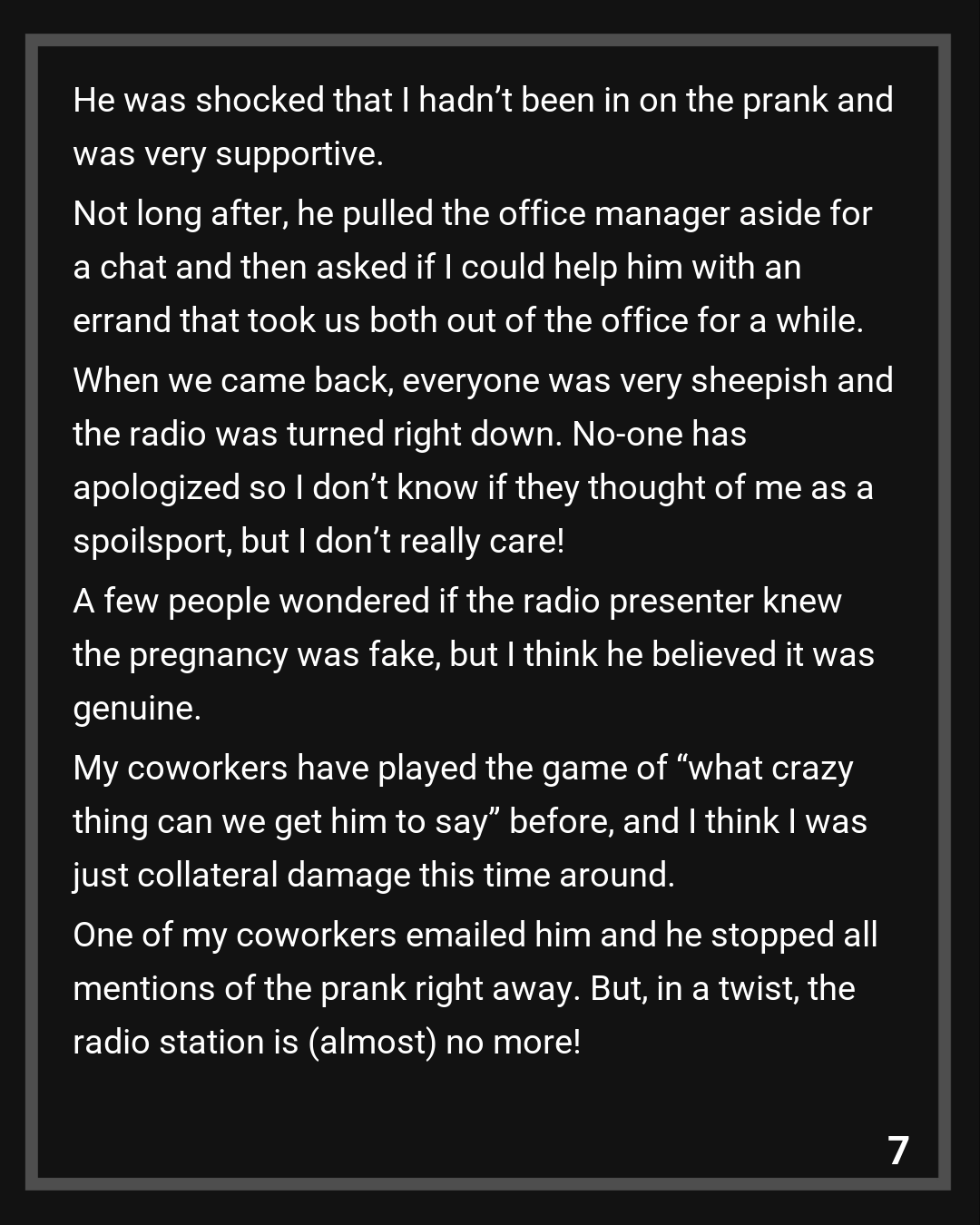
Her director intervened once informed. The radio mentions stopped. The office went quiet, though quiet and resolution are not the same thing. No apology followed.
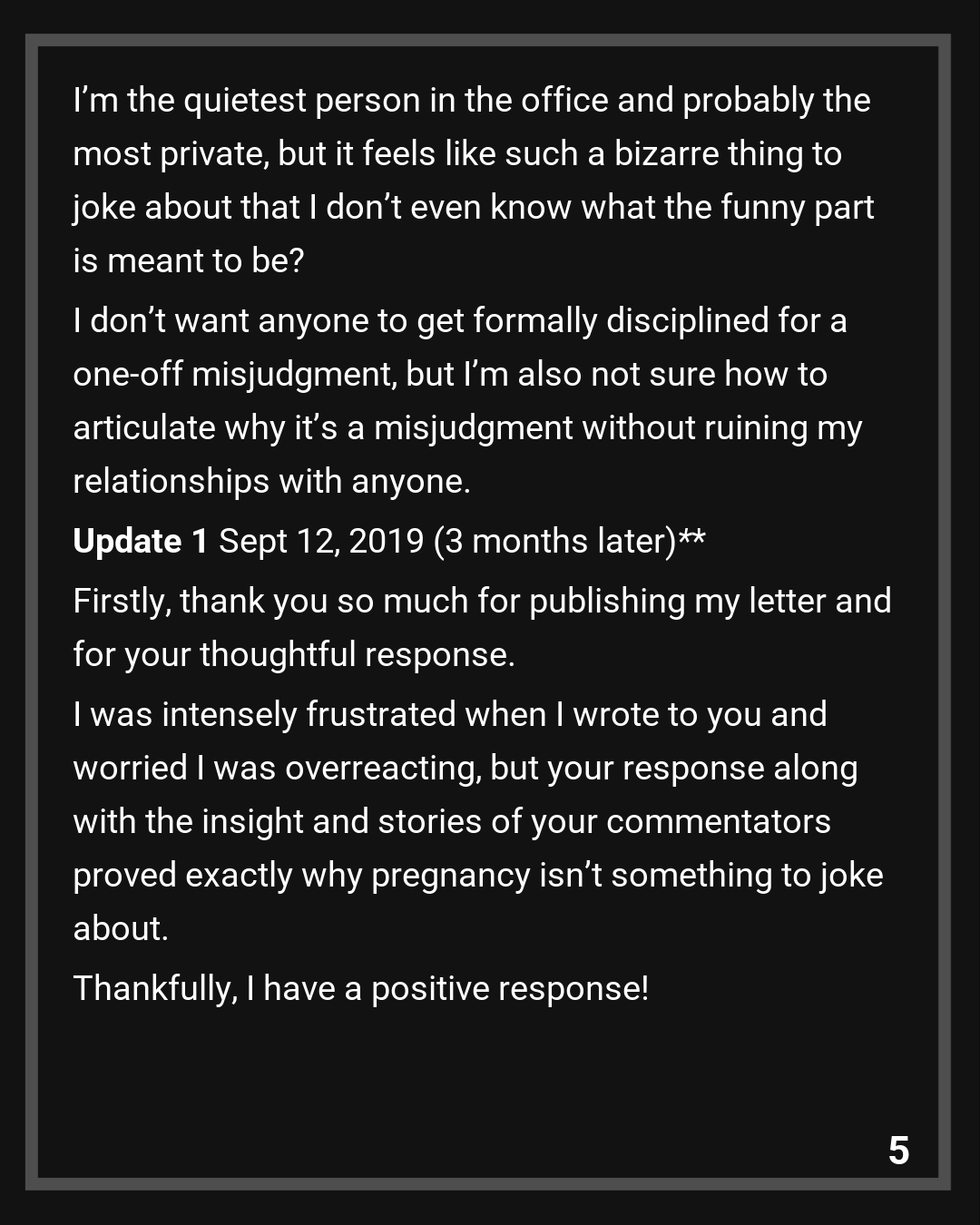
Months later, she found an internal messaging channel built to mock her behind her back. It predated the radio prank, reframing the pregnancy joke as a visible eruption of something already entrenched in private. A formal HR complaint followed. One colleague was dismissed. Others delivered face-to-face apologies.
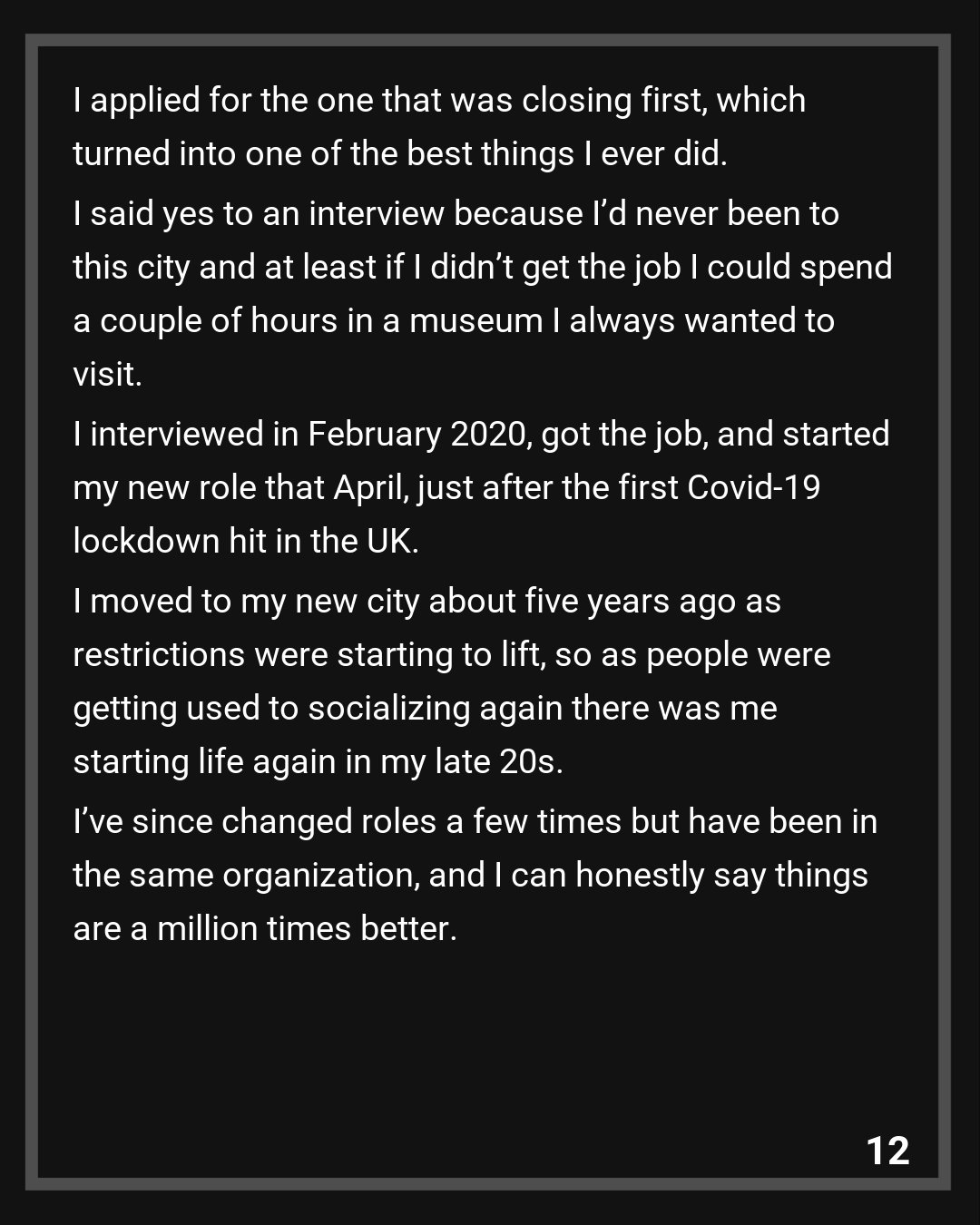
The company’s wider history made the pattern legible. A married pair of directors whose divorce fractured the business. Employees seated with screens facing management. Lunches staggered and enforced in solitude. A former director who punched a staff member on a work night out. The writer escaped with precision, filtering job listings by four requirements: functioning HR, transparent pay, a location she actually wanted to visit, and a closing date soon enough to force a decision. She relocated during lockdown, rebuilt through her late twenties, and joined a workplace union. Six years on, this Reddit workplace prank update reads as a record of someone learning to name what she had been trained to absorb.


Who Gets to Define Harmless
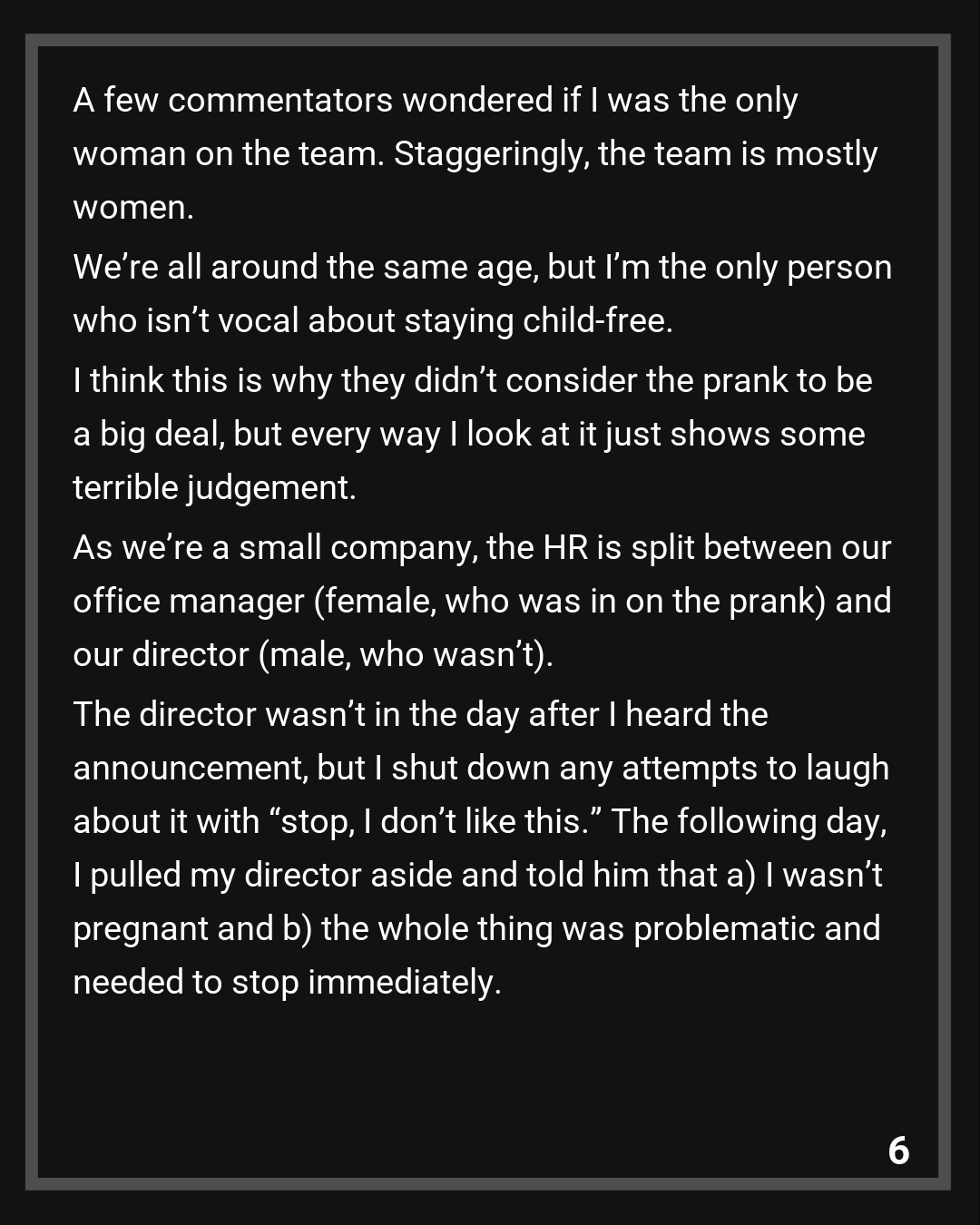
The team was mostly women. They were around the same age. Everyone except the letter writer was vocal about staying childfree. These facts reframe the prank from generic office mischief into something more targeted. Pregnancy was chosen because the group had already decided it was absurd for someone like them. The joke worked precisely because the writer had never declared the same position. Her silence on the topic became the opening.
Calling it harmless required a specific consensus: that pregnancy is so ridiculous a concept for their demographic that announcing it falsely could only be funny. A radio host spoke her full name alongside her employer’s with genuine warmth, week after week. He believed it. The comedy depended on his sincerity and on hers being absent from the room. She returned to hear a stranger celebrating a fiction about her body, and her first reflex was to laugh along. That reflex did not come from nowhere.
The Channel That Came First
The internal messaging channel changes the entire chronology. It predated the radio prank by months, meaning covert mockery was already infrastructure before anyone contacted a show host. The pregnancy announcement was not an escalation from zero. It was the moment private contempt found a public stage.
When the writer discovered the channel after her relationship fell apart, the timing compounded the damage but also clarified something. The prank had not been a one-off misjudgment by otherwise reasonable colleagues. It sat inside a pattern of sustained, organized ridicule that required effort to maintain. Someone created that channel. Others joined. Messages accumulated over months while the writer sat at her outward-facing screen, unaware.
Her formal complaint led to one dismissal and several apologies delivered face to face. The apologies came only after HR involvement, not from recognition. That distinction matters.
Screens Facing Outward
Before the prank, before the channel, the company was already a case study in dysfunction wearing the costume of normalcy. Employees took staggered lunches alone. Screens faced outward so directors could monitor them. Communication outside of instant messaging was discouraged. One director had punched a former employee on a work night out, prompting resignations that created the opening the writer eventually filled.
She walked into a workplace shaped by a divorcing married couple who owned the business together, and she absorbed its surveillance logic as baseline. When the remaining director tried to loosen restrictions after the other left, the habits had already calcified. The writer herself acknowledges contributing to the environment. But the architecture of isolation was load-bearing by the time she arrived. No individual employee built it, and no individual employee could dismantle it by being friendlier at lunch.
A Museum She Always Wanted to Visit
Her exit criteria deserve slow reading. Active HR department. Visible salary scales. Based in an interesting part of the country. Application closing soon. Each requirement maps onto a specific failure from and the years that followed. Where HR had been split between a complicit office manager and an uninformed director, she now demanded a functioning department. Where pay had been opaque, she wanted transparency printed on the listing. Where geography had been incidental, she made it a reason to show up.
The museum detail is the one that lingers in this Reddit workplace prank update. She applied for a job partly because the interview city had a museum she wanted to visit, reasoning that even a failed interview would give her a couple of hours doing something she chose for herself. Someone who has spent years absorbing a workplace that surveilled, isolated, and mocked her decided that wanting to see art was sufficient justification for a cross-country trip. She got the job. She moved during lockdown. She started over in her late twenties while everyone else was relearning how to be around people.
The Embarrassment Points Inward
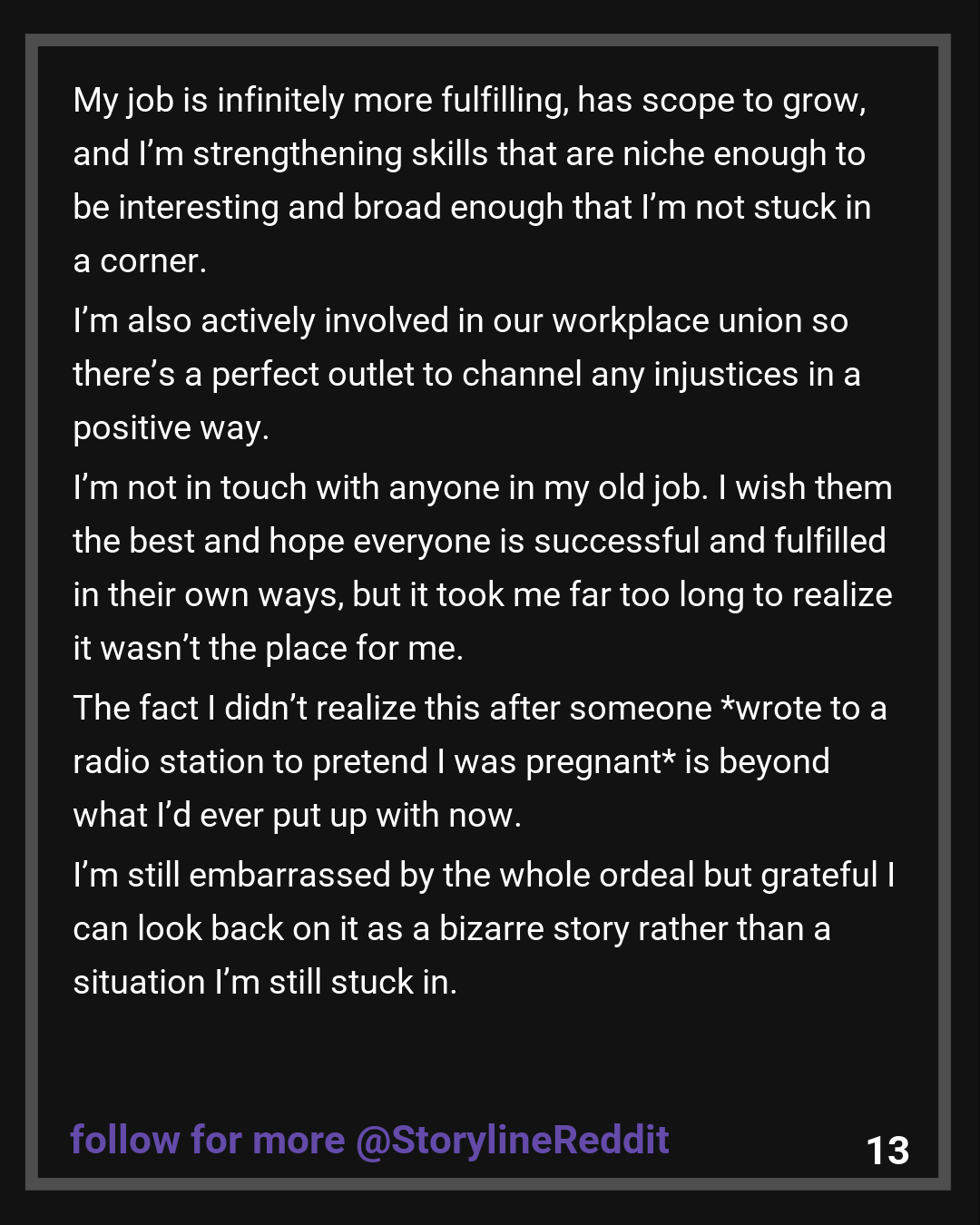
Six years later, the writer’s sharpest feeling is embarrassment directed at herself. Not at the coworkers who fabricated her pregnancy, maintained a mockery channel, or let her sit in an environment built on control. She is embarrassed that she stayed. She is embarrassed that the radio prank was not enough to make her leave.
This is where the comfortable reading falls apart. The writer was not purely a passive recipient of a toxic workplace. She laughed along on day one. She planned to ask a coworker to send the correction rather than sending it herself. She absorbed months of dysfunction after the prank was resolved before the messaging channel forced her hand. Her own account resists the framing of a clean victim and a clean villain, and that resistance is more honest than most retrospectives manage.
Still, self-blame and accountability are not the same thing. The company trained its employees to treat discomfort as personal failure. Staggered lunches, monitored screens, suppressed conversation. She internalized that training so thoroughly that discovering an organized campaign against her felt like the first real permission to be angry. Five years into her new city, she joined a workplace union, channeling the frustration that once had nowhere to go. The job she left required outward-facing screens.
How the Comments Read the Room
The largest cluster fixated on the married-couple ownership model, trading escalating horror stories about working for spouses whose domestic dysfunction became the office weather. Farm workers, startup employees, and corporate refugees all recognized the same structural trap: when the owners’ marriage is the org chart, every employee becomes an unwilling witness to someone else’s argument. The emotional register ran dry and knowing, less outraged than resigned. These readers treated the company’s dysfunction as an inevitability rather than a scandal, which says something about how normalized that particular flavour of chaos has become.
A second group gravitated toward revenge fantasies, each one more theatrical than the last. Fake miscarriage announcements, sobbing phone calls to the radio station, annual anonymous cards referencing a child who never existed. The escalation was competitive and darkly playful, but the impulse beneath it was serious. These commenters understood that the prank’s real damage was its assumption that pregnancy is communal property, and their proposed responses all weaponized the same assumption back at the perpetrators. The register was angry, dressed in humor.
A smaller but persistent thread mourned the radio host. Several readers noted he was a volunteer doing an afternoon show for fun, genuinely happy about a pregnancy that never happened, and likely collateral damage from a group that had been testing how far they could push him for sport. The station folding shortly after added weight to this reading. Compassion here was quiet and specific, directed at someone the original letter barely mentioned.
The nursing prank subthread carved out its own territory. Hospital staff described a practice of forcing suspected pregnant colleagues to reveal their status by assigning them patients on teratogenic medication. Readers reacted with sharp disgust, and the discussion rapidly became a referendum on institutional cruelty masked as professional culture. Several commenters drew the connection between schoolyard bullying and careers that offer petty authority over captive peers.
What the comment section surfaces is a readership primed to identify structural dysfunction but reluctant to sit with individual accountability. Readers catalogued every systemic failure and offered elaborate counter-pranks, yet almost nobody examined why the writer herself took years to leave. The revenge fantasies function as a proxy for agency the commenters wish she had exercised sooner, which mirrors exactly the embarrassment the writer now directs at her own patience.
This editorial is based on a story originally shared on Reddit’s r/BestofRedditorUpdates community.