Featured on @StorylineReddit: November 8, 2025
The Gate Janice Built
A Reddit CEO first name dispute looks like a lesson in corporate etiquette. But the real story is about a mid-level executive who appointed herself gatekeeper to a door that was never locked.
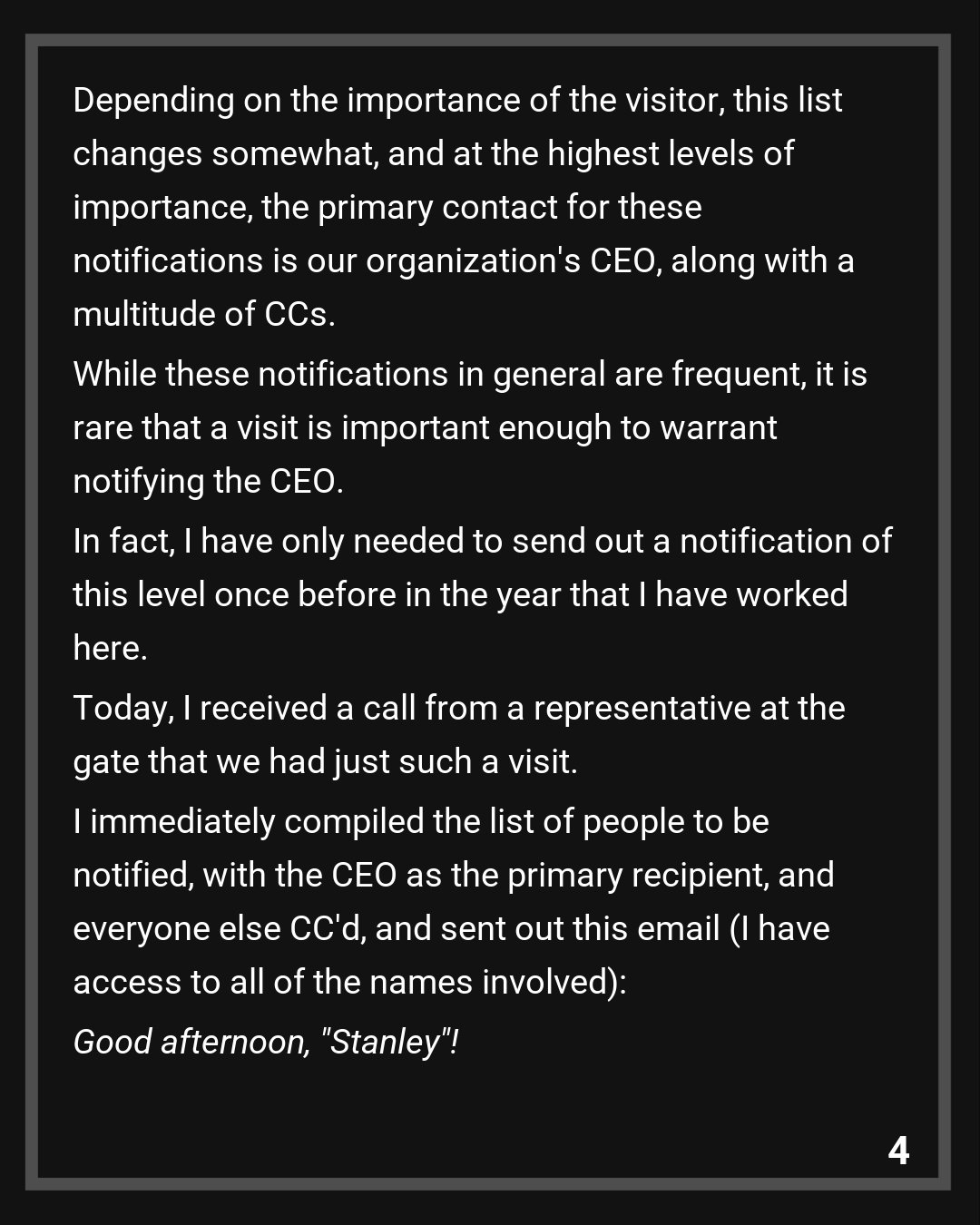
A 24-year-old aquarium employee sends a routine notification email. He addresses the CEO as “Stanley,” because everyone at this nonprofit does. Within five minutes, a colleague from donor relations fires back a correction and CC’s his boss for good measure. She waited three and a half years before earning that first-name privilege, and she wants him to know the cost of admission.
The employee spirals. He apologizes to the CEO directly. Then the CEO responds on a Saturday evening with three words and a signature: “Thanks. Stanley.” No title. No honorific. Just the first name Janice spent years trying to earn, handed back freely to the person she tried to discipline.
Janice did not protect the CEO. She protected the distance between herself and everyone below her.
Three Words and a Reddit CEO First Name
The architecture of this conflict is almost comically small. One email. One correction. One reply. Yet each message functions as a precise statement of position within an organization that claims to have no positions worth defending.
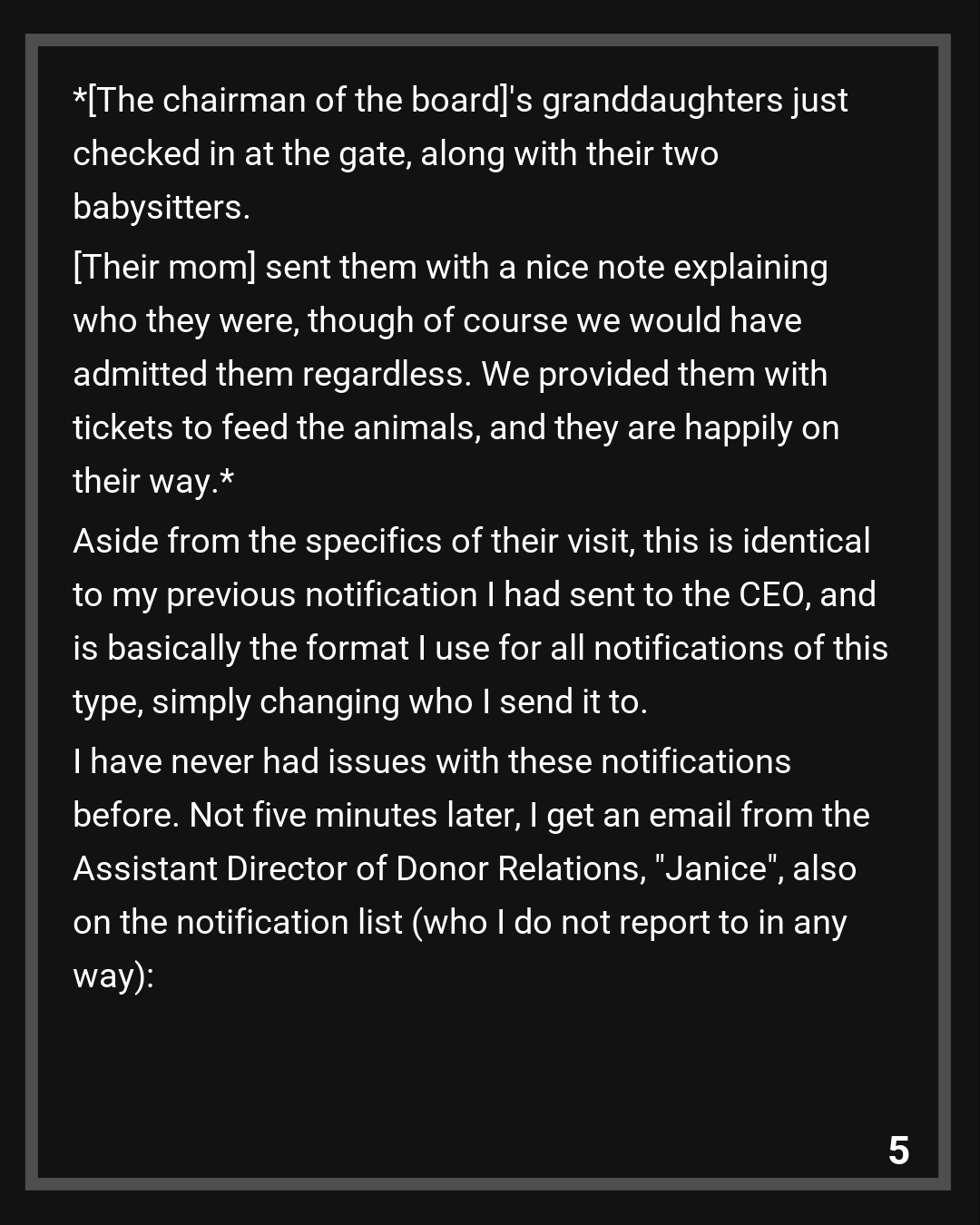
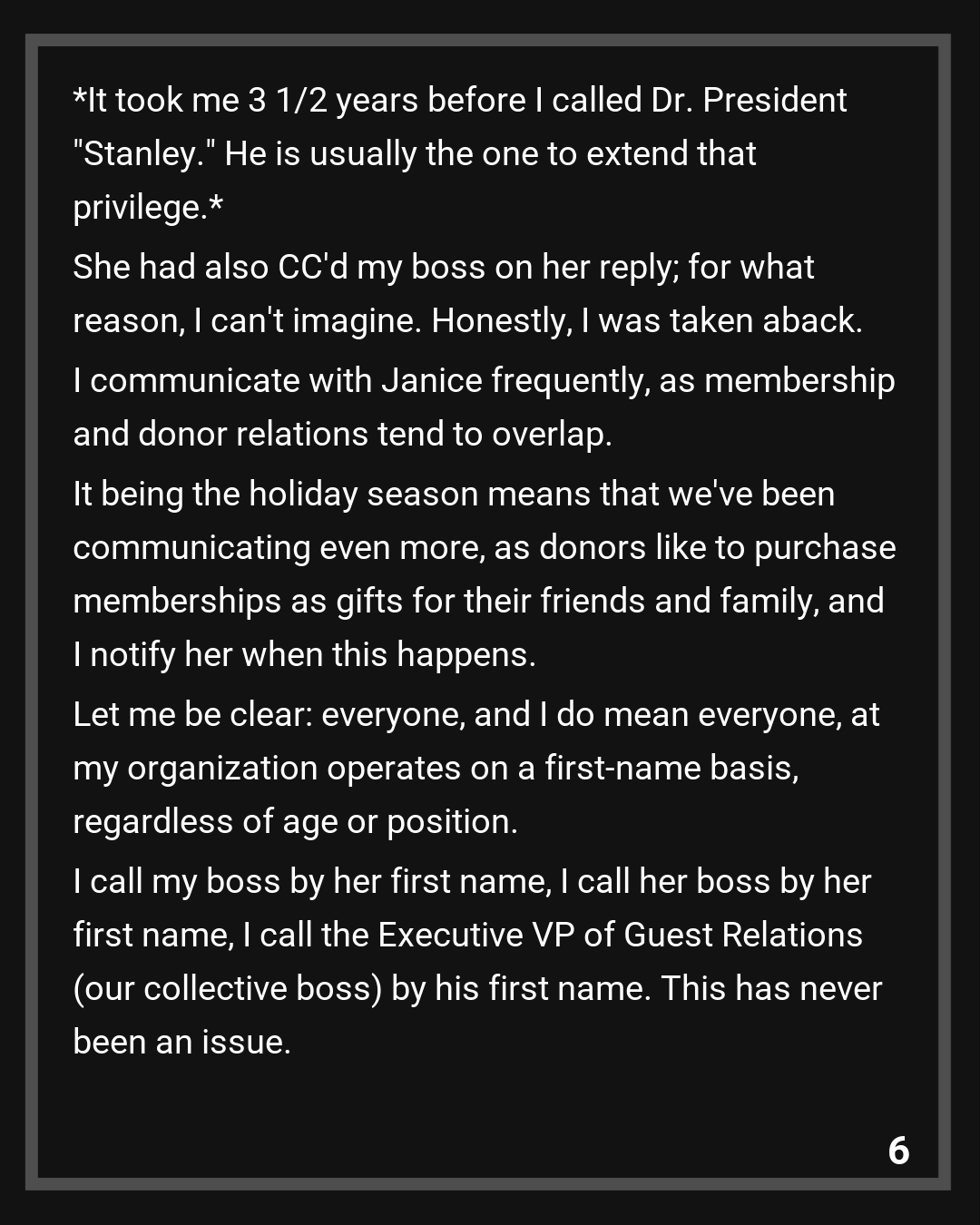
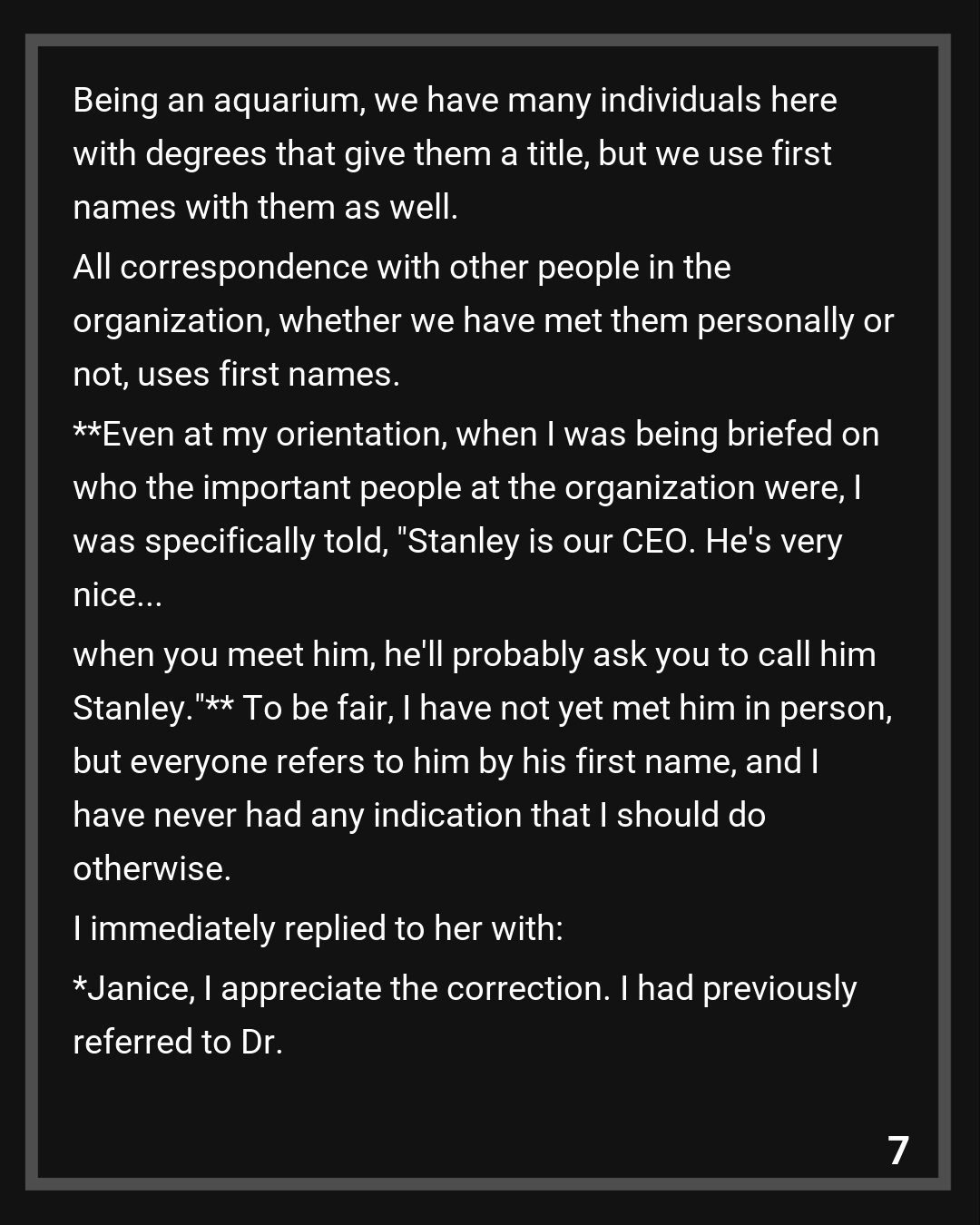
OOP’s original notification follows the format he has always used. He writes “Good afternoon, Stanley!” because that is the name every colleague uses, the name orientation explicitly told him to use. Nothing about his email deviates from established practice. Janice’s response does not correct a mistake. It invents one. Her three-sentence reply accomplishes two things simultaneously: it reframes an organizational norm as a personal privilege earned through years of deference, and it loops in OOP’s supervisor to ensure the correction carries institutional weight.
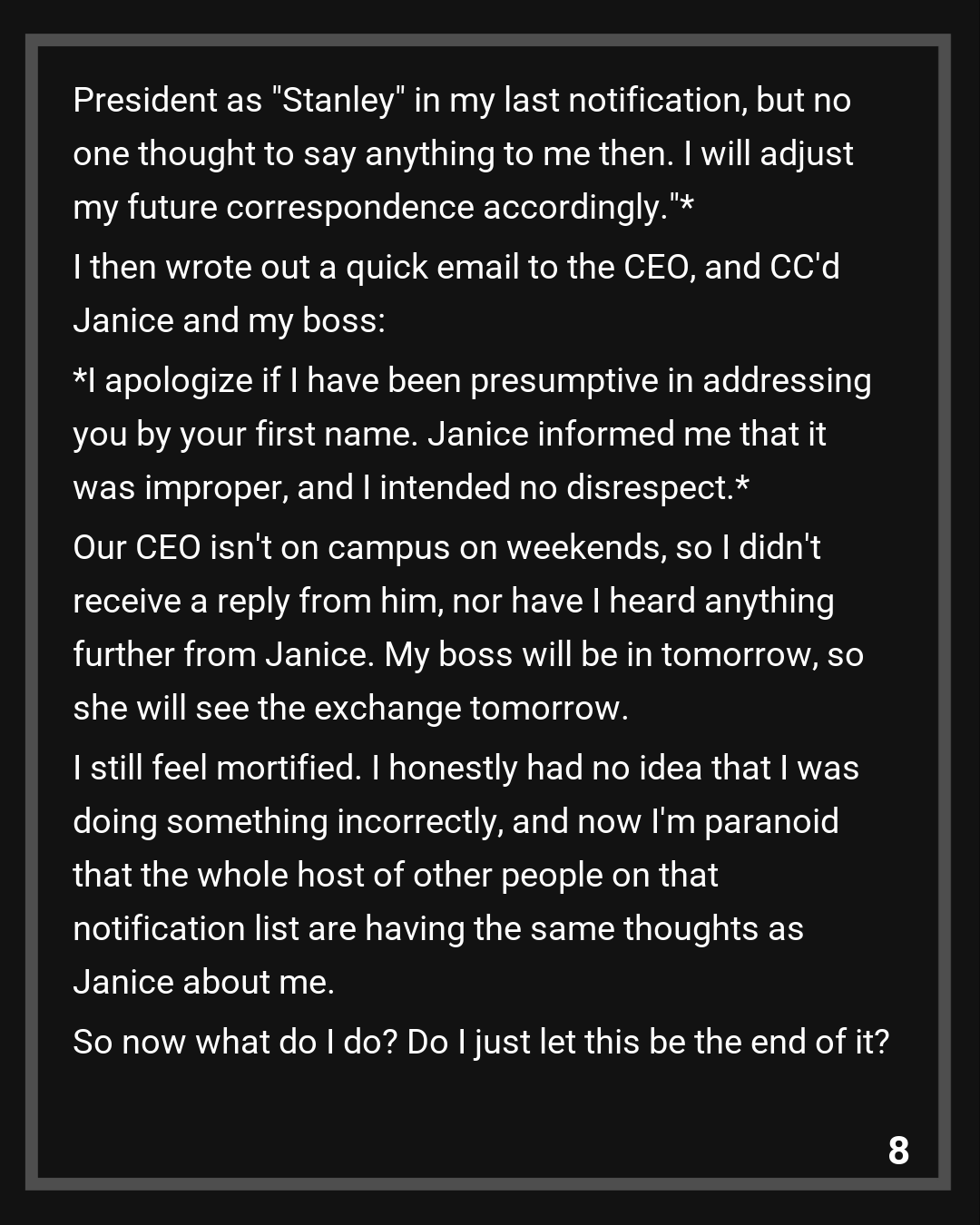
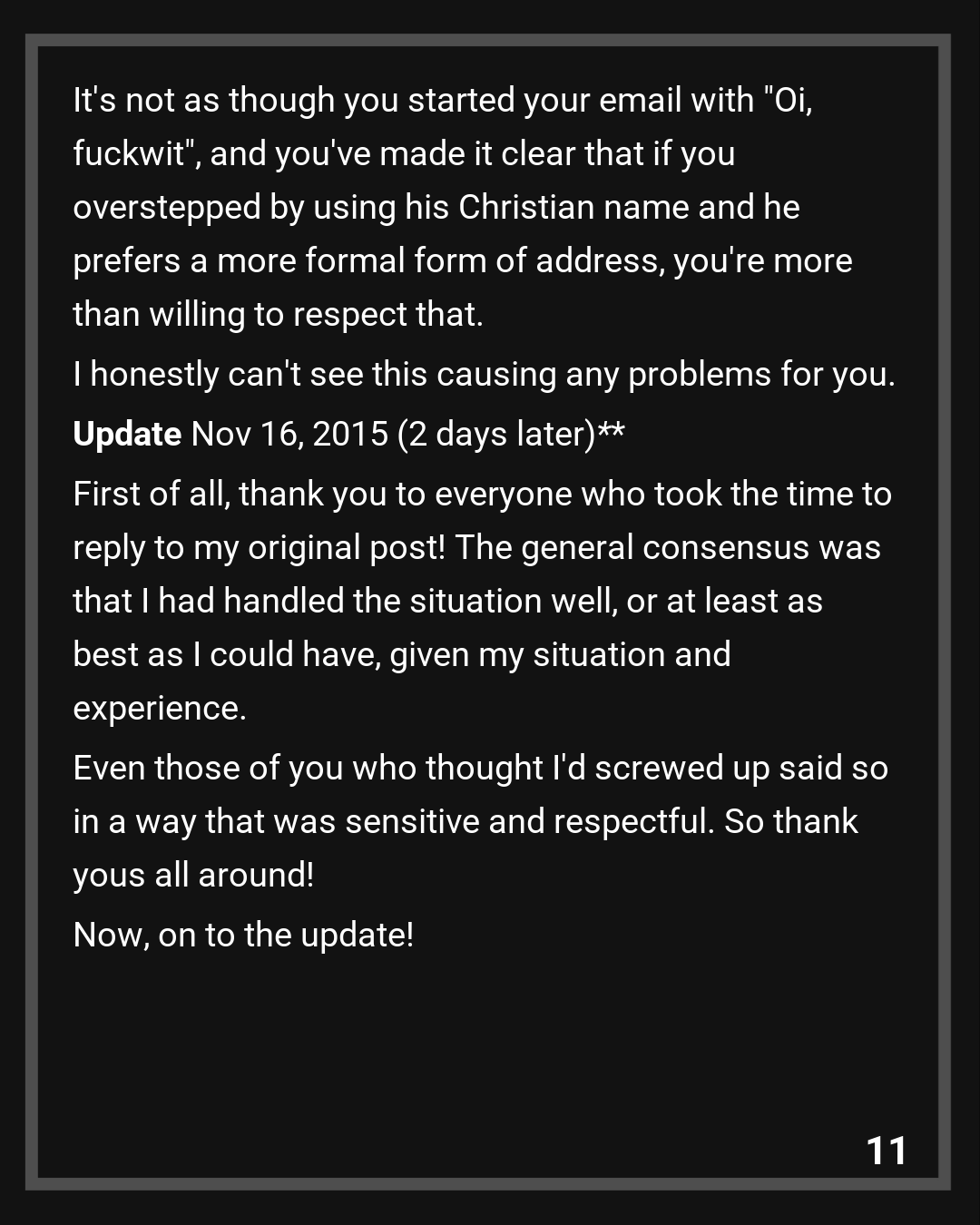
OOP responds with textbook professionalism. He thanks Janice, adjusts his approach, and writes a direct apology to the CEO. His instinct toward over-correction is the only real evidence of his inexperience.
The Reply That Settled Everything
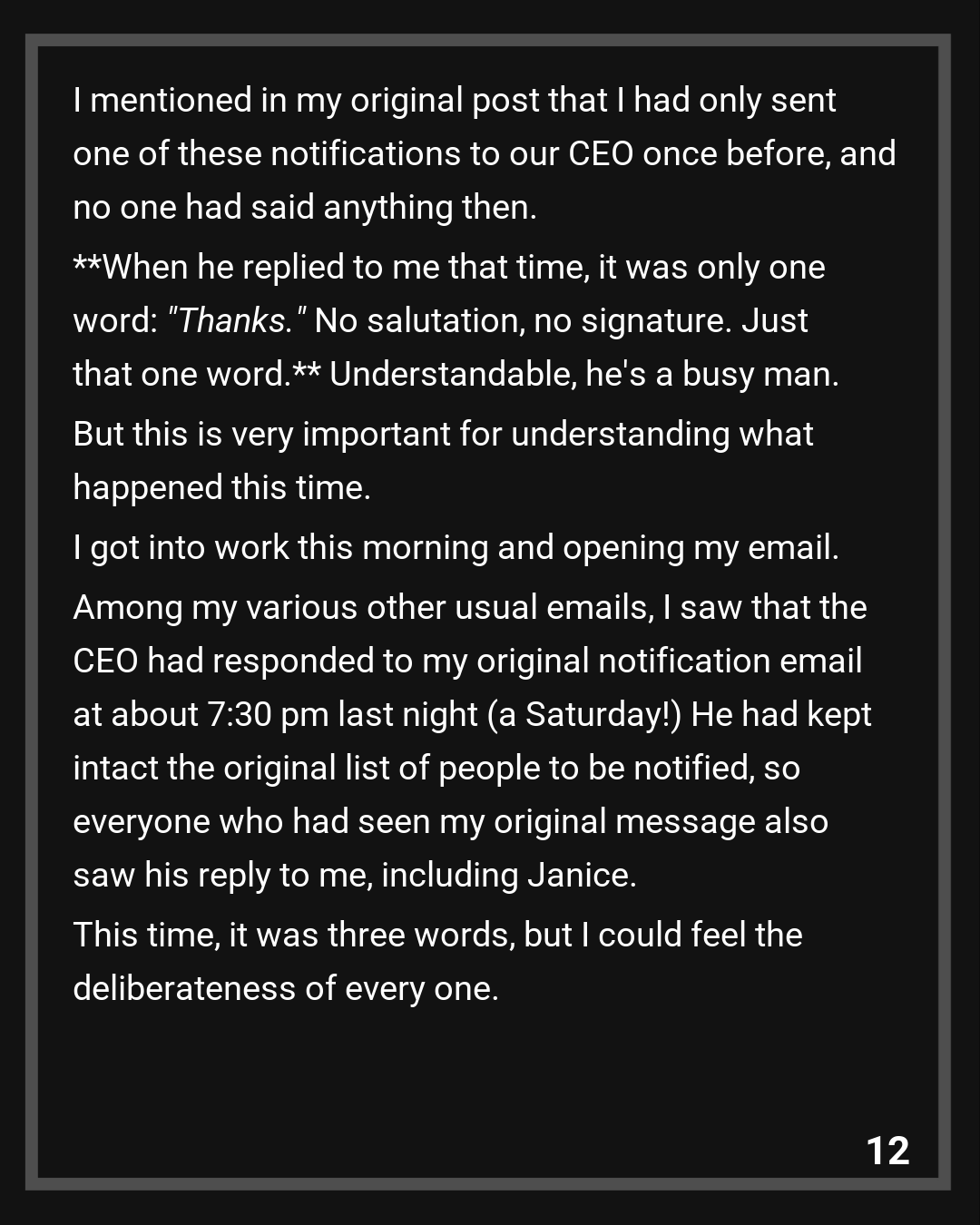
The CEO’s Saturday-evening email strips the entire dispute down to its actual stakes. By signing “Stanley” on a message visible to every original recipient, he does not merely forgive the informality. He endorses it. Janice’s carefully maintained hierarchy collapses under three words. The formality she policed was never a rule the CEO set or wanted. It belonged to Janice alone, a velvet rope she installed around access she believed she had earned. Stanley, for his part, never noticed the rope was there.



The CC That Said Everything
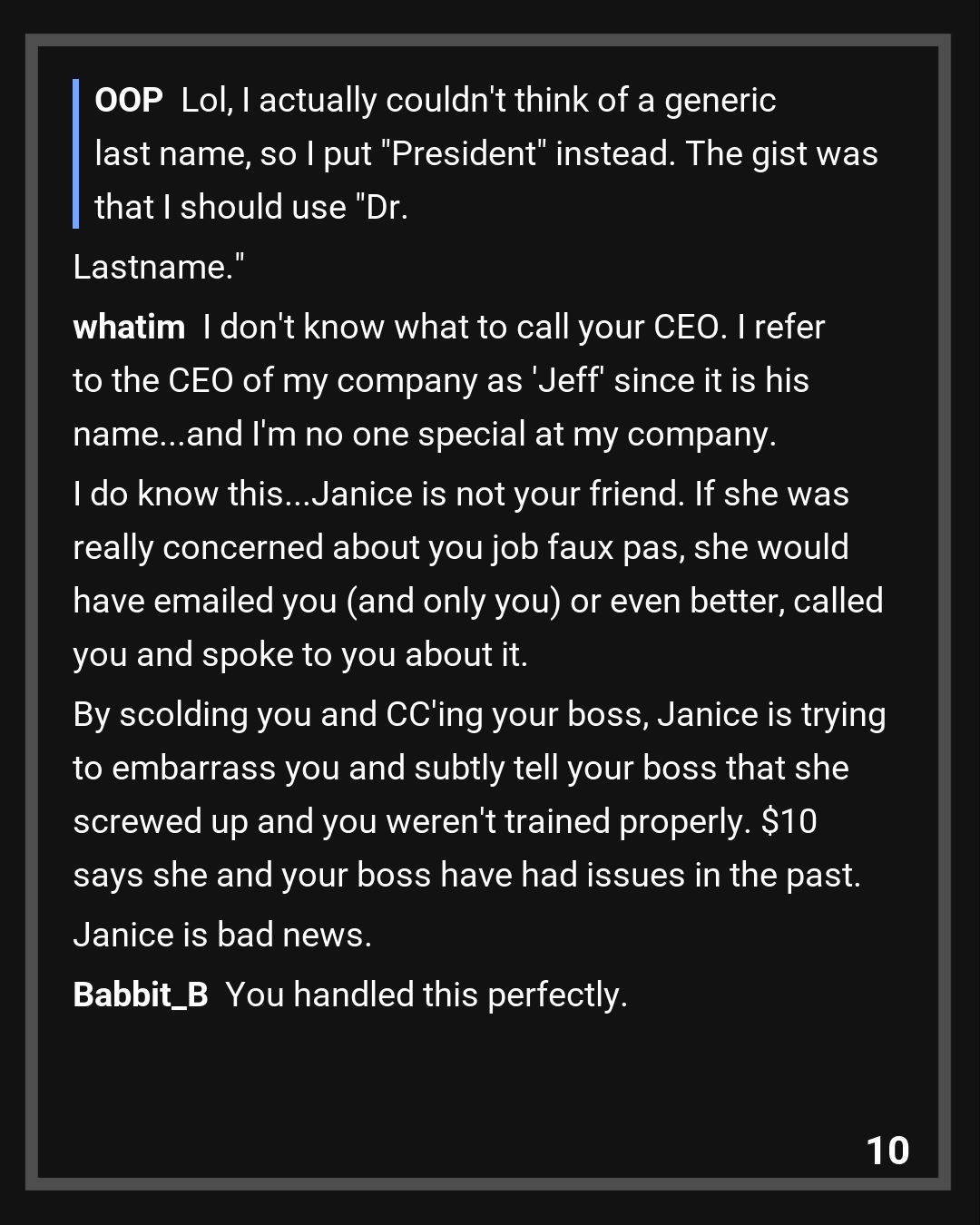
Janice could have picked up the phone. She could have sent a private email. She chose neither. Instead, she hit “reply” with OOP’s boss on copy and delivered her correction where everyone involved could watch it land.
That choice matters far more than the content of her message. A private note would have been collegial guidance from a senior colleague. Adding the supervisor turned it into a performance, staged for an audience of exactly the right people. Janice was not teaching OOP a workplace norm. She was demonstrating, publicly, that she understood rules he did not. The correction functioned as a credential.
Her phrasing reinforces this reading. “It took me 3½ years before I called Dr. President ‘Stanley.'” She does not cite a policy. She does not reference an employee handbook or a directive from the CEO’s office. She cites her own timeline of deference as if it were organizational law. The rule she enforced had exactly one source: her own experience of waiting.
When Guidance Becomes Territory
Private correction protects the person being corrected. Public correction protects the person doing the correcting. Janice’s email was not aimed at OOP. It was aimed at every name on that CC list, a broadcast that she held authority over who could speak to the CEO and how.
The Velvet Rope Nobody Installed
Every organization has people like Janice. Not bullies, exactly. Proximity managers. They accumulate closeness to power through patience and deference, then guard that closeness as though it were a finite resource threatened by anyone who skips the line.
OOP’s aquarium operates on a first-name basis. Orientation materials confirm it. Every colleague practices it. Janice herself presumably witnesses it daily. Yet she maintained a private hierarchy in which addressing the CEO informally required years of earned access. She built a gate around a door that the organization left wide open, then punished someone for walking through.
Here is the uncomfortable counterpoint, though: Janice’s instinct was not baseless. In most workplaces, casual familiarity with a CEO you have never met does carry risk. OOP addressed “Stanley” by first name not because he had read the room with particular skill, but because the room happened to match his default. A different CEO, one who preferred formality, would have made Janice look prescient and OOP look naive. The outcome vindicates OOP. The logic does not, entirely. He was right by accident as much as by judgment.
Still, being accidentally right is different from being wrong. And Janice’s enforcement revealed something she probably did not intend to advertise: that her proximity to the CEO was not a natural relationship but a carefully maintained distance she had rebranded as closeness.
Stanley’s Saturday Signature
The CEO’s reply arrived on a Saturday evening, long after business hours. Three words. “Thanks. Stanley.” No title, no honorific, no acknowledgment of the apology OOP had sent. He kept every original recipient on the thread.
That restraint is the most deliberate element of the entire exchange. A longer reply would have created a conversation. A private reply would have resolved things quietly but left Janice’s public correction standing unchallenged. By responding on the same thread, with the same audience, Stanley matched the forum Janice chose and reversed its verdict without mentioning her once.
A First Name as a Policy Statement
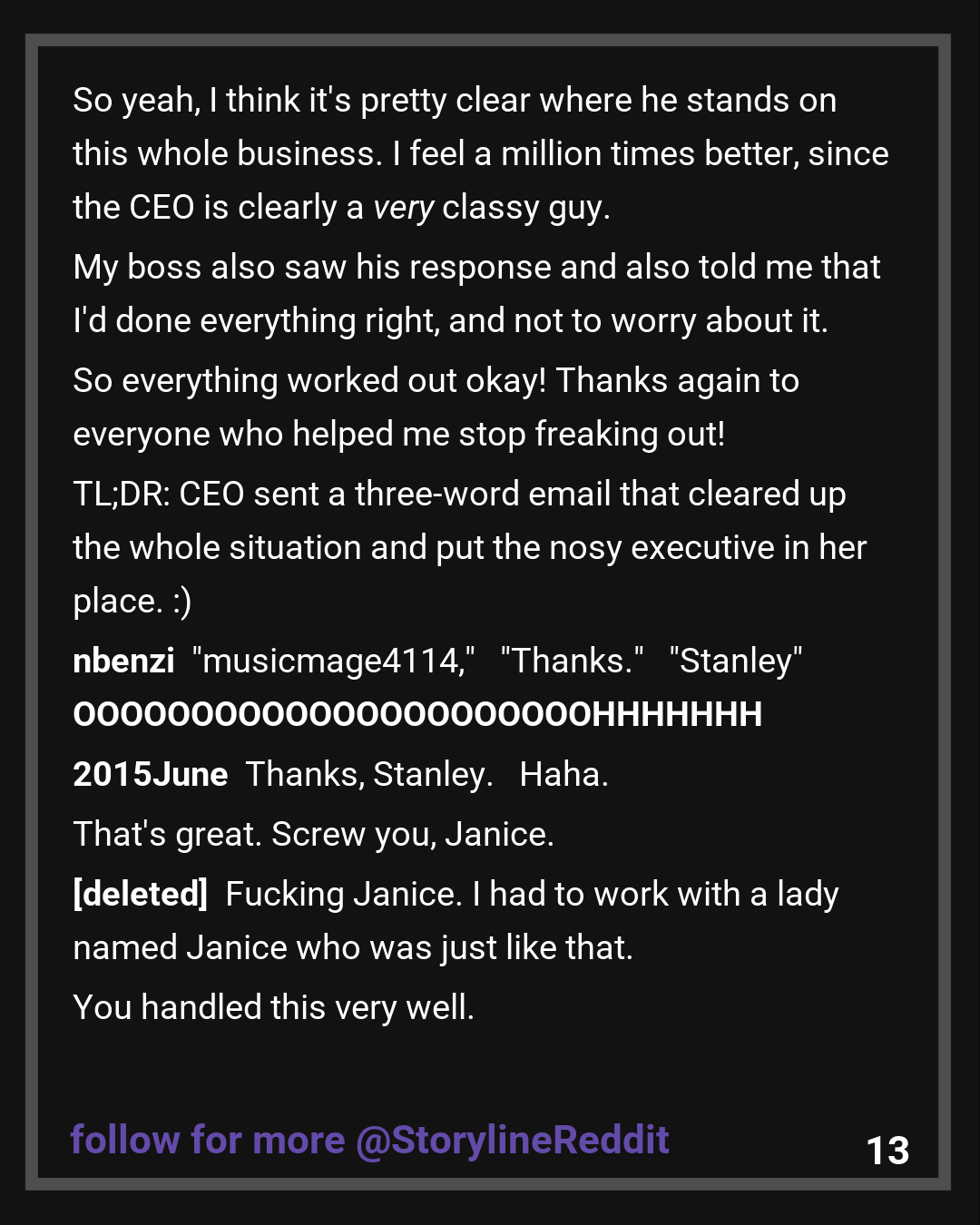
His signature line did the work a memo never could. By signing “Stanley” rather than “Dr. President,” he answered OOP’s apology and Janice’s correction simultaneously. The informality OOP used was not forgiven. It was confirmed. Every recipient on that thread could see it.
The comment section on responded with gleeful recognition, dozens of readers savoring the precision of an executive who understood exactly how much silence could say. But the detail that lingers is smaller than the CEO’s reply. It is Janice’s three and a half years, offered as proof of status, exposed in a single Saturday-evening signature as proof of nothing anyone else was ever asked to earn.
How the Thread Read the Room
The dominant cluster, by a wide margin, treated Stanley’s three-word reply as the emotional climax of the entire post. Thousands of upvotes gathered around the idea that his signature was not merely a response but a correction aimed squarely at Janice, delivered without naming her. Readers parsed the punctuation, the Saturday timing, the deliberate inclusion of every original recipient. Their fascination was less about workplace etiquette than about witnessing power exercised with surgical economy. The emotional register ran hot with vicarious satisfaction, the particular thrill of watching someone get publicly overruled by the very authority they claimed to represent.
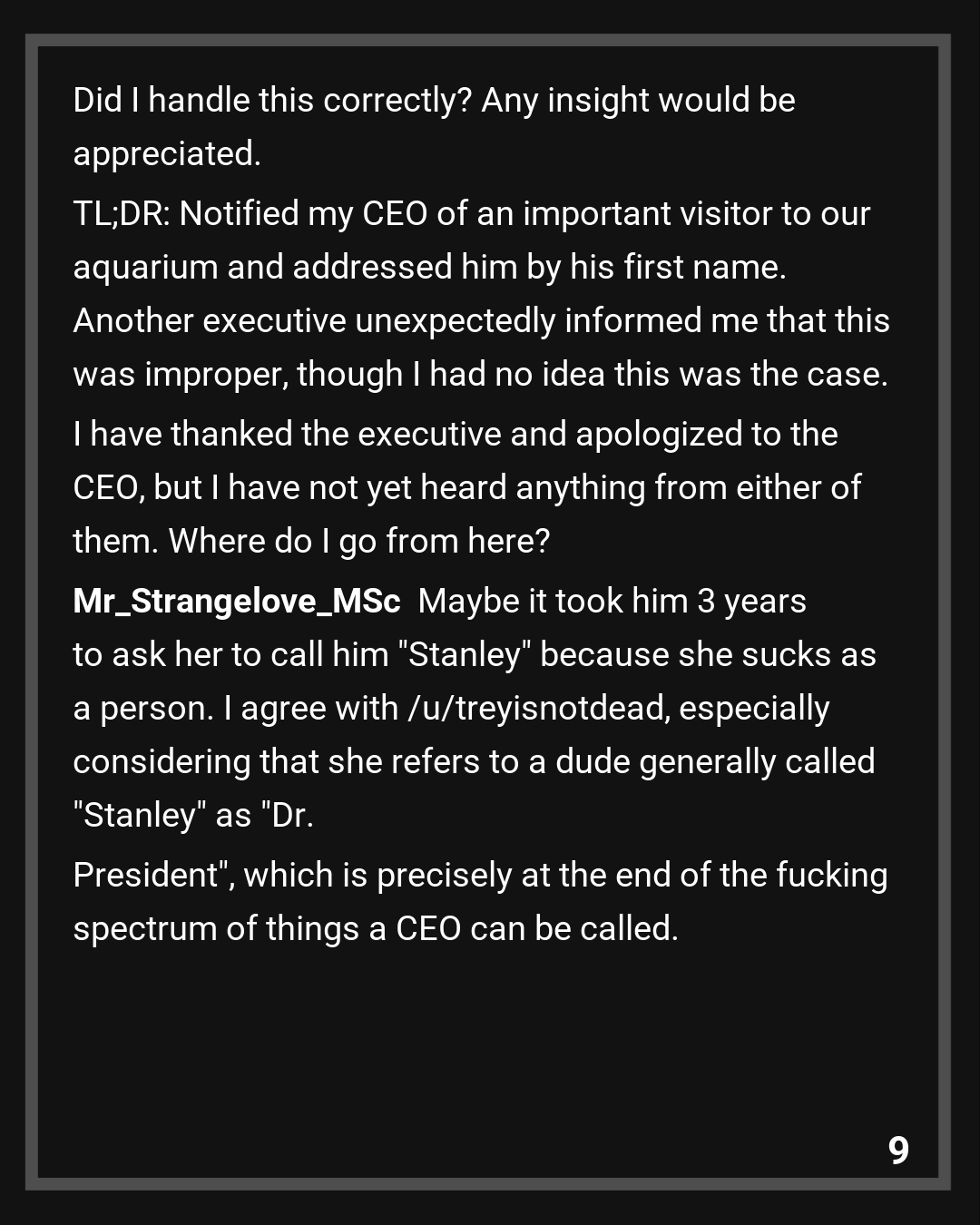
A second cluster zeroed in on Janice as an archetype rather than an individual. Nonprofit workers surfaced in droves to report their own Janices, assistants and mid-level colleagues who police access to leadership they do not control. The recurring argument framed her behavior as proximity hoarding: someone who spent years earning closeness to the CEO and then treated that closeness as a depletable resource threatened by a 24-year-old’s cheerful email. Several commenters drew an explicit parallel to military spouses who invoke their partner’s rank, a comparison that landed because both cases involve borrowed authority defended more fiercely than the original holder ever requested.
A smaller but persistent thread questioned whether OOP deserved the level of anxiety the situation produced. Readers with academic and corporate backgrounds pointed out that first-name culture is standard in most modern organizations, and that insisting on titles generally signals insecurity rather than respect. Their tone was more bemused than angry, puzzled that anyone could spiral over something so routine.
A fourth cluster, quieter still, appreciated OOP’s handling of the aftermath. His immediate apology to the CEO, with Janice copied, was read as strategically elegant. By surfacing the conflict directly to the person whose preference actually mattered, he forced a resolution that no amount of private back-and-forth with Janice could have produced.
The comment section reveals a readership that processes workplace conflict primarily through the lens of earned versus performed authority. Readers did not debate etiquette rules. They debated legitimacy. The near-universal contempt for Janice had little to do with her being wrong about formality and everything to do with her enforcing a boundary she had no standing to set. Stanley’s reply satisfied the thread not because it was kind, but because it clarified jurisdiction.
This editorial is based on a story originally shared on Reddit’s r/BestofRedditorUpdates community.
