Featured on @StorylineReddit: November 7, 2025
Six Minutes and a Conspiracy Rabbit Hole
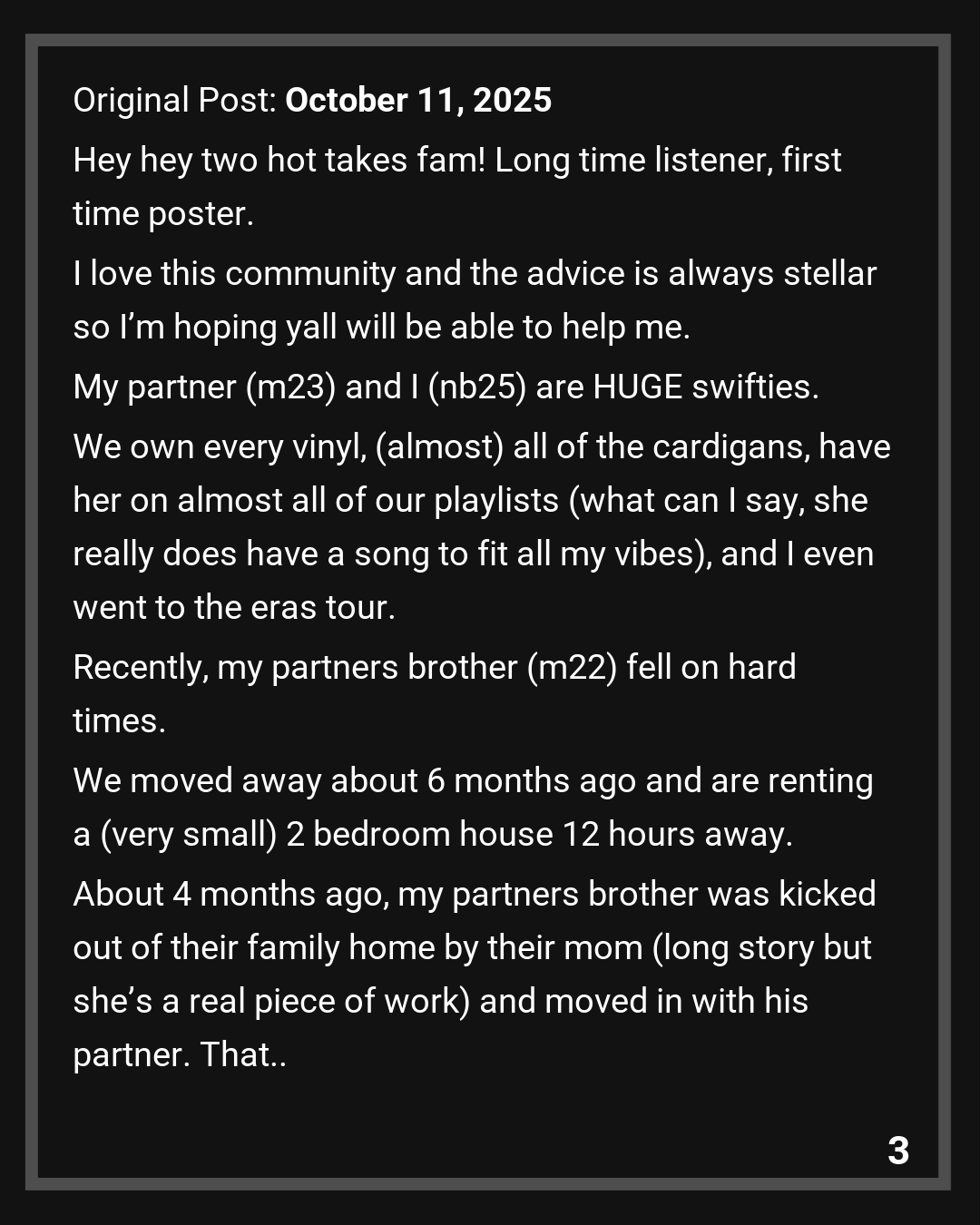
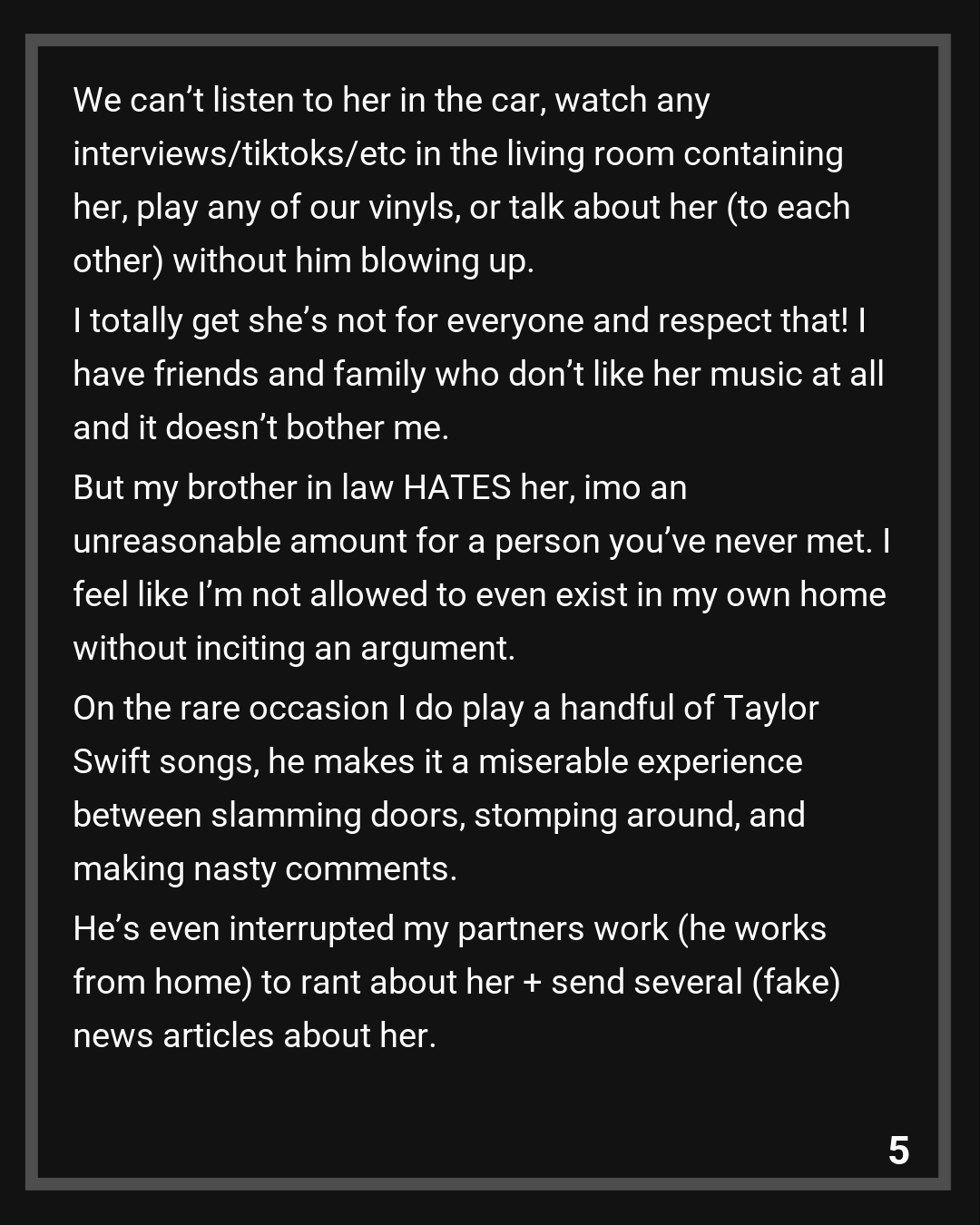
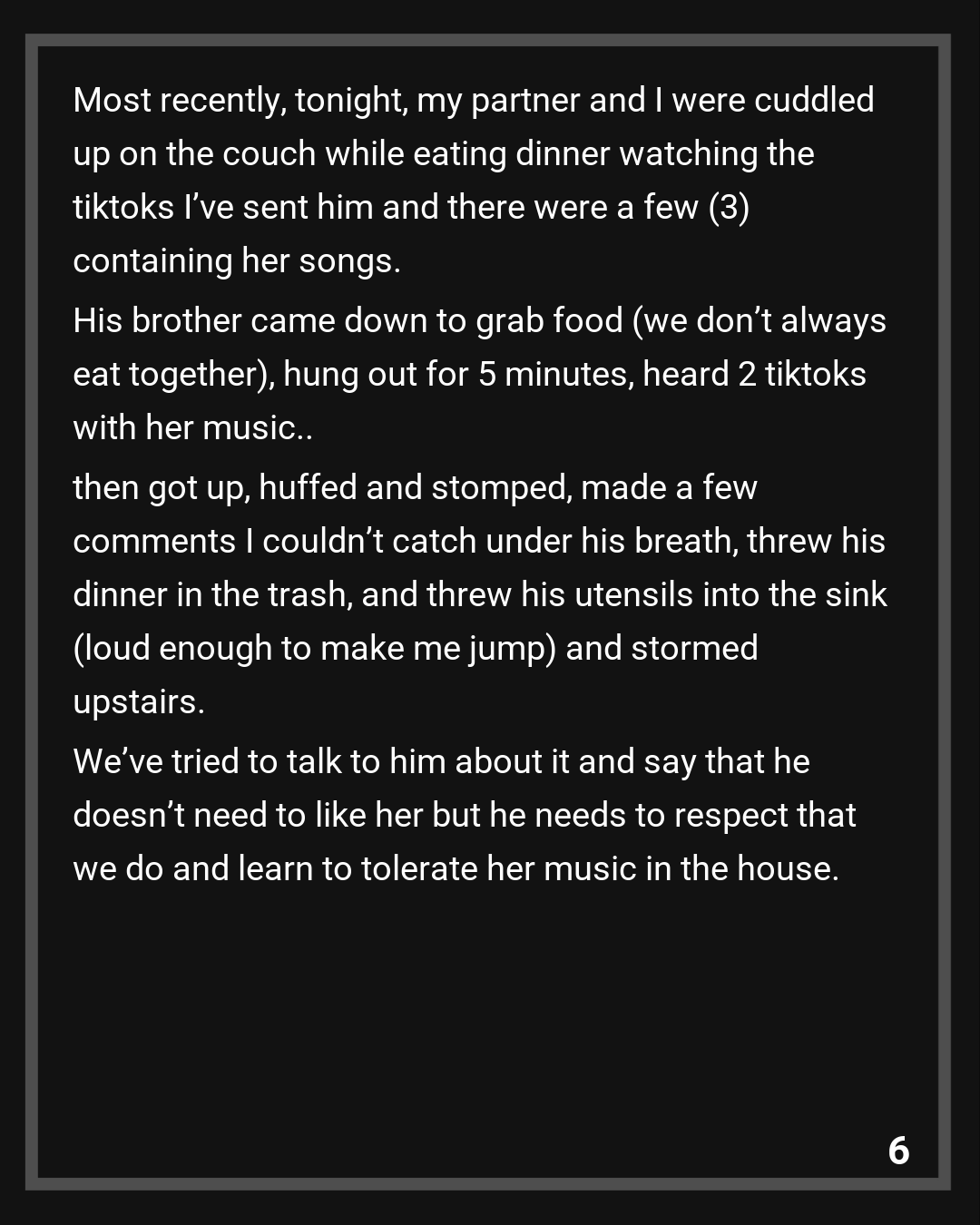
The person OOP describes as their rock, the one who helped them dress during flare-ups and proofread every anxious text, spent three weeks slamming doors over a Reddit roommate music conflict that amounted to six minutes of Taylor Swift per day.
OOP calculated that number themselves. In a third update running over a thousand words, they broke the exposure down to individual TikToks, counted conversations, and converted it all into a per-day average. That kind of arithmetic doesn’t come from confidence. It comes from someone who has been justifying their own existence in a space they pay for.
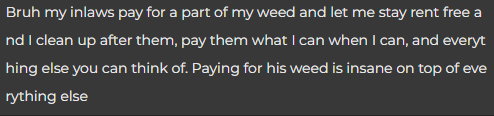
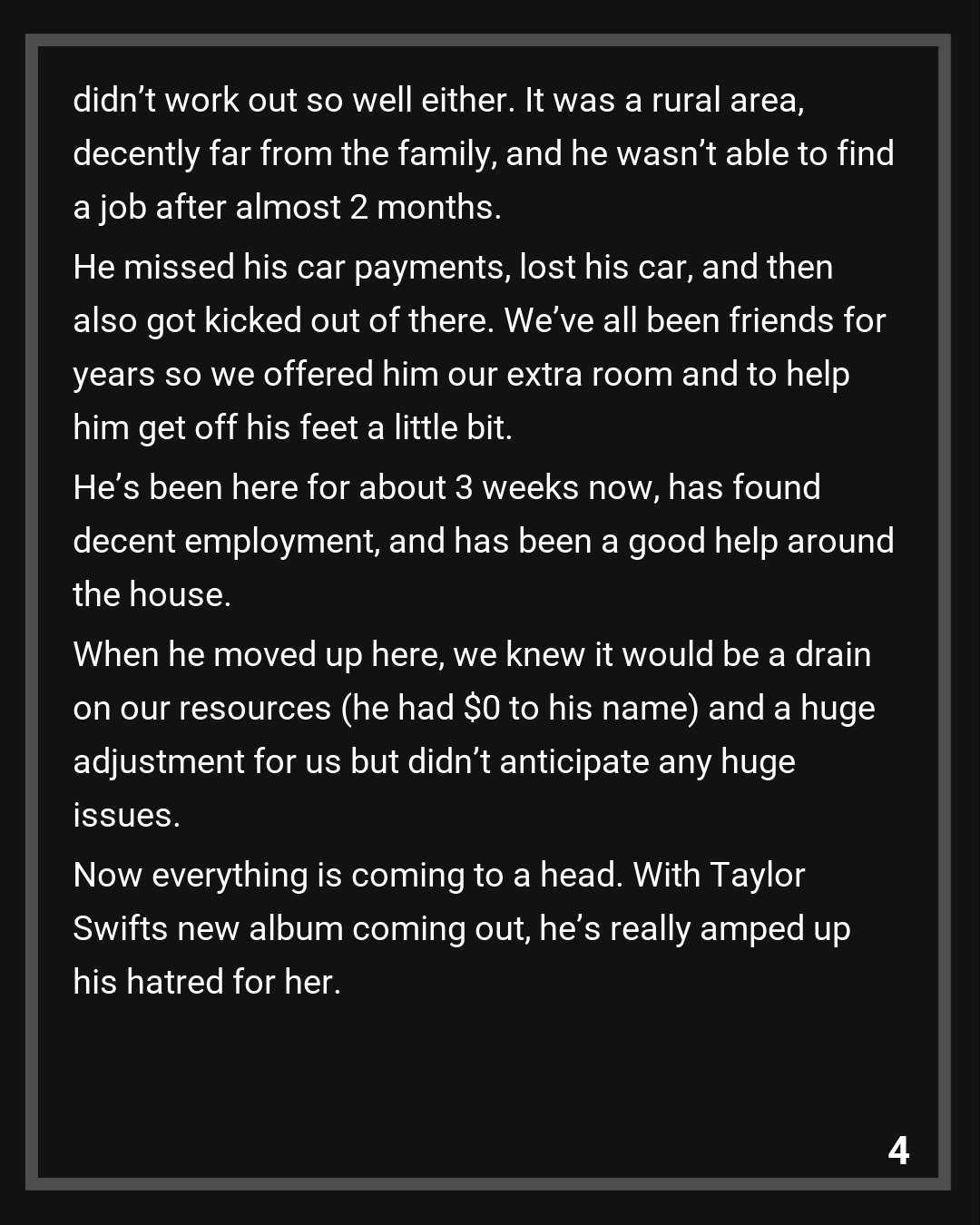
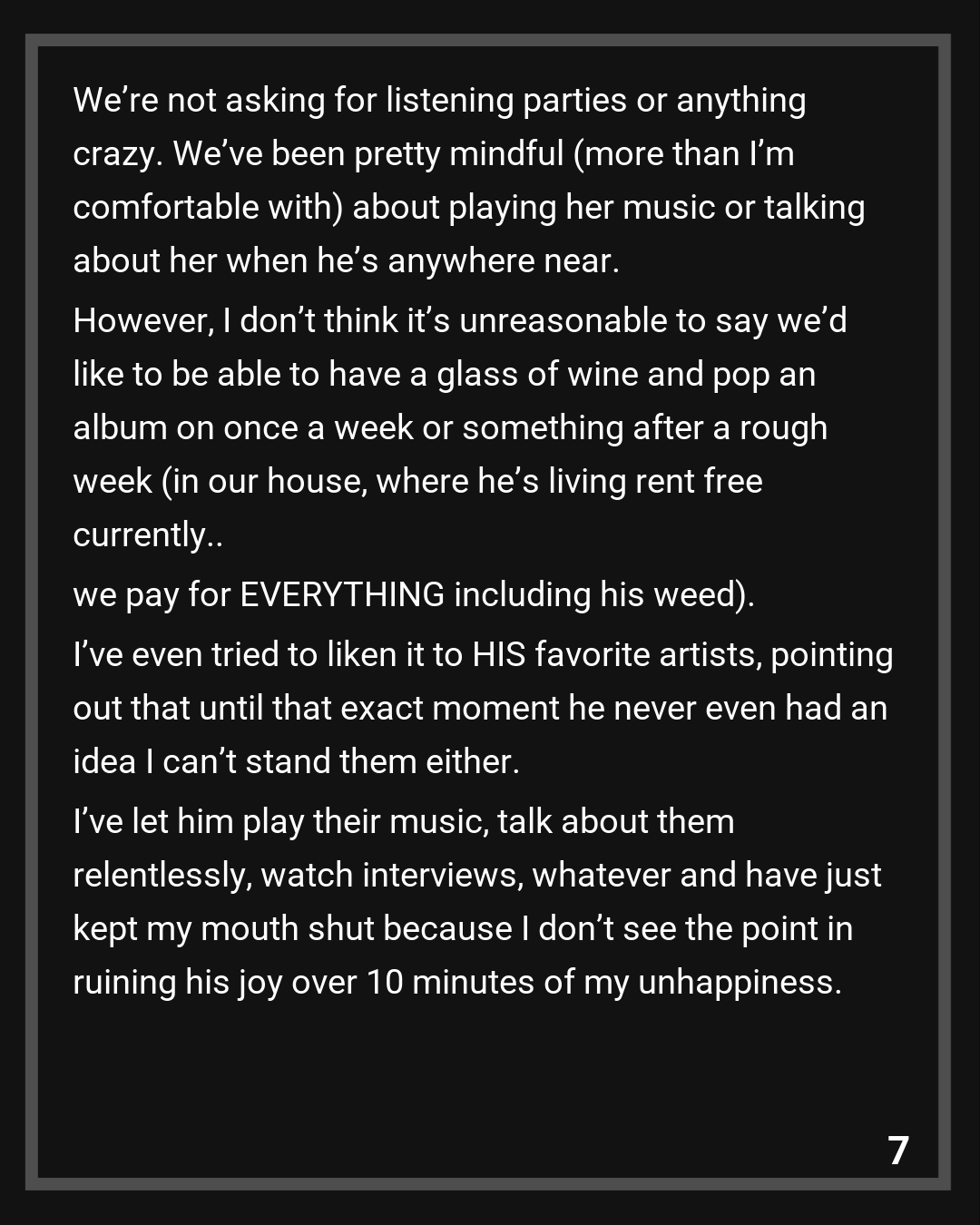
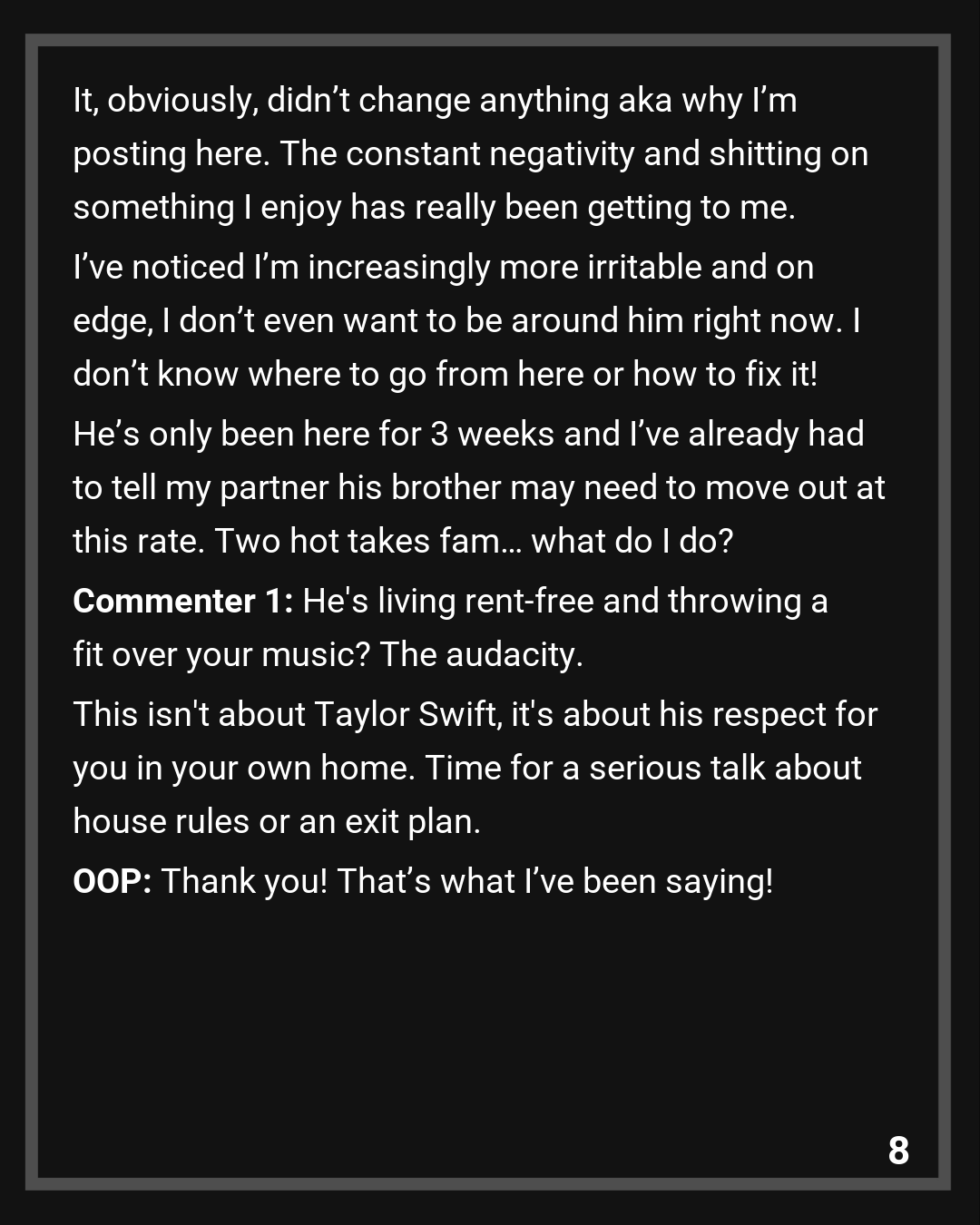
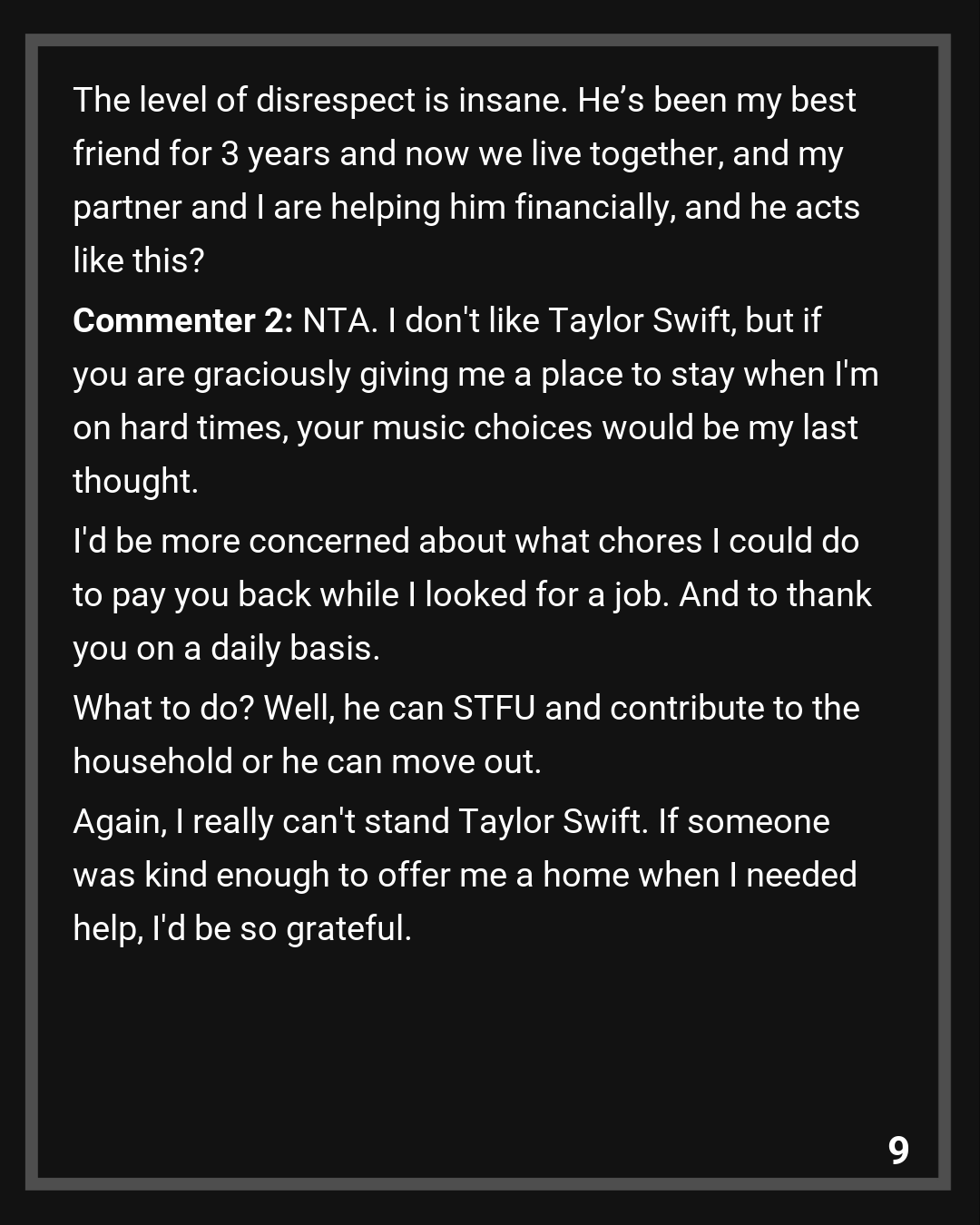
The brother-in-law arrived with zero dollars and no car. OOP and their partner covered rent, groceries, weed, and vapes for a 22-year-old who repaid them by throwing his dinner in the trash when a Taylor Swift song played on a TikTok. Yet OOP’s first instinct was not anger but calculation: proving, to strangers online, that they hadn’t asked for too much.
That instinct tells a fuller story than any slammed door.
The Roommate Music Conflict Nobody Was Winning
On the surface, this Reddit roommate music conflict ran on a predictable loop. BIL heard Taylor Swift, erupted, and OOP retreated further into accommodation. But several dynamics operated underneath that cycle, each one feeding the others.
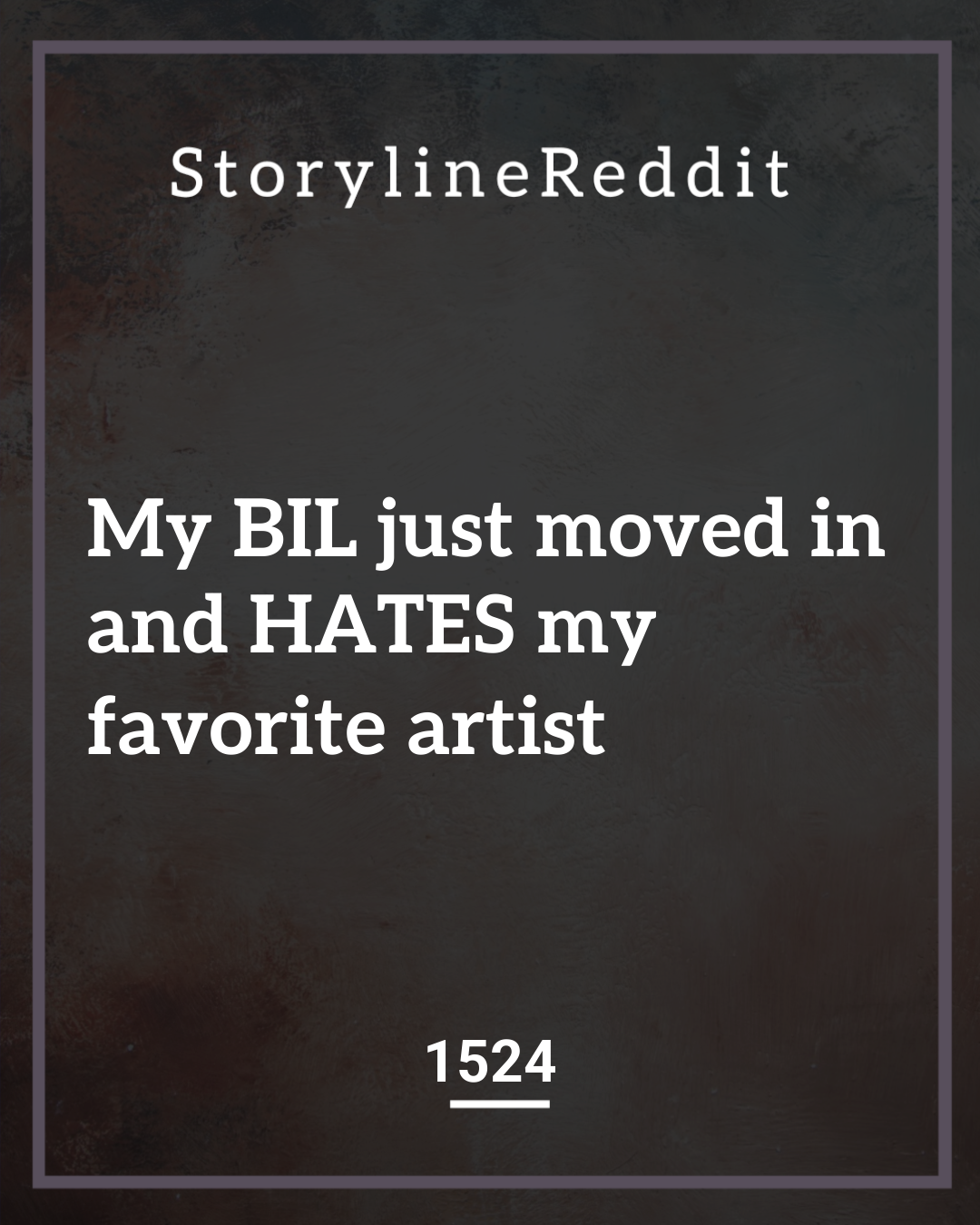
BIL’s hostility was not garden-variety annoyance. OOP mentions conspiracy theories, claims that Swift is “literally the devil reincarnated,” and Google search histories saturated with hate content. The algorithm had been doing its work on a young man already isolated, recently homeless, and quietly spiraling into what OOP later describes as bordering psychosis. His rage at the music functioned as a pressure valve for a crisis he could not name.
OOP’s response to that rage was to shrink. They stopped playing music in common spaces, stopped mentioning their interest, stopped existing comfortably in a home they financed entirely. The detailed minute-by-minute accounting in their third update reads less as helpful context and more as evidence submitted to an imaginary court by someone who internalized the belief that their own preferences require a defense brief.
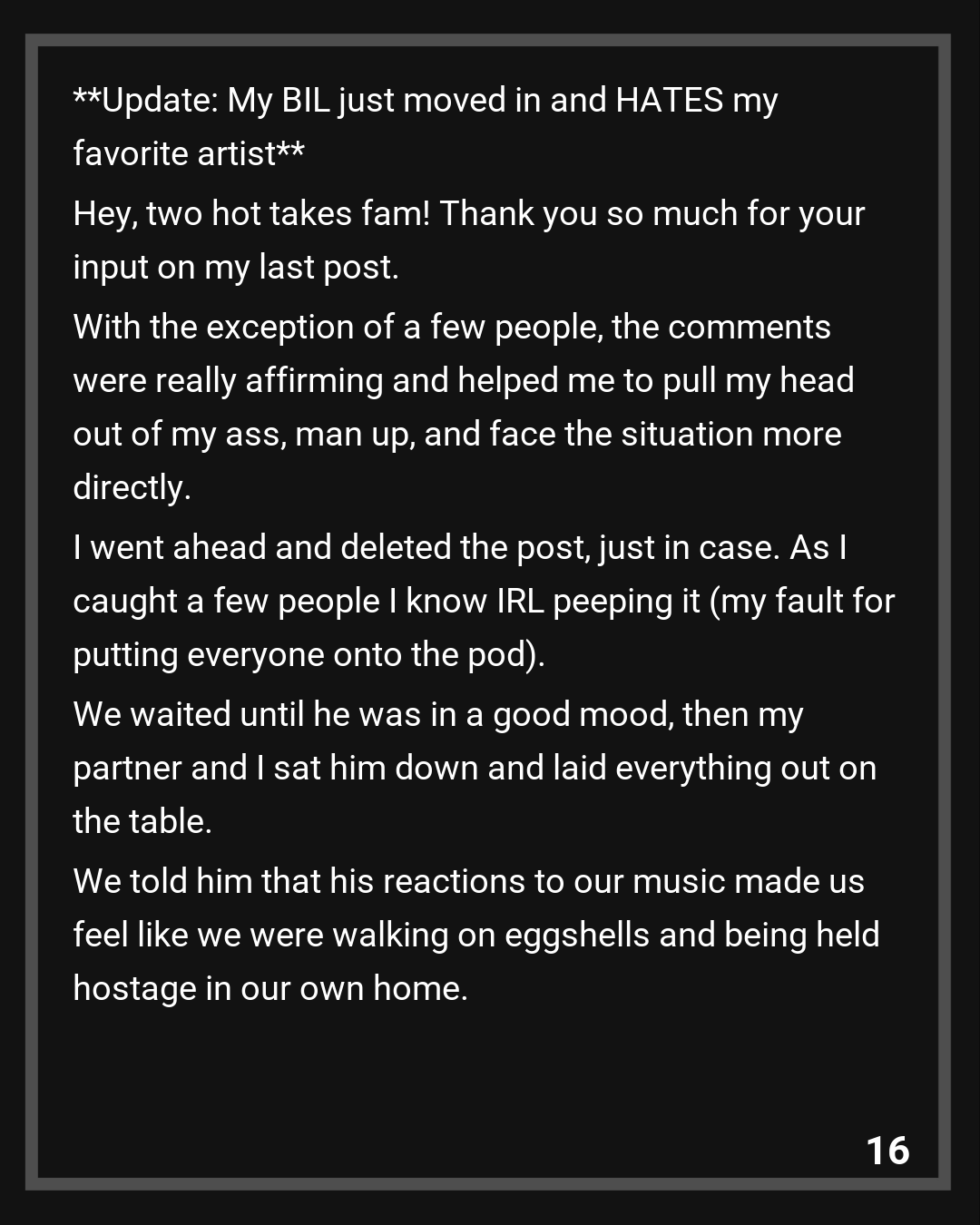
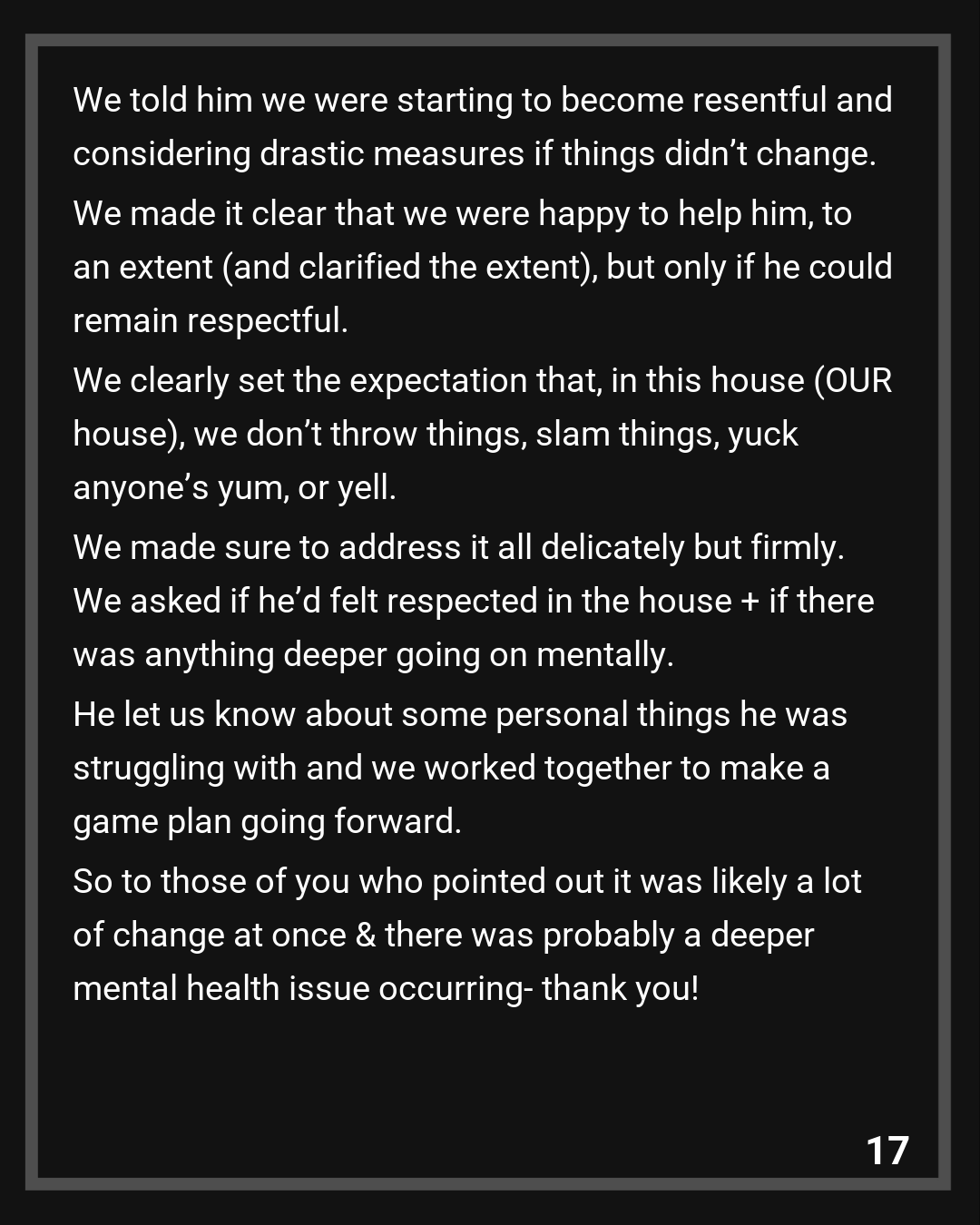
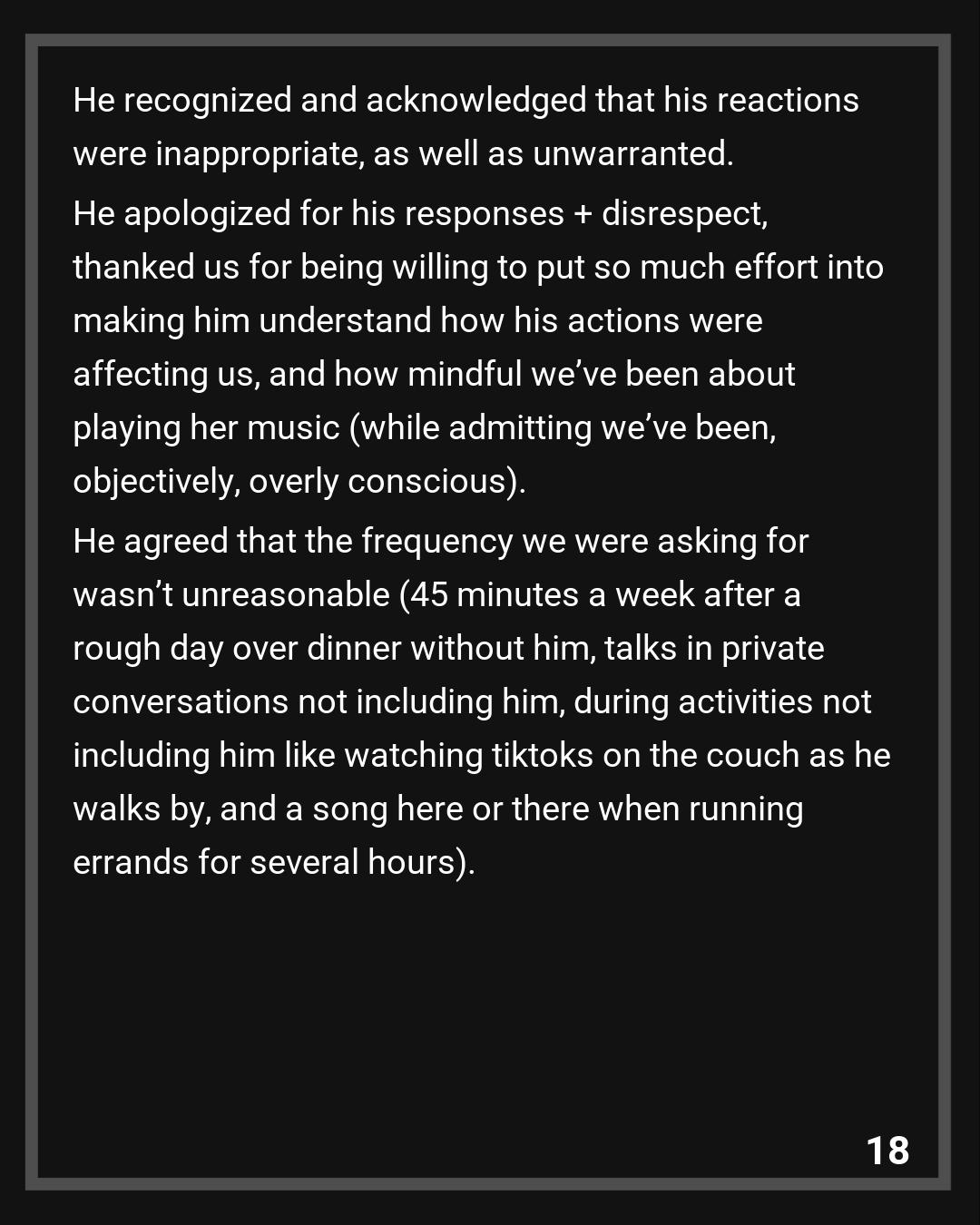
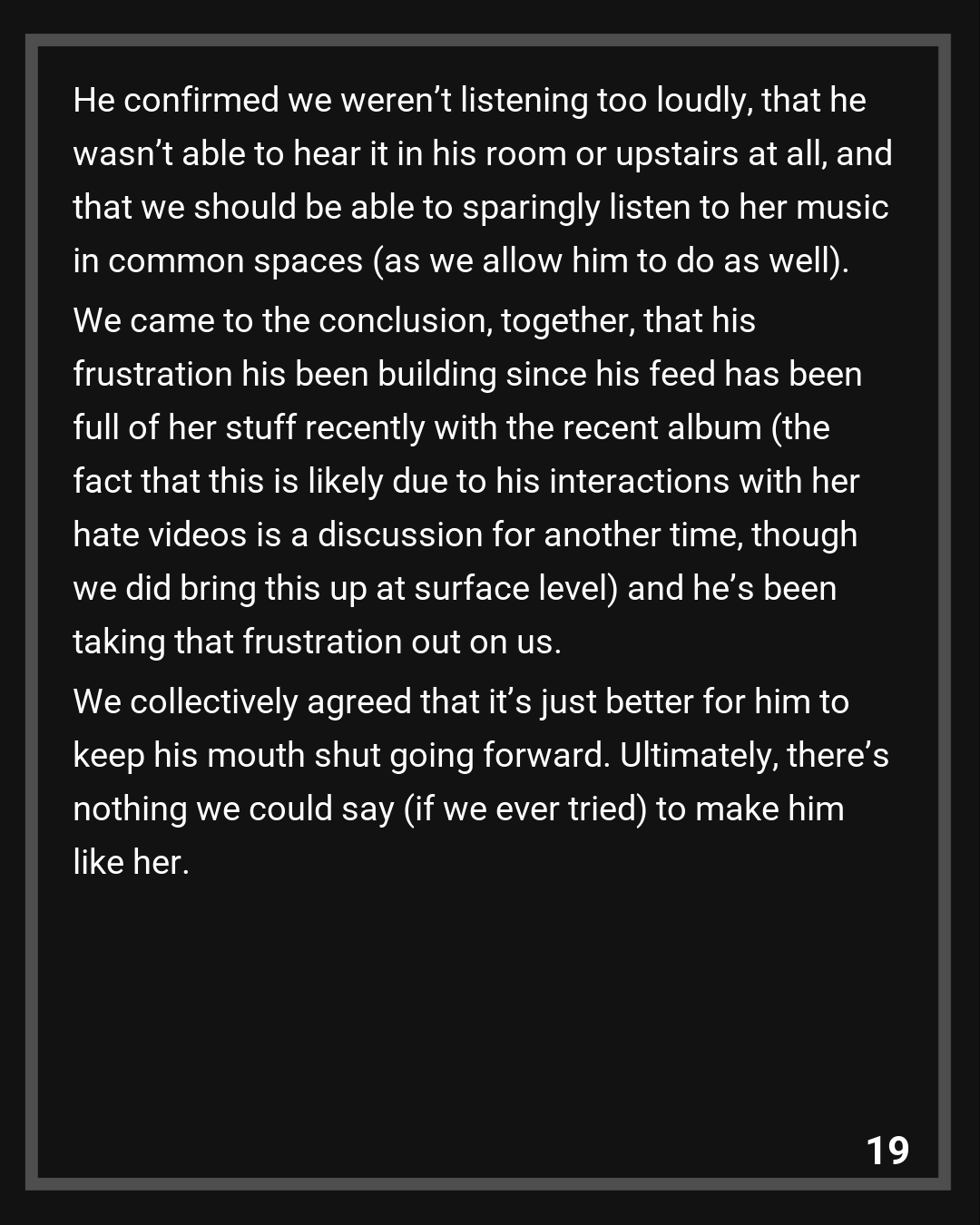
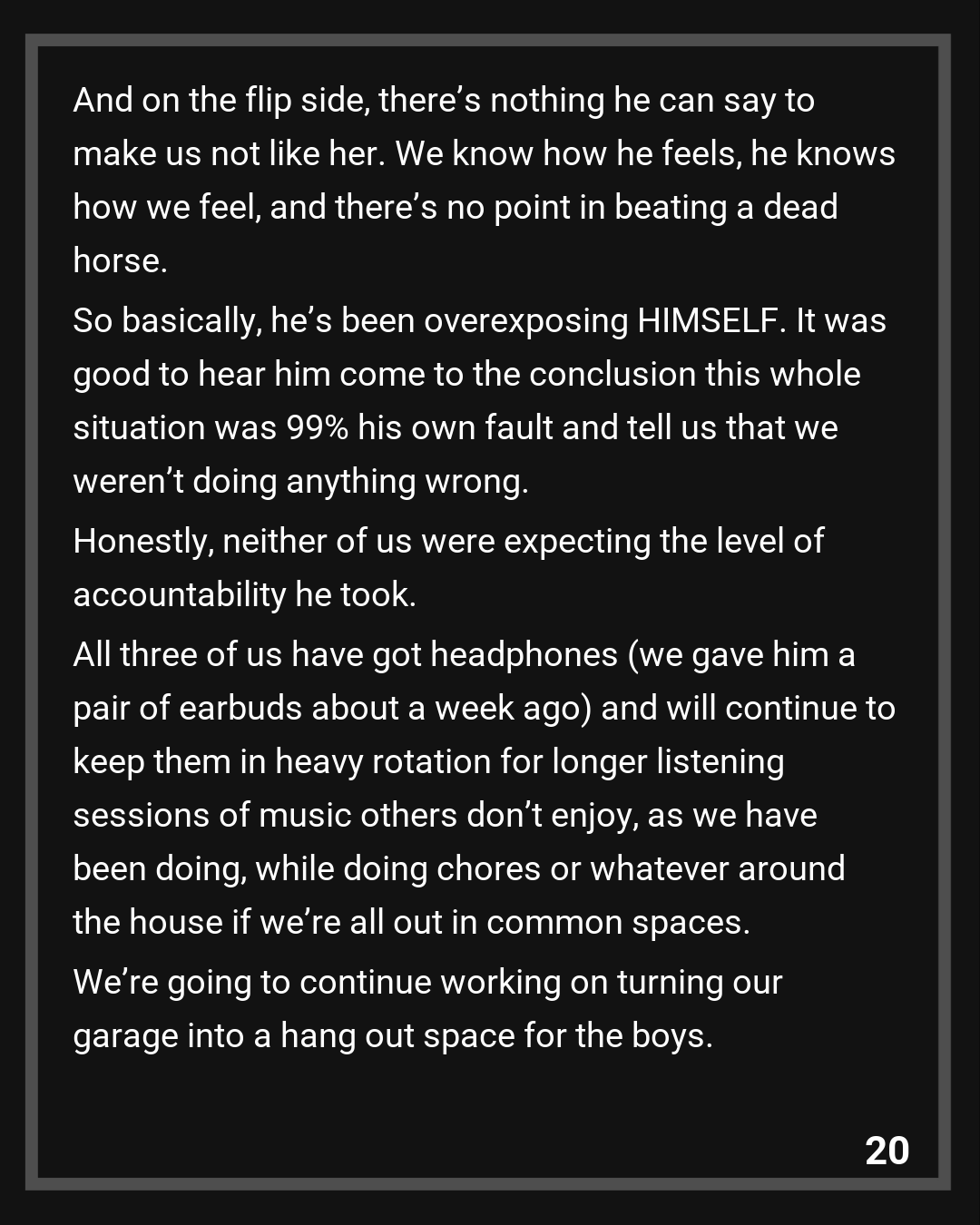
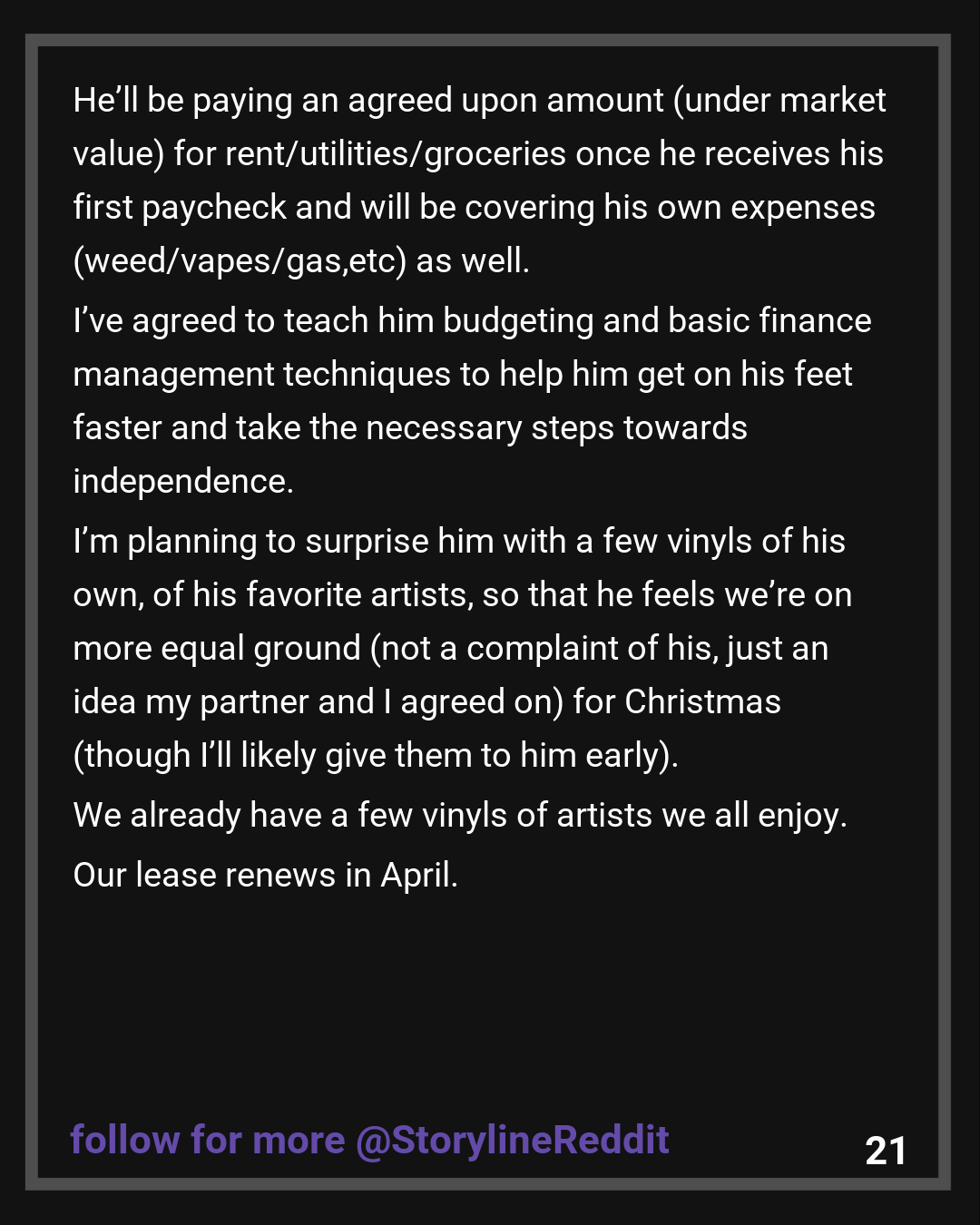
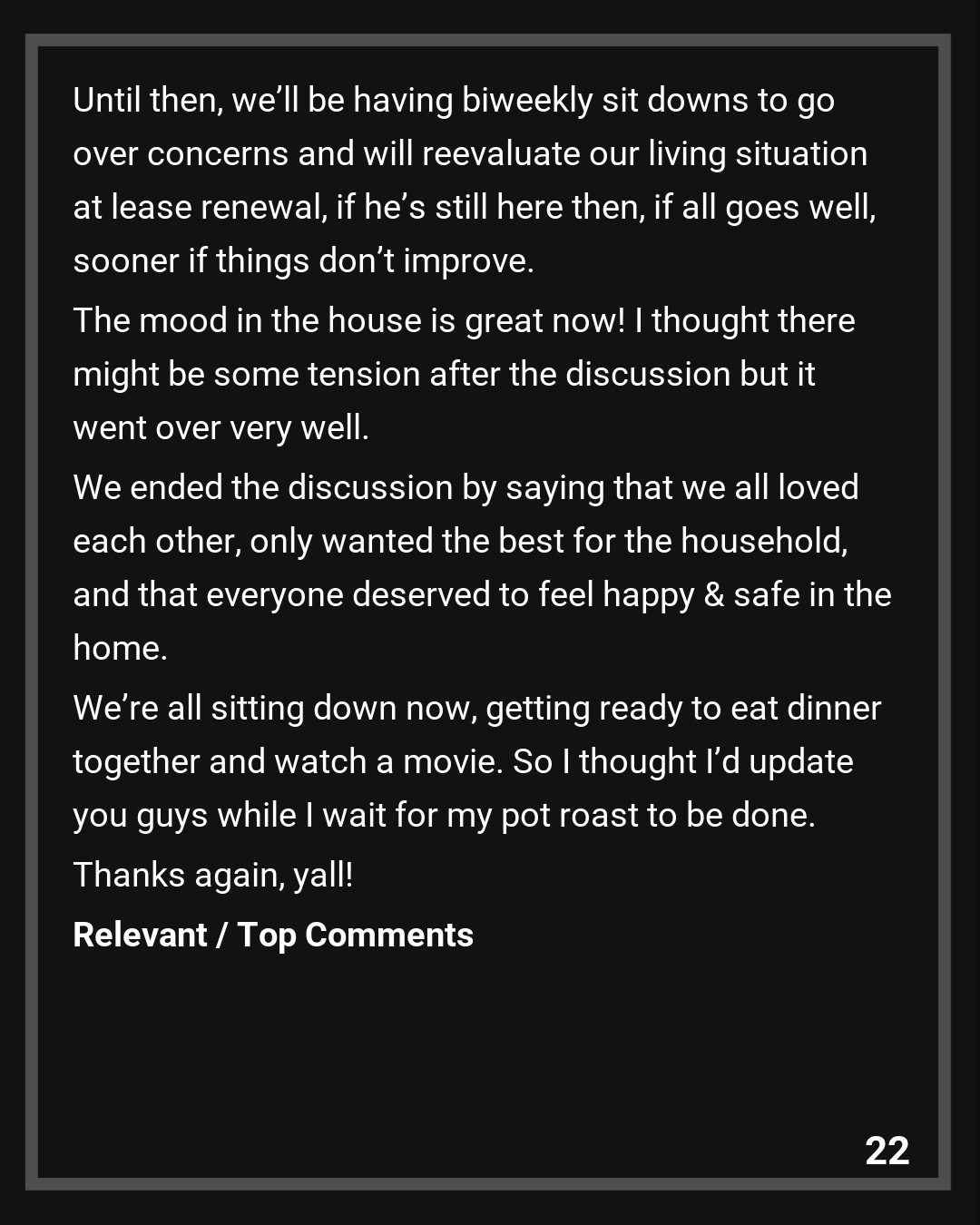
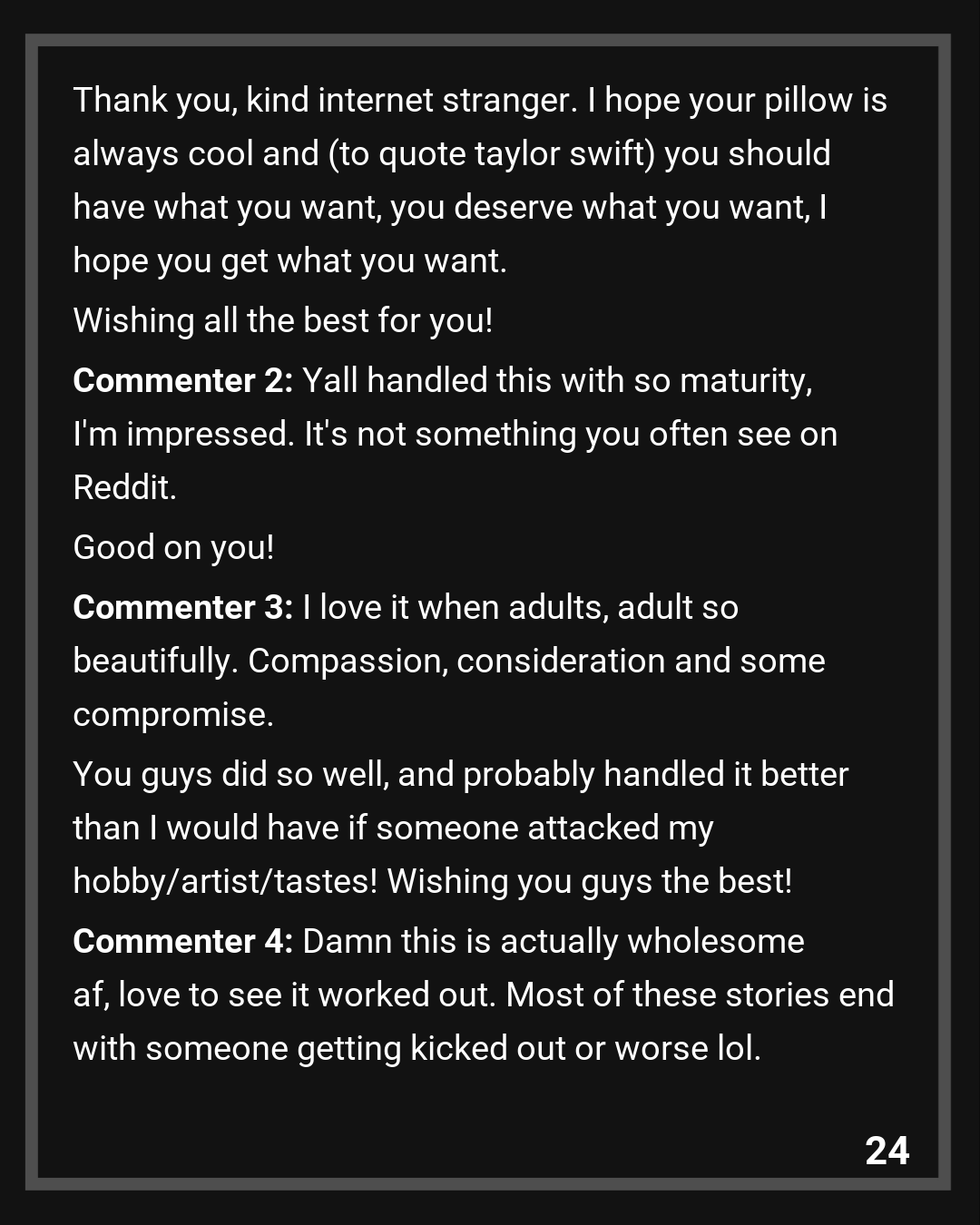
Resolution arrived only when OOP’s partner joined the conversation. Together, they named the behavior, heard BIL disclose what was actually wrong, and watched him take genuine accountability. He started paying rent. The biweekly sit-downs OOP instituted sound over-engineered on paper, but they gave a household with no prior model for honest confrontation a scheduled reason to practice it.
What holds this story together is not the dispute but the distance between OOP’s instinct to show up for everyone around them and their near-total inability to extend that same grace inward.


The Spreadsheet Where Self-Respect Should Be
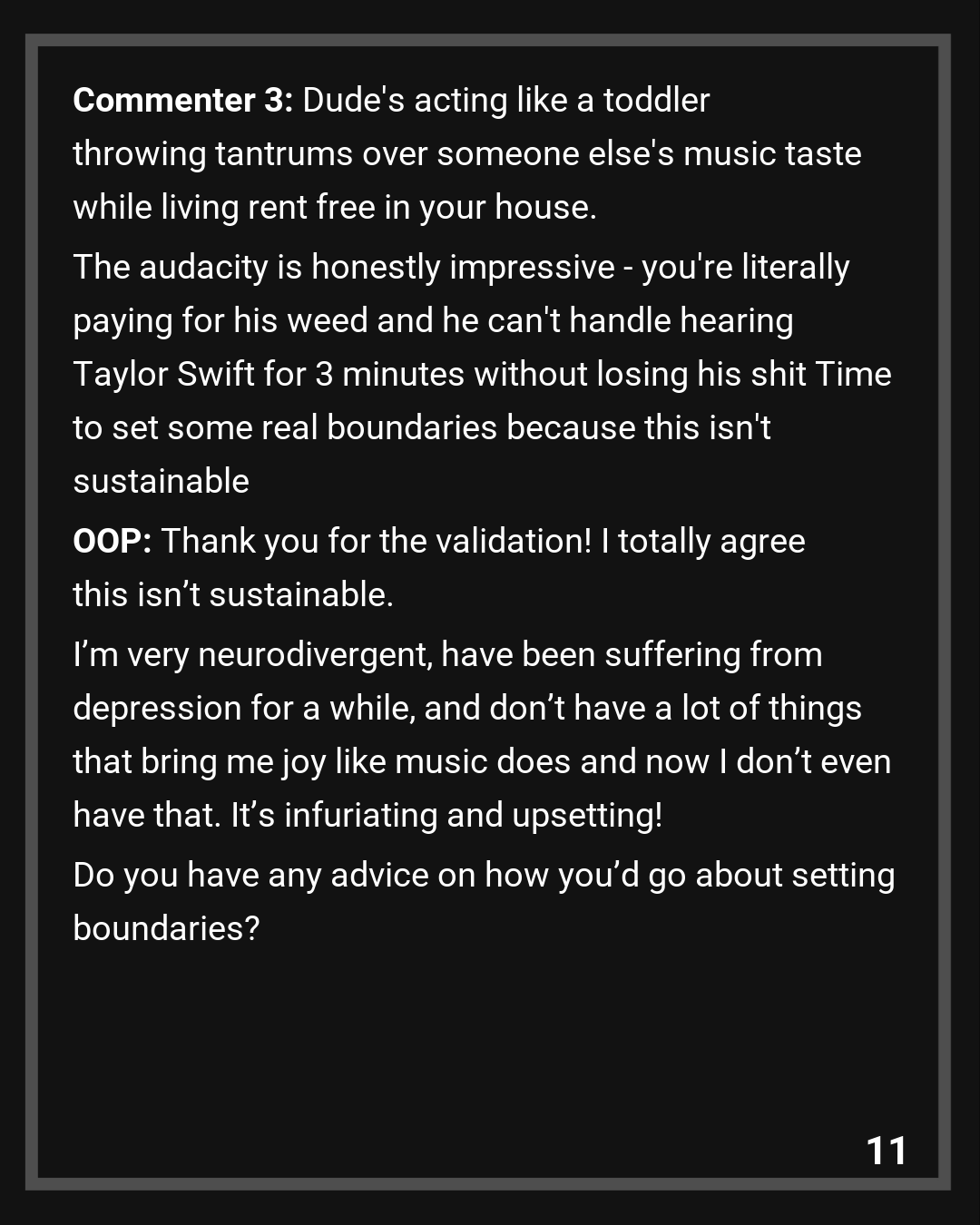
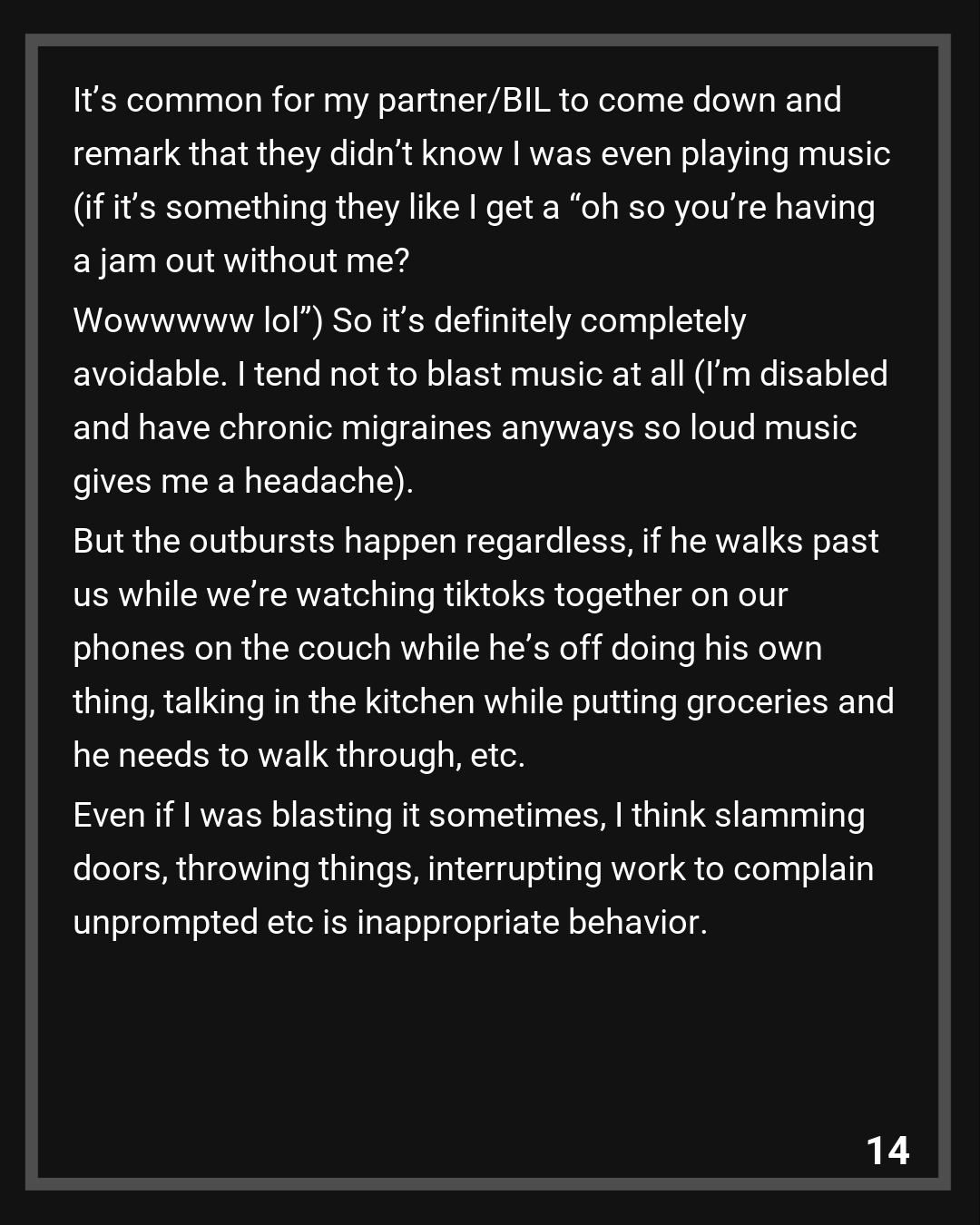
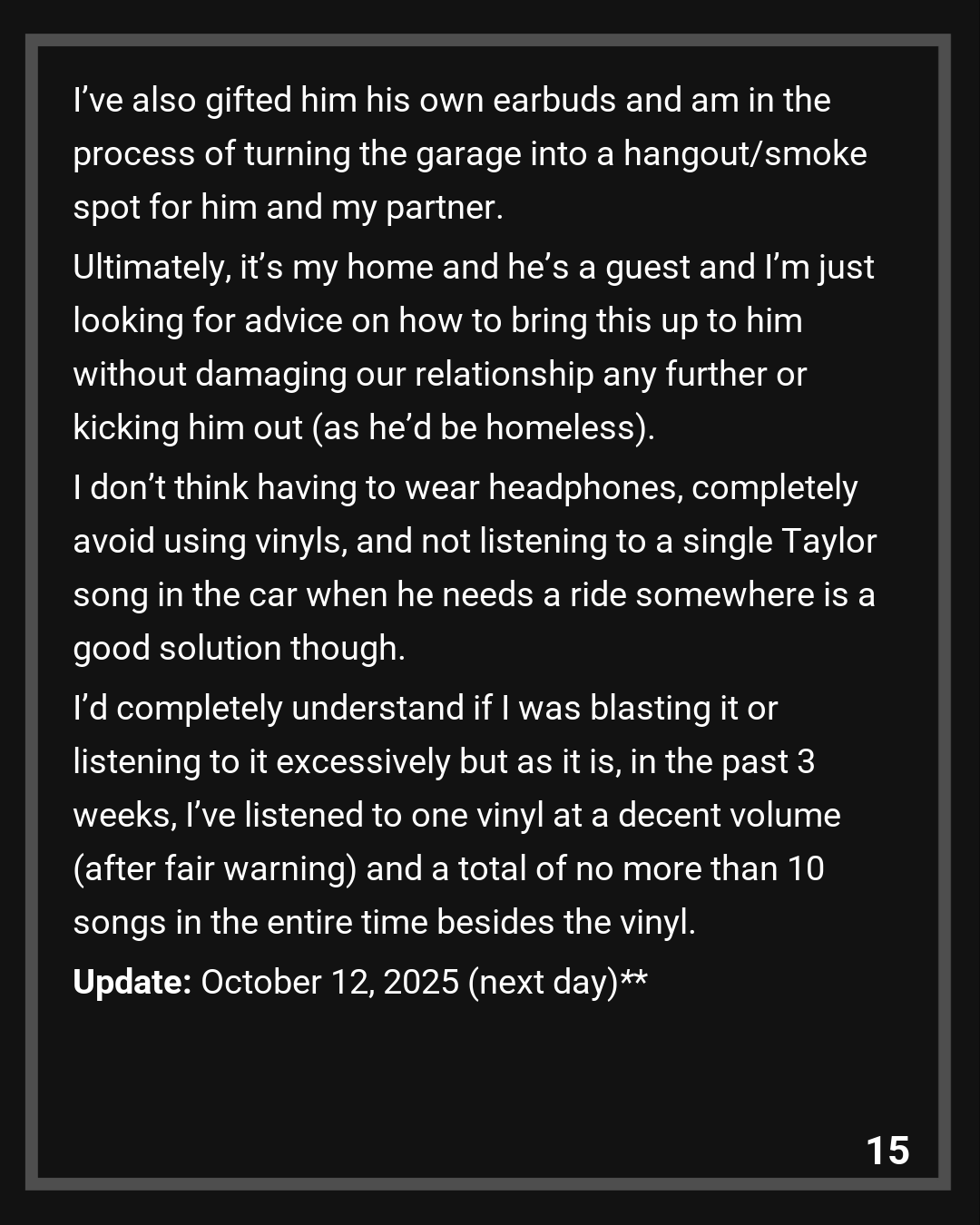
OOP did the math. They counted songs, timed TikToks, estimated conversation lengths, and arrived at a precise figure: roughly 128 minutes of Taylor Swift exposure over three weeks. About six minutes per day. That calculation was not aimed at BIL. It was aimed at Reddit commenters, at an imagined jury that might rule OOP had been unreasonable in their own home.
People who feel secure in their right to occupy space do not build spreadsheets defending it. OOP’s instinct to quantify their own enjoyment reveals how far the accommodation had already gone before the first door was slammed. By the time they posted, they had already internalized BIL’s premise: that his comfort outranked theirs, and any deviation required justification.
When Giving Ground Becomes the Default
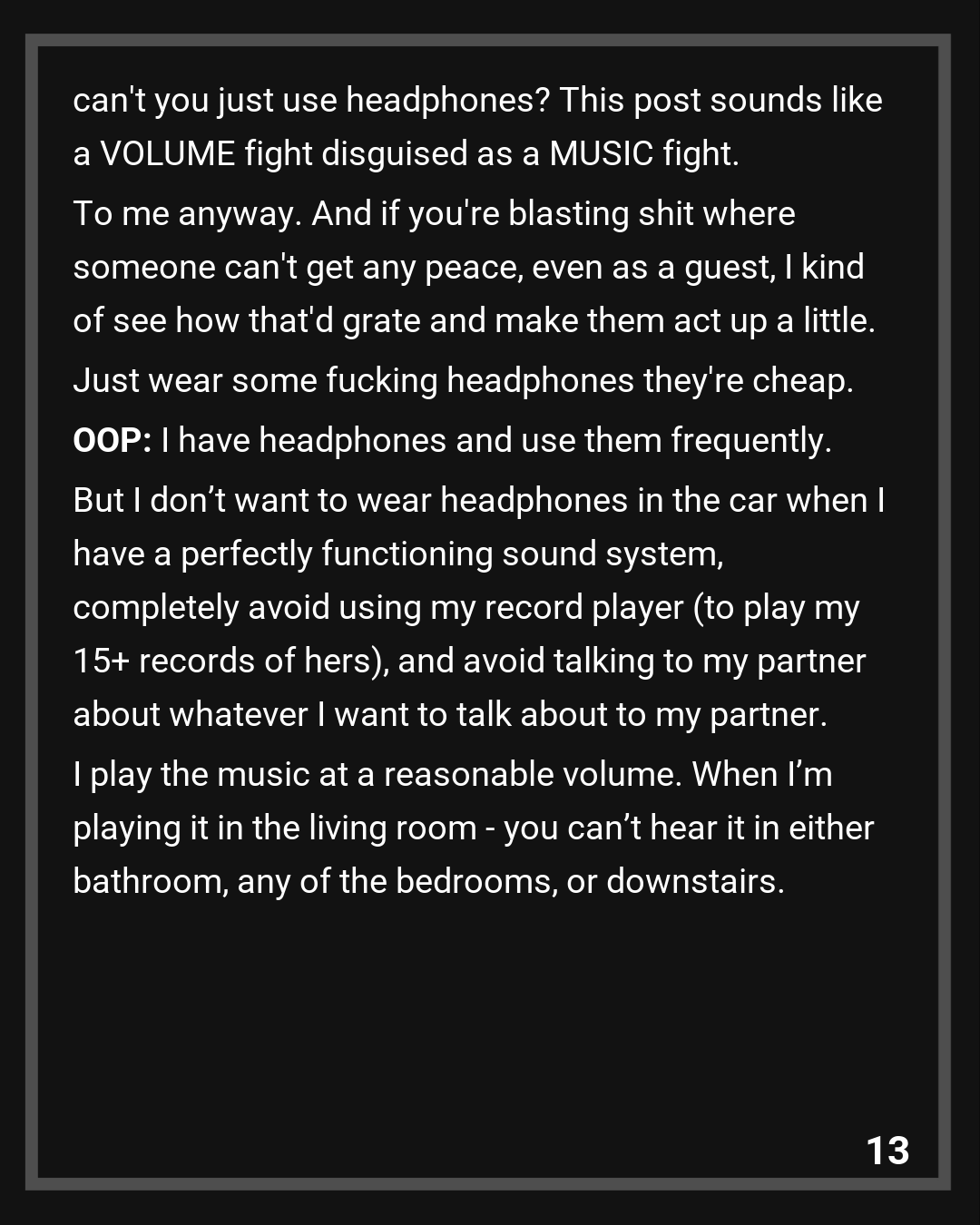
The pattern predates the conflict. OOP describes choosing silence over confrontation for weeks, restricting their music to headphones, whispering about their interests behind closed doors. They framed this as mindfulness. From the outside, it looks closer to someone rehearsing their own disappearance. Their partner worked from home while BIL interrupted that work to deliver rants about a pop star, and still OOP’s first move was to post on Reddit rather than say “stop” out loud.
That reluctance makes more sense once you factor in the relationship history. BIL helped OOP dress during physical flare-ups. He proofread their nervous texts. He chose OOP’s side in family conflicts at personal cost. Confronting someone who has seen you that vulnerable feels like risking the loss of a witness to your worst moments. So OOP kept shrinking.
The Feed That Built the Fury
BIL was not simply a man who disliked pop music. He had traveled deep into conspiracy content claiming Taylor Swift was a literal incarnation of the devil. OOP saw the search history. They heard the theories repeated back to them. The hatred had a texture that went beyond taste and into fixation.
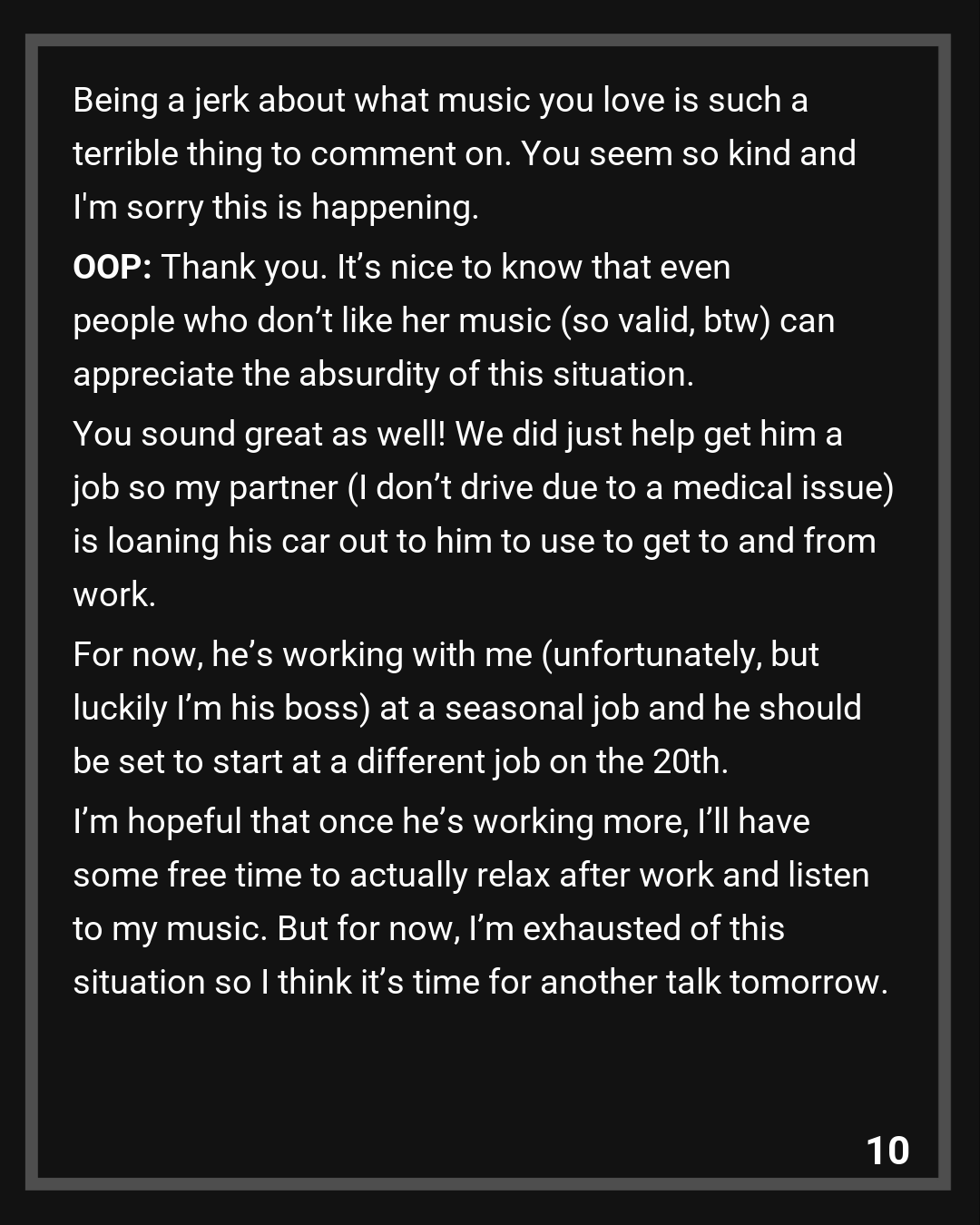
Algorithmic rabbit holes thrive on isolation, and BIL had plenty. He had lost his home twice, lost his car, lost his proximity to everyone he knew, and landed in a small rental twelve hours from anything familiar. When first went up, most commenters focused on entitlement. Fewer noticed that a 22-year-old with no money, no transportation, and no established support network had been feeding himself a steady diet of rage content while quietly approaching what OOP later described as bordering psychosis.
Hate-Watching as a Coping Mechanism
The irony is that BIL’s own engagement drove the content deeper into his feed. Every hate-click trained the algorithm to serve more Swift content, which generated more frustration, which produced more clicks. He was not a passive victim of his recommendations. But he was a young man in crisis who found an outlet that felt like conviction rather than compulsion. His anger at Taylor Swift gave him something to be certain about during a period when everything else had collapsed.
A Thousand Times Over
OOP closes their final update with a philosophical stance: “I’d rather be taken advantage of for my niceness 1,000x over than let the world turn me cold.” Framed as compassion, posted to applause. But that sentence does real work as a shield. If you announce in advance that you will absorb mistreatment indefinitely, you never have to sit with the discomfort of saying no. You never have to risk the relationship by holding someone to a standard. Generosity that refuses to draw a line is not generosity. It is conflict avoidance with a better reputation.
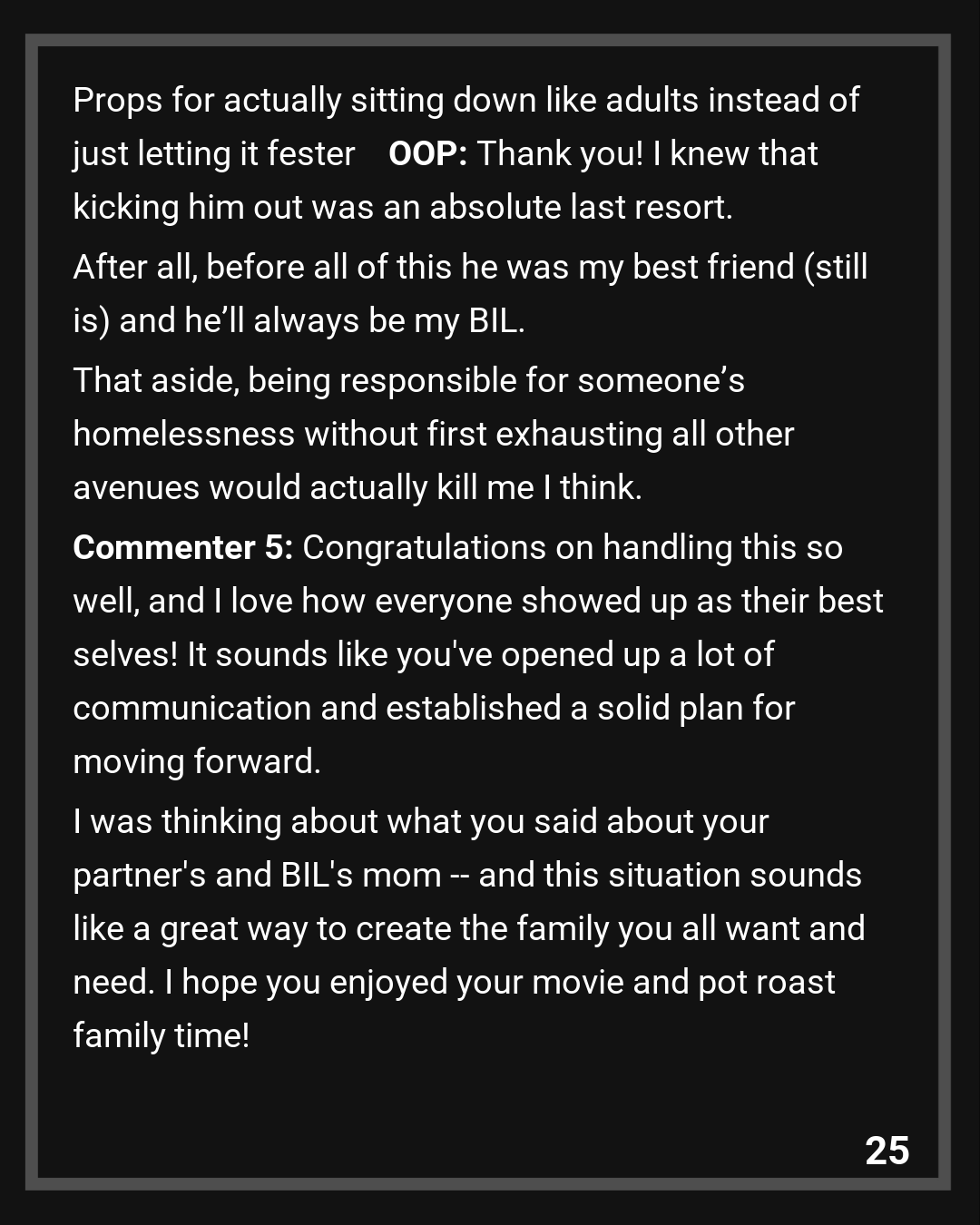
OOP did draw the line, eventually, and BIL responded with accountability that surprised everyone. He apologized, started paying rent, covered meals and coffee. The biweekly sit-downs kept working. But the resolution happened despite OOP’s stated philosophy, not because of it. It happened because their partner sat down beside them and they said the uncomfortable thing together.
OOP is now teaching BIL budgeting, buying him vinyl records, and converting the garage into a shared hangout space. They still pay for the pair of earbuds they handed him a week into his stay.
How the Thread Read the Room
The largest cluster treated BIL’s behavior as a simple transactional breach. If someone else is paying your rent, buying your groceries, and covering your weed, you do not get to dictate the playlist. These commenters showed zero interest in BIL’s mental state or the conspiracy rabbit hole. Their logic was jurisdictional: the person holding the lease holds the authority, and a guest who throws his free dinner in the trash has forfeited the right to an opinion. The emotional register ran hot but uncomplicated, closer to exasperation than anger. Several commenters noted they would actively learn choreography if a Swiftie was keeping them off the streets.
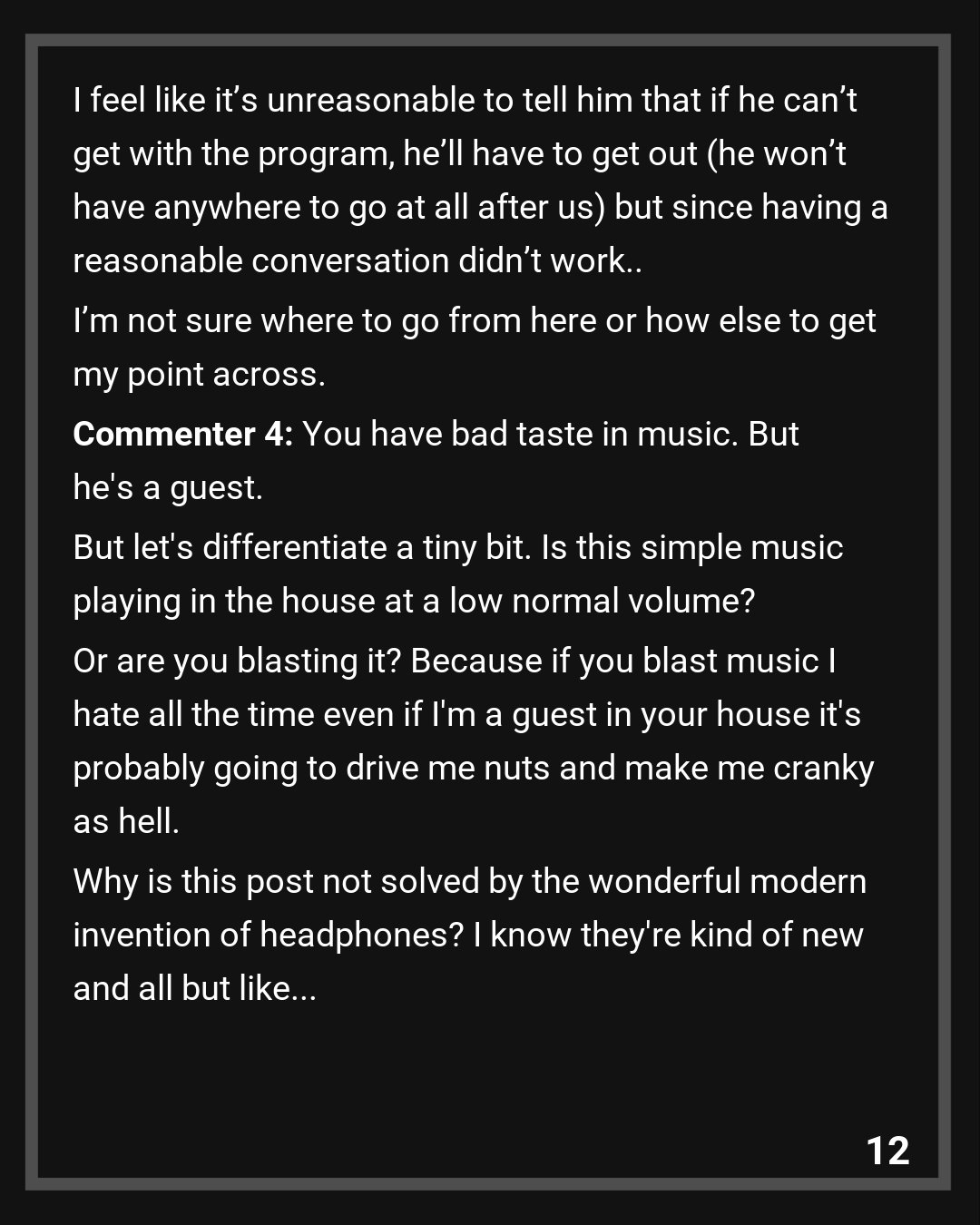
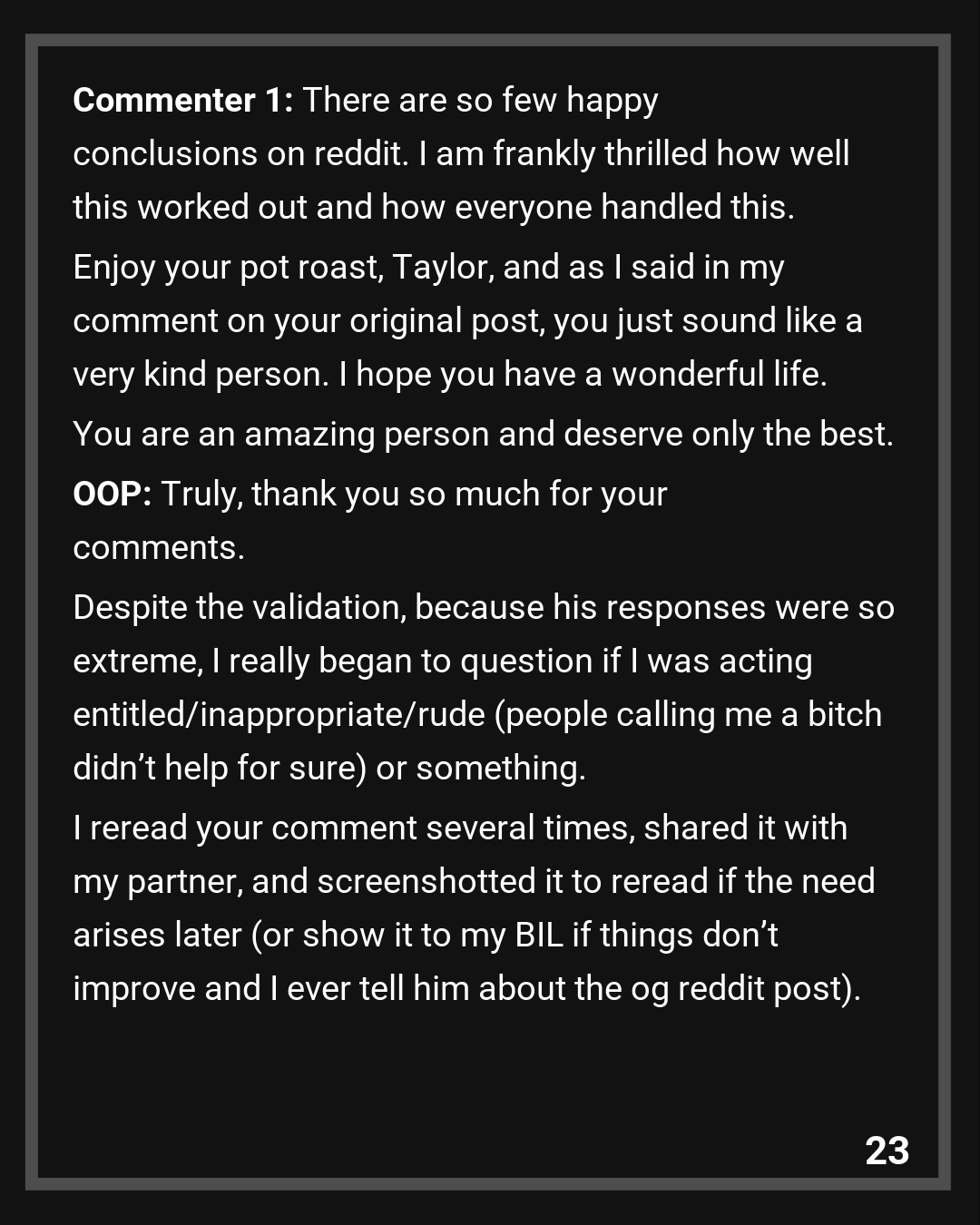
A second, equally vocal group barely engaged with BIL at all. They turned their attention to OOP’s third update, a sprawling thousand-word defense that most readers found exhausting and unnecessary. The top comment, sitting at 3.6K upvotes, was a one-line summary that rendered the entire post redundant. Readers in this cluster recognized OOP’s compulsive self-justification as the same people-pleasing pattern that allowed BIL’s behavior to continue for three weeks. The tone was more amused than hostile, but the message was consistent: the length of the explanation was itself the diagnosis.
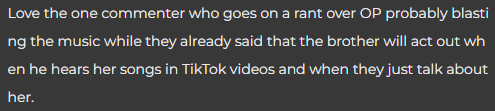
A smaller but persistent thread fixated on whether OOP was understating their fandom. Commenters pulled quotes from the original post and compared them against the third update’s careful downplaying, noting the contradiction between “HUGE swifties” who own every vinyl and someone who insists they are not that invested. This cluster operated with dry, forensic energy, less concerned with the roommate conflict than with catching OOP in a self-image discrepancy.
A fourth cluster used the post as a launchpad for broader Swift discourse, debating her political affiliations, album quality, and fan culture. These comments drifted far from OOP’s actual situation and functioned more as a referendum on celebrity parasocial dynamics in both directions. One commenter observed that seething hatred for a stranger is just as parasocial as devotion, a line that gathered significant traction.
The comment section reveals a readership far more interested in diagnosing OOP than in evaluating BIL. His behavior was so clearly wrong that it generated almost no debate. What drew scrutiny instead was OOP’s response to that behavior: the over-explanation, the minute-by-minute accounting, the philosophical manifesto about preferring to be taken advantage of. Readers recognized the pattern before OOP did, and the thread’s real energy went toward naming it.
This editorial is based on a story originally shared on Reddit’s r/BestofRedditorUpdates community.